
 Worksheets
7th Grade EARTH Science Review
Total questions: 60
Worksheet time: 49mins
Name
Class
Date
1.
Air pressure is greatest:
a)
closer to Earth
b)
farther from Earth
2.
A severe storm which involves a funnel cloud forming over land is:
a)
hurricane
b)
tornado
c)
thunderstorm
d)
blizzard
3.
A severe storm that involves winds over 119mph and forms over water is:
a)
tornado
b)
thunderstorm
c)
hurricane
d)
blizzard
4.
This severe weather involves lightning, rain, and possibly hail
a)
thunderstorm
b)
tornado
c)
hurricane
d)
blizzard
5.
The boundary between two air masses is known as:
a)
front
b)
storm
c)
climate
d)
flood
6.
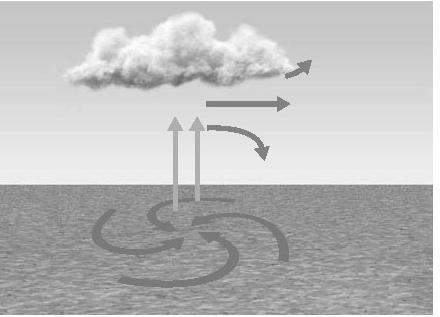
Which type of pressure system is pictured?
a)
high
b)
low
c)
medium
d)
none
7.
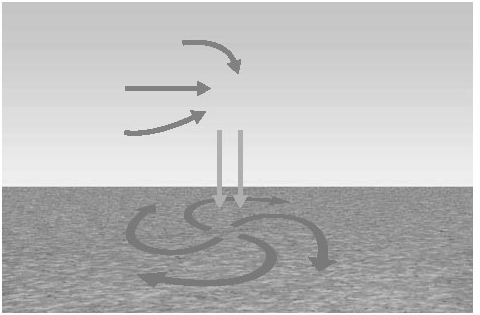
Which type of pressure system is pictured?
a)
high
b)
low
c)
medium
d)
none
8.
Cold air traveling south from Canada is:
a)
continental tropical
b)
continental polar
c)
maritime tropical
d)
maritime polar
9.
Warm air moving upwards from the Gulf of Mexico is:
a)
continental tropical
b)
continental polar
c)
maritime tropical
d)
maritime polar
10.
In _________ pressure systems, air sinks:
a)
high
b)
low
c)
medium
d)
none
11.
In _______ pressure systems, air rises
a)
high
b)
low
c)
medium
d)
none
12.
This type of front can bring strong storms
a)
cold
b)
warm
c)
stationary
d)
occluded
13.
This type of front results in the same weather for several days
a)
warm
b)
cold
c)
stationary
d)
occluded
14.
Which weather tool measures air pressure?
a)
thermometer
b)
barometer
c)
anemometer
d)
psychrometer
15.

What does this symbol on a weather map indicate?
a)
High pressure system
b)
Low pressure system
c)
Cold front
d)
Warm front
16.

Which number illustrates Condensation?
a)
1
b)
2
c)
3
d)
4
17.

What part of the illustration shows Evaporation?
a)
1
b)
2
c)
3
d)
4
18.
What kind of weather is usually associated with a high pressure system?
a)
Sunny weather
b)
Precipitation (rain, snow, etc.)
19.
This weather tool measures wind speed and direction
a)
thermometer
b)
barometer
c)
anemometer
d)
psychrometer
20.
Which type of cloud is most often observed during a thunderstorm?
a)
cirrus
b)
stratus
c)
cumulus
d)
cumulonimbus
21.
Hot air (RISES / FALLS) __________.
a)
RISES
b)
FALLS
22.
Cold air (RISES/ FALLS) _________.
a)
RISES
b)
FALLS
23.
Rain, snow, sleet, and hail are all forms of _____.
a)
precipitation
b)
condensation
c)
evaporation
d)
climate
24.

The amount of water vapor present in the air is called ________________.
a)
weather
b)
humidity
c)
air mass
d)
dew point
25.

What is it called when plants give off water vapor as a waste product?
a)
condensation
b)
evaporation
c)
sublimation
d)
transpiration
26.
What is the energy source for the water cycle?
a)
the sun
b)
the earth
c)
water
d)
the moon
27.
______occurs when water vapor cools and changes back into liquid droplets.
a)
evaporation
b)
condensation
c)
precipitation
d)
transpiration
28.
_______describes the process of water turning into water vapor.
a)
Deposition
b)
Precipitation
c)
Condensation
d)
Evaporation
29.
Chemical formula to represent water's unique structure
a)
Hydrogen + 2 Oxygen
b)
2 Hydrogen + 1 Oxygen
c)
HO
d)
OH
30.
What are the 3 states of matter?
a)
solid, freezing, thawing
b)
solid, liquid, gas
c)
Georgia, Florida, South Carolina
31.
The sum total of all the water on earth and in its atmosphere is known as
a)
Biosphere
b)
Atmosphere
c)
Hydrosphere
d)
Ionosphere
32.
What is it called when rainwater contributes to the flow of rivers and streams?
a)
Transformation
b)
Runoff
c)
Irrigation
d)
Desertification
33.
Water that fills the spaces in soil and rock layers
a)
runoff
b)
precipitation
c)
water
d)
groundwater
34.
___________________ is the movement of water into the ground due to the pull of gravity.
a)
runoff
b)
infiltration
c)
evaporation
d)
precipitation
35.
What causes warm air to rise?
a)
the fact that it's less dense than cold air
b)
The fact that it weighs more than cold air
c)
The fact that it has higher pressure than cold
d)
the fact that its more dense than cold air
36.
What causes wind to blow?
a)
Differences in longitude
b)
Shock waves from clouds
c)
Differences in air temperature and pressure
d)
The rotation of the earth
37.
Which term best describes how the earth's atmosphere is heated?
a)
Spirally
b)
Unevenly
c)
Circularly
d)
Kinetically
38.
When Earth's rotation causes the wind to curve
a)
cloudy
b)
Coriolis effect
c)
high pressure
d)
low pressure
39.
When heat rises cools then sinks
a)
high pressure
b)
convection current
c)
low pressure
d)
stratospheric pressure
40.

What kind of breeze is this and when would it form?
a)
Land breeze - daytime
b)
Land breeze - nighttime
c)
Sea breeze - daytime
d)
Sea breeze - nighttime
41.

What kind of breeze is this & what time of day/night would it form?
a)
Land breeze - daytime
b)
Land breeze - nighttime
c)
Sea breeze - daytime
d)
Sea breeze - nighttime
42.
As you climb up a mountain what happens to the air pressure?
a)
decreases
b)
increases
c)
stays the same
43.

Walking on the warm sand with your bare feet demonstrates this type of heat transfer.
a)
conduction
b)
convection
c)
radiation
44.
Feeling the warmth from a bonfire is an example of
a)
conduction
b)
convection
c)
radiation
45.
________ is the force exerted on an object by the weight of the air above it.
a)
Wind pressure
b)
Air pressure
c)
Temperate weight
d)
Gravatic pressure
46.
Which gas in our atmosphere is most abundant?
a)
Argon
b)
Oxygen
c)
Nitrogen
d)
Carbon Dioxide
47.
What is the percentage of oxygen in Earth's atmosphere?
a)
1%
b)
21%
c)
78%
d)
90%
48.
What is the percentage of nitrogen in Earth's atmosphere?
a)
1%
b)
21%
c)
78%
d)
90%
49.
Which layer of the atmosphere contains the greatest amount of water vapor?
a)
Thermosphere
b)
Troposphere
c)
Mesosphere
d)
Stratosphere
50.
In which layer of the atmosphere does weather occur?
a)
Mesosphere
b)
Thermosphere
c)
Stratosphere
d)
Troposphere
51.
What causes the temperature to increase in the stratosphere?
a)
Nitrogen
b)
Ozone
c)
Water Vapor
d)
carbon dioxide
52.
What is the lowest main layer of Earth's atmosphere?
a)
Thermosphere
b)
Troposphere
c)
Stratosphere
d)
Mesosphere
53.
What is the second lowest main layer of Earth's atmosphere?
a)
Thermosphere
b)
Troposphere
c)
Stratosphere
d)
Mesosphere
54.

Where is the temperature the highest?
a)
1
b)
2
c)
3
d)
4
55.
The layers of the atmosphere are classified according to changes in _________.
a)
altitude
b)
density
c)
composition
d)
temperature
56.
Which of the following is the correct order of the atmosphere layers from Earth to space?
a)
troposphere, stratosphere, mesosphere, thermosphere, exosphere
b)
troposphere, mesosphere, thermosphere, exosphere, stratosphere
c)
thermosphere, stratosphere, mesosphere, troposphere, exosphere
d)
troposphere, stratosphere, mesosphere, exosphere, thermosphere
57.
Which layer of the atmosphere protects Earth from being hit by most meteoroids?
a)
tropsphere
b)
mesosphere
c)
exosphere
d)
stratosphere
58.
Which is the coldest layer?
a)
troposphere
b)
stratosphere
c)
mesosphere
d)
exosphere
59.
The hottest layer of the atmosphere is
a)
troposphere
b)
thermosphere
c)
stratosphere
d)
mesosphere
60.
As you move through the TROPOSPHERE, temperatures will
a)
increase (get hotter)
b)
decrease (get colder)
c)
Stay the same
100 %

