
 Worksheets
6th Grade Benchmark Review!!
Total questions: 100
Worksheet time: 2hrs 35mins
Name
Class
Date
1.
Which type of rock results from melting and cooling of magma?
a)
Igneous
b)
Metamorphic
c)
Sedimentary
d)
Extrusive
2.
Which type of rock forms from extreme heat and pressure?
a)
Igneous
b)
Sedimentary
c)
Organic
d)
Metamorphic
3.
A metamorphic rock changes into an igneous rock by what two processes?
a)
Melting and cooling
b)
Extreme heat and pressure
c)
Compaction and cementation
d)
Weathering and erosion
4.
Wind, water, and ice breaking down rock is called
a)
Erosion
b)
Deposition
c)
Compaction
d)
Weathering
5.
Scientists classify rocks by their composition and
a)
chemicals
b)
size
c)
color
d)
texture
6.
True/False: Igneous rocks can only turn into metamorphic rocks.
a)
True
b)
False
7.
How many different elements are in this chemical formula: C2H2ClK3
a)
6
b)
8
c)
2
d)
4
8.
Which of the following atomic symbols is written correctly?
a)
ee
b)
hE
c)
C
d)
CL
9.
Which of the following atomic symbols is written correctly?
a)
OH
b)
oH
c)
fe
d)
H
10.
Which of the following is a pure substance?
a)
CO
b)
C02
c)
Co
d)
H2O
11.
Can be found on the periodic table
a)
Element
b)
Compound
c)
MIxture
12.

What is gold?
a)
element
b)
compound
c)
mixture
13.

What is sugar?
a)
element
b)
compound
c)
mixture
14.
Which one can be found on the periodic table?
a)
Compound
b)
Element
15.

Which item on this element square is the chemical symbol?
a)
Copper
b)
29
c)
Cu
d)
63.546
16.
What is the most abundant element found in the earth's atmosphere?
a)
Oxygen
b)
Sulfur
c)
Nitrogen
d)
Argon
17.

Which layer of Earth is located above the outer core?
a)
crust
b)
inner core
c)
mantle
d)
lithosphere
18.
What is the top layer of the Earth's surface called?
a)
Mantle
b)
Innercore
c)
Outercore
d)
Crust
19.
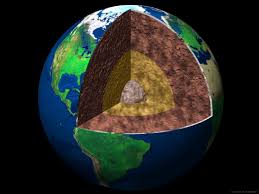
Which layer of Earth is located above the outer core?
a)
crust
b)
inner core
c)
mantle
d)
lithosphere
20.
What is the rigid layer of the Earth's surface made up of the crust and upper mantle called?
a)
asthenosphere
b)
lithosphere
c)
mesosphere
d)
continental crust
21.
Temperature _____________________ as you go deeper into the earth.
a)
increases
b)
decreases
c)
goes up and down depending on the layer
d)
stays the same
22.
What is the ISS?
a)
International Student Services
b)
Inside Sun Secrets
c)
International Space Station
d)
Iraq Space Services
23.
Which of these is a place where humans live and study space?
a)
Moon probe
b)
Mars Rover
c)
Space Shuttle
d)
International Space Station
24.
What object is launched into orbit and designed to send and receive information?
a)
rover
b)
satellite
c)
space shuttle
25.
A tool for viewing and observing
a)
telescope
b)
space shuttle
26.
The force that keeps planets on there orbit...
a)
orbit
b)
stars
c)
planets
d)
gravity
27.

The investigation of physical conditions in space and on stars, planets, and other celestial bodies through the use of satellites, space probes, or spacecrafts with human crews.
a)
Space Exploration
b)
Newton's Law of Gravity
c)
the ISS
d)
Space travel
28.

Which vehicle’s engine is filled with chemical propellants?
a)
rocket
b)
rover
c)
satellite
d)
space shuttle
29.

What is designed and built to transport people and cargo between Earth and space?
a)
space rocket
b)
space shuttle
c)
space probe
d)
telescope
30.

How did Galileo discover the moons on Jupiter
a)
space mission
b)
rover
c)
telescope
d)
space probe
31.

What object is launched into orbit and designed to send and receive information?
a)
rover
b)
satellite
c)
space shuttle
d)
space probe
32.

What scientist use a telescope to observe the night sky and led to him being called the father of astronomy?
a)
Galileo
b)
Einstein
c)
Dr. Tyson
d)
Dr. Wernher von Brauun
33.
The order of the planets is:
a)
Mars,Venus,Earth,
Mercury,Saturn
Jupiter, Uranus, Neptune
Mercury,Saturn
Jupiter, Uranus, Neptune
b)
Earth,Venus,Mars
Jupiter, Neptune,
Mercury,Saturn,
Uranus
Jupiter, Neptune,
Mercury,Saturn,
Uranus
c)
Mercury,Venus,Earth
Mars,Jupiter,
Saturn,Uranus
Neptune
Mars,Jupiter,
Saturn,Uranus
Neptune
34.

Which planet is the largest?
a)
Jupiter
b)
Saturn
c)
Uranus
d)
Neptune
35.
Which planet is fifth from the sun?
a)
Saturn
b)
Jupiter
c)
Mars
d)
Earth
36.
The spinning of an object on its axis is called______
a)
orbit
b)
rotation
c)
revolution
d)
tide
37.
Day and night is caused by the _____________ of earth on its axis.
a)
revolution
b)
orbit
c)
rotation
38.
How long does it take the Earth to make one REVOLUTION around the Sun?
a)
12 hours
b)
24 hours
c)
365 days
d)
29.5 days
39.
How long does it take for Earth to complete on full rotation?
a)
365 days
b)
23 hours
c)
24 hours
d)
1 month
40.
Energy can cause an object to ______________ the position of its motion.
a)
Energy
b)
Change
c)
Speed
d)
Stored
41.
The faster an object moves, the ________ kinetic energy it has.
a)
more
b)
less
c)
none of the above
d)
all of the above
42.
__________ is stored energy.
a)
Potential
b)
Kinetic
c)
None of the above
d)
All of the above
43.
When you are holding a book, energy is stored between the book and Earth; this type of energy is called ________ potential energy.
a)
Kinetic
b)
Potential
c)
Gravity
d)
Friction
44.
When you stretch a rubber band, you are storing __________ energy.
a)
kinetic
b)
potential
c)
none of the above
d)
all of the above
45.
Which of the following is the smallest unit of life that can carry out all life functions?
a)
the mitochondria
b)
the vacuoles
c)
the nucleus
d)
the cell
46.
Cells with a nucleus and membrane-bound organelles are called ____________________.
a)
prokaryotes
b)
eukaryotes
c)
bacteria
d)
protists
47.
The basic unit of structure and function in a living things.
a)
chloroplast
b)
nucleus
c)
cell
d)
cell membrane
48.
Cells can only be seen with the help of a...
a)
hand lens
b)
magnifying glass
c)
3D glasses
d)
microscope
49.
Bacteria is what kind of cell?
a)
Eukaryotic
b)
Prokaryotic
50.
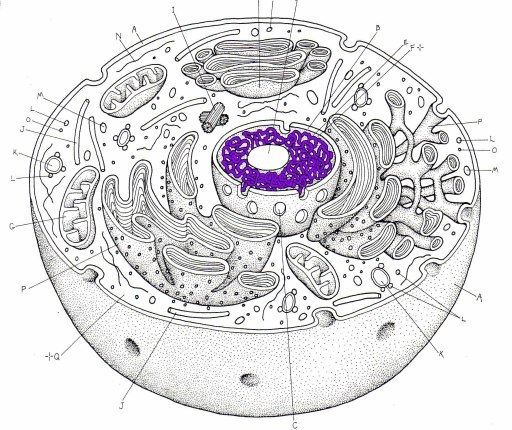
What kind of cell is this?
a)
Eukaryotic
b)
Prokaryotic
51.
What is unicellular?
a)
one cell
b)
many cells
c)
no nuclues
d)
DNA
52.
What is multicellular?
a)
one cell
b)
no cells
c)
many cells
d)
no nucleus
53.
What type of cell has a nucleus?
a)
eukaryotic
b)
prokaryotic
54.
What type of cell does not have a nucleus?
a)
eukaryotic
b)
prokaryotic
55.
Plants and animal cells are examples of ___ cells
a)
prokaryotic cells
b)
eukaryotic cells
56.
Cells that do not have a true nucleus are called....
a)
eukaryote
b)
prokaryote
c)
unicellular
d)
multicellular
57.
Cells that have a true nucleus are called....
a)
eukaryotes
b)
prokaryotes
c)
unicellular
d)
multicellular
58.
The eight levels of classification, from general to specific, are
a)
domain, kingdom, class, order, phylum, family, genus, species
b)
somain, kingdom, phylum, class, family, order, genus, species
c)
domain, kingdom, phylum, class, order, family, genus, species
d)
domain, kingdom, class, phylum, order, family, genus, species
59.
Jack has a rock. The rock has a mass of 14g and a volume of 2cm3. What is the density of the rock?
a)
7 mL
b)
7 g/cm3
c)
28 g/cm3
d)
1/7 g/cm3
60.
Which lab tool might you use to measure the volume of a liquid?
a)
electric scale
b)
bunsen burner
c)
test tube
d)
graduated cylinder
61.
True or False: The density of a specific type of material never changes.
a)
True
b)
False
62.
What is the formula for density?
a)
density = mass x volume
b)
density = mass / volume
c)
density = mass + volume
d)
density = mass - volume
63.
Stacy has an eraser. It has a mass of 4g, and a volume of 2cm3. What is its density?
a)
8 g/cm3
b)
2 g/cm3
c)
1/2 g/cm3
d)
24 g/cm3
64.
Phil has a paper clip. It has a mass of 9g and a volume of 3cm3. What is its density?
a)
3 g/cm3
b)
1/3 g/cm3
c)
27 g/cm3
d)
39 g/cm3
65.
An object with which of the following densities will float on water?
a)
0.7 g/cm3
b)
1.2 g/cm3
c)
3.5 g/cm3
d)
11.4 g/cm3
66.
Why do ice cubes float in a glass of water?
a)
the ice cubes are more dense than the water
b)
the water is more dense than the ice cubes
c)
the water is more dense than the glass
d)
the ice is more dense than the glass
67.
Veal finds a gold colored rock in a river. It has a mass of 9.65 grams and a volume of 0.5 cm3. What is the density of the rock?
a)
10.15 g/cm3
b)
19.3 g/cm3
c)
9.15 g/cm3
d)
4.825 g/cm3
68.
Which property of matter is determined by dividing its mass by its volume?
a)
elasticity
b)
buoyancy
c)
density
d)
viscosity
69.

A Microscope is a
a)
tool to help you see objects that are far away
b)
tool to make objects appear much larger
c)
tool to help you weigh an object
d)
tool to protect your eyes
70.

Identify the correct sequence of energy transformations using the picture above.
a)
Electric to thermal
b)
electric to solar
c)
electric to mechanical
d)
electric to electric
71.

Identify the correct sequence of energy transformations using the picture above.
a)
mechanical to thermal
b)
mechanical to light
c)
Chemical to solar
d)
Chemical to mechanical
72.

Identify the correct sequence of energy transformations using the picture above.
a)
Chemical to sound and solar
b)
Chemical to thermal and sound
c)
Chemical to thermal and light
d)
Chemical to electric to light
73.

Identify the correct sequence of energy transformations using the picture above.
a)
Electrical to light to sound
b)
Thermal to light
c)
Chemical to electrical to light
d)
Solar to chemical
74.

Name this boundary
a)
Convergent
b)
Divergent
c)
Transform
d)
Sergent
75.

Name the boundary
a)
divergent
b)
convergent
c)
transform
d)
sergent
76.

Name the boundary
a)
convergent
b)
transform
c)
divergent
d)
sergent
77.
Which of the following is associated with transform boundary?
a)
volcanoes
b)
mountains
c)
trenches
d)
earthquakes and fault line
78.
Earth's plates are....
a)
Constantly moving and changing the face of the Earth
b)
Never moved
c)
Move seldom and very fast
d)
move when they feel like it
79.
What was the name given to all the continents when they were joined as one super continent?
a)
Supreme Continent
b)
Eurasia
c)
Plate tectonics
d)
Pangea
80.
Plates moving apart would be...
a)
convergent
b)
divergent
c)
transform
81.
Which of the following is the softer moving area of the mantle that contains convection current?
a)
asthenosphere
b)
lithosphere
c)
outer core
d)
oceanic crust
82.

Sand Andreas Fault formed at this type of boundary-
a)
Transform Boundary
b)
Convergent Boundary
c)
Divergent Boundary
d)
Hot Spot
83.

This is an example of -
a)
convergent
b)
divergent
c)
transform
84.

This is the theory that states that all the continents started as a single massive continent and have been MOVING apart for over 200 million years and the man that proposed it.
a)
The Big Bang Theory, Einstein
b)
The Pangea Theory, Hutton
c)
The Tectonic Plate Theory, Darwin
d)
The Continental Drift Theory, Wegner
85.

This is the driving force behind the movement of tectonic plates.
a)
Mantle convection currents
b)
Oceanic convection currents
c)
Atmospheric convection currents
d)
Solar convection currents
86.
What is the name of the layer that contains the uppermost mantle and crust
a)
Asthenosphere
b)
Mesosphere
c)
Lithosphere
d)
Transosphere
87.
Kingdom Plantae is
a)
autotroph
b)
heterotroph
c)
trophy wife!
88.
Kingdom Animalia is
a)
Eukayotic
b)
Prokaryotic
c)
Pick me!
d)
No, Pick me!!
89.
Members of Kingdom Animalia are...
a)
heterotrophs.
b)
autotrophs
90.
My Kingdom includes mushrooms and yeast!
a)
Animalia
b)
Plantae
c)
Eubacteria
d)
Fungi
91.
Non-Renewable resources are also known as what?
a)
Fossil Fuels
b)
Renewable
c)
Solar Energy
d)
Hydroelectric Energy
92.
what is a fossil fuel
a)
oil
b)
biomass
c)
wind
d)
hydro
93.

What is an example of a renewable resource?
a)
hydroelectric
b)
oil
c)
coal
d)
fossil fuel
94.

Do Renewable energy sources run out?
a)
Yes
b)
No
95.

Coal is a __________ energy resource.
a)
Renewable
b)
Nonrenewable
96.

Oil is a __________ energy resource.
a)
Renewable
b)
Nonrenewable
97.

Wind is a __________ energy resource.
a)
Renewable
b)
Nonrenewable
98.

Geothermal Power is a __________ energy resource.
a)
Renewable
b)
Nonrenewable
99.
Non-renewable or Renewable: Coal
a)
Renewable
b)
Non-Renewable
100.
ARE YOU READY FOR TOMORROW'S ACTIVITY?!?!
a)
YES!!! ALWAYS READY!
b)
No............
100 %

