wayground logo

Free Printable Worksheets

Font size

S
M
L
XL
Worksheets

Full Year Review

Total questions: 100

Worksheet time: 2hrs 35mins

Name
Class
Date
1.

What is a gene

a)

A long length of DNA that codes for a chromosome

b)

A short length of DNA that codes for a chromosome

c)

A short length of DNA that codes for a protein.

2.
A change in DNA or chromosomes
a)
Mitosis
b)
Meiosis
c)
mutation
d)
Osmosis
3.

Which of the following lists each term from LARGEST to SMALLEST?

a)

Chromosome -> DNA -> Gene

b)

Chromosome -> Gene -> DNA

c)

Gene -> Chromosome -> DNA

d)

Gene -> DNA -> Chromosome

4.
The process on the left is:
The process on the right is:
a)
Left: meiosis
Right: meiosis
b)
Left: meiosis
Right: cloning
c)
Left: mitosis
Right: meiosis
d)
Left: mitosis
Right: mitosis
5.
How many daughter cells are produced from meiosis ?
a)
10
b)
6
c)
4
d)
2
6.
Name that process
a)
Mitosis
b)
Meiosis
c)
Mutation
d)
Cell Cycle
7.

Mitosis turns a single parent cell into ____ new cells

a)

0

b)

1

c)

2

d)

4

8.

Meiosis creates daughter cells which are genetically identical to the parent

a)

True

b)

False

9.

Mitosis creates daughter cells which are genetically identical to the parent cell

a)

True

b)

False

10.

When is a mutation considered to be beneficial?

a)

If it helps the organism survive

b)

If it has no effect on the organism's survival

c)

If it decreases the chances of an organism surviving.

11.

When is a mutation considered to be harmful?

a)

If it increases the organism's chances of survival.

b)

If it has no effect on the organism's survival.

c)

If it decreases the organism's chances of survival.

12.

What do genes do?

a)

make proteins

b)

store energy

c)

create covalent bonds

d)

create hydrogen bonds

13.
Mitosis is a type of ________________ reproduction.
a)
Sexual
b)
Asexual
14.
Meiosis makes sperm and egg cells. In humans, sperm and egg cells each have _____ chromosomes. Therefore a fertilized human egg cell (sperm and egg cell combined) would create a cell with _____ chromosomes.
a)
23, 46
b)
46, 23
c)
2, 4
d)
50, 100
15.

A mode of reproduction in which an organism arises from two organisms and inherits half of its DNA from each parent

a)

Sexual Reproduction

b)

Asexual Reproduction

c)

Cloning

d)

Fragmentation

16.

A mode of reproduction by which an organism arises from a single organism and inherit the identical genes of that parent

a)

Asexual Reproduction

b)

Sexual Reproduction

c)

Genetic Variation

d)

Alleles

17.
What are some of the facts about asexual reproduction?
a)
Takes only one mate to reproduce and takes a longer time to reproduce
b)
Takes a shorter amount of time to reproduce and it takes two mates to reproduce
c)
Reproduces diverse offspring and takes a longer time to reproduce
d)
Takes only one mate to reproduce and takes a shorter time to reproduce
18.
G = green, g = yellow
The genotype for a yellow plant is...
a)
GG
b)
Gg
c)
gg
d)
all of the choices result in yellow
19.
Heterozygous is when...
a)
the alleles are the same
b)
the alleles are different
c)
the alleles are absent
d)
the alleles are present
20.
What you see, or the physical appearance.
a)
Genotype
b)
Phenotype
c)
Homozygous
d)
Heterozygous
21.
The purpose of selective breeding is to 
a)
Get bigger animals
b)
get smaller animals
c)
create animals with desirable traits
d)
create animals with bad traits
22.
This trait always shows up in an organism when the allele is present
a)
dominant allele
b)
codominance
c)
probability
d)
recessive allele
23.
This trait is hidden whenever the dominant allele is present
a)
dominant allele
b)
codominance
c)
recessive allele
d)
Punnett Square
24.

The genotype gg is best described as

a)

heterozygous

b)

homozygous

25.
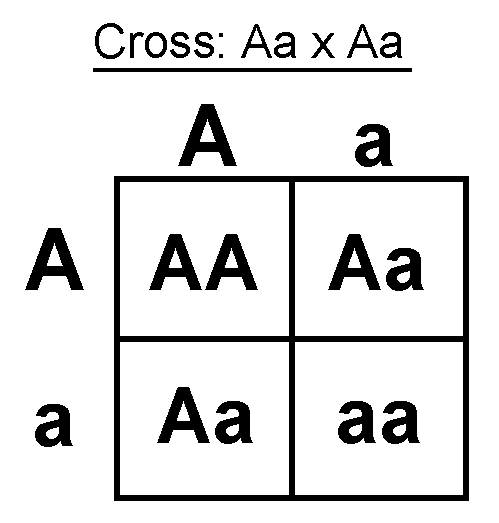
T - tall and t = short
In the punnett square below, what belongs in the missing square
a)
tt
b)
Tt
c)
Bb
d)
TT
26.
What is the phenotype of the offspring? (A-Brown hair; a-blond hair) 
a)
50 % Brown Hair and 50% Blond Hair 
b)
25 % Brown Hair and 75% Blond Hair 
c)
75 % Brown Hair and 25% Blond Hair 
d)
0% Brown Hair and 100% Blond Hair 
27.
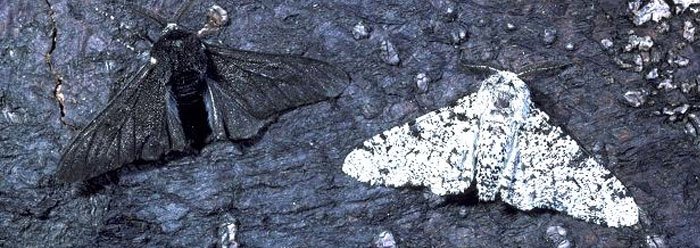
The trees these moths used to live on were white, but have been covered in soot from coal factories. Which moth will be more successful in this environment?
a)
Dark moth
b)
Light moth
c)
Both will be equally successful
d)
Neither will be successful
28.

According to most scientists, what is the ultimate cause of most mass extinctions?

a)

overhunting

b)

evolution of new species to replace old ones

c)

major change in environment

d)

asteroid impact

29.
When a population becomes divided by an event such as a new river forming, ____________ has occurred.
a)
Differentiation 
b)
Isolation
c)
Adaptation
d)
Separation
30.
____________ development of new species when a population is reproductively isolation in some form.
a)
Competitive 
b)
Speciation
c)
Isolation
d)
mutation
31.
The process by which metamorphic rocks are formed...
a)
heat and pressure
b)
erosion and deposition
c)
melting and cooling
32.
According to the law of superposition, which layer is the youngest?
a)
A
b)
B
c)
C
33.

The starfish fossil in the diagram below was found in the Guadeloupe Mountains. Which can most likely be concluded regarding the place where this fossil was found?

a)

The mountains were covered by sea water at some point in the past.

b)

The mountain environment was much more arid at some point in the past.

c)

The mountains were covered by glaciers at some point in the past.

d)

The mountain environment was much colder at some point in the past.

34.
Which Rock type would be best to find fossils?
a)
Igneous Rock
b)
Sedimentary Rock
c)
Metamorphic Rock
35.

Intrusive & extrusive are 2 types of...

a)

sedimentary

b)

metamorphic

c)

Igneous

36.
This rock was formed when molten rock cooled into a solid. What type of rock is it?
a)
Igneous Rock
b)
Metamorphic Rock
c)
Sedimentary Rock
37.
This rock was formed by smaller pieces of rock that settled at the bottom of a lake millions of years ago. What type of rock is this?
a)
Sedimentary
b)
Igneous
c)
Metamorphic
38.
Which layer is made of the crust and upper mantle?
a)
lithosphere
b)
asthenosphere
c)
mesosphere
d)
outer core
39.

What does heat do when convection currents are moving?

a)

Sinks

b)

Rises

c)

Stays in place

40.
In convection, COOL air
a)
Rises
b)
Sinks
41.
Earth's plates are....
a)
Constantly moving and changing the face of the Earth
b)
Never moved
c)
Move seldom and very fast
d)
move when they feel like it
42.
Plate movement is caused by _____
a)
The rotation of the Earth
b)
Ocean tides
c)
Convection current in the mantle
d)
The moon's gravity
43.
Which of the following is the softer moving area of the mantle that contains convection current?
a)
asthenosphere
b)
lithosphere
c)
outer core
d)
oceanic crust
44.
Scientists hypothesize that a super continent existed 200 million years ago.  This continent is called
a)
America
b)
Super Earth
c)
Pangea
d)
Eurasia
45.
Which piece of evidence did Wegener use to prove continental drift?
a)
The shape of the continents
b)
Similar fossils found on separate continents
c)
Tree fossils found in odd places
d)
All of the above
46.
The process by which molten material adds new oceanic crust to the ocean floor is called ___________.
a)
Divergent boundary
b)
Sea-floor spreading
c)
Convergent boundary
d)
Renovating 
47.
What is the process by which oceanic crust sinks beneath a deep-ocean trench and back into the mantle at a convergent plate boundary?
a)
Subduction
b)
Induction
c)
Abduction 
d)
Reduction
48.
_____________ is a plate boundary where two plates move away from each other.
a)
Convergent boundary
b)
Transform boundary
c)
Divergent boundary
d)
Insurgent boundary
49.
_____________ is when two plates move toward each other.
a)
Convergent boundary
b)
Allegiant boundary
c)
Transform boundary
d)
Sliding boundary
50.
A _____________ is when two plates move past each other in opposite directions.
a)
emergent boundary
b)
divergent boundary
c)
transform boundary
d)
convergent boundary
51.
What type of boundary is in this image?
a)
convergent plate boundary
b)
divergent plate boundary
c)
transform plate boundary
d)
subduction
52.
What type of boundary is in this image?
a)
convergent plate boundary
b)
divergent plate boundary
c)
transform plate boundary
d)
subduction
53.
What type of boundary is in this image?
a)
convergent plate boundary
b)
divergent plate boundary
c)
transform plate boundary
d)
subduction
54.
What new feature forms at a convergent plate boundary where two continental plates collide?
a)
mid-ocean ridge
b)
trench
c)
mountain range
d)
none of these features form
55.
What forms at a convergent boundary between a continental plate and an oceanic plate?
a)
volcanoes
b)
rift valleys
c)
faults
d)
mid-ocean ridges
56.
What is a destructive force?
a)
A natural process that destroys land
b)
A natural process that creates land
c)
A natural process where areas that are normally dry is covered in water
57.
A constructive force is defined as
a)
a natural occurrence that can build up or break down
b)
an earthquake or a volcano
c)
a natural force that builds up and creates new land
d)
a destructive force that has been controlled
58.
 Deposition is a process that
a)
Dissolves sediment
b)
Breaks down rock to form sediment
c)
Removes sediment from land forms
d)
Drops sediment to form landforms
59.
Weathering can be created by
a)
wind
b)
ice
c)
water
d)
all of the above
60.
What is sediment?
a)
small bits of rock, sand, and silt
b)
a bunch of cement
61.
What is a fault?
a)
Something you did wrong 
b)
a crack in the earth's crust
62.

Volcanic eruptions

a)

Constructive

b)

Destructive

c)

Both

d)

Neither

63.

Earthquakes

a)

Constructive

b)

Destructive

c)

Both

d)

Neither

64.

Weathering

a)

Constructive

b)

Destructive

c)

Both

d)

Neither

65.

Erosion

a)

Constructive

b)

Destructive

c)

Both

d)

Neither

66.

Landslides

a)

Constructive

b)

Destructive

c)

Both

d)

Neither

67.

Flooding

a)

Constructive

b)

Destructive

c)

Both

d)

Neither

68.

Deposition

a)

Constructive

b)

Destructive

c)

Both

d)

Neither

69.
What is the breaking up of rocks into smaller pieces without changing the chemistry of it?
a)
physical weathering
b)
chemical weathering
70.
What is the process in which rock is broken down by changes in its chemical makeup?
a)
physical weathering
b)
chemical weathering
71.
What agent of chemical weathering, causes rocks to break down and change composition?
a)
burrowing animals 
b)
roots of plants
c)
acid rain
d)
wind abrasion 
72.
What process is happening at C in the diagram?
a)
runoff
b)
precipitation
c)
condensation
d)
transpiration
73.
Water stored below the Earth's surface is called:
a)
Groundwater
b)
Bogs
c)
Water in the ground
74.
Water that flows over the ground surface instead of sinking in is called
a)
water table
b)
runoff
c)
watershed
d)
aquifer
75.

Which letter shows INFILTRATION?

a)

B

b)

C

c)

D

d)

F

76.
A huge undersea earthquake off the Alaskan coastline could produce what natural hazard? 
a)
Tsunami 
b)
Cyclone 
c)
Hurricane 
d)
Drought 
77.
A seismograph can be used to measure and study what? 
a)
Volcanic eruptions
b)
Earthquakes
c)
Tsunamis
d)
All of the above
78.

Resources that exist in a limited supply and are used up at a faster rate than they can be replaced are?

a)

renewable resources

b)

nonrenewable resources

c)

none of the above

d)

all of the above

79.

Resources that are either always available, or can be renewed in a relatively short amount of time are?

a)

renewable resources

b)

nonrenewable resources

c)

none of the above

d)

all of the above

80.

natural resources, such as coal, oil and natural gas are also known as

a)

renewable resources

b)

petroleum

c)

fossil fuels

d)

none of the above

81.

Which of the following are renewable resources?

a)

sunlight

b)

water

c)

air

d)

all of the above

82.

The protection, preservation and management of natural resources is known as

a)

recycling

b)

consumption

c)

conservation

d)

restoration

83.

_____ waves NEED a medium to travel.

a)

Seismic

b)

Light

c)

Mechanical

84.

This is a high frequency wave. Which part of the wave is "B"

a)

crest/peak

b)

wavelength

c)

trough

85.

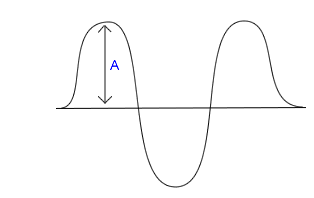
Look at this wave. "A" is which part of a wave?

a)

Crest/Peak

b)

Wave Speed

c)

Resting Point

86.

Which wave has the longest wave length?

a)

top wave

b)

bottom wave

87.

What is transferred from place to place by waves?

a)

energy

b)

water

c)

fish

d)

amplitude

88.

An area of bunched up particles (bottom blue arrow) in a longitudinal wave is an area of ________________ .

a)

rarefaction (low pressure)

b)

compression (high pressure)

c)

amplitude (energy)

89.

_____________ is a measurement of how long or short a wave is. (Point B to Point F or Point D to Point H)

a)

wavelength

b)

amplitude

c)

compression

90.
Which wave has a greater frequency?
a)
A
b)
B
91.
As volume increases, ____ increases.
a)
amplitude
b)
frequency
c)
pitch
d)
resting point
92.
_____?______ materials do not allow light waves to pass through.
a)
Opaque
b)
Transparent
c)
Translucent
93.
Which objects on the table are "Translucent"?
a)
Fish Bowl; Supply Box; Goggles
b)
Pencil; Fish Bowl; Cup
c)
Fish Bowl; Supply Box; Pitcher
94.
Which objects on the table are "Transparent"?
a)
Rock; Pencil
b)
Cup; Goggles
c)
Supply Box; Fish Bowl
95.
This diagram best represents 
a)
reflection
b)
refraction
c)
absorption
d)
diffusion
96.
If you see an object as orange,
a)
it is absorbing orange light and reflecting all other colors. 
b)
it is reflecting all colors. 
c)
it is absorbing all colors. 
d)
it is reflecting orange light and absorbing all other colors. 
97.
When a sound is louder what measurement gets bigger?
a)
Frequency 
b)
Amplitude 
c)
Wavelength 
d)
Crest
98.
If the distance represented by the letter A (the amplitude) were increased, how would it change the sound?
a)
The sound would be higher. 
b)
The sound would be lower. 
c)
The sound would be softer. 
d)
The sound would be louder. 
99.
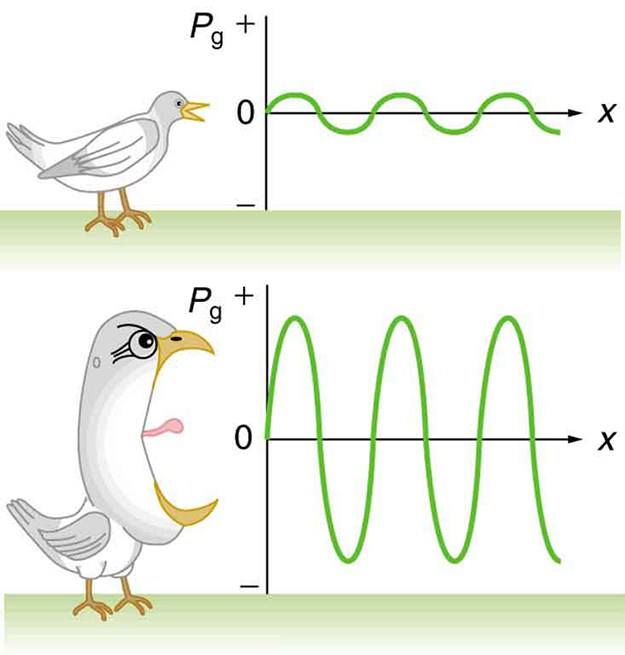
What is changed in the second picture?
a)
Someone is talking louder in picture 2
b)
Someone is talking softer in picture 2
c)
Someone is talking lower pitch in picture 2
d)
Someone is talking higher pitch in picture 2
100.

The picture shows waves being bent as they go through plastic. What type of wave movement is this?

a)

absorption

b)

transmission

c)

reflection

d)

refraction