
 Worksheets
Review Assignment Quizizz Game
Total questions: 100
Worksheet time: 2hrs 45mins
Name
Class
Date
1.

Is this equation balanced?
a)
yes
b)
no
c)
Not enough information
2.

Is this equation balanced?
a)
yes
b)
no
c)
Not enough information
3.
Is the equation balanced?: 2H2O + O2 --> 4MgO + 3Fe
a)
Yes
b)
No
4.
Balance this equation
_Al +_HCl --> _H2 +_AlCl3
_Al +_HCl --> _H2 +_AlCl3
a)
2, 6, 3, 2
b)
it is already balanced
c)
4, 12, 3, 4
d)
2, 1, 4, 5
5.
Balance this equation.
_CH4 + _O2 --> _CO2 + _H2O
_CH4 + _O2 --> _CO2 + _H2O
a)
1,2,1,1
b)
2,1,2,1
c)
1,2,1,2
d)
0,2,0,2
6.
A bar of copper has a mass of 216g and a volume of 24cm3. What is the density of copper?
a)
9g/cm3
b)
.11g/cm3
c)
5184g/cm3
d)
322mL
7.
What is the density of a plastic ball that has a volume of 6cm3 and a mass of 12g?
a)
2g/cm3
b)
.5g/cm3
c)
72g/cm3
d)
4mL
8.
The volume of a candy bar is 55cm3. The mass of the candy bar is 70g. What is the density of the candy bar?
a)
2.3g/cm3
b)
.8g/cm3
c)
3850g/cm3
d)
1.3g/cm3
9.
The volume of a candy bar is 55cm3. The mass of the candy bar is 70g. What is the density of the candy bar?
a)
2.3g/cm3
b)
.8g/cm3
c)
3850g/cm3
d)
1.3g/cm3
10.
Calculate the density of a sugar cube with a mass of 2.9 grams and a length of 1.5 cm, width of 1.5 cm. and height of 1.5 cm.
a)
0.859 g/cc
b)
0.528 g/cc
c)
1.93 g/cc
d)
4.35 gcc
11.
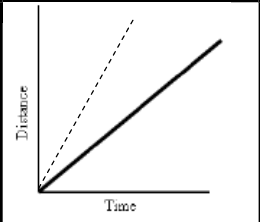
What does this graph represent?
a)
Constant Speed
b)
Acceleration
c)
Not moving
12.

How long did it take this object to travel 10 m?
a)
0 s
b)
10 s
c)
15 s
d)
20 s
13.
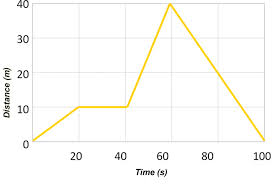
How long did it take this object to travel back to its reference/starting point?
a)
20 s
b)
30 s
c)
60 s
d)
100 s
14.
In a chemical equation, is it true that -
a)
the reactant side and product side can have different numbers of atoms for each element
b)
there can be different elements on the reactant side and the product side
c)
an element or compound must be accompanied by a phase change
d)
the coefficients indicate the number of molecules of each reactant used and the number of molecules of each product made
15.

For an investigation a student poured a blue solution of CuSO4 into a beaker. The student placed a shiny, silver-colored strip of zinc metal in the solution and observed the changes.
The student inferred that a chemical reaction occurred. What evidence supports this inference?
The student inferred that a chemical reaction occurred. What evidence supports this inference?
a)
A dark solid formed on the zinc metal.
b)
The zinc metal remained silver-colored and shiny
The zinc metal remained silver-colored and shiny
c)
The CuSO4 solution turned blue when the zinc metal was added.
d)
None of these
16.

Which of the following equations demonstrates an actual chemical reaction that forms a new substance?
a)
A
b)
B
c)
C
d)
D
17.
The chemical formula for glucose, a simple sugar, is C6H12O6. The formula for ethanol is C2H6O. What accounts for the differences in these compounds?
a)
The elements that make up glucose are different than the elements that make up ethanol
b)
The ratio of the elements is different in ethanol than in glucose
c)
The chemical properties of the elements are different in glucose and ethanol
d)
Glucose has more elements than the ethanol
18.
The reactants are on the left side of the chemical equation.
a)
True
b)
False
19.
If there are two forces going in the same direction how would you find the net force?
a)
Subtract
b)
Add
c)
Neither
d)
Multiply
20.
Find the net force: 15 N to the right, and another 15 newtons to the right.
a)
0 N Right
b)
0 N Left
c)
30 N Left
d)
30 N Right
21.
8 N to the left , and 4 N to the right. Find the net force. Is this balanced
a)
12 N Right No
b)
4 N Left No
c)
12 N Right Yes
d)
4 N Left Yes
22.
What is force?
a)
A push exerted on an object
b)
A push or pull exerted on an object
c)
A pull exerted on an object
d)
Nothing
23.
With unbalanced forces, the object will move in the direction of the _______ force.
a)
larger
b)
smaller
c)
equal
24.
What is the speed of a car that travels 400 m in 20 minutes?
a)
20 miles/hr
b)
20 m/min
c)
800 m/min
d)
200 miles/hr
25.
Velocity is both ____ and _____.
a)
speed , direction
b)
direction, mass
c)
volume, density
d)
direction, magnitude
26.
Acceleration: is the rate of change in ___________.
a)
speed
b)
distance
c)
velocity
d)
displacement
27.

A drag racer accelerated from 0 m/s to 200 m/s in 5 s. What was the acceleration?
a)
0 m/s
b)
40 m/s2
c)
-40 m/s2
d)
40 m/s
28.
Car #1 that traveled 160 kilometers in 5 hours, and Car #2 traveled 140 kilometers in the same time. Which car traveled faster?
a)
Car #1
b)
Car #2
c)
Their speeds are equal.
29.
This organelle creates the energy for the cell
a)
mitochondria
b)
cell membrane
c)
ribosome
d)
endoplasmic reticulum
30.
The ____________ regulates what enters and leaves the cell.
a)
mitochondria
b)
cell membrane
c)
golgi bodies
d)
cytoplasm
31.
The _________ holds the dna for the cell
a)
vacuole
b)
smooth ER
c)
rough ER
d)
nucleus
32.
Jelly-like material that makes up most of the cell
a)
cytoskeleton
b)
cytoplasm
c)
cyclops
d)
cytoliquid
33.
What creates the protein for the cell?
a)
Cytoplasm
b)
Nucleus
c)
Golgi bodies
d)
Ribosomes
34.
Which is the correct formula for:
three hydrogen (H)
one sulfur (S)
four oxygen (O)
three hydrogen (H)
one sulfur (S)
four oxygen (O)
a)
H3SO4
b)
HSO4
c)
H4S3O
d)
H2O
35.
Which of the following is NOT an element?
a)
H2O
b)
H2
c)
O2
d)
Au
36.
How many atoms are there TOTAL in:
H2SO4
H2SO4
a)
6
b)
5
c)
7
d)
3
37.
How many Sodium (Na) are in 6NaCl?
a)
1
b)
12
c)
6
38.
Which of the following is a positively charged subatomic particle found in the nucleus of an atom?
a)
Electron
b)
Proton
c)
Neutron
d)
Quark
39.
What is one cause of air pollution?
a)
litter found on the side of the road
b)
water used as a coolant by power plants
c)
burning fossil fuels
d)
Dropping litter
40.
Depletion of the ozone layer is a cause of air pollution
a)
true
b)
false
41.

How has the atmosphere changed over the last 10,000 years?
a)
Carbon dioxide has increased
b)
Carbon dioxide has decreased
c)
Water vapour has remained at a constant level
d)
Nitrogen has increased
42.

A farmer is using a crop duster to help spray chemicals on his crops to kill insects. The chemicals the farmer uses seeps into the soil and drains into the nearby river. How does this affect the animals that live in the river?
a)
They swim away
b)
They change color
c)
They get sick or die
d)
The chemicals give them more energy
43.
What is an effect of water pollution?
a)
industrial pollution
b)
disruption of food chains
c)
oil spills
d)
acid rain
44.
What law is best described by inertia?
a)
1st
b)
2nd
c)
3rd
45.
Acceleration is due to a force put on an objects mass.
a)
1st
b)
2nd
c)
3rd
46.
Action/Reaction
a)
1st
b)
2nd
c)
3rd
47.
Force exerted between the surfaces of two objects.
a)
Friction
b)
Inertia
c)
Force
d)
Gravity
48.
Objects tendency to resist change
a)
Friction
b)
Inertia
c)
Force
d)
Gravity
49.
A[n] ______________ tide occurs when the sun is at right angles to the line between Earth and the moon.
a)
high
b)
neap
c)
low
d)
spring
50.
A[n] ___________ tide occurs when the sun, Earth, and the moon are nearly in a line.
a)
spring
b)
high
c)
low
d)
neap
51.
A neap tide is a tide with the greatest difference between low and high tides
a)
true
b)
false
52.
What do we call a tide that has largest range; highest high and lowest low?
a)
gravity
b)
wind
c)
spring
d)
neap
53.

What is it called when more than half of the moon is lit on the right side and light is increasing?
a)
Waxing cresent
b)
Waxing gibbous
c)
Waning gibbous
d)
Waning cresent
54.
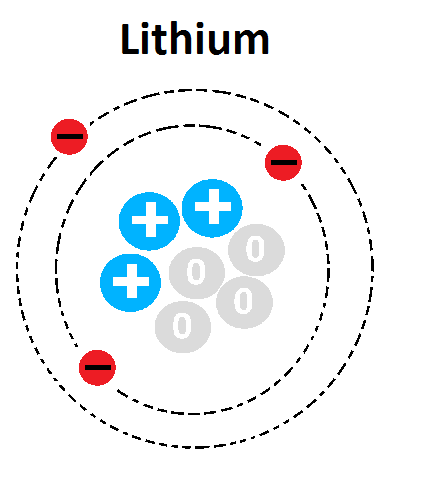
What is the mass number of this atom?
a)
1
b)
3
c)
4
d)
7
55.

What is the atomic number of this atom?
a)
2
b)
4
c)
6
d)
none of the above
56.

How many valence electrons?
a)
2
b)
3
c)
5
d)
10
57.

What's a valence electron?
a)
electrons in the second energy level
b)
electrons in the outermost energy level
c)
the atomic number
d)
electrons in the first level
58.
Which of the following is a positively charged subatomic particle found in the nucleus of an atom?
a)
Electron
b)
Proton
c)
Neutron
d)
Quark
59.
Energy due to motion is ____________ energy.
a)
Potential
b)
Energy
c)
Kinetic
d)
Friction
60.
__________ is stored energy.
a)
Potential
b)
Kinetic
c)
None of the above
d)
All of the above
61.
Gravitational potential energy depends on the ________ and ________ of the object.
a)
Height and mass
b)
Friction and movement
c)
Mass and Movement
d)
Height and Friction
62.
When you stretch a rubber band, you are storing __________ energy.
a)
kinetic
b)
potential
c)
none of the above
d)
all of the above
63.

Which 2 letters have the most kinetic energy
a)
W & Y
b)
X & Z
64.

According to the graph how far does the person travel in the first 5 seconds?
a)
2 m
b)
10 m
c)
0 m
d)
5 m
65.

What is the person doing from 5 seconds to 10 seconds?
a)
Walking
b)
Running
c)
Standing Still
d)
Walking Fast
66.

Which organism do the owl and the weasel compete for in the food web?
a)
Hawk
b)
Spider
c)
Grasshopper
d)
Shrew
67.
A __________ includes all living and non-living things in an environment.
a)
population
b)
niche
c)
abitotic
d)
ecosystem
68.
Which best explains why many kinds of plants and animals can live together in an ecosystem?
a)
The plants and animals are all part of a food chain and depend on each other to live.
b)
Plants and animals are interdependent of one another.
c)
One species may overpopulate, killing all plant life.
d)
Over population of a species results in a biodiversity.
69.
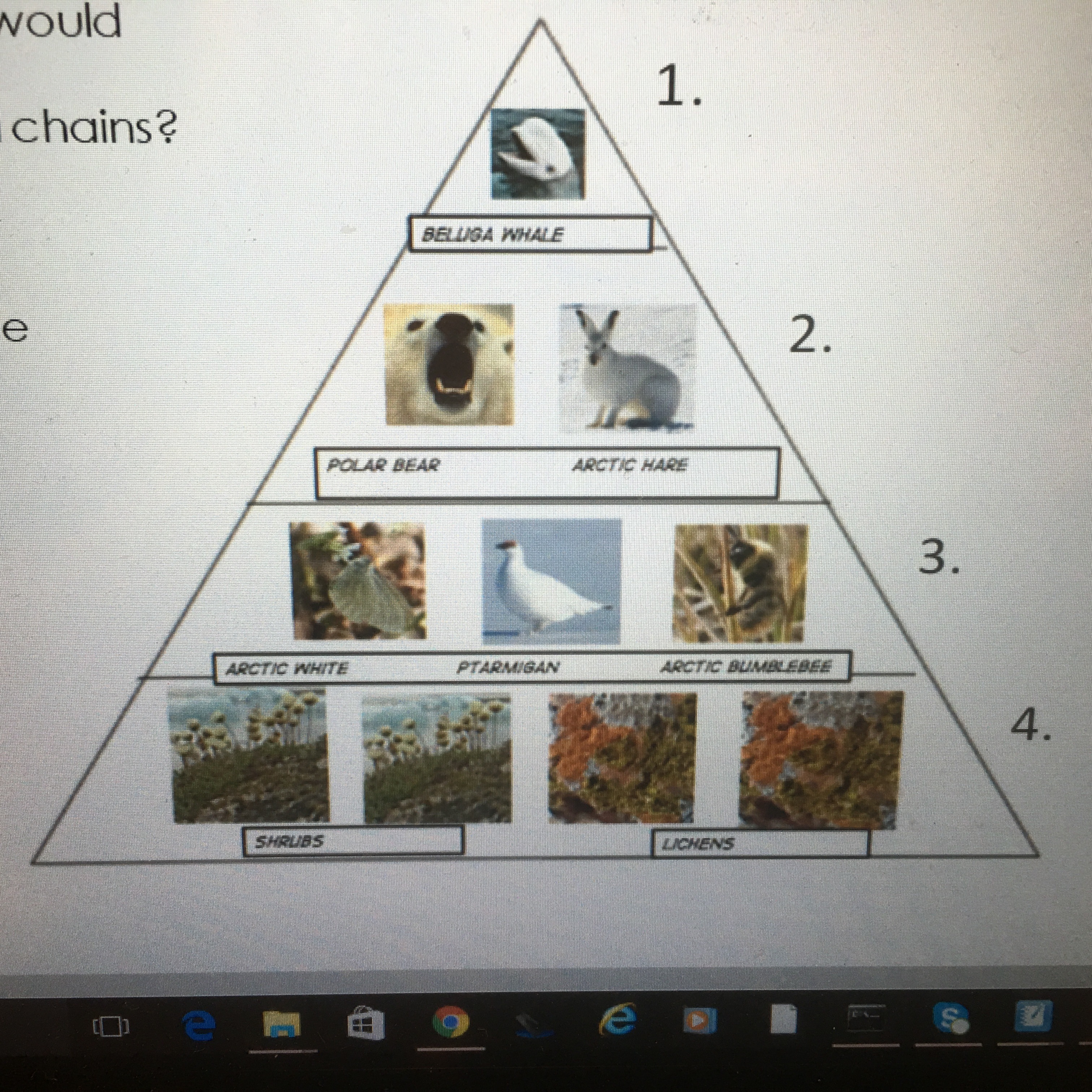
Based on the model, which consumers would receive the greatest amount of energy captured by the producers in their food chains?
a)
Beluga Whale
b)
Polar Bear and Arctic Hare
c)
Ptarmigan and Arctic Bumble
d)
Lichens and Shrubs
70.
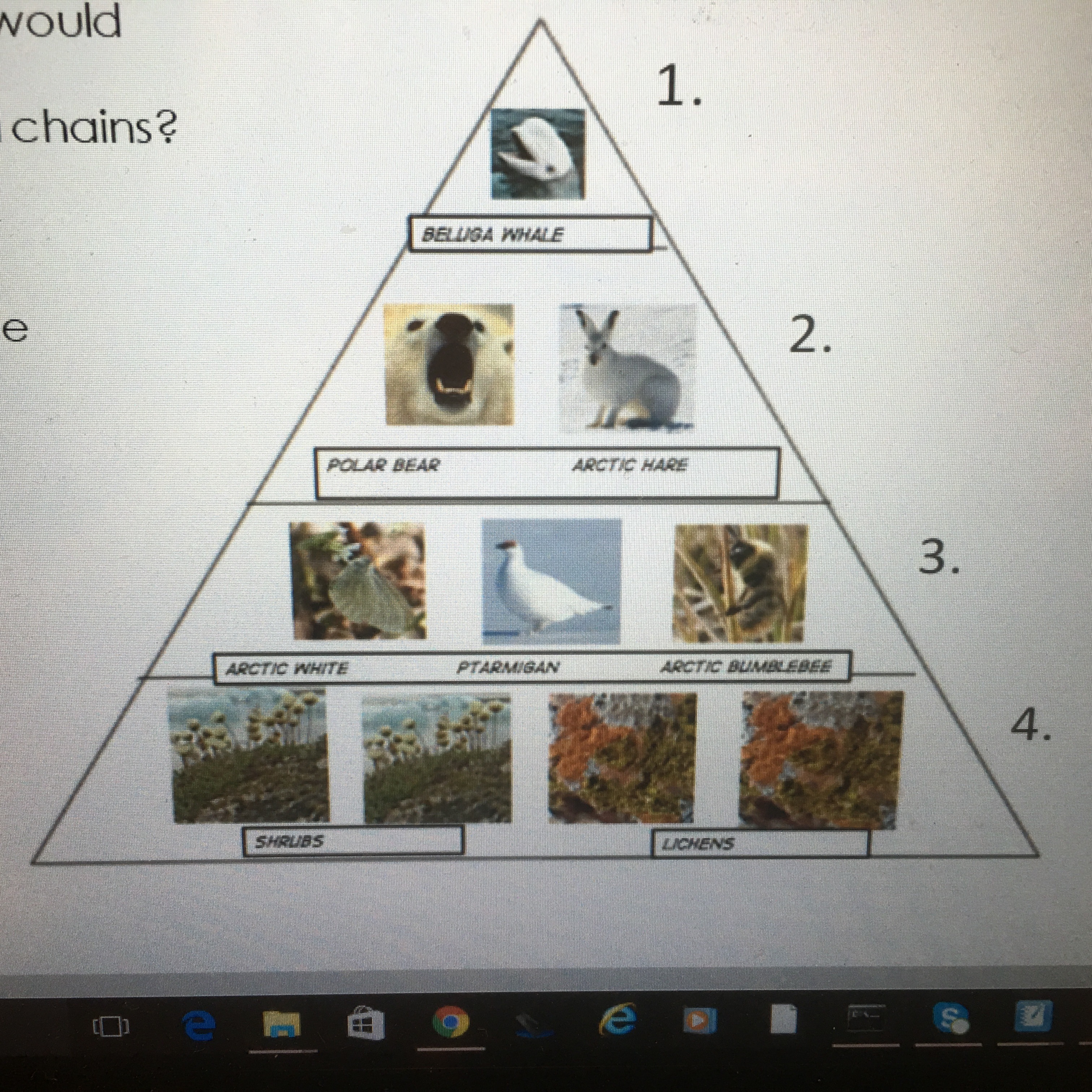
Which trophic level has the greatest amount of energy to use?
a)
Producers
b)
Primary consumers
c)
Secondary consumers
d)
Tertiary consumers
71.
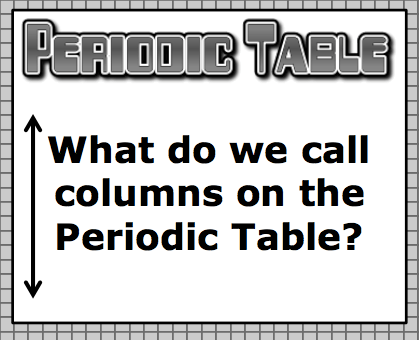
a)
Periods
b)
Groups
72.
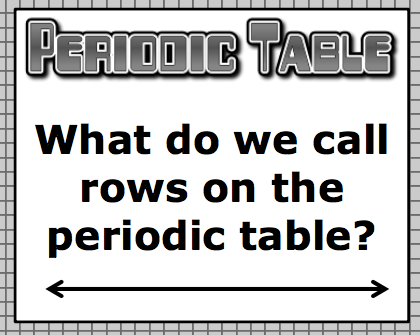
a)
Periods
b)
Groups
73.

a)
energy levels
b)
valence electrons
c)
protons
d)
neutrons
74.
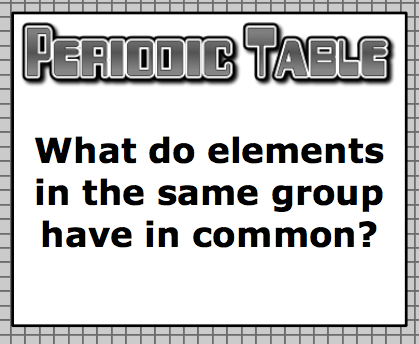
a)
energy levels
b)
valence electrons
c)
protons
d)
neutrons
75.
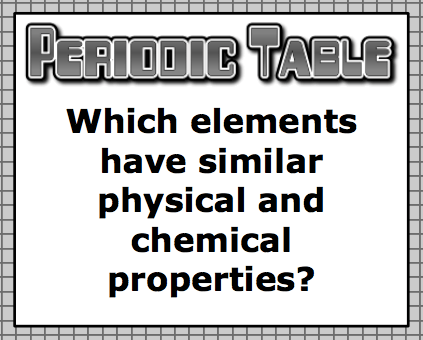
a)
Same group
b)
Same period
76.
The main purpose of the ____________ system is to break food particles into pieces that can be used.
a)
circulatory
b)
respiratory
c)
digestive
d)
skeletal
77.
What is responsible for delivering oxygen and removing carbon dioxide from the body?
a)
cell nucleus
b)
excretory system
c)
nervous tissue
d)
respiratory system
78.
The __________ system directs the body to inner and outer changes.
a)
digestive
b)
circulatory
c)
nervous
d)
skeletal
79.
The circulatory system uses _________ to deliver oxygen to the rest of the body.
a)
blood cells
b)
lungs and nose
c)
blood vessels
d)
brain and spinal cord
80.
When tissues come together, they form ___________.
a)
cells
b)
atoms
c)
organs
d)
systems
81.
The type of plate boundary where two plates come together is a .....
a)
Convergent Boundary
b)
Divergent Boundary
c)
Transform Boundary
d)
Plate Boundary
82.
Which of the following causes Earth's tectonic plates to move?
a)
Energy from the Sun
b)
Magnetic Pole Reversal
c)
Convection currents in the mantle
d)
Faults in Mountain Ranges
83.

What type of plate boundary is this?
a)
Plate
b)
Divergent
c)
Convergent
d)
Transform
84.

What type of event will occur at this boundary?
a)
Earthquake
b)
Volcano Eruption
c)
Tornado
d)
Mountain Building
85.
A divergent boundary occurs when plates ....
a)
Pull apart
b)
Come together
c)
Slide past each other
d)
subducting
86.
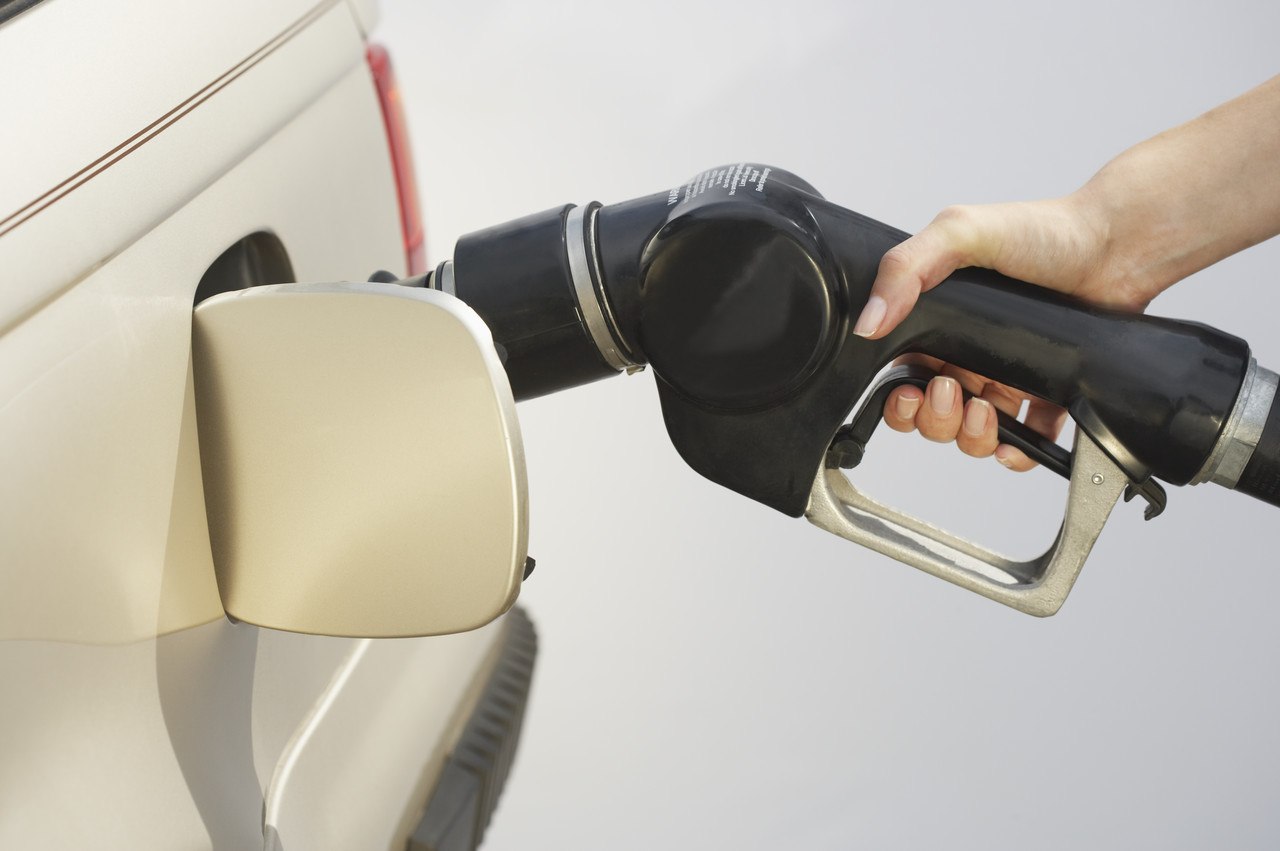
Which energy conversion is taking place when you put gasoline in a car?
a)
thermal -> electrical
b)
mechanical -> electrical
c)
chemical -> mechanical
d)
mechanical -> electromagnetic
87.

Electrical Energy is transferred to _____ Energy.
a)
Thermal
b)
Solar
c)
Electrical
d)
None
88.
Which energy transformation occurs in a toaster?
a)
chemical to electric
b)
electric to thermal
c)
kinetic to chemical
d)
thermal to potential
89.

A battery converts what type of energy to another?
a)
sound to kinetic
b)
light to heat
c)
mechanical to electrical
d)
chemical to electrical
90.
Which items would have this energy transformation: chemical energy -> mechanical energy?
a)
person running
b)
candle burning
c)
windmill turning
d)
playing a violin
91.
The natural chemical or physical processes that breaks down rock on Earth's surface.
a)
weathering
b)
erosion
c)
deposition
d)
jackhammering
92.
The process by which water, ice, wind or gravity moves weathered rock and soil from one place to another.
a)
weathering
b)
erosion
c)
deposition
d)
dumptruck
93.
The process of moving weathered rock and depositing it in another location is called?
a)
weathering
b)
erosion
c)
deposition
94.
Weathering involves the movement of rocks and minerals by agents such as water, wind and gravity.
a)
True
b)
False
95.
The process of carrying away weathered bits of rocks is called
a)
weathering
b)
erosion
c)
deposition
96.
Deposited material at the end of a river is called?
a)
landform
b)
delta
c)
canyon
97.
Glaciers shape and carve away the land beneath them and can drastically reshape the landscape over hundreds or even thousands of years.
a)
True
b)
False
98.
Waves dropping sand on the beach is called?
a)
Weathering
b)
Erosion
c)
Deposition
99.
Weathering and erosion are the same thing.
a)
True
b)
False
100.
Water getting into cracks, freezing, and breaking the rocks or pavement apart is called?
a)
Weathering
b)
Erosion
c)
Deposition
100 %

