
 Worksheets
Carbon-Oxygen Cycle & Metamorphosis
Total questions: 48
Worksheet time: 33mins
Name
Class
Date
1.
Which answer best defines carbon dioxide?
a)
A gas in the atmosphere that animals breathe to survive
b)
a green substance in plant leaves that captures energy fro the sun
c)
The process in which plants use energy fro the sun to make their own food
d)
a gas in the atmosphere that plants use during the process of photosynthesis
2.
Stomata is best defined as
a)
tiny holes in the leaves of a plant that allow gases to enter or leave the plant
b)
a gas in the atmosphere that plants use during the process of photosynthesis
c)
Plant parts that hold a plant in place and takes in water and nutrients
d)
living things
3.
Which answer best defines photosynthesis?
a)
the movement of carbon dioxide and oxygen between organisms and the air
b)
Tiny holes in the leaves of a plant that allow gases to enter or leave the plant
c)
the process in which plants use energy from the sun to make their own food
d)
a gas in the atmosphere that plants use to make food
4.
The carbon dioxide-oxygen cycle is best defined as-
a)
the process in which plants use energy from the sun to make their own food
b)
a green substance in plant leaves that captures energy from the sun
c)
living things
d)
the movement of carbon dioxide and oxygen between organisms and the air
5.
Which answer best defines roots?
a)
a plant part that holds leaves up and moves water and nutrients throughout the plant
b)
plant part that hold a plant in place and take in water and nutrients
c)
a plant part that carries out photosynthesis to make food for the plant
d)
tiny holes in the leaves of a plant that allow gases to enter or leave the plant
6.
Which answer best defines stem?
a)
a plant part that holds leaves up and moves water and nutrients through the plant
b)
plant parts that hold a plant in place and take in water and nutrients
c)
a plant part that carries out photosynthesis to make food for the plant
d)
tiny holes in the leaves of a plant that allow gases to enter or leave the plant
7.
Leaf is best defined as-
a)
a plant part that holds leaves up and moves water and nutrients throughout the plant
b)
plant parts that hold a plant in place and take in water and nutrients
c)
a plant part that carries out photosynthesis to make food for the plant
d)
tiny holes in the leaves of a plant that allow gases to enter or leave the plant
8.
Which answer best defines chlorophyll?
a)
the green substance in plant leaves that captures energy from the sun
b)
living things
c)
a gas in the atmosphere that plants use during the process of photosynthesis
d)
the process in which plants use energy from
9.
What does an "exchange of gases" mean?
a)
It means that gases are apart of everything.
b)
It means that orange juice is an upside down milkshake with a missing tail.
c)
It means that humans and plants trade gases back and forth.
d)
It means that carbon in apart of all living things.
10.
Why is the CO2 and O2 cycle considered to be a cycle?
a)
there is a exchange of gases
b)
the trees use it and trees are apart of all cycles
c)
there is a continuous exchange of gases
11.
If the removal of many plants and trees increase in a forest, what effect could this have on the carbon dioxide and oxygen cycle?
a)
CO2 levels decrease
b)
CO2 levels increase
c)
Nitrogen levels decrease
d)
Oxygen levels increase
12.
The CO2/O cycle is important to animals because it provides
a)
a gas they take in when breathing
b)
chemicals that build bones
c)
energy they need to move
d)
fresh water for their survival
13.
________________ could increase the amount of oxygen in the air.
a)
Building more houses
b)
Burning more oil
c)
Paving more streets
d)
Planting more trees
14.
Animals use oxygen for _____________.
a)
breathing
b)
creating food
c)
making glucose
d)
transpiration
15.
Plants use _____________ to make their own food during photosynthesis.
a)
water
b)
energy from the Sun
c)
CO2
d)
water, energy from Sun, CO2
16.
What causes an increase in the oxygen level in the atmosphere?
a)
Oxygen inhaled by animals.
b)
Oxygen released by animals.
c)
Oxygen released by plants.
d)
Oxygen taken in by animals.
17.
How plants and animals interact in the CO2/O cycle?
a)
Plants release O into the atmosphere which animals inhale. Animals exhale CO2 into the atmosphere which is breath in by plants.
b)
Animals release O into the atmosphere which plants inhale. Plants exhale CO2 into the atmosphere which is breath in by animals.
c)
Plants and animals don't need each other.
d)
Plants and animals take in O and release CO2.
18.
If the Sun stop shinning, plants and animals would not survive because ___________________.
a)
Plants use the Sun's energy and oxygen to make glucose, which animals eat.
b)
Plants use the Sun's energy and CO2 to make glucose, and release O that animals breathe.
c)
Plants use the Sun's energy to make CO2 and release glucose.
d)
Plant use the Sun's energy to make water and release O that animals breathe in.
19.
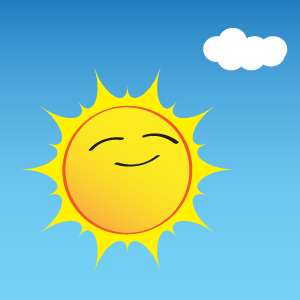
Which type of organism gets its energy directly from the Sun?
a)
producer
b)
consumer
c)
composer
d)
decomposer
20.
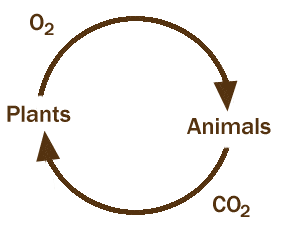
Which statement is true about the carbon dioxide-oxygen cycle?
a)
animals breathe in nitrogen and release oxygen which is used by plants
b)
animals breathe in oxygen and release carbon dioxide which is used by plants
c)
animals breathe in nitrogen and release carbon dioxide which is used by plants
d)
animals breathe in carbon dioxide and release oxygen which is used by plants
21.

Which statement is an example of how plants and animals depend on each other?
a)
animals provide food for plants
b)
animals provide water for plants
c)
animals provide oxygen for plants
d)
animals provide carbon dioxide for plants
22.

If all the trees on Earth were destroyed, what would be the effect on humans?
a)
there would be a lack of food
b)
there would be a lack of oxygen
c)
there would be a lack of fresh water
d)
there would be a lack of carbon dioxide
23.

The class decided to have a terrarium. The teacher says it is important to include both plants and animals. Why is it necessary to include both plants and animals?
a)
plants provide food for the animals and animals provide water for the plants
b)
plants provide water for the animals and animals provide food for the plants
c)
plants provide carbon dioxide for the animals and animals provide oxygen for the plants
d)
plants provide oxygen for animals and the animals provide carbon dioxide for the plants
24.
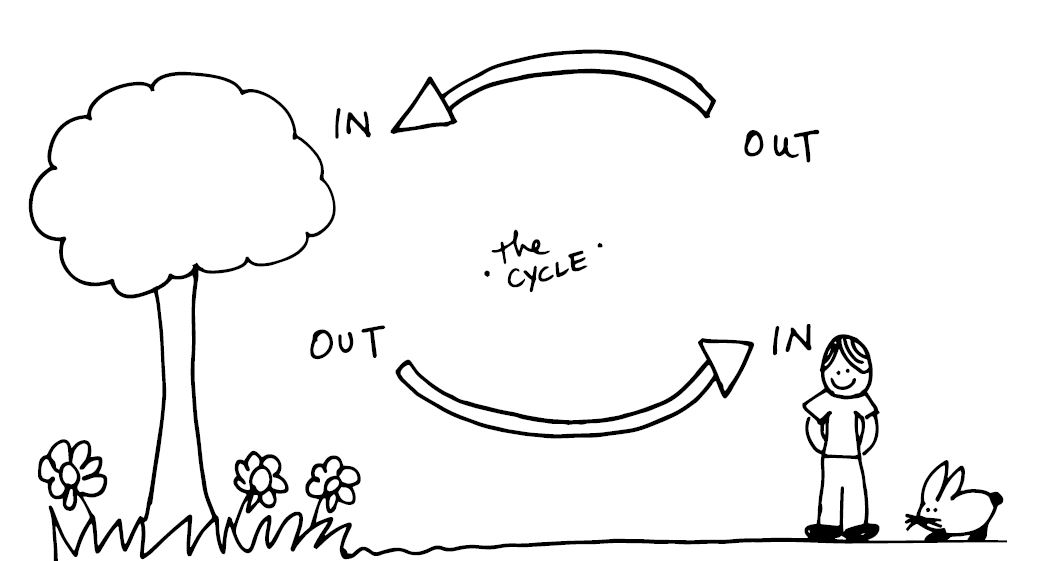
Animals and plants use substances that cycle through the environment. Which substance is needed by plants to survive and is released into the environment by animals?
a)
oxygen
b)
sugar
c)
salt
d)
carbon dioxide
25.

List the correct order of the three stages in an incomplete life cycle.
a)
egg, nymph, adult
b)
adult, nymph, egg
c)
egg, adult, nymph
d)
nymph, egg, adult
26.

How many stages are in an incomplete life cycle?
a)
1
b)
2
c)
3
d)
4
27.

a)
Egg
b)
Caterpillar
c)
Pupa
d)
Adult
28.

Complete or Incomplete Metamorphosis?
a)
Complete because it has 3 stages
b)
Complete because it has 4 stages
c)
Incomplete because it has 3 stages
d)
Incomplete because it has 4 stages
29.

Complete or Incomplete Metamorphosis
a)
Complete because the stages look the same throughout its life
b)
Complete because the stages look different throughout its life
c)
Incomplete because it looks the same throughout its life
d)
Incomplete because it looks different throughout its life
30.

How do you know this insect is undergoing incomplete metamorphosis?
a)
The insect changes color when it becomes an adult.
b)
The first stage of the insects development is as an egg.
c)
The insect undergoes more than four stages in its development.
d)
The insect has similar body parts throughout its development.
31.
In complete metamorphosis which stage doesn't belong?
a)
egg
b)
nymph
c)
larva
d)
adult
32.
In incomplete metamorphosis which stage doesn't belong?
a)
egg
b)
nymph
c)
pupa
d)
adult
33.
Which life cycle has nymphs that resemble the adults?
a)
complete metamorphosis
b)
direct development
c)
indirect development
d)
incomplete metamorphosis
34.
Which 2 stages are in both complete and incomplete metamorphosis?
a)
Egg, larva
b)
Larva, adult
c)
Adult, nymph
d)
Egg, adult
35.
Which stage is worm-like and eats a lot?
a)
Nymph
b)
Egg
c)
Adult
d)
Larva
36.
Which stage of a butterfly life cycle would eat leaves?
a)
Pupa
b)
Egg
c)
Adult
d)
Larva
37.

The diagram below shows the growth of a tree. The diagram represents a
a)
food chain
b)
food supply
c)
life span
d)
life cycle
38.

A picture of a beetle life cycle is shown.
Which letter represents the adult stage of the darkling beetle life cycle?
Which letter represents the adult stage of the darkling beetle life cycle?
a)
A
b)
B
c)
C
d)
D
39.

The diagrams show the life cycle of a frog and of a ladybug.
What do frog and ladybug life cycles have in common? Both frogs and ladybugs spend time as -
What do frog and ladybug life cycles have in common? Both frogs and ladybugs spend time as -
a)
tadpole
b)
pupa
c)
larva
d)
eggs
40.
Incomplete metamorphosis is different than complete metamorphosis because an insect that goes through incomplete metamorphosis –
a)
does not begin as an egg
b)
does not go through the pupa stage
c)
is always born under the water
d)
will not have wings when it is an adult
41.
A new species of insect is discovered. What observation could be made to determine if this new insect undergoes complete or incomplete metamorphosis? Only if the insect undergoes complete metamorphosis, will scientists observe -
a)
an adult with wings
b)
offspring that resemble adults
c)
a pupa, or resting stage
d)
a female laying eggs
42.

A dragonfly’s life cycle is shown here.
In a dragonfly’s life cycle, the stage that flies around is also the stage that
In a dragonfly’s life cycle, the stage that flies around is also the stage that
a)
lives underwater
b)
lays eggs
c)
becomes a nymph
d)
eats plants
43.

Complete or Incomplete?
a)
Complete
b)
Incomplete
44.

Complete or Incomplete?
a)
Complete
b)
Incomplete
45.

Complete or Incomplete?
a)
Complete
b)
Incomplete
46.

Complete or Incomplete?
a)
Complete
b)
Incomplete
47.

What is the correct order for the development of a butterfly?
a)
X Z Y W
b)
Z Y X W
c)
W Z X Y
d)
Y Z X W
48.

Which letter shows the larva stage in the butterfly's life cycle?
a)
W
b)
Z
c)
X
d)
Y
100 %

