wayground logo

Free Printable Worksheets

NEW

Font size

S
M
L
XL
Worksheets

Biological Taxonomy

Total questions: 35

Worksheet time: 26mins

Name
Class
Date
1.
A tool used by a taxonomist to identify an unknown organism is known as a __________.
a)
dichotomous key
b)
binomial nomenclature
c)
scientific name
d)
binomial key
2.
The science of classifying and naming organisms is ______________.
a)
evolution
b)
taxonomy
c)
grouping
d)
scientific names
3.
An illustration and a dichotomous key are given. What is the correct classification for this organism?
a)
Class Insecta
b)
Order Amblygygi
c)
Order Araneae
d)
Order Scorpiones
4.
Who first proposed binomial nomenclature as a way of classifying organisms?
a)
Carolus Linnaeus
b)
Aristotle
c)
Charles Darwin
d)
Louis Pasteur
5.
Smallest taxonomic group with many similar characteristics...
a)
domain
b)
kingdom
c)
species
d)
class
6.
A student discovers an arachnid with a segmented abdomen, long legs, and a tail with no stinger. The student uses the dichotomous key below to identify it. Which arachnid has the student found?
a)
Whip Scorpion
b)
Wind Scorpion
c)
Daddy long legs
d)
Scorpion
7.
Which organism in the table shown is most closely related to the common dolphin?
a)
human
b)
killer whale
c)
giant kelp
d)
bat star
8.
Which kingdom contains members who are prokaryotic?
a)
Archaebacteria and Eubacteria
b)
Archaebacteria and Protista
c)
Eubacteria and Animalia
d)
Eubacteria  and Fungi
9.
Common bacteria are found in this kingdom
a)
Archaebacteria
b)
Eubacteria
c)
Protista
d)
Fungi
10.
Members of this kingdom live in unusual conditions such as deep ocean trenches or volcanoes
a)
Eubacteria
b)
Protista
c)
Fungi
d)
Archaebacteria
11.
Members of this kingdom never have a cell wall
a)
Animalia
b)
Plantae
c)
Archaebacteria
d)
Protista
12.
Members  of this kingdom are multicellular and heterotrophic
a)
Plantae
b)
Protista
c)
Animalia
d)
Achaebacteria
13.
Members of this kingdom are multicellular and autotrophic
a)
Plantae
b)
Animalia
c)
Protista
d)
Fungi
14.
Algae, seaweeds, and protozoans belong to kingdom:
a)
Protista
b)
Animalia
c)
Plantae
d)
Fungi
15.
The scientific name for an organism is made from the:
a)
class and family name
b)
genus and species name
c)
domain and kingdom name
d)
kingdom and phylum name
16.

Which two organisms would be able to reproduce and produce fertile offspring?

a)

2 organisms in the same class

b)

2 organisms in the same family

c)

2 organisms in the same genus

d)

2 organisms in the same species

17.
Term given to describe the 2 name naming system is:
a)
dichotmous key
b)
binomial nomenclature
c)
2 scientific names
d)
binomial key
18.
What is the correct way of writing our scientific name?
a)
homosapiens
b)
homo sapiens
c)
Homo Sapiens
d)
Homo sapiens
19.
An organism whose cell contains a nucleus
a)
Prokaryote
b)
Eukaryote
20.
A Prokaryote is
a)
Cell with a nucleus
b)
Cell without a nucleus
c)
One cell
d)
Many cells
21.

What are the three domains?

a)

eukarya, archaea, and eubacteria

b)

plantae, archaea, and eubacteria

c)

animalia, eukarya, and archaea

d)

protista, eubacteria, and eukarya

22.

What level of classification is the broadest?

a)

domain

b)

kingdom

c)

species

d)

family

23.

This kingdom are multicellular, eukaryotes. All are autotrophs (producers), but in a few rare cases, some are also heterotrophs . They can reproduce sexually or asexually.

a)

animals

b)

plants

c)

fungi

d)

archaea

24.

This kingdom are eukaryotes. Many are multicellular, but some are unicellular. All are heterotrophs. Most feed on dead or decaying organisms. They are found almost everywhere on land, but some live in water. They can reproduce sexually or asexually.

a)

fungi

b)

protista

c)

animal

d)

archaea

25.

What are the four kingdoms under the Eukarya domain?

a)

protista, animal, plant, fungi

b)

archaea, plant, animal, fungi

c)

eubacteria, plant animal, protista

d)

animal, plant, fungi, archaea

26.

John saw this under a microscope. What domain would this organism most likely belong?

a)

Archaea

b)

Eubacteria

c)

Eukarya

d)

Fungi

27.

Humans would be classified under what domain?

a)

Eubacteria

b)

Archaea

c)

Eukarya

d)

Animal

28.
Are living things biotic or abiotic?
a)
Biotic
b)
Abiotic
29.
The 8 levels of classification, most broad to most specific.
a)
Domain, Genus, Family, Order, Class, Phylum, Kingdom, Species
b)
Domain, Species, Kingdom, Genus, Phylum, Family, Class, Order
c)
Domain, Kingdom, Phylum, Class, Order, Family, Genus, Species
d)
Order, Kingdom, Species, Domain, Phylum, Family, Class, Genus
30.
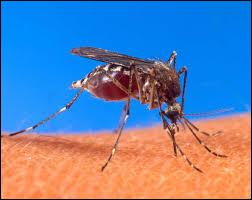
Mosquito  belongs to what kingdom?
a)
Animal Kingdom
b)
Plant Kingdom
c)
Fungi Kingdom
d)
Protista Kingdom
31.
Which organisms are most closely related?
a)
Equus caballas (Horse) & Equus burchellii (Zebra)
b)
Cyanea artica (Jellyfish) &
Ctenodiscus crispatus (Mud Starfish)
c)
Naja naja (cobra) & Glycine max (soya bean)
d)
Ophiocomina nigra (black brittle star) & Brassica nigra (black mustard)
32.
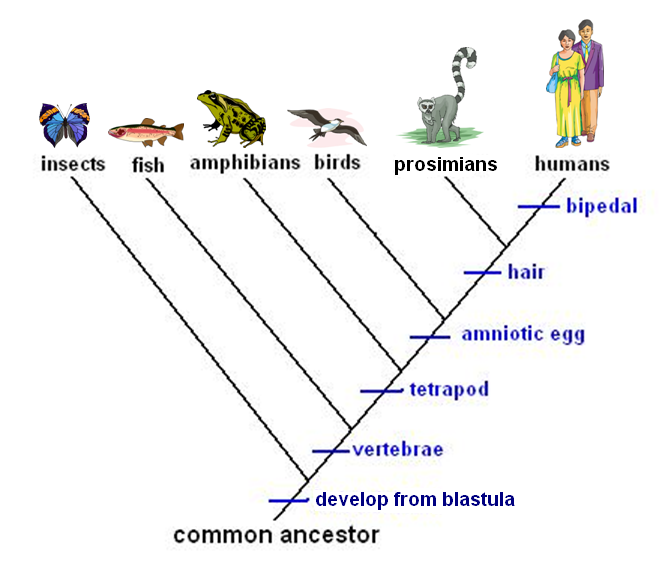
Which organisms pictured on the cladogram have hair?
a)
prosimians only
b)
prosimians and humans
c)
humans only
d)
prosimians and birds
33.
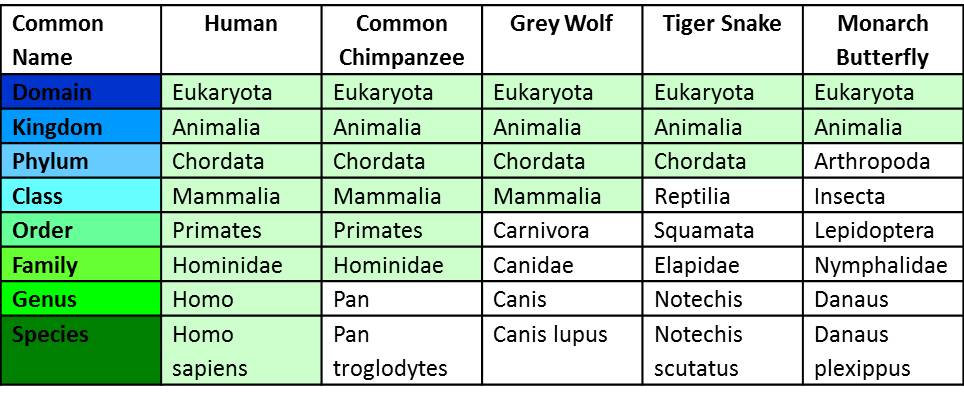
Which organism in the table is least closely related to the chimpanzee?
a)
human
b)
grey wolf
c)
tiger snake
d)
monarch butterfly
34.

Which 2 organisms would be able to reproduce and produce fertile offspring?

a)

2 organisms in the same class

b)

2 organisms in the same family

c)

2 organisms in the same genus

d)

2 organisms in the same species

35.

This organism is found in pond water. It has a nucleus, is microscopic, unicellular and can perform photosynthesis. What kingdom does it belong in?

a)

protista

b)

eubacteria

c)

archaebacteria

d)

plantae