

wayground logo

Free Printable Worksheets

NEW

Font size

S
M
L
XL
Worksheets

Earth's Materials (Section 1) Pre-Assessment

Total questions: 25

Worksheet time: 25mins

Name
Class
Date
1.

What can help you to identify where an igneous rock was formed?

a)

size

b)

mass

c)

volume

d)

grain size

2.

What rock forms when melted rock cools and hardens either inside the Earth or on the Earth's surface?

a)

metamorphic

b)

igneous

c)

sedimentary

d)

foliated

e)

clastic

3.

What type of rock forms from the cementation and compaction of deposited particles close to or on earth's surface?

a)

Sedimentary

b)

Metamorphic

c)

Igneous

d)

Intrusive

4.

Which box is more dense?

a)

Box A

b)

Box B

c)

both have the same density

d)

it can't be determined from the picture
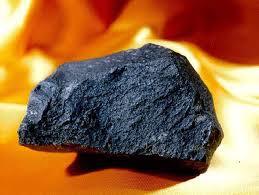
5.

This rock was found near the mouth of a volcano. What type of rock is this?

a)

Sedimentary

b)

Igneous

c)

Metamorphic

d)

Clastic

6.
The process in which dissolved minerals crystallize and glue sediment together.
a)
compaction
b)
deposition
c)
organic rock
d)
cementation
7.

The process when rocks break into smaller pieces due to exposure to natural elements is called

a)

Erosion

b)

Weathering

c)

Lithification

d)

Deposition

8.
Which of the following properties does the Mohs scale measure?
a)
Luster
b)
Hardness
c)
Density
d)
Streak
9.
The mineral in the picture has a ____________ luster.
a)
Nonmetallic
b)
Metallic
c)
Pearly
d)
Earthy
10.

___________ is the color of powdered mineral.

a)

Luster

b)

Streak

c)

Fracture

d)

Hardness

11.

__________ is if a mineral breaks apart in a jagged or rough layer.

a)

cleavage

b)

luster

c)

fracture

d)

inorganic

12.
The _____ is the thinnest layer of the earth. 
a)
Inner Core
b)
Crust
c)
Mantle
d)
Outer Core
13.
Intrusive rock derives from________.
a)
Above ground 
b)
Below ground 
c)
Under water 
d)
Neither 
14.
Which mineral has a Moh's value of 10?
a)
Talc 
b)
Quartz
c)
Diamond 
d)
Calcite
15.
_________________ is the process that involves the movement of soil and rocks.
a)
Weathering 
b)
Erosion 
c)
Deposition 
d)
Waves 
16.
Most important mechanical weathering agent is ___________.
a)
Sun 
b)
Water 
c)
Sand
d)
Rocks
17.
Although cement, brick, steel, and glass all come from substances found in Earth’s crust, they are not classified as minerals because  
a)
They are organic
b)
They are not naturally occurring 
c)
They are too hard
d)
They have many uses
18.
What does inorganic mean?
a)
Something that is living
b)
Something that is dead, but was once living
c)
Something that was never living
d)
Something that was once dead and is now alive
19.
A mineral breaks into pieces like the one shown in the picture. How would you describe this mineral's breakage?
a)
Fracture
b)
Cleavage
c)
Glassy
d)
Waxy
20.
What is the relationship between a rock and a mineral?
a)
Rocks are made up of minerals.
b)
Minerals are made up of rocks.
c)
Rocks are on the Earth's surface. Minerals are found underground.
d)
Rocks and minerals are different names for the same thing.
21.
A naturally formed, inorganic solid with a crystalline structure is known as what? 
a)
A Rock
b)
A Mineral
c)
A Non-Silicate Mineral
d)
A Foliated Metamorphic Rock
22.
Wind blowing sediment through the air is an example of what?
a)
Weathering
b)
Erosion
c)
Deposition
d)
Compaction
23.
The process of sediments "settling" out of wind or water is known as what?
a)
erosion
b)
deposition
c)
compaction
d)
cementation
24.
Which of the words below describe mud, sand, and tiny bits of rocks that cement together to form a type of rock?
a)
concrete
b)
magma
c)
metamorphs
d)
sediments
25.

Once magma reaches the earth's surface it is called.....

a)

Silica

b)

Deposition

c)

Lava

d)

Sediment
