
 Worksheets
Ch 20 Sun Earth Moon
Total questions: 83
Worksheet time: 53mins
Name
Class
Date
1.
the star at the center of the Solar System that supplies heat and light to earth; its enormous gravity keep the Solar System in orbit.
a)
satellite
b)
sun
c)
craters
d)
moon
2.
a natural force that causes two objects to pull toward each other on their mass and the distance between them.
a)
gravity
b)
orbit
c)
atmosphere
d)
axis
3.
the path one object takes as it revolves (moves) around another object.
a)
gravity
b)
orbit
c)
rotate
d)
axis
4.
a natural satellite that orbits a planet.
a)
sun
b)
atmosphere
c)
moon
d)
craters
5.
to spin on an axis
a)
orbit
b)
rotate
c)
axis
d)
atmosphere
6.
a)
orbit
b)
rotate
c)
gravity
d)
axis
7.
As the Moon's phase changes from first quarter to last quarter, the visible portion of the Moon as observed from Earth will
a)
decrease, only
b)
increase, only
c)
decrease, then increase
d)
increase, then decrease
8.
The time required for the Moon to complete one cycle of phases is about one
a)
day
b)
week
c)
month
d)
year
9.
The same side of the Moon always faces Earth because the
a)
Moon's period of rotation is longer than its period of revolution around the Earth
b)
Moon's period of rotation is shorter than its period of revolution around Earth
c)
Moon rotates once as it completes one revolution around Earth
d)
Moon does not rotate as it completes one revolution around Earth
10.
The length of an Earth day is determined by the time required for approximately one
a)
Earth rotation
b)
Earth revolution
c)
Sun rotation
d)
Sun revolution
11.
Which motion of a solar system body takes the least amount of time?
a)
Earth completing one rotation on its axis
b)
Earth completing one revolution around the sun.
c)
The moon completing one revolution around Earth
d)
A comet completing one orbit around the Sun
12.
What is the main cause of Earth's seasons?
a)
The Earth's tilt on its axis
b)
The Earth's tides
c)
The moon's revolution around the Earth
d)
The gravity between the moon and the Earth
13.
How long does Earth take to complete one orbit around the Sun?
a)
1 day
b)
1 month
c)
1 year
d)
1 decade
14.
Dark-colored, relatively flat regions of the Moon's surface that were formed when interior lava filled large basins are called _______.
a)
craters
b)
volcanoes
c)
maria
d)
sedimentary rocks
15.
The Earth is tilted at a ________ angle.
a)
10.5 degree
b)
90 degree
c)
23.5 degree
d)
0 degree
16.
Which moon phases correspond with a Spring Tide?
a)
Full and New Moon
b)
First and Last Quarter
c)
Waning Gibbous and Waning Crescent
d)
Waxing Gibbous and Waxing Crescent
17.
Which describes Earth's orbit around the Sun?
a)
a circle
b)
an ellipse
c)
an eclipse
d)
a sphere
18.
A _______ occurs when the Moon moves directly between the Sun and Earth and casts a shadow on Earth.
a)
lunar eclipse
b)
waning gibbous
c)
waxing gibbous
d)
solar eclipse
19.
A __________ occurs when the Earth moves directly between the Sun and Moon and shadow on the Moon.
a)
lunar eclipse
b)
waning gibbous
c)
waxing gibbous
d)
solar eclipse
20.
The phase of the Moon that immediately precedes the first quarter moon is the ____________.
a)
waxing crescent
b)
first quarter
c)
waning crescent
d)
third quarter
21.
When all of the Moon's surface that faces Earth is dark, there is a _____
a)
full moon
b)
new moon
c)
first quarter
d)
waning gibbous
22.
More of the illuminated surface of the moon is facing Earth at the
a)
waning gibbous
b)
third quarter
c)
new moon
d)
waxing crescent
23.
What two moon phases correspond with Neap Tides?
a)
New and Full Moon
b)
Waning Gibbous and Waning Crescent
c)
First and Third (Last) Quarter
d)
Waxing Crescent and Waxing Gibbous
24.
A solar eclipse occurs during what moon phase.
a)
New Moon
b)
Waning Crescent
c)
First Quarter
d)
Waxing Crescent
25.

This is a diagram of . . .
a)
a solar eclipse
b)
a lunar eclipse
c)
the sun, Earth and Mars
d)
santa going down the chimney
26.

This is a diagram of . . .
a)
The sun, Earth and Moon and their orbital path and revolution direction
b)
The sun, Earth and moon with their orbital paths in reverse.
c)
our solar system
d)
Santa's plan for his sleigh ride on Christmas Eve
27.

This is a diagram of a . . .
a)
our solar system
b)
Lunar Eclipse
c)
Solar Eclipse
d)
a flashlight shining from the Earth to the Sun
28.

The follow is a diagram of . . .
a)
The Earth, high tide, the moon
b)
The Earth, low tide, the moon
c)
The Earth, the moon, and sun during low tide
d)
The location of the North Pole
29.

How often does a neap time occur?
a)
twice a day
b)
about twice a month during the first quarter and last quarter moons
c)
when Santa Claus is coming to town
d)
once in a blue moon
30.
How long does it take for Earth to orbit the Sun?
a)
24 hours
b)
365 days
c)
29 days
31.
How long is the day and night cycle of Earth?
a)
12 hours
b)
29 hours
c)
24 hours
32.
A solar eclipse only happens during a ________ moon.
a)
New
b)
Cresent
c)
Gibbous
d)
Full
33.
Which of the following is not true about a total solar eclipse?
a)
It can be viewed once a year from every spot on earth
b)
It is dangerous to look at without the proper device
c)
When it happens, the moon blocks all of the sun except the corona
d)
You must be within the moon's umbra to see it
34.
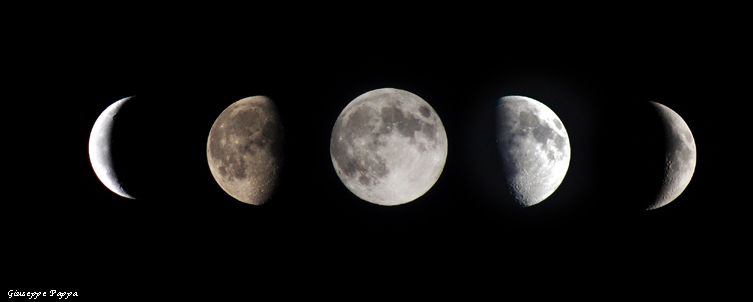
A solar eclipse only occurs during which moon phase?
a)
1st Quarter
b)
New Moon
c)
Full Moon
d)
3rd Quarter
35.
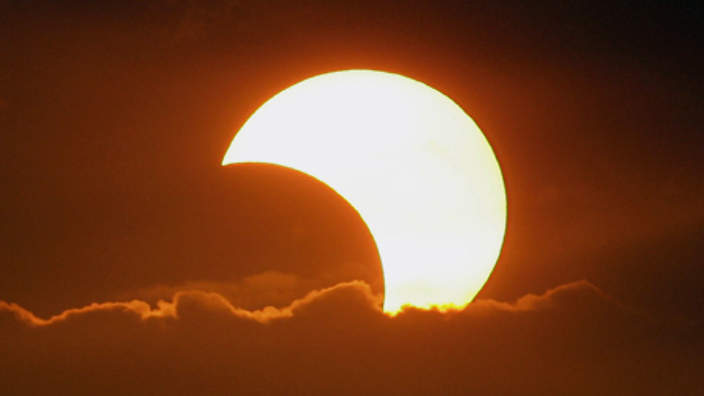
This image is an example of
a)
Lunar Eclipse
b)
Full Moon
c)
New Moon
d)
Solar Eclipse
36.
In order to have an eclipse, the Moon, Sun and Earth have to be?
a)
Below each other
b)
Above each other
c)
In alignment
37.
Which type of eclipse occurs when the Moon comes directly between Earth and the Sun?
a)
Lunar eclipse
b)
Solar eclipse
38.

What is the darkest inner part of the shadow cone called, where a total eclipse can be viewed.
a)
Total
b)
Umbra
c)
Penumbra
39.

a)
solar eclipse
b)
lunar eclipse
40.
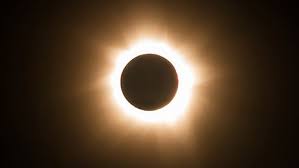
During a solar eclipse...
a)
The sun is blocked by the moon
b)
The Earth is blocked moon
c)
The moon is blocked by the sun
d)
You are blocked
41.
Why do the Sun and Moon appear to be the same size in the sky?
a)
The Sun is 400 times bigger, but the Moon is 100 times closer.
b)
The Sun is 100 times bigger, but the Moon is 400 times closer.
c)
The Sun is 400 times bigger, but the Moon is 400 times closer.
d)
The Moon is 400 times bigger, but the Sun is 400 times closer.
42.
An eclipse in space is when....
a)
one object passes through the shadow of another object.
b)
two shadows collide.
c)
the moon is in the waxing crescent phase.
d)
the Sun and Moon are side by side.
43.
What is the order during a lunar eclipse
a)
sun, moon, earth
b)
sun, earth, moon
44.
When Earth moves into the moon’s shadow, a solar eclipse takes place. Which phase represents the appearance of the moon during a solar eclipse?
a)
full moon
b)
new moon
c)
third quarter
d)
waning gibbous
45.
When does a lunar eclipse occur?
a)
At night
b)
When the moon's shadow is on the earth
c)
when the moon comes between the sun and earth
d)
During the day
46.
A lunar eclipse only happens during a ________ moon.
a)
New
b)
Cresent
c)
Gibbous
d)
Full
47.

In thinking about a solar eclipse, what does the ball in the diagram represent?
a)
the Earth
b)
the Moon
c)
the Sun
48.

According to the diagram, what does the light shining on the ball create?
a)
Shadow
b)
Moon
c)
Earth
d)
Sun
49.

How many parts does the shadow have?
a)
one
b)
two
c)
three
d)
four
50.

What is the central, darker part of a shadow called?
a)
the umbra
b)
the penumbra
51.

In thinking about a solar eclipse, what does the light source in the diagram represent?
a)
the Earth
b)
the Moon
c)
the Sun
52.

What must occur for an solar eclipse to occur?
a)
Sun-Earth-Moon in line
b)
Sun-Moon-Earth in line
53.
A lunar eclipse occurs when the Moon casts a shadow on Earth.
a)
True
b)
False
54.
You would see a partial solar eclipse if you were within the Moon’s penumbra.
a)
True
b)
False
55.
The order of a lunar eclipse is..
a)
Sun-Earth-Moon
b)
Earth-Sun-Moon
c)
Moon-Sun- Earth
d)
Earth-Moon-Sun
56.
You would see a partial solar eclipse if you were within the Moon’s penumbra.
a)
True
b)
False
57.

We do NOT have a solar or lunar eclipse each month because...
a)
The tilt of the moon's orbit is at 5 degrees
b)
The moon is too small
c)
The moon's orbital distance changes
d)
All choices
58.
The moon probably formed when...
a)
A piece of the Earth broke off due to it's fast rotation
b)
A Mars-sized object rammed into the Earth
c)
Earth captured the moon gravitationally as it attempted to pass by.
d)
the molten bubble of the Earth budded.
59.
A[n] ______________ tide occurs when the sun is at right angles to the line between Earth and the moon.
a)
high
b)
neap
c)
low
d)
spring
60.
Differences in the moon's and sun's pull on different sides of the Earth cause _________.
a)
gravity
b)
lunar phases
c)
tides
d)
dabbing
61.
A[n] ___________ tide occurs when the sun, Earth, and the moon are nearly in a line.
a)
spring
b)
high
c)
low
d)
neap
62.
The bulge of water on the side of the Earth closest to the moon produces ___________.
a)
high tide
b)
low tide
c)
neap tide
d)
spring tide
63.
Tides are caused mainly by the differences in how much gravity from the moon and the sun pulls on different parts of the Earth.
a)
True
b)
False
64.

Which body has the greater effect on Earth's tides?
a)
Sun
b)
Saturn
c)
Moon
d)
Venus
65.

What type of tides would this arrangement of earth-moon-sun create?
a)
neap tide
b)
spring tide
c)
new moon tide
d)
full moon tide
66.

Wha type of tide would this arrangement of earth-moon-sun create?
a)
full moon tide
b)
new moon tide
c)
neap tide
d)
spring tide
67.

When the visible (lit) portion of the moon is increasing, the moon is:
a)
waning
b)
full
c)
waxing
d)
new
68.

When the Earth is between the moon and sun, it is most likely a:
a)
new moon
b)
full moon
c)
waxing crescent
d)
waxing gibbous
69.

Approximately how much time passes between the new moon and full moon?
a)
one month
b)
two weeks
c)
3 days
d)
24 hours
70.
What causes the moon's phases
a)
Where you are standing on Earth
b)
the amt of sunlight reflected onto the moon from the sun
c)
The tilt of Earth
d)
how fast the moon is moving
71.
Mrs. Smith says "the moon looks larger than the stars!" What explains this?
a)
The moons soaks up the star's light
b)
The moon is larger than Earth
c)
The moon is larger than stars
d)
the moon is closer to Earth than stars
72.

The Moon orbits Earth in a ________________ direction
a)
clockwise
b)
counterclockwise
c)
upwards
d)
downwards
73.
Define Waxing
a)
Moon is increasing and light part appears to be growing
b)
Completely illuminated
c)
dark side is facing earth
d)
Moon is decreasing and light part appears to be shrinking
74.
Define Gibbous
a)
Less than half of moon visible
b)
More than half of moon visible
c)
All of moon visible
d)
None of moon visible
75.
Define Full Moon
a)
None of moon is visible
b)
Half moon phase is visible
c)
Complete moon face is visible
d)
Less Than half of moon is visible
76.
Define New Moon
a)
None of moon is visible from Earth
b)
All of moon visible from Earth
c)
Moon is 1/2 visible from Earth
d)
Moon is more than Half Visible from Earth
77.
Define Quarter Moon
a)
None of moon visible
b)
Less than Half the moon is visible
c)
More than half of moon is visible
d)
Half of the moon is visible
78.

Name the moon phase
a)
Waxing Gibbous
b)
Waxing Crescent
c)
Waning Crescent
d)
Waning Gibbous
79.

Name the moon phase
a)
Waning Crescent
b)
Waxing Crescent
c)
Waning Gibbous
d)
Waxing Gibbous
80.
The phase of the moon that occurs between the sun and Earth
a)
Full moon
b)
Waxing crescent
c)
Waning Crescent
d)
New Moon
81.
The 1st Quarter moon is lit on the:
a)
Left Side
b)
Right Side
82.

When only a small part of the moon is visible, it is probably in what phase?
a)
waxing or waning crescent
b)
first quarter
c)
new moon phase
d)
waxing or waning gibbous phase
83.
What is the correct order of the moon phases?
a)
new, full, 1st quarter, 3rd quarter
b)
new moon, 1st quarter, full moon, 3rd quarter
c)
1st quarter, 3rd quarter, new moon, full moon
d)
new, 1st quarter, 3rd quarter, full
100 %

