
 Worksheets
Climate and Climate Change
Total questions: 60
Worksheet time: 44mins
Which BEST describes why latitudes closest to the equator have warmer climates?
they are at lower elevations
they receive more solar energy
they are nearer to ocean currents
they get more winds that carry energy in the form of heat
What are the weather conditions in an area over a long period of time?
climate
temperature
elevation
precipitation
Which is NOT a factor that affects climate?
altitude
latitude
lakes and oceans
living organisms, other than humans
Which is a period of drier weather than normal?
drought
equinox
monsoon
upswelling
Which provides clues to the climate of the distant past?
rocks along ocean coastlines
air in caves and deep holes
water samples from the ocean holes
air pockets in ice caps

Why is the predicted change in human population a concern for climate change?
fewer resources will be needed as this change occurs
Earth cools as resources are used
greenhouse gases will be depleted as resources are used more
more greenhouse gases will be added to atmosphere as more resources are used
Climates are classified by ____.
plants and animals
altitude and latitude
bodies of water and ocean currents
temperature and precipitation


Which of the following is NOT a greenhouse gas?
Carbon dioxide
Methane
Water vapour
Nitrogen
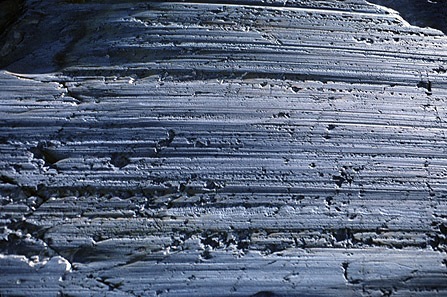
_____ are parallel scratch marks on bedrock.
Plucking
Abrasion
Straitions
Till

_____ are are materials deposited at the bottom or along the sides of glaciers.
Eskers
Till
Erratics
Moraines
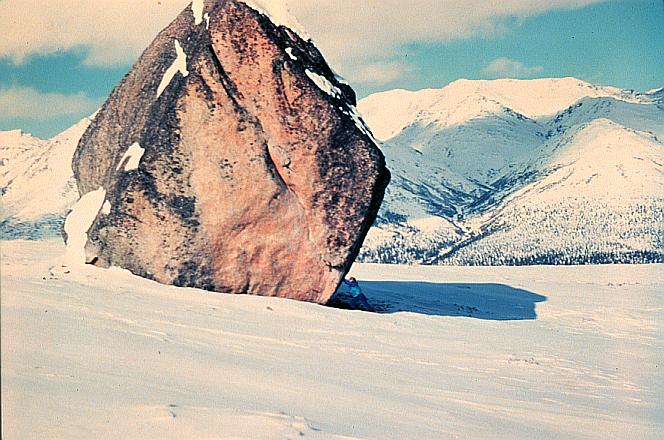
This force causes the movement of glaciers.
pressure
ice age
gravity
firn
What is the Laurentide ice sheet?
a lake that freezes early each year
an expanding glacier
a huge ice sheet that once covered all of Canada and the northern United States
a huge ice sheet that is beginning to cover Canada
Many of the world's glaciers have receded or vanished completely. Why?
Every 15 years, sunspots block a percentage of the light.
Data shows that average global temperatures are steadily rising.
Because of the Milankovitch cycles, our Earth is now closer to the Sun than it has ever been.
Glaciers depend on yearly snowfall, so they are temporary anyway.
What will happen to human populations if sea levels keep rising?
Lakes will dry up and no fresh water will be available to drink.
Industry will suffer because there will be fewer mineral resources.
People will have to live on boats and barges.
Cities and the people who live in them must be moved, causing economic challenges.
What is in store for our oceans if ocean waters continue to warm?
Bottom-dwelling creatures will have better conditions.
Fish and plant life will be reduced.
Larger fish will thrive.
Stronger currents and wave patterns will occur.
What will happen if polar ice caps melt?
The sea levels will rise.
The sea water will become saltier.
New lands will be formed.
Evaporation will increase exponentially.
What has happened since 1900 that has made carbon dioxide levels change?
Earth's orbit has changed, due to the Milankovitch cycles.
A hole in the ozone is now letting more UV radiation in.
People have burned more and more fossil fuels.
People have moved from less populated areas to more populated areas.
How is the thickness of glaciers/icesheets related to sea levels?
As glaciers melt, sea levels rise.
As glaciers melt, oceans evaporate.
As glaciers melt, sea levels fall.
As glaciers melt, polar bears will have to learn to waterski.
In a warmer world, we would expect more ______.
droughts
hurricanes
desert expansions
all of these



What is created because land heats and cools more quickly than the water?
Trade winds
Polar easterlies
Sea and land breezes
Doldrums
This protects us from harmful UV rays from the sun _____.
Troposphere
Stratosphere
Greenhouse Effect
Ozone Layer

Which of these sets of three items produce CFCs
cars, factories, and cardboard
spray cans, cardboard, insulation
spray cans, refrigerant, cardboard
spray cans, refrigerant, insulation

What chemical is responsible for breaking up the ozone?
CFCs
Carbon Dioxide
Nitrogen
Oxygen
Carbon dioxide and seawater combine to form _____.
calcium carbonate
carbon monoxide
carbonic acid

