wayground logo

Free Printable Worksheets

NEW

Font size

S
M
L
XL
Worksheets

TEST Chapter 18

Total questions: 50

Worksheet time: 57mins

Name
Class
Date
1.
Are the atoms more stable when they are bonded together or when they are apart? 
a)
Bonded Together
b)
Apart
2.
Ionic Bonding involves...
a)
The transfer of protons
b)
The transfer of nuetrons 
c)
The transfer of electrons
d)
None Of the above
3.
What do atoms that form positive ions tend to do?
a)
Tend to lose electrons 
b)
Tend to lose protons
c)
Tend to gain electrons
d)
Tend to gain protons
4.
What usually forms the positive ion?
a)
Metal
b)
Non Metals
c)
None
5.
What happens when the sodium atom loses an electron?
a)
It become negatively charged 
b)
It become positively charged
c)
none
6.
What usually forms the negative ion?
a)
nonmetals
b)
metal
c)
none
7.
Covalent compounds
a)
Share electrons
b)
transfer electrons
c)
contain a sea of electrons
d)
conduct electricity
8.
What two types of atoms make a covalent bond?
a)
2 Nonmetals
b)
1 Nonmetal and 1 Metal
c)
2 Metals
d)
2 Noble Gases
9.
What happens when an atom loses an electron?
a)
Neutral (no charge)
b)
Positive charge
c)
Negative charge
10.
What happens when an atom gain an electron?
a)
Neutral(no charge)
b)
Positive charge
c)
Negative charge
11.
What elements generally make an ionic bond?
a)
metal and nonmetal
b)
2 or more nonmetals
c)
metal
d)
none of the above
12.
What elements generally make a covalent bond?
a)
metal and nonmetal
b)
2 or more nonmetals
c)
metal
d)
none of the above
13.
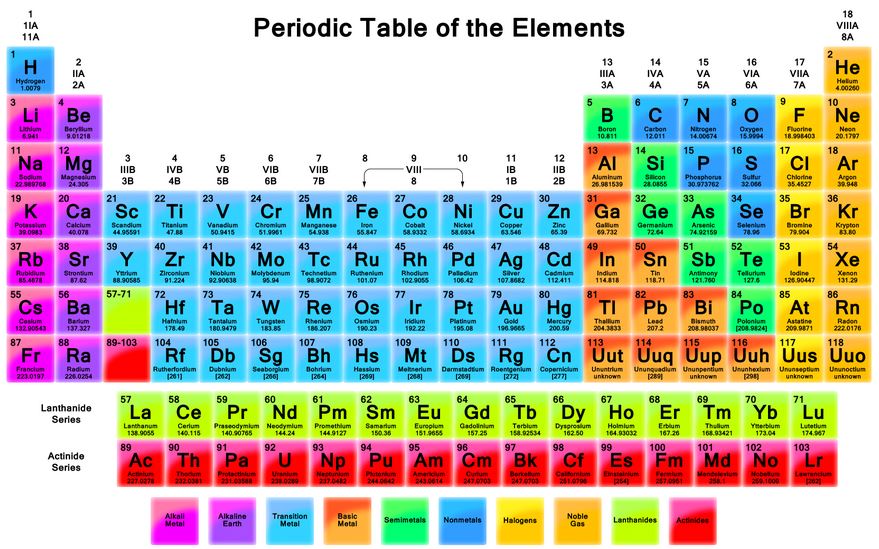
Predict the bond that will form between Be and F.
a)
Ionic
b)
Covalent
14.
Predict the bond that will form between Se and Cl.
a)
Ionic
b)
Covalent
15.
Predict the bond that will form between Sr and S.
a)
Ionic
b)
Covalent
16.
What is a valence electron?
a)
an electron that is found in the outermost shell of an atom. 
b)
an electron found in the innermost shell of an atom.
c)
an electron found in the middle shell.
17.
What is the number of valence electrons for Oxygen?
a)
8
b)
6
c)
2
d)
1
18.
What is the number of valence electrons for Beryillum?
a)
1
b)
4
c)
2
d)
7
19.
How many valence electrons in this structure?
a)
6
b)
5
c)
4
d)
7
20.
Elements on the LEFT side of the periodic table will most likely form:
a)
Positive ions
b)
Negative ions
c)
Neutral Ions
d)
None of these
21.
If an atom loses two electrons what charge will it have?
a)
+ 2
b)
 - 2
c)
+1
d)
-1
22.
If an atom gains one electron what charge will it have?
a)
-2
b)
-1
c)
+1
23.
When forming an ionic bond, a metal atom
a)
Gains electrons to form a cation
b)
Loses electrons to form a cation
c)
Gains electrons to form an anion
d)
Loses electrons to form an anion
24.
In chemical compounds, covalent bonds form when
a)
the electronegativity difference between two atoms is very large.
b)
electrons are completely transferred between two metals.
c)
pairs of electrons are shared between two nonmetal atoms.
d)
two nonmetal atoms are attracted to each other by opposite charges.
25.
An ionic bond forms when 
a)
Valence electrons are shared
b)
a sea of mobile electrons surround the cations
c)
valence electrons are transferred between atoms
d)
none of the above
26.
What type of diagram is this?
a)
Electron Dot Diagram
b)
Bohr Model
c)
Alkali Diagram
d)
Chemical Diagram
27.
A positively or negatively charged particle.
a)
covalent bond
b)
compound
c)
ion
d)
chemical bond
28.
A chemical bond between oppositely charged ions.
a)
compound
b)
ion
c)
covalent bond
d)
ionic bond
29.
A chemical bond between oppositely charged ions.
a)
compound
b)
ion
c)
covalent bond
d)
ionic bond
30.
A chemical bond formed between shared atoms.
a)
chemical bond
b)
covalent bond
c)
oxidation #
d)
ionic bond
31.
Tells what elements a compound contains and the number of those atoms.
a)
compound
b)
ion
c)
chemical formula
d)
ionic bond
32.
How many atoms of Oxygen are in this compound?
a)
4
b)
1
c)
12
d)
7
33.
How many elements make up this compound?
a)
6
b)
4
c)
2
d)
3
34.

A group of atoms that acts together as one charged atom in a

a)

polyatomic ions.

b)

crystal.

c)

molecule.

d)

negative ion.

35.

In a chemical formula for an ionic compound, which item is written first?

a)

positive ion

b)

charge

c)

subscript

d)

negative ion

36.

Magnesium bromide is an ionic compound with the chemical formula MgBr2. What does the "2" tell you?

a)

Bromide has a 2- charge.

b)

Bromide has a 2+ charge.

c)

There are two bromide ions for every magnesium ion.

d)

There are two magnesium ions to every bromide ion.

37.

What is the chemical name for the compound with the formula Na2S?

a)

sodium fluoride

b)

sodium sulfide

c)

lithium oxide

d)

magnesium sulfide

38.

How many hydrogen atoms are present in one molecule of ammonium acetate, NH4C2H3O2?

a)

3

b)

11

c)

7

d)

4

39.

What is the total number of atoms in the compound Ca(ClO3)2?

a)

2

b)

9

c)

6

d)

3

40.

Potassium oxide is a binary compound.

a)

True

b)

False

41.

What type of compound is calcium chloride?

a)

metallic compound

b)

covalent compound

c)

ionic compound

d)

answer not given

42.

What is the correct formula for potassium sulfide?

a)

KS2

b)

K2S

c)

PS2

d)

P2S2

43.

What is the formula for lead (IV) phosphate?

a)

Pb5P4

b)

Pb4P3

c)

Pb3(PO4)4

d)

Pb3PO4

44.

What is the name of Li2S?

a)

dilithium sulfide

b)

lithium sulfide

c)

lithium sulfate

d)

dilithium sulfate

45.

What is the name of Cr2O3?

a)

Chromium (III) oxide

b)

chromium (II) oxate

c)

dichromium trioxide

d)

chromium dioxide

46.

What is NH4Cl?

a)

nitrogen hydrchlorate

b)

ammonium chloride

c)

ammonium chlorate

d)

nitrogen hydroxate chloride

47.

What is the correct formula for aluminum oxide?

a)

Al2O3

b)

Al(OH)2

c)

NH4O3

d)

Al2(SO4)3

48.

What are the oxidation numbers of iron (II) oxide?

a)

iron +2, oxide -2

b)

iron +2, oxide -1

c)

iron +1, oxide -2

d)

answer not given

49.
Ca+2, O-2
a)
CaO
b)
OCa
c)
Ca-2O+2
d)
Ca2O2
50.
The correct chemical formula for magnesium phosphide is
a)
MgP
b)
Mg₂P₃
c)
Mg₃P₂
d)
Mg₃(PO₄)₂