
 Worksheets
Periodic Table Review
Total questions: 47
Worksheet time: 50mins
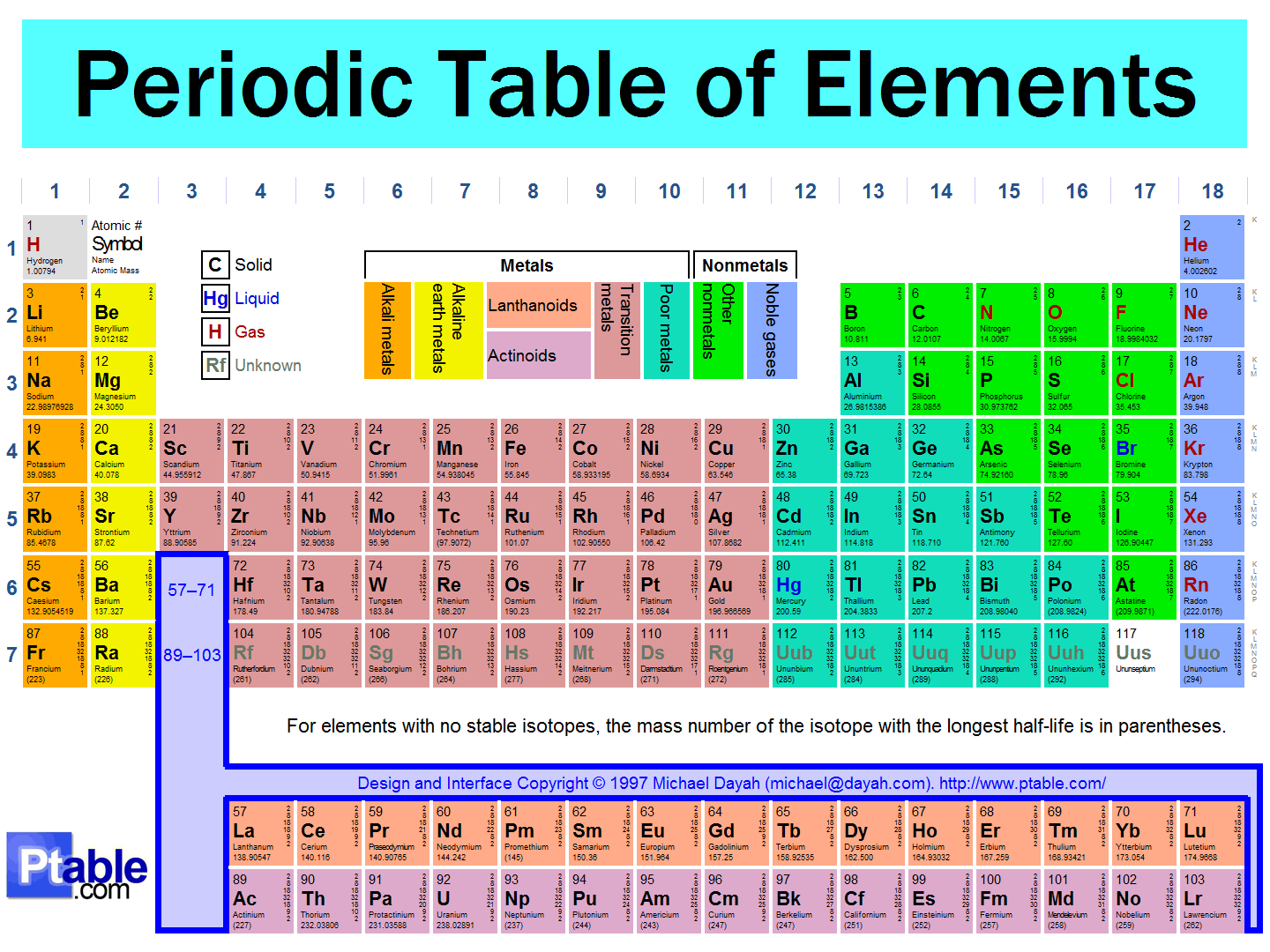


Elements which are shiny, conduct electricity and heat are called
metals
nonmetal
metalloid
nonexistent

The elements along the staircase are called
metals
nonmetals
metalloids
noble gases

Which is an alkali metal?
Magnesium
Iron
Sodium
Europium

The elements shaded yellow are called
metals
nonmetals
metalloids
noble gases


The elements shaded blue are called
metals
nonmetals
metalloids
noble gases

How many electrons does potassium contain?
19
39
20
40


The noble gases have how many valence electrons?
1
2
7
8

Which period is Bromine in?
3
2
4

What is a valence electron?
electrons in the second energy level
electrons in the outermost energy level
the atomic number
electrons in the first level
An isotope is the same element with a different number of......
Protons
Neutrons
Electrons
The horizontal (left and right) row on the periodic table is called a
group
family
period
atomic number
A vertical column (up and down) is called a
group
tower
period
crew

Dmitri Mendeleev developed the Periodic Table in what year?
1899
2019
1869
1982

To the left of the staircase you will find all metals, except________________.
Sodium
Lithium
Iron
Hydrogen
All metals are solid at room temperature except for ___________.
Cobalt
Mercury
Copper
Aluminum
Most non-metals are _____________.
Gases
Solids
Liquids
Plasma

Metalloids are all solids at room temperature.
True
False

The MOST reactive group of all METALS is _______________.
Alkaline Earth Metals
Halogens
Rare Earth Metals
Alkali Metals

How many valence electrons do Alkali Metals have in their outer orbital?
8
1
6
1000

What happens as you travel down the Alkali Metals group?
Elements get less reactive
Reactivity of elements stays the same
Elements get more reactive
The elements become compressed from all the weight of the elements on top of them!

Of the groups listed below, which is the most reactive?
Alkaline Earth Metals
Alkali Metals
Noble Gases
Transition Metals

Alkaline Earth Metals have ________ valence electrons.
2
5
20
Zero

Look closely at the image depicting the "staircase" on the Periodic Table. This staircase depicts metalloids (located on either side). Which element is NOT a metalloid?
Boron
Silicon
Aluminum
Germanium

When Dmitiri Mendeleev developed the first Periodic Table there were only ____ known elements.
118
8
1
60

Mendeleev's Periodic Table predicted and left room for ____________________________.
the future discovery of elements.
extra food and condiments.
the names of planets.
error.

Francium (an Alkali Metal) and Radium (an Alkaline Earth Metal) have this in common.
They both are non-metals
They are both abundant in nature.
They are both radioactive.
They both like the same kind of music.

Halogens (Group 17) are the MOST reactive of the NON-METALS.
True
False

What Nobel Gas is used commercially for glow lamps, signs like the one shown in the picture, and lasers?
Silicon
Neon
Mercury
Oxygen

As you move UP the Halogen group what happens to reactivity?
Increases
Decreses
Stays the same
Halogens do not react to form compounds

When elements react with other elements they either transfer or take valence electrons to form a new substance. What is this new substance called?
A mixture
A rookie
A compound
A isotope

Fluorine (F) is toxic by itself, but when combined with Sodium (Na) it is added to water and toothpaste to help prevent tooth decay. What family of elements does Fluorine fall under?
Noble Gases
Alkali Metals
Halogens
Alkaline Earth Metals

Look closely at the attached picture and find the element with an atomic number of 36. What is the family and Group Number this element is found under? (you have two minutes for this question so take your time)
Nobel Gases (Group 18)
Alkali Metals (Group 1)
Alkali Metals (Group 18)
Halogens (Group 17)

What element is in Period 6 and Group 12? (Use the Periodic Table provided and take your time...you have 2 minutes)
Au (Gold)
Fe (Iron)
Kr (Krypton)
Hg (Mercury)

This group is made up of metals like copper, iron, and platinum. It consists of groups 3 through 12, and properties include: lustrous, malleable, ductile, and electrically conductive.
Alkali Metals
Transition Metals
Noble gasses
Halogens

These are all metals, and they are all radioactive.
Actinides
Transition Metals
Metalloids
Noble Gases

