
 Worksheets
Year 8 Science Revision
Total questions: 66
Worksheet time: 46mins
Name
Class
Date
1.
Which of these nutrients is needed for growth and repair?
a)
Carbohydrates
b)
Protein
c)
Fibre
d)
Lipids
2.
Which of these tests for proteins in a food?
a)
Benedict's test
b)
Biuret test
c)
Rubbing on paper
3.
What is this sentence describing?
The process of breaking food apart into pieces small enough to be absorbed.
The process of breaking food apart into pieces small enough to be absorbed.
a)
Absorption
b)
Eating
c)
Chemical reaction
d)
Digestion
4.
What is the name of this process?
Plants use carbon dioxide and water to produce sugar and oxygen, using sunlight for energy.
Plants use carbon dioxide and water to produce sugar and oxygen, using sunlight for energy.
a)
Respiration
b)
Photosynthesis
c)
Combustion
d)
Neutralisation
5.
Which kind of respiration does not require oxygen?
a)
Aerobic
b)
Anaerobic
6.
Which kind of respiration happens all the time in your body?
a)
Aerobic
b)
Anaerobic
7.
Where does respiration take place?
a)
In the lungs
b)
In the heart
c)
In the mitochondria of most cells
d)
In the nucleus of most cells
8.
Which kind of respiration releases most energy?
a)
Anaerobic
b)
Aerobic
9.
Which part of the plant cell absorbs sunlight?
a)
Chlorophyll
b)
Mitochondria
c)
Nucleus
d)
Cell wall
10.
The name for both male and female sexual cells is
a)
Sperm
b)
Gamete
c)
Egg
d)
Cytoplasm
11.

Robert Hooke, Anton van Leeuwenhoek, Theodor Schwann, Rudolf Virchow, and Matthias Schliden were all responsible for what theory?
a)
The Theory of Gravity
b)
The Theory of Relativity
c)
The Cell Theory
d)
The Theory of Continental Drift
12.
what is the control center in a cell
a)
mitochondria
b)
DNA
c)
nucleus
d)
movement
13.
Has nucleus
a)
Prokaryote
b)
Eukaryote
c)
both
14.
An organism made of one cell is called
a)
unicellular
b)
multicellular
15.
Bacteria
a)
Prokaryote
b)
Eukaryote
c)
both
16.
Cells that have a true nucleus are called....
a)
eukaryotes
b)
prokaryotes
c)
unicellular
d)
multicellular
17.
The eight levels of classification, from general to specific, are
a)
domain, kingdom, class, order, phylum, family, genus, species
b)
somain, kingdom, phylum, class, family, order, genus, species
c)
domain, kingdom, phylum, class, order, family, genus, species
d)
domain, kingdom, class, phylum, order, family, genus, species
18.
How many different elements are in this chemical formula: C2H2ClK3
a)
6
b)
8
c)
2
d)
4
19.
Which one can be found on the periodic table?
a)
Compound
b)
Element
20.
Which one has more than one type of atom in it?
a)
Element
b)
Compound
21.
Water is an example of:
a)
Element
b)
Compound
c)
Solution
22.
Carbon is considered an element while carbon dioxide is considered a compound. This is because carbon dioxide is –
a)
a gas at room temperature.
b)
made of two different elements.
c)
given off by green plants.
23.

What is the volume of the rock? The water level is displaced from 20 mL to 23 mL with the rock.
a)
3 mL
b)
23 mL
c)
20 mL
d)
43 mL
24.
Anything that has mass and takes up space is called
a)
volume
volume
volume
b)
matter
c)
magnetism
d)
electricity
25.
Jack has a rock. The rock has a mass of 14g and a volume of 2cm3. What is the density of the rock?
a)
7 mL
b)
7 g/cm3
c)
28 g/cm3
d)
1/7 g/cm3
26.
Which units of measurement are used for volume?
a)
grams
b)
centimeters
c)
grams/milliliter
d)
milliliter
27.
What is the formula for density?
a)
density = mass x volume
b)
density = mass / volume
c)
density = mass + volume
d)
density = mass - volume
28.
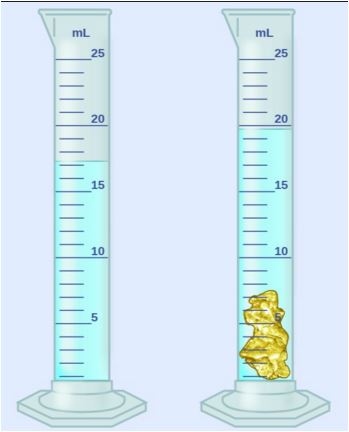
An irregularly shaped piece of gold was lowered into a graduated cylinder holding a volume of water equal to 17 ml. The height of the water rose to 20 ml. If the mass of the gold was 27 g, what was its density?
a)
9 g/mL
b)
10.5 g/mL
c)
6.5 g/mL
d)
8 g/mL
29.

What fossil fuel is in the image?
a)
Coal
b)
Natural Gas
c)
Petroleum
30.

Number 4 is pointing to the....
a)
Anus
b)
Rectum
c)
Large Intestine
d)
Small intestine
31.

Number 5 is pointing to the...
a)
Liver
b)
Gallbladder
c)
Pancreas
d)
Stomach
32.

Number 3 is pointing to the...
a)
Small intestine
b)
Rectum
c)
Large intestine
d)
Stomach
33.

Number 2 is pointing to the...
a)
Esophagus
b)
Stomach
c)
Small intestine
d)
Anus
34.

As waste moves through the digestive system, the ______ absorbs water before storing waste in the rectum.
a)
Small intestine
b)
Stomach
c)
Esophagus
d)
Large intestine
35.
Which elements are found on the left to middle of The Periodic Table?
a)
Metals
b)
Nonmetals
c)
Metalloids
d)
Candles
36.
If you have a material that can conduct electricity well it is probably a...
a)
Metalloid
b)
Matter
c)
Non-metal
d)
Metal
37.
What side of the periodic table are nonmetals on?
a)
left
b)
right
c)
top
d)
bottom
38.
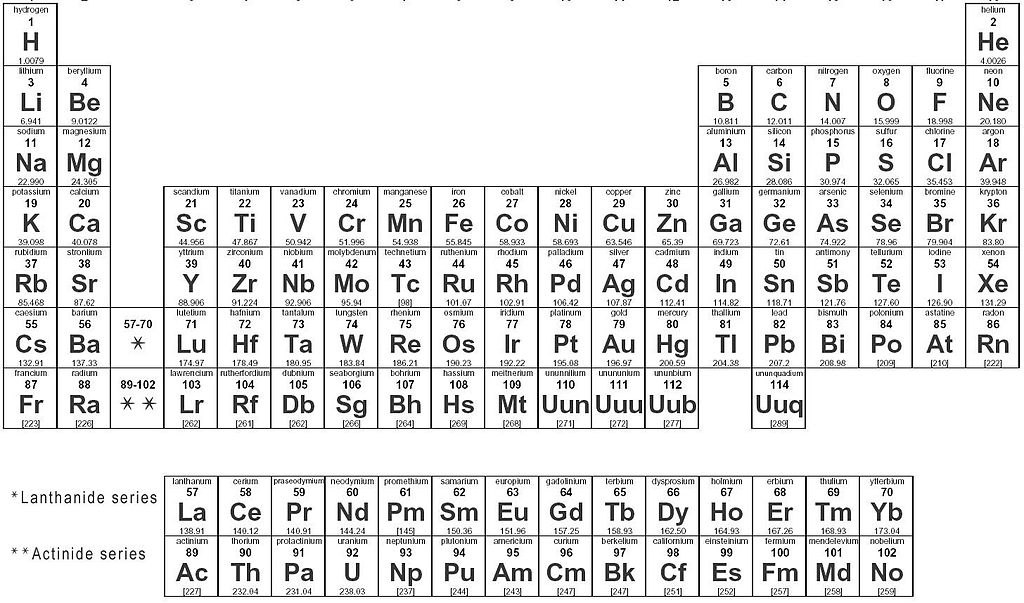
Is gold metal or nonmetal?
a)
metal
b)
nonmetal
39.
What does malleable mean?
a)
able to bend
b)
will break easily
c)
can be used for wire
d)
is shiny
40.
What do metals conduct?
a)
heat
b)
electricity
c)
both
d)
neither
41.
All of these properties describe metals EXCEPT...
a)
malleable
b)
conductors
c)
brittle
d)
luster
42.
Rows on the period table are called _____ while columns are called _____.
a)
groups, families
b)
groups, periods
c)
periods, groups
d)
families, groups
43.
The male part of the flower is________
a)
pistil
b)
sepal
c)
ovaries
d)
stamen
44.
The pollen grains are found in this part of the stamen.
a)
anther
b)
style
c)
pistil
45.
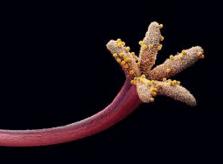
The part of the flower on which the pollen grains land.
a)
pistil
b)
stamen
c)
sepals
d)
stigma
46.

What is #4 pointing to?
a)
anther
b)
style
c)
stigma
d)
ovary
47.
Small grains that contain a plant's male reproductive cells.
a)
stamen
b)
pollen
c)
pistil
d)
stigma
48.
what is copper?
a)
an alloy metal
b)
metal
c)
a malleable, ductile, metallic element having a characteristicreddish-brown color
d)
non
49.
magnesium + nitric acid →
a)
Magnesium oxide
b)
magnesium nitrate + water
c)
Magnesium hydroxide + chlorine
d)
magnesium nitrate + hydrogen
50.
sulfuric acid + lithium →
a)
lithium sulfate + water
b)
lithium nitrate
c)
lithium sulfate + oxygen
d)
lithium sulfate + hydrogen
51.
? + ? → nickel nitrate + hydrogen
a)
nickel + water
b)
nickel + hydrochloric acid
c)
nickel + nitric acid
d)
nickel + hydroxide
52.
? + sulfuric acid → ? + iron sulfate
a)
Iron, hydrogen
b)
iron, water
c)
iron, hydroxide
d)
iron, oxygen
53.
? + phosphoric acid → ? + aluminium phosphate
a)
aluminium, water
b)
aluminium, hydrogen
c)
aluminium, hydroxide
d)
aluminium, oxygen
54.

Which explains why the fork looks different under water?
a)
light can't pass through the glass
b)
the wavelength of light lengthens
c)
the amount of light increases when going through water
d)
light is refracted at an angle
55.
Smooth surfaces _______ a lot of light.
a)
reflect
b)
bend
c)
absorb
d)
twist
56.
Why do we see objects as white?
a)
They absorb all light
b)
They reflect all light
c)
They absorb some light and reflect some light
57.

The Law of Reflection:
The angle of incidence is _________ the angle of reflection
The angle of incidence is _________ the angle of reflection
a)
bigger than
b)
the same as
c)
smaller than
58.

If light strikes a mirror at a 50⁰ angle, what angle will it come off of the mirror?
a)
50⁰
b)
70⁰
c)
45⁰
d)
30⁰
59.

Which color absorbs all light?
a)
White
b)
Black
c)
Orange
d)
Green
60.

Which color reflects all light?
a)
White
b)
Black
c)
Orange
d)
Green
61.
What does the property 'Conductivity' mean in relation to metals?
a)
Ability to conduct heat
b)
Ability to conduct Electricity
c)
Ability to insulate heat
d)
Ability to conduct heat, electricity, light and sound
e)
Ability to conduct /insulate heat, electricity, light and sound.
62.
Which of the following is a sign that a chemical reaction has occurred?
a)
change in shape
b)
melting
c)
formation of a gas
d)
dissolving
63.
Is melting butter for popcorn a chemical or physical change?
a)
chemical
b)
physical
64.
A change where one or more new substances are created.
a)
Physical Change
b)
Chemical Change
65.
Fizzing, foaming, and burning are all examples of
a)
Chemical change
b)
Physical change
66.
Rust on an iron bar is an example of chemical change.
a)
True
b)
False
100 %

