
 Worksheets
First Semester 6th grade EXAM
Total questions: 65
Worksheet time: 1hrs 4mins
Name
Class
Date
1.
a tire is inflated with air
a)
chemical change
b)
physical change
2.
Liquid particles are...
a)
tightly packed
b)
loosely bonded and flowing
c)
free to fly in all directions
3.
The air we breathe contains different individual gases (mostly nitrogen and oxygen). Which of the following correctly describes the air we breathe?
a)
compound
b)
liquid
c)
element
d)
mixture
4.
If a lab fire erupts, immediately:
a)
A. Notify (or tell) your teacher
b)
B. Run and scream
c)
C. Throw water at the fire
d)
D. Open the windows
5.
Why are approved eye protection devices (such as goggles) are worn in the lab?
a)
A. To improve your vision
b)
B. To make you look like a bug
c)
C. To give you headaches
d)
D. To protect eyes around chemicals, heat, or glassware
6.
You are in lab and your partner accidentally gets their hair stuck in a triple beam balance. What should have your partner done?
a)
A. Worn a hat in class
b)
B. Skipped class
c)
C. Got a hair cut
d)
D. Tied/pulled their hair back
7.
Carbon is considered an element while carbon dioxide is considered a compound. This is because carbon dioxide is –
a)
a gas at room temperature.
b)
made of two different elements.
c)
given off by green plants.
8.

How many elements are in this compound:
a)
3
b)
6
c)
4
d)
5
9.

A section of the Periodic Table of Elements is provided. What is the chemical symbol for magnesium?
a)
Mn
b)
Magnesium
c)
Mg
d)
12
10.
Element is a
a)
pure substance
b)
compound
c)
mixture
d)
molecule
11.

How many atoms of Oxygen are in this compound?
a)
1
b)
2
c)
3
d)
4
12.
Law of conservation of mass states that
a)
matter is created
b)
matter is destroyed
c)
matter is neither created nor destroyed
d)
matter does not change
13.
CO2
a)
Carbon Monoxide
b)
Monocarbon Dioxide
c)
Carbon Dioxide
d)
Carbon Dioxygen
14.

what type of matter is this
a)
solid
b)
liquid
c)
gas
d)
plasma
15.
Molecules move quickest in which state of matter
a)
solid
b)
liquid
c)
gas
d)
solid, liquid and gas
16.
________ is anything that has weight and takes up space
a)
matter
b)
mass
c)
volume
d)
solids
17.

Which form of matter take the shape of a container like this juice?
a)
liquid
b)
solid
c)
glass
d)
gas
18.

Which state of matter do the particles in this picture represent?
a)
solid
b)
liquid
c)
gas
d)
plasma
19.
______ is the amount of space an object takes up.
a)
mass
b)
volume
20.
Helium, Carbon, and Iron are all examples of __________.
a)
elements
b)
compounds
c)
mixtures
d)
molecules
21.
Which of the following should not be worn during laboratory activities?
a)
loose clothing
b)
dangling jewelry
c)
open-toed shoes
d)
all of the above
22.

Horseplay or practical jokes in the laboratory are...
a)
always against the rules.
b)
okay.
c)
not dangerous.
d)
okay if you are working alone.
23.

You have been injured in the laboratory (cut, burn, etc.) The FIRST thing you should do is...
a)
visit the school nurse after class.
b)
see a doctor after school.
c)
tell the science teacher straight away.
d)
apply first aid to yourself.
24.
After completing an experiment in the lab, all chemical wastes should be:
a)
poured down the sink.
b)
disposed of according to the teacher's directions.
c)
thrown at other students.
d)
taken home to play with.
25.
When working in a science lab, you should report any accidents immediately to the teacher.
a)
True
b)
False
26.
What scientific instrument uses two lenses to magnify small objects?
a)
mirror
b)
kaleidoscope
c)
compound microscope
27.
The piece of scientific equipment that is used to measure the mass of an object is a _________________.
a)
spring scale
b)
triple beam balance
28.
Which is NOT a characteristic of metals?
a)
Dull
b)
Malleable
c)
good conductor
d)
shiny luster
29.
What is NOT a characteristic of nonmetals?
a)
Dull luster
b)
Malleable
c)
brittle
d)
good insulator
30.
Which is NOT a characteristic of metalloids?
a)
Always good conductors of electricity
b)
Semiconductor
c)
Has some properties of metals
d)
has some properties of nonmetals
31.
What is the formula for density?
a)
Density = volume / mass
b)
Density = mass x volume
c)
Density = volume x mass
d)
Density = Mass / Volume
32.
What is the metric unit of measurement for mass?
a)
grams (g)
b)
Celcius (C)
c)
centimeters (cm)
33.
A liquid has a
a)
definite shape
b)
definite volume
34.
A substance which takes the shape and volume of its container is a
a)
solid
b)
gas
35.
Which of the following is an example of chemical change
a)
a pond drying up
b)
BURNING gasoline producing carbon dioxide
36.
What is the name of a single type of atom?
a)
cell
b)
proton
c)
element
d)
atom
37.
What is the term for combining 2 or more atoms together?
a)
atoms
b)
elements
c)
molecules
d)
compounds
38.
What is the term for combining 2 or more DIFFERENT atoms together?
a)
atoms
b)
elements
c)
molecules
d)
compounds
39.

What is the picture displayed?
a)
atom
b)
element
c)
molecule
d)
compound
40.
What is the tiniest particle in the entire universe?
a)
cells
b)
gases
c)
atoms
d)
liquids
41.
I am anything that has mass and takes up space!
a)
energy
b)
matter
c)
molecules
d)
atoms
42.
A pure substance that cannot be broken down into any other substance by chemical or physical means. There are about 118 of us shown in the Periodic Table
a)
compound
b)
mixture
c)
molecule
d)
element
43.
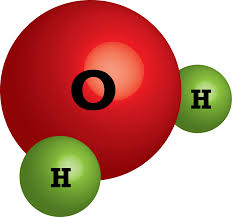
How many atoms of Hydrogen are in this compound
a)
1
b)
2
c)
3
d)
4
44.

What is the picture displayed?
a)
atom
b)
element
c)
molecule/compound
45.
A _____ is a pull or a push.
a)
force
b)
friction
c)
gravity
d)
speed
46.
_____ is the force that slows and stops motion between touching objects.
a)
Friction
b)
Gravity
c)
Pull
d)
Push
47.
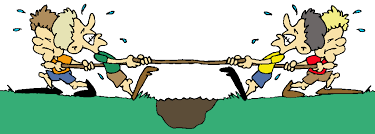
If these teams are pulling with the same amount of force what will happen?
a)
The boy in blue will win.
b)
They will not move at all.
c)
The boy in red will win.
d)
Both will fall down.
48.
What will cause an object to move?
a)
Applied forces
b)
Balanced forces
c)
Unbalanced forces
49.
The force that pulls objects towards Earth.
a)
Gravity
b)
Friction
c)
Inertia
d)
Force
50.
How far an object has moved?
a)
displacement
b)
distance
c)
motion
d)
reference point
51.
How far the object is from it's original position
a)
distance
b)
displacement
c)
direction
d)
vector
52.
The color of a mineral in powder form is called the mineral's
a)
hardness
b)
specific gravity
c)
luster
d)
streak
53.
How light reflects off of a mineral is called the mineral's
a)
luster
b)
streak
c)
cleavage
d)
fracture
54.

The following image shows what mineral property?
a)
Hardness
b)
Streak
c)
Cleavage
d)
Density
55.

By definition, a mineral has which of the following characteristic(s)?
a)
definite chemical composition
b)
crystal structure
c)
naturally occuring
d)
all of the above
56.

What mineral is salt?
a)
quartz
b)
sulfur
c)
halite
d)
calcite
57.
A naturally occurring, inorganic solid with a crystal structure and a definite chemical composition is referring to
a)
density
b)
streak
c)
mineral
d)
non silicate mineral
58.
Which mineral smells like rotten eggs?
a)
talc
b)
sulfer
c)
mica
d)
pyrite
59.
The ________ measures how hard a mineral is.
a)
Miller Scale
b)
Dishong Scale
c)
Curly Scale
d)
Mohs Scale
60.

What is the volume of the water?
a)
25 mL
b)
50 mL
c)
20 mL
d)
22 mL
61.
Find the volume of an object if the volume of water is 20 mL and the volume of the object & water is 30 mL
a)
5 mL
b)
50 mL
c)
10 mL
62.
An object that floats in water is _____________
a)
Less dense than water
b)
More dense than water
c)
Same density as water
63.
The tool used to measure the volume of a liquid.
a)
ruler
b)
graduated cylinder
c)
scale
64.

The density of this material is 2 g/cm3.
There are 24 cm3 Find the total mass.
There are 24 cm3 Find the total mass.
a)
12 grams
b)
48 grams
c)
12 g/cm3
d)
48 g/cm3
65.
Find the density of a 2 cm x 2 cm x 2 cm cube with a mass of 64 g.
a)
6 cm3
b)
12 g/cm3
c)
128 g/cm3
d)
8 g/cm3
100 %

