
 Worksheets
6th Chapter Earth Interior
Total questions: 66
Worksheet time: 56mins
Name
Class
Date
1.
What is the correct order (starting from the surface) of Earth's layers?
a)
crust, outer core, inner core, mantle
b)
mantle, outer core, inner core, crust
c)
crust, mantle, outer core, inner core
d)
outer core, inner core, crust, mantle
2.
Earth's inner core is...
a)
a dense ball of solid iron and nickel.
b)
a layer of molten iron and nickel.
c)
a layer of hot rock.
d)
a layer of rock that forms Earth's outer skin.
3.
Which layer of Earth has the GREATEST density?
a)
crust
b)
mantle
c)
outer core
d)
inner core
4.
Heat transfer within a fluid takes place by...
a)
convection currents
b)
radiation
c)
conduction
d)
density
5.
When the heat source is removed from a fluid, convection currents in the fluid will
a)
speed up.
b)
change direction.
c)
eventually stop.
d)
continue at the same rate forever.
6.
Using data from seismic waves, geologists have learned that Earth's interior is made up of several
a)
continents
b)
layers
c)
ridges
d)
trenches
7.
Earth's mantle is
a)
a layer of molten metal.
b)
a layer of hot rock.
c)
a dense ball of solid metal.
d)
a layer of rock that forms Earth's outer skin.
8.
Earth's magnetic field results from movements in the
a)
mantle
b)
outer core
c)
inner core
d)
crust
9.
Scientists think that convection currents flow in Earth's
a)
continents
b)
mantle
c)
lithosphere
d)
inner core.
10.
Which layer of Earth is the hottest?
a)
lithosphere
b)
asthenosphere
c)
outer core
d)
inner core
11.
Compared to rock in Earth's crust, rocks in the mantle are more
a)
dense
b)
mineral-rich
c)
granular
d)
porous
12.
A deep well or mine shaft goes through which layer or layers of Earth?
a)
crust only
b)
mantle only
c)
crust and mantle
d)
mantle and core
13.
If we compare the temperature and pressure of Earth's mantle to the core, what differences can we expect as we move downward into Earth?
a)
Both temperature and pressure increase.
b)
Both temperature and pressure decrease.
c)
Temperature decreases and pressure increases.
d)
Temperature increases and pressure decreases.
14.
Which layer of Earth is LIQUID?
a)
upper mantle
b)
lower mantle
c)
outer core
d)
inner core
15.
What are the two kinds of crust?
a)
lithospheric and asthenospheric
b)
silicon based and iron based
c)
continental and oceanic
d)
outer and inner
16.
Which layer of Earth is the thinnest?
a)
crust
b)
mantle
c)
outer core
d)
inner core
17.
Earth's oceanic crust is ______ than continental crust.
a)
thinner but denser
b)
thicker and denser
c)
thicker but less dense
d)
thinner and less dense
18.
In Earth's crust, what type of rock is found under the oceans?
a)
only granite
b)
only basalt
c)
granite on top; basalt underneath
d)
basalt on top; granite underneath
19.
Which layer of Earth is made up partly of crust and partly of mantle material?
a)
asthenosphere
b)
crust
c)
lithosphere
d)
mantle
20.
The soft layer of the mantle on which pieces of lithosphere move is called
a)
mesosphere
b)
lithosphere
c)
asthenosphere
d)
outer core
21.
Earth's solid inner core is surrounded by the hot, molten metal of which layer?
a)
lithosphere
b)
outer core
c)
crust
d)
mantle
22.
Pressure increases with depth toward the center of Earth. In which layer would you expect pressure to be the greatest?
a)
crust
b)
mantle
c)
outer core
d)
inner core
23.
Which layer of Earth is made up of tectonic plates?
a)
outer core
b)
inner core
c)
asthenosphere
d)
lithosphere
24.
Continental crust is made of
a)
granite
b)
basalt
c)
water
d)
sandstone
25.
Name the three types of heat transfer.
a)
conduction, convection, radiation
b)
lithosphere, conduction, x-rays
c)
ROY G BIV
d)
waves, sunlight, heat
26.
What is the difference between the inner and outer core?
a)
The outer core is liquid, the inner core is solid.
b)
The inner core is liquid and the outer core is solid.
c)
The outer core is made of nickel and the inner core is made of iron.
d)
The outer core is hotter than the inner core.
27.
Why have geologists not reached the mantle?
a)
It is too hot for humans to go there.
b)
It is too smelly for humans to go there.
c)
It doesn't have Wi-Fi so none of their instruments work.
d)
Scientists have not figured out how to time travel.
28.
Which statement is true about Earth’s inner core?
a)
It is not very dense.
b)
It is composed of molten (melted) metal.
c)
It is under extreme pressure.
d)
It is made of granite and basalt.
29.
Scientists determine what Earth’s interior looks like by using:
a)
Volcanoes
b)
Seismic Waves
c)
Continental Drift
d)
Convection Currents
30.
What layer of Earth do we live on?
a)
Crust
b)
Core
c)
Mantle
31.

The temperature inside the Earth reaches 9000 F in the center
a)
True
b)
False
32.
6. The Lithosphere is the______part of the mantle
a)
Solid
b)
Liquid
c)
Gaseous
33.

Which layer of Earth would have the greatest density?
a)
upper mantle
b)
lower mantle
c)
inner core
d)
outer core
34.

The Magnetic Field is due to
a)
The movement of the Outer Core around the Inner Core
b)
The movement of the Inner Core around the Outer Core
c)
The movement of the Mantle around the Inner Core
d)
None of the above
35.

From the outside to the inside, the correct order of the layer of the Earth is
a)
Core, Mantle, Crust
b)
Crust, Core, Mantle
c)
Crust, Mantle, Geosphere
d)
Crust, Mantle, Core
36.
Basalt is a dark, fine-grained rock that that is mostly associated with...
a)
Earth's core
b)
Continental crust
c)
Earth's mantle
d)
Oceanic crust
37.
Which rock type is generally associated with continental crust?
a)
Limestone
b)
Basalt
c)
Granite
d)
Igneous
38.
What is Biosphere?
a)
All the living things on Earth
b)
Soils and Rocky parts of Earth
c)
Sea water of Earth
d)
Frozen Mountains on Earth
39.
Which of followings is an example of the Biosphere?
a)
Desks
b)
Clouds
c)
River water
d)
Grass
40.
What is Atmosphere?
a)
Air around the Earth
b)
Hot portion of Earth
c)
Liquid portion of Earth
d)
Frozen portion of the Earth
41.
Which of followings is an example of Atmosphere?
a)
Sea water
b)
River water
c)
Lake water
d)
Oxygen
42.
What is Hydrosphere?
a)
Water around the Earth
b)
Mountains on Earth
c)
Air around the Earth
d)
Desert
43.
Which of followings is NOT an example of Hydrosphere?
a)
Ocean water
b)
River water
c)
Underground water
d)
Cloud
44.

Body of air surrounding our planet.
a)
Hydrosphere
b)
Biosphere
c)
Atmosphere
d)
Lithosphere
45.
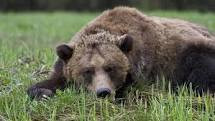
When living things breathe, they interact with which of Earth's spheres?
a)
Lithosphere
b)
Hydrosphere
c)
Atmosphere
d)
Biosphere
46.
When volcanoes erupt, dust and ash particles spread through much of the air blocking the sun. Which two spheres are interacting?
a)
Hydrosphere and atmosphere
b)
Lithosphere and atmosphere
c)
Biosphere and atmosphere
d)
Atmosphere and atmosphere
47.
Energy from the sun is stored by plants. When animals eat the plants, they acquire the energy originally captured by the plants. Between which two spheres is the above interaction?
a)
Hydrosphere and biosphere
b)
Atmosphere and biosphere
c)
Biosphere and biosphere
d)
Lithosphere and biosphere
48.

When a plants takes carbon dioxide from the air which two spheres are interacting?
a)
Biosphere and atmosphere
b)
Lithosphere and atmosphere
c)
Hydrosphere and atmosphere
d)
Atmosphere and atmosphere
49.
When living things breathe, they interact with which of Earth's spheres?
a)
lithosphere
b)
Hydrosphere
c)
Atmosphere
d)
Biosphere
50.

The Four Spheres of Earth
a)
are all connected
b)
have nothing to do with one another
c)
exist on Venus and Mars
d)
don't affect human life
51.

This volcano is an example of something you would find in the:
a)
Atmosphere
b)
Biosphere
c)
Hydrosphere
d)
Lithosphere
52.
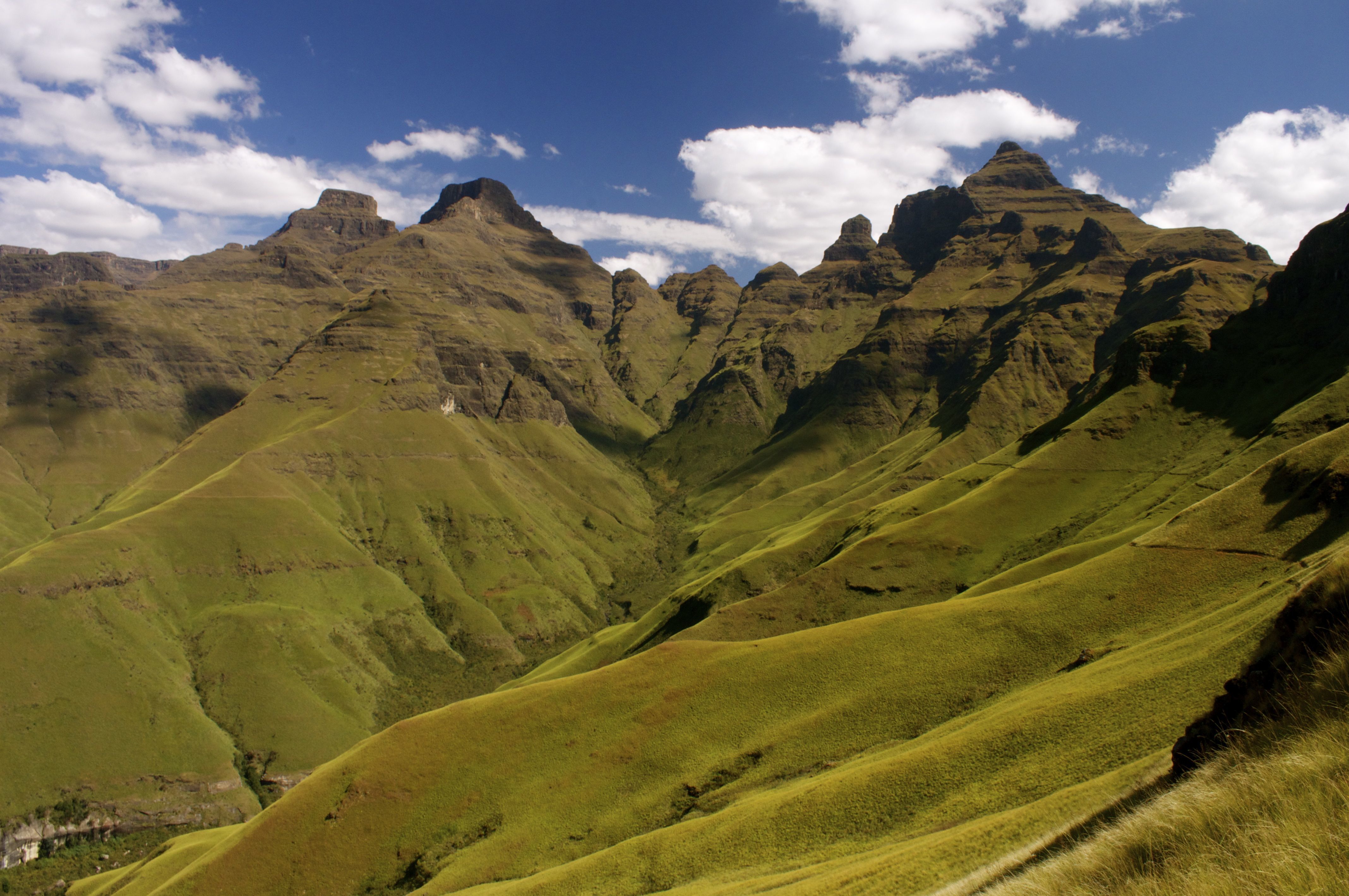
This sphere includes the continents, the ocean floor, all the rocks on the surface, and all of the sand in the deserts.
a)
Hydrosphere
b)
Biosphere
c)
Atmosphere
d)
Lithosphere
53.

This is the water of the Earth
a)
Lithosphere
b)
Hydrosphere
c)
Atmosphere
d)
Biosphere
54.

This is the life that inhabits the Earth
a)
Lithosphere
b)
Hydrosphere
c)
Atmosphere
d)
Biosphere
55.

This is part of the....
a)
Geosphere
b)
Biosphere
c)
Cryosphere
d)
Atmosphere
56.

This is part of the....
a)
Geosphere
b)
Atmosphere
c)
Hydrosphere
d)
Cryosphere
57.

This is part of the....
a)
Geosphere
b)
Atmosphere
c)
Cryosphere
d)
Hydrosphere
58.

This is part of the....
a)
Geosphere
b)
Biosphere
c)
Hydrosphere
d)
Cryosphere
59.
When dead plants decompose and nitrogen is returned to the soil, the interaction is between which two spheres?
a)
The biosphere and atmosphere
b)
The atmosphere and geosphere
c)
The geosphere and atmosphere
d)
The biosphere and geosphere
60.
What is the density of a liquid that has a mass of 27g and a volume of 30ml?
a)
0.9 g/ml
b)
3 g/ml
c)
57 g/ml
d)
810 g/ml
61.
A scientist has four different liquids and pours them all into a bottle. The silver liquid sinks to the bottom, the red liquid settles on top of the silver one, and the pink liquid stays at the surface. Which liquid has the smallest density?
a)
the pink liquid
b)
the silver liquid
c)
the red liquid
d)
the water
62.
What is the formula for density?
a)
density = mass x volume
b)
density = mass / volume
c)
density = mass + volume
d)
density = mass - volume
63.
Frank has an eraser. It has a mass of 4g, and a volume of 2cm3. What is its density?
a)
8 g/cm3
b)
2 g/cm3
c)
1/2 g/cm3
d)
24 g/cm3
64.
Frank has a paper clip. It has a mass of 9g and a volume of 3cm3. What is its density?
a)
3 g/cm3
b)
1/3 g/cm3
c)
27 g/cm3
d)
39 g/cm3
65.
Which lab tool might you use to measure the volume of a liquid?
a)
electric scale
b)
bunsen burner
c)
test tube
d)
graduated cylinder
66.

What is the volume of Object X?
a)
10.0 cm3
b)
15.0 cm3
c)
20.0 cm3
d)
25.0 cm3
100 %

