
 Worksheets
Summative Review (M, V, D)
Total questions: 62
Worksheet time: 47mins
Name
Class
Date
1.
You find a ring and you are not sure of the material is it made from. How do you plan to find out the material that this "Mystery Object" is made out of?
a)
Find the mass with a balance, then volume by water displacement, then calculate density.
b)
Take it to a jewelry store.
c)
Se if it floats or sinks in water
d)
Find the mass and compare to the chart.
2.
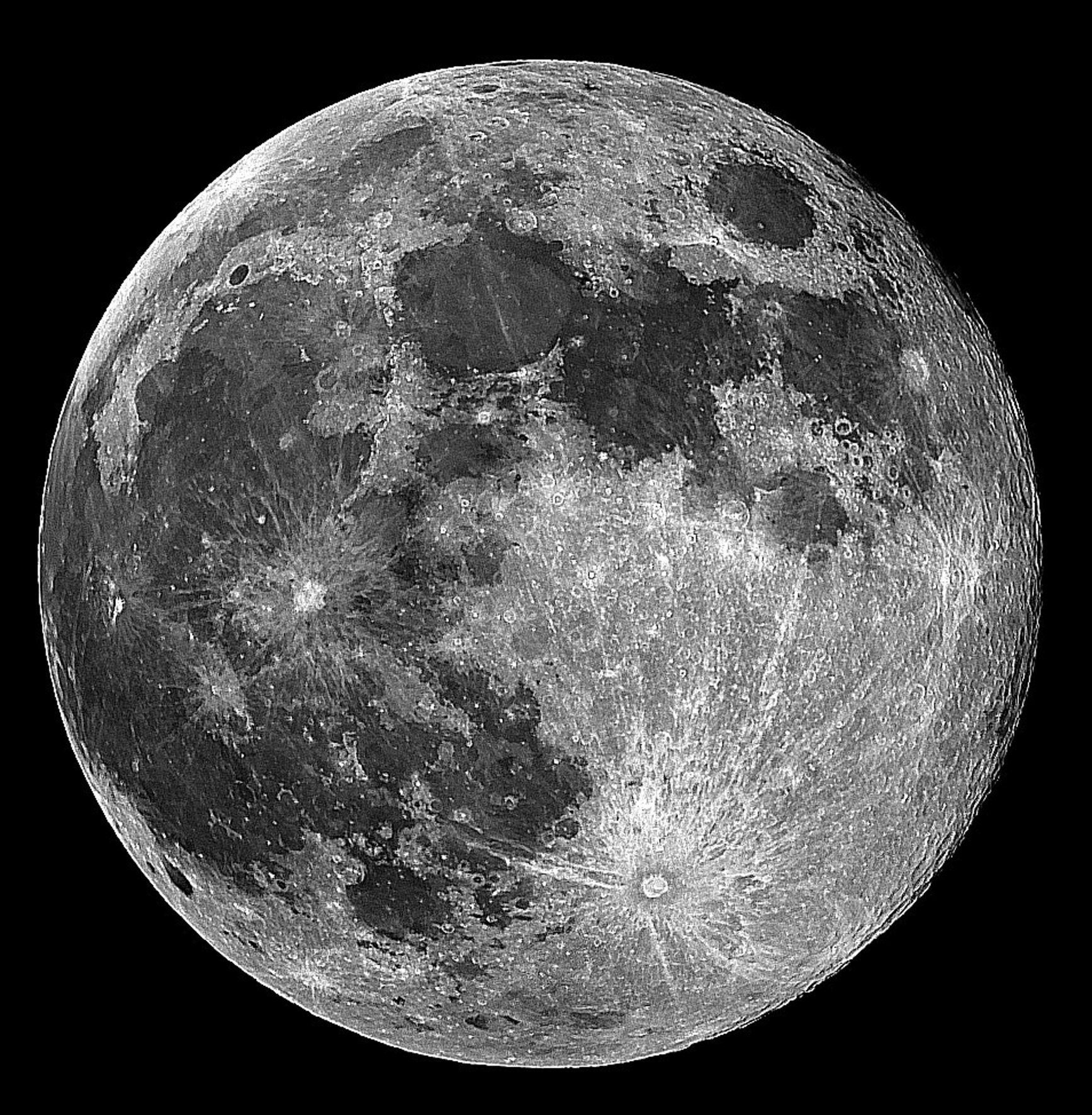
Why would you weigh less on the moon compared to Earth?
a)
less air
b)
less sunlight
c)
more gravitational pull
d)
less gravitational pull
3.
On which celestial object (outer space) would your mass be the greatest?
a)
Earth
b)
Jupiter
c)
Sun
d)
Your mass doesn't change on different celestial objects
4.
Which of the following is a unit of mass?
a)
kilogram
b)
liter
c)
meter
d)
pound
5.
Anything made of matter must _____________________.
a)
take up space and have mass
b)
have mass and be a solid
c)
be a solid and not move
d)
take up space and be a liquid
6.
The mass of an object ___________________________.
a)
changes, depending on where it is located
b)
changes randomly
c)
changes, depending on temperature
d)
does not change
7.
Mass is a property of ___________.
a)
waves
b)
energy
c)
matter
d)
light
8.
The mass of an object WILL change if ____________.
a)
it changes shape
b)
it loses a piece
c)
it gets hotter
d)
it gets cooler
9.
If you added or removed matter from an object, what would change?
a)
the color
b)
the melting point
c)
the mass
d)
the texture
10.
If a piece of matter changes shape, what happens to its mass?
a)
It increases
b)
It decreases
c)
it changes randomly
d)
it stays the same
11.
Mass is expressed in what type of units?
a)
meters and kilometers
b)
grams and kilograms
c)
liters and milliliters
d)
ounces and pounds
12.
What is mass?
a)
the force of an object caused by gravity
b)
the amount of space something takes up
c)
the amount of matter in an object
d)
how fast something is moving
13.
The tendency of an object to resist a change in its motion
a)
acceleration
b)
inertia
c)
mass
d)
frame of reference
14.
The SI unit for force
a)
distance
b)
Newton (N)
c)
frame of reference
d)
inertia
15.
Objects with greater _________ also have greater inertia.
a)
speed
b)
mass
c)
temperature
d)
friction
16.
What kind(s) of objects have inertia?
a)
all objects with mass
b)
only objects at rest
c)
only objects in motion
d)
only objects whose motion is being changed
17.
Inertia refers to ___.
a)
The force that keeps stationary objects at rest
b)
The force which keeps moving objects in motion with a constant
c)
The tendency of moving objects to remain in motion
d)
All of the above
18.
Which formula can be used to find the volume of a rectangular, regular shaped object?
a)
length x width
b)
length x width x height
c)
height x length
d)
length + width + height
19.

What is the volume of this rectangular prism?
a)
60 cubic centimeters
b)
15 cubic centimeters
c)
20 cubic centimeters
d)
6 cubic centimeters
20.
Jack has a rock. The rock has a mass of 14g and a volume of 2cm3. What is the density of the rock?
a)
7 mL
b)
7 g/cm3
c)
28 g/cm3
d)
1/7 g/cm3
21.
Which lab tool might you use to measure the volume of a liquid?
a)
electric scale
b)
bunsen burner
c)
test tube
d)
graduated cylinder
22.

What is the volume of Object X?
a)
10.0 cm3
b)
15.0 cm3
c)
20.0 cm3
d)
25.0 cm3
23.
True or False: The density of a specific type of material never changes.
a)
True
b)
False
c)
Density will remain constant as long as temperature remains constant
24.
What is the formula for density?
a)
density = mass x volume
b)
density = mass / volume
c)
density = mass + volume
d)
density = mass - volume
25.
The tool used to measure the mass of a substance or object is a ______________.
a)
balance
b)
graduated cylinder
c)
ruler
d)
thermometer
26.
Mercury is a metal that is liquid at room temperature and has a density of 13.5 g/cm3. Which of these metals would sink below the mercury if dropped into a container of mercury?
a)
gold (density=19.3 g/cm3)
b)
lead (density=11.4 g/cm3)
c)
iron (density=7.9g/cm3)
d)
aluminum (density=2.7g/cm3)
27.
A brick sinks in water while a wooden block of the same size floats. This is because the brick has a
a)
lower volume than the wooden block
b)
lower density than the wooden block
c)
higher volume than the wooden block
d)
higher density than the wooden block
28.
Will an object with a density of 0.999 g/cubic centimeter sink or float in water?
a)
sink
b)
float
29.
What is the density of water?
a)
0 g/mL
b)
1 g/mL
c)
10 g/mL
d)
100 g/mL
30.
Why do some substances float on water?
a)
they are warmer than water
b)
they are cooler than water
c)
they are more dense than water
d)
they are less dense than water
31.

What is the volume of the fish?
a)
18.0 cm3
b)
6.0 cm3
c)
38.0 cm3
32.

Which box has a higher density?
a)
Box A
b)
Box B
c)
cannot be determined
d)
they are the same
33.

What do we know about the density of lamp oil, rubbing alcohol, and vegetable oil?
a)
The density is greater than 1.0 g/mL
b)
The density is less than 1.0 g/mL
c)
The density is equal to 1.0 g/mL
d)
The density can not be determined
34.

Put the liquids in order from most dense to least dense?
a)
4, 3, 2, 1
b)
1, 2, 3, 4
c)
3, 4, 2, 1,
d)
4, 3, 1, 2
35.
If the density of a bar of gold is 19.3 g/cm3and you cut it into 4 pieces, what is the density of each piece of gold?
a)
4.825 g/cm3
b)
9.65 g/cm3
c)
19.3 g/cm3
d)
38.6 g/cm3
36.
When you find mass per unit volume of a mineral, you are testing its
a)
Luster
b)
Streak
c)
Density
d)
Crystal structure
37.

What is the volume of the screw?
a)
10 mL
b)
13 mL
c)
16 mL
d)
3 mL
38.

The amount of particles or "stuff" in a given amount of space is called __________.
a)
Mass
b)
Volume
c)
Density
d)
Weight
39.

The amount of "stuff" or particles in an object is called its _____________.
a)
Mass
b)
Volume
c)
Density
d)
Weight
40.
Heat always travels from _____ to ______ objects
a)
hot to cold
b)
cold to hot
c)
cold to cold
d)
hot to hot
41.

Temperature increases
a)
Density increases
b)
Density decreases
42.

Briefly describe the overall relationship between temperature and density.
a)
Lower temperature water has higher density, warmer water has lower density
b)
Lower temperature water has lower density, warmer water has higher density
43.
Which of these happens when a gas expands?
a)
The molecules get closer together.
b)
Liquids turn into a gas.
c)
Atoms control the variable.
d)
The molecules get further apart.
44.
Every substance is made of
a)
particles.
b)
computers.
c)
observations.
d)
experiments.
45.

Which state of matter has particles that are tightly packed?
a)
liquid
b)
gas
c)
solid
46.

Inside these bubbles there is a ....
a)
solid
b)
liquid
c)
gas
47.

Which state of matter has particles that are very loose?
a)
solids
b)
liquids
liquids
liquids
c)
gases
gases
gases
48.

What state of matter is shown in this picture?
a)
plasma
b)
solid
c)
gas
d)
liquid
49.

What state of matter is shown in this picture?
a)
plasma
b)
liquid
c)
gas
d)
solid
50.

What state of matter is shown in this picture?
a)
solid
b)
gas
c)
liquid
d)
plasma
51.
The 3 most common states of matter.
a)
plasma, solid, liquid
b)
solid, liquid, mass
c)
solid, liquid, gas
d)
liquid, solid, mass
52.
What state of matter has a definite shape and a definite volume?
a)
solid
b)
liquid
c)
gas
d)
plasma
53.
What state of matter has a definite volume, but not a definite shape?
a)
solid
b)
liquid
c)
gas
d)
plasma
54.
What state of matter has NO definite volume and NO definite shape?
a)
solid
b)
liquid
c)
gas
d)
plasma
55.
Density is a characteristic property because...
a)
Density identifies
b)
Does not depend on the amount of substance present
c)
Will not change as long as temperature is constant
d)
All of the above
56.

The density of a flattened aluminum is the same as the density of an aluminum block.
a)
True
b)
False
57.
Two objects are placed in water. One sinks and the other floats. Which conclusion can be drawn from this data?
a)
one object is magnetic and the other is not
b)
one object is solid and the other is a liquid
c)
one object has a greater density than the other
d)
one object is much larger than the other
58.

The table provided gives the densities of four transparent materials A student has a clear block of an unknown substance and needs to determine the identity of the substance. The mass of the block is 23.9 grams. The block displaces 8.8 mL of water when dropped in a graduated cylinder. What is the identity of the substance?
a)
Polyethylene
b)
Lucite
c)
Glass
d)
Quartz
59.

The table provided shows the masses and volumes of four liquids. A student has a mystery liquid with a density of 3 g/mL. Which liquid does the student have?
a)
Liquid 1
b)
Liquid 2
c)
Liquid 3
d)
Liquid 4
60.

I have two objects with the same volume but different masses. Which object will be more dense?
a)
The object with less weight.
b)
The object with more weight.
c)
The object with more mass.
d)
The object with less mass.
61.
What is the volume of Object X?
a)
10.0 cm3
b)
15.0 cm3
c)
20.0 cm3
d)
25.0 cm3
62.
I have a regular shaped object that measures 4cm by 1cm by 2 cm and has a mass of 72g. What is the density of half of the object?
a)
8 cubic centimeters
b)
9 g/cubic centimeter
c)
4.5 g/cubic centimeter
100 %

