Wayground logo

Free Printable Worksheets

Font size

S
M
L
XL
Worksheets

FSA REMEDIATION

Total questions: 61

Worksheet time: 49mins

Name
Class
Date
1.

Mrs. Hertl plants a seedling. Which part is the first to absorb the water?

a)

stem

b)

flower

c)

roots

d)

flower

2.

What part of the plant is responsible for making food?

a)

roots

b)

flower

c)

stem

d)

leaves

3.

Mrs. Wayne is conducting an experiment to see if plants grow better with dirt from the playground or soil from the store. Which should she measure each day to determine which one grows better?

a)

the height of the plants

b)

the color of the soil

c)

the smell of the leaves

d)

the amount of soil

4.

What is the function of the flower part of a plant?

a)

help the plant reproduce

b)

transport water to the leaves

c)

make food for the plant

d)

provide support for the plant

5.

Why does a plants roots always grow downward?

a)

light

b)

electricity

c)

heat

d)

gravity

6.

Plants always grow toward_____?

a)

the wind

b)

the rain

c)

the light

d)

the snow

7.

What do plants need to have to produce it's own food?

a)

darkness, air

b)

sunlight, air

c)

sunlight, water, air

d)

to be left alone

8.
Non-Renewable resources are also known as what?
a)
Fossil Fuels
b)
Renewable
c)
Solar Energy
d)
Hydroelectric Energy
9.
what is a renewable resource used for?
a)
food
b)
diging
c)
energy
d)
smelting
10.
Where does most of earth`s energy come from?
a)
The sun
b)
Mars
c)
Wind
d)
Water
11.
What is the first stage in a plant's life?
a)
germination
b)
seed
c)
young adult
d)
seedling
12.

How are the life cycles of butterflies and frogs similar?

a)

They both look like their parents.

b)

They both eat leaves.

c)

They both begin as eggs.

13.

How are the life cycles of a white-tailed deer and a butterfly different?

a)

The white tailed deer has many babies at once while a butterfly usually only has one at a time.

b)

The butterfly gives birth to living babies while the deer lays eggs.

c)

The butterfly looks very similar to an adult when it is born but the deer goes through many stages before looking like an adult deer.

d)

The deer looks very similar to an adult when it is born but the butterfly will go through many stages before looking like an adult deer.

14.
Very few moons
a)
Inner planets
b)
Outer planets
c)
Both
d)
Mercury
15.
Gas giants
a)
Inner planets
b)
Outer planets
c)
Both
d)
Venus
16.
Mercury, Venus, Earth, & Mars
a)
Inner planets
b)
Outer planets
c)
Both
d)
Pluto
17.
Jupiter, Saturn, Uranus, & Neptune
a)
Inner planets
b)
Outer planets
c)
Both
d)
Earth
18.
Close to the sun
a)
Inner planets
b)
Outer planets
c)
Both
d)
Kuiper Belt
19.
Lots of rings
a)
Inner planets
b)
Outer planets
c)
Both
d)
Mars
20.
Located between the inner and outer planets.
a)
Sun
b)
Asteroid belt
c)
Uranus
d)
Moons
21.
Small diameter
a)
Inner planets
b)
Outer planets
c)
Both
d)
Jupiter
22.
Orbit the sun
a)
Inner planets
b)
Outer planets
c)
Both
23.
Nicknamed the 'red planet'.
a)
Venus
b)
Mercury
c)
Jupiter
d)
Mars
24.
Commonly referred to as ice giants.
a)
Mercury & Venus
b)
Earth & Mars
c)
Jupiter & Saturn
d)
Uranus & Neptune
25.
A battery contains what type of energy?
a)
Mechanical Energy
b)
Nuclear Energy
c)
Chemical Energy
d)
Thermal Energy
26.
Friction creates ____________ energy
a)
Thermal
b)
Mechanical
c)
Chemical
d)
Electrical
27.
When rolling down hill on a roller coaster potential energy is transformed into...
a)
Sound Energy
b)
Thermal Energy
c)
Kinetic Energy
d)
All of the above
28.
We get __________ energy from the food we eat.
a)
Sound
b)
Mechanical
c)
Thermal
d)
Chemical
29.
Our most important energy resource is/are....
a)
Wind
b)
Sun
c)
Plants
d)
Fossil Fuels
30.
Which of the following is not an insulator?
a)
Air
b)
Wood
c)
Copper
d)
Glass
31.
What is used to open a circuit?
a)
Switch
b)
Button
c)
String
d)
Loop
32.
Electricity is produced in a hydroelectric plant when moving water turns a turbine.  Which describes this energy transformation from the turning turbine to electricity?
a)
Chemical energy to electric energy
b)
Thermal energy to electric energy
c)
Nuclear energy to electric energy
d)
Kinetic energy to electric energy
33.
It is important to practice electrical safety. Which of the following choices is unsafe?
a)
Using electrical cords that have proper insulation
b)
Using a cord that has no insulator around it
c)
Keeping electrical appliances away from sinks
d)
Using circuit breakers in your home.
34.
In this energy pyramid, which organisms have the most energy available?
a)
Producers
b)
Carnivores
c)
Herbivores
d)
Top Predator
35.
In an ecological pyramid, which type of organism always has the least amount of energy available?
a)
Producers
b)
Herbivores
c)
Carnivores
d)
Top Predator
36.
Which direction will the heat flow while this person holds a hot cup of tea?
a)
from the cup to her hand
b)
from her hand to the cup
c)
no heat is transferred
37.
________ is the transfer of thermal energy.
a)
heat
b)
cold
c)
temperature
d)
transformation
38.
Heat travels from an area that is _____ to an area that is ____
a)
near, far
b)
high temperature, lower temperature
c)
low temperature, high temperature
d)
low, high
39.
______ are materials that allow heat to transfer easily.
a)
conductors
b)
convectors
c)
insulators
d)
transporters
40.
______ are materials that allow heat to transfer easily.
a)
conductors
b)
convectors
c)
insulators
d)
transporters
41.
______ stop or slow down the transfer of heat.
a)
conductors
b)
insulators
c)
convectors
d)
cold things
42.
Tarzan is swinging through the jungle looking for Jane. He is constantly moving back and forth..his kinetic energy is being changed to 
a)
electrical
b)
chemical
c)
potential
d)
nuclear
43.
Stored energy based on position is known as...
a)
Lazy
b)
Potential
c)
Kinetic
44.
A car moving down the road is an example of
a)
Potential
b)
Kinetic
45.
When a soccer ball is on a field, the energy it has just before being kicked is called
a)
kinetic energy
b)
potential energy
c)
mechanical energy
d)
chemical energy
46.
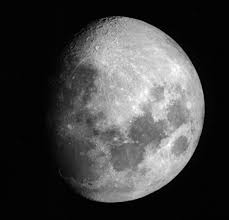
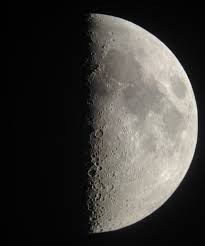
Name the moon phase
a)
waning crescent
b)
waxing crescent
c)
waning gibbous
d)
waxing gibbous
47.
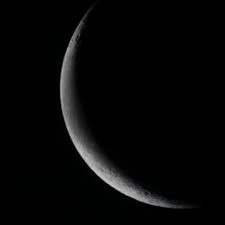
Name the moon phase
a)
waning crescent
b)
waxing crescent
c)
waning gibbous
d)
waxing gibbous
48.
Name the moon phase
a)
waning crescent
b)
waxing crescent
c)
waning gibbous
d)
waxing gibbous
49.
Name the moon phase
a)
waning crescent
b)
waxing crescent
c)
waning gibbous
d)
waxing gibbous
50.
Name the moon phase
a)
waning crescent
b)
waxing crescent
c)
waning gibbous
d)
waxing gibbous
51.
Name the moon phase
a)
waning crescent
b)
waxing crescent
c)
waning gibbous
d)
waxing gibbous
52.
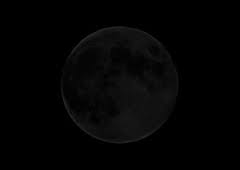
Name the moon phase
a)
First Quarter
b)
Last Quarter
c)
New Moon
d)
Full Moon
53.
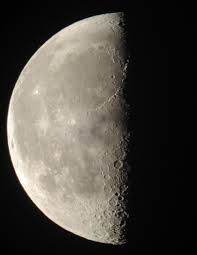
Name the moon phase
a)
First Quarter
b)
Last Quarter
c)
New Moon
d)
Full Moon
54.
Name the moon phase
a)
First Quarter
b)
Last Quarter or (third quarter)
c)
New Moon
d)
Full Moon
55.
Name the moon phase
a)
First Quarter
b)
Last Quarter
c)
New Moon
d)
Full Moon
56.
How much of the moon is always lit?
a)
can't tell
b)
always changes
c)
half
d)
3/4
57.
Name the moon phase that would come AFTER this moon.
a)
waning crescent
b)
waxing crescent
c)
waning gibbous
d)
waxing gibbous
58.
How many phases does the moon go through?
a)
4
b)
8
c)
10
d)
16
59.
Phases of the moon in which the moon appears to be getting larger are referred to as _.
a)
waxing
b)
waning
c)
new
d)
eclipse
60.
The cycle of the moon lasts about a _.
a)
day
b)
year
c)
week
d)
month
61.
Name the moon phase that would come AFTER this moon.
a)
waning crescent
b)
waxing crescent
c)
waning gibbous
d)
waxing gibbous