
 Worksheets
MCAS Review (Astronomy and Plate Tectonics)
Total questions: 115
Worksheet time: 2hrs 31mins
Name
Class
Date
1.
What part of the moon do we see from Earth?
a)
all of it
b)
the same side
c)
none of it
d)
only one quarter
2.
The moon seems to change shape from day to day in a cycle that lasts about a month as it goes through _.
a)
revolutions
b)
phases
c)
rotations
d)
eclipses
3.
As the moon's shape appears to get smaller, we say that the moon is _.
a)
swelling
b)
waxing
c)
waning
d)
disappearing
4.
About how long does it take the moon to make one complete cycle around the earth?
a)
65 days
b)
8 days
c)
365 days
d)
28 days
5.
Which moon phase is when you can't see the moon at all?
a)
Waning crescent
b)
Full moon
c)
Waxing gibbous
d)
New moon
6.
Phases of the moon in which the moon appears to be getting larger are referred to as _.
a)
waxing
b)
waning
c)
new
d)
eclipse
7.
Which of the following words describe the phases of the moon?
a)
none, quarter, half, three quarters, full
b)
new, crescent, quarter, gibbous, full
c)
dark, light, half, quarter, blue
d)
first quarter, second quarter, third quarter, fourth quarter
8.

Name the phase of the moon for letter f
a)
Waning Gibbous
b)
Waxing Gibbous
c)
Waning Crescent
d)
Waxing Crescent
9.

Name the phase of the moon for letter a
a)
First Quarter
b)
Last Quarter
c)
Waxing Gibbous
d)
Waning Gibbous
10.

Name the phase of the moon for letter b
a)
Waxing Crescent
b)
Waning Gibbous
c)
Waxing Crescent
d)
Waning Crescent
11.

Name the phase of the moon for letter c
a)
New Moon
b)
Full Moon
c)
Waxing Crescent
d)
Waning Crescent
12.
The spinning of an object on its axis is called______
a)
orbit
b)
rotation
c)
revolution
d)
tide
13.
Day and night is caused by the _____________ of earth on its axis.
a)
revolution
b)
orbit
c)
rotation
14.
As the Earth travels around the sun, this tilt causes different areas of the Earth’s surface to get different amounts of daylight at different times of the year. The angle of the Sun’s rays to the surface also causes areas to have more or less of the Sun’s energy. This causes the ________.
a)
months
b)
day and night
c)
seasons
d)
years
15.
A ______ eclipse occurs when the moon passes between Earth and the sun, blocking the sunlight from reaching Earth. The moon's shadow then hits Earth.
a)
solar eclipse
b)
lunar eclipse
c)
vernal equinox
d)
autumnal equinox
16.

A body that orbits a planet is a...
a)
Meteor
b)
Asteroid
c)
Satellite
d)
Comet
17.

Seasonal changes are caused by Earth's ........... around the sun.
a)
Orbit
b)
Revolution
c)
Rotation
d)
Tilt of axis
18.
Movement of Earth around the sun.
a)
Rotation
b)
Revolution
19.

What phase of the moon is pictured here?
a)
New moon
b)
Waxing crescent moon
c)
Full moon
d)
Waxing gibbous moon
20.

What phase of the moon is pictured here?
a)
Full moon
b)
New moon
c)
Waxing gibbous
d)
Waxing crescent
21.

What phase of the moon is pictured here?
a)
Full moon
b)
New moon
c)
Waxing gibbous
d)
Waxing crescent
22.
What is the sun?
a)
A star
b)
A moon
c)
A planet
d)
An asteroid
23.

What does this diagram represent?
a)
Solar eclipse
b)
Lunar eclipse
24.

What does this diagram represent?
a)
Solar eclipse
b)
Lunar eclipse
25.
About how long ago do scientists believe the
universe began?
a)
13-14 billion years ago
b)
13-14 million years ago
c)
12-13 billion years ago
d)
12-13 million years ago
26.

Which of the following pictures is showing a high tide?
a)
A
b)
B
c)
C
d)
D
27.
Which is the correct hierarchy of the Earth in the universe from SMALLEST TO LARGEST?
a)
Milky Way Galaxy, Earth, solar system, universe
b)
Earth, solar system, universe, Milky Way Galaxy
c)
Earth, solar system, Milky Way Galaxy, universe
d)
universe, Milky Way Galaxy, solar system, Earth
28.
What is the Earth's tilt in degrees?
a)
25.3 degrees
b)
32.5 degrees
c)
28.5 degrees
d)
23.5 degrees
29.

At position A, which hemisphere would have summer?
a)
Northern hemisphere
b)
Southern hemisphere
30.
What is the origin of the universe called?
a)
The Hubble Glitch
b)
The Big Crunch
c)
The Big Bang
d)
The Big Collapse
31.
A[n] ______________ tide occurs when the sun is at right angles to the line between Earth and the moon.
a)
high
b)
neap
c)
low
d)
spring
32.
In what way does the Sun warm Earth?
a)
radiation
b)
convection
c)
conduction
d)
condensation
33.

Our solar system has several terrestrial planets. They include:
a)
Jupiter, Earth, Mars
b)
Venus, Mercury, Mars
c)
Saturn, Neptune, Uranus
d)
Pluto, Jupiter, Earth
34.

True or False: One half of the whole moon is ALWAYS illuminated.
a)
True
b)
False
35.
The asteroid belt is located between which two planets?
a)
Earth and Mars.
b)
Venus and Earth.
c)
Mars and Jupiter.
d)
Mercury and Earth.
36.

A _______ is a burning body of matter that has entered Earth's atmosphere; "shooting star"
a)
Meteor
b)
Comet
c)
Asteroid
d)
Solar Flare
37.

Our weight on Earth is the measure of the force gravity on us. Each planet has a different amount of gravity. On which of the planets listed here would you weigh the least?
a)
Jupiter
b)
Mercury
c)
Uranus
d)
Neptune
38.

Which of the 8 planets have the most moons?
a)
Earth
b)
Jupiter
c)
Saturn
d)
Uranus
39.

It takes one year for the Earth to orbit the Sun. based on the data in the table, which planet has the longest year?
a)
Jupiter
b)
Mars
c)
Mercury
d)
Neptune
40.

A(n) ________ occurs on the day when the tilt of Earth causes the length of day to be longest or shortest.
a)
Equinox
b)
Lunar Eclipse
c)
Solar Eclipse
d)
Solstice
41.
Which day of the year has the least amount of daylight?
a)
Winter Solstice
b)
Summer Solstice
c)
Autumnal Equinox
d)
Vernal Equinox
42.
Which day of the year has the most sunlight?
a)
Winter Solstice
b)
Summer Solstice
c)
Vernal Equinox
d)
Autumnal Equinox
43.
Summer occurs on the hemisphere of Earth that is.......
a)
turned away from the sun
b)
tilted away from the sun
c)
tilted toward the sun
d)
tilted away from the sun
44.
This type of planet has no solid surface.
a)
terrestrial
b)
gas giant
45.
The name of our galaxy is
a)
Snickers
b)
Andromeda
c)
The Milky Way
d)
Pleides
46.

What type of galaxy is this?
a)
Spiral
b)
Elliptical
c)
Irregular
d)
Irrational
47.

What type of galaxy is this?
a)
Spiral
b)
Elliptical
c)
Irregular
d)
Irrational
48.

What type of galaxy is this?
a)
Spiral
b)
Elliptical
c)
Irregular
d)
Irrational
49.

How many stars are in a galaxy.
a)
millions or billions
b)
thousands
c)
hundreds
d)
Ten
50.

At position A, which hemisphere would have summer?
a)
Northern hemisphere
b)
Southern hemisphere
51.

What happens when the area in which you live tilts away from the sun?
a)
It is summer.
b)
It is spring.
c)
It is winter.
d)
It is fall.
52.
The term equinox means....
a)
equal amount of day light and equal amount of night
b)
Equal amount of winter and summer
c)
Equal amounts of hot dogs for everyone
d)
The longest day of the year
53.

Why is the Equator warmest?
a)
Because it is closest to the sun.
b)
Because it receives the most direct sunlight
c)
Because no clouds form here.
d)
Because it is far from the sun
54.
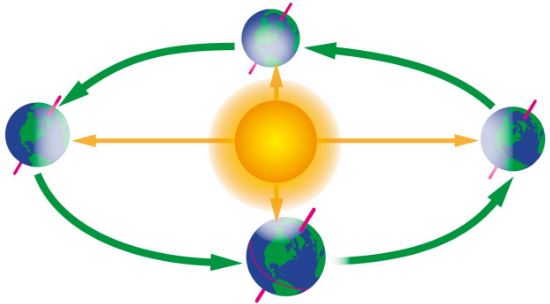
In spring/summer, the axis of the earth is pointed away or toward the sun?
a)
towards
b)
Neither away or toward
c)
away
55.

Which season is taking place in the Northern Hemisphere in Position 2?
a)
Winter
b)
Spring
c)
Summer
d)
Fall
56.

Which season is taking place in the Southern Hemisphere in Position 1?
a)
Winter
b)
Spring
c)
Summer
d)
Fall
57.

Which season is taking place in the Northern Hemisphere in Position 1?
a)
Winter
b)
Spring
c)
Summer
d)
Fall
58.

Which season is taking place in the Northern Hemisphere in Position 3?
a)
Winter
b)
Spring
c)
Summer
d)
Fall
59.

True or False
The Sun is the biggest star in the sky.
The Sun is the biggest star in the sky.
a)
True
b)
False
60.

What word best describes our sun?
a)
Average
b)
Supergiant
c)
Dwarf
d)
Red Giant
61.
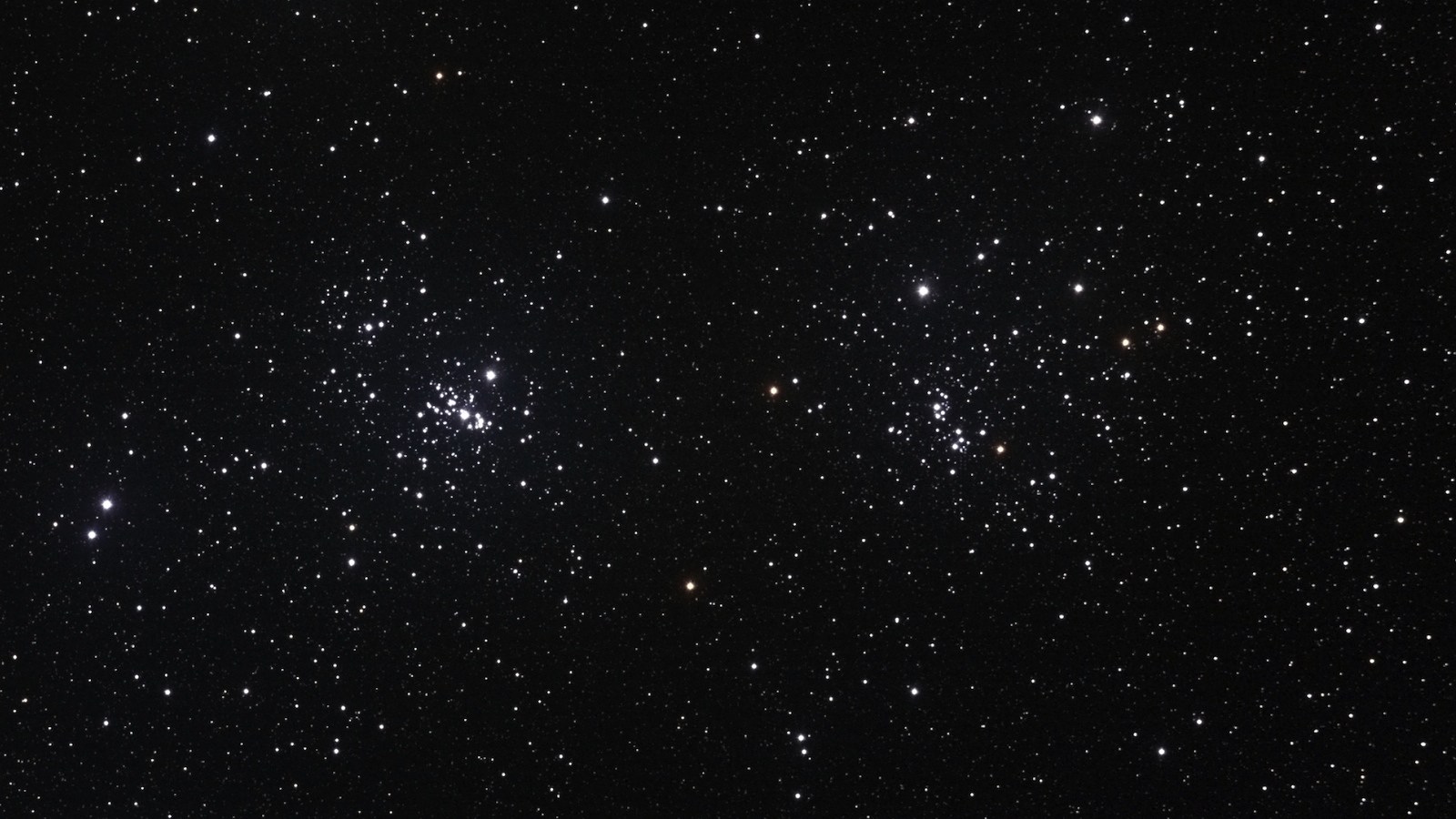
Why do other stars appear so much smaller than the sun?
a)
They are much smaller
b)
They are so far away
c)
They are not as bright
d)
They are dwarf stars
62.
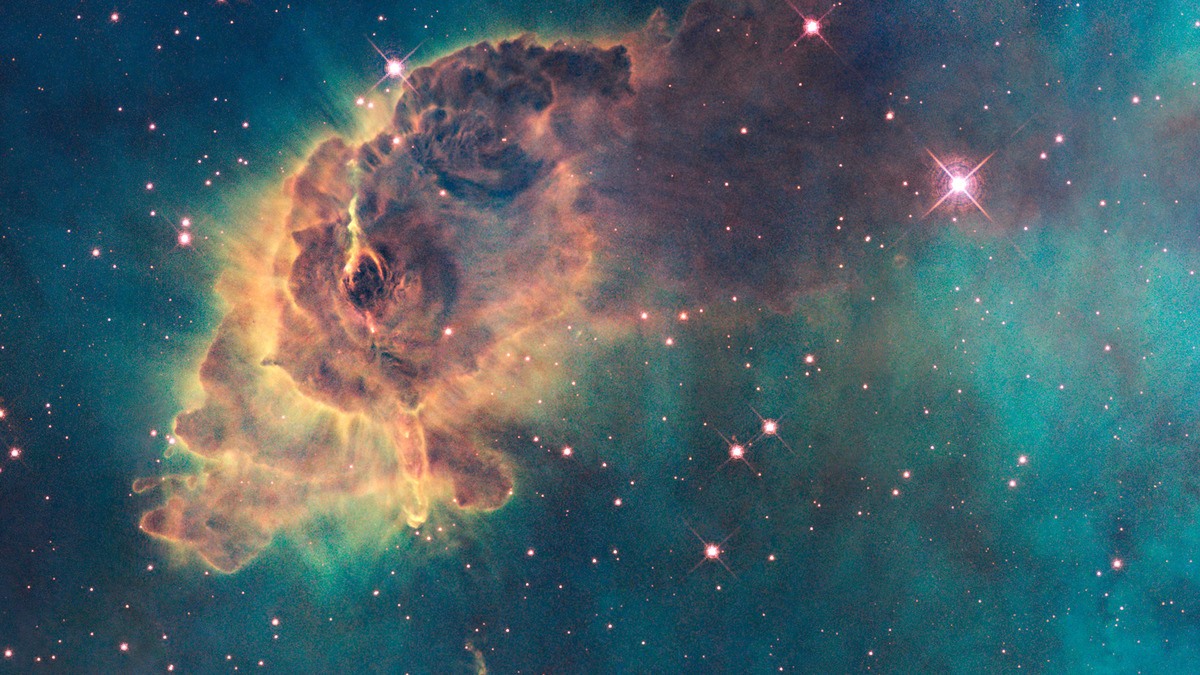
What is the name of the gas/dust clouds that form stars?
a)
Nebulas
b)
Protostars
c)
Supernova
d)
Neutron Star
63.
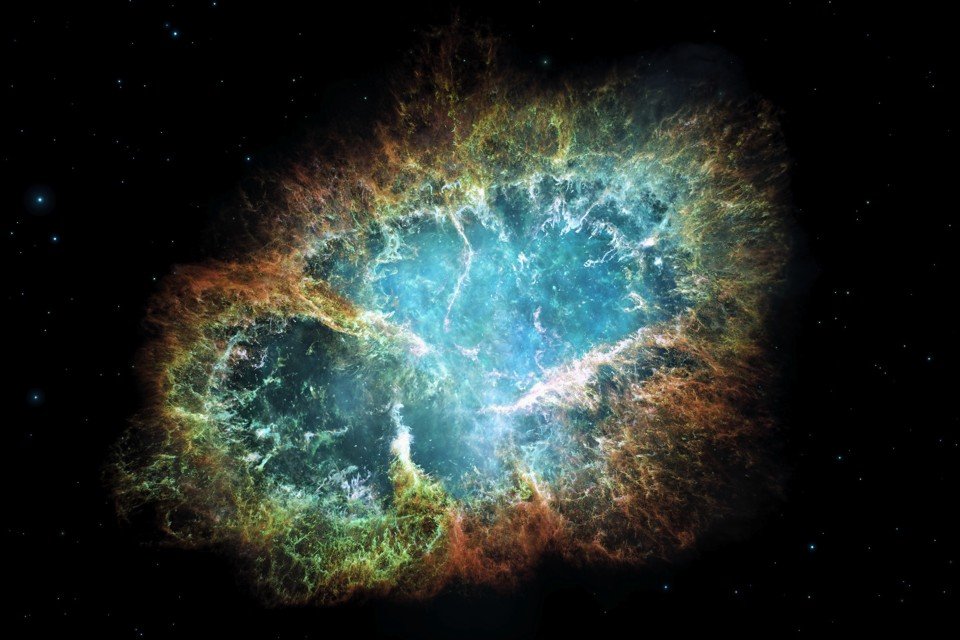
What is the name of the explosion at the death of a massive star?
a)
Supergiant
b)
Supernova
c)
Black Hole
d)
Nebula
64.
What is the main element in a stars composition?
a)
Hydrogen
b)
Helium
c)
Lithium
d)
Heavy Elements
65.
The color of the star tells us its
a)
composition
b)
Temperature
c)
Luminosity
d)
Mass
66.
The hottest color star is
a)
Blue
b)
White
c)
Yellow
d)
Red
67.
Our star is a
a)
yellow/ large star
b)
yellow/ small star
c)
yellow/ medium star
68.
The only objects in our Universe that produces and emits its own light is
a)
Nebulas
b)
Comets
c)
Planets
d)
Stars
69.
Galaxies are composed of
a)
millions of stars
b)
trillions of stars
c)
billions of stars, dust and gas
70.

Which star has the lowest luminosity?
a)
A
b)
B
c)
C
d)
D
71.

Which star has the lowest temperature?
a)
A
b)
B
c)
C
d)
D
72.

Average size stars will turn into a _____ star next.
a)
protostar
b)
red giant
c)
supergiant
d)
black hole
73.
A massive star can end it's life as a ______ or ___________.
a)
neutron star/black hole
b)
main sequence star/ nebula
c)
supernova
nebula
d)
red giant
supergiant
74.
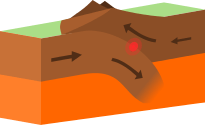
What type of plate boundary is this?
a)
Plate
b)
Divergent
c)
Convergent
d)
Transform
75.
Which of the following causes Earth's tectonic plates to move?
a)
Energy from the Sun
b)
Magnetic Pole Reversal
c)
Convection currents in the mantle
d)
Faults in Mountain Ranges
76.

What type of event will occur at this boundary?
a)
Earthquake
b)
Volcano Eruption
c)
Tornado
d)
Mountain Building
77.
A divergent boundary occurs when plates ....
a)
Pull apart
b)
Come together
c)
Slide past each other
d)
subducting
78.
Which of the following is the name of the ancient supercontinent formed 28 Million Years ago.
a)
Pangea
b)
Gondwanda
c)
Laurasia
d)
Neverland
79.
Which of the following is NOT evidence to support the theory of plate tectonics?
a)
Fossils
b)
Mountains
c)
Glaciers
d)
Sand Erosion
80.
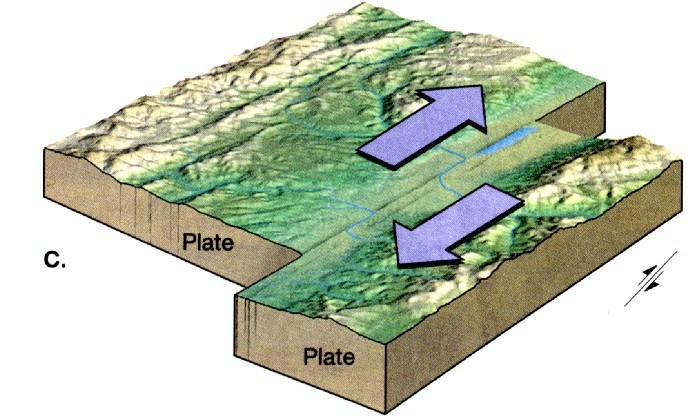
What type of plate boundary is this?
a)
Transform
b)
Convergent
c)
Divergent
d)
Plate
81.
The theory that says Earth's continents once made up an ancient supercontinent, and have been drifting apart ever since, is called the theory of...
a)
Pangea
b)
Plate Tectonics
c)
Natural Selection
d)
Gravity
82.
Oceanic Trenches are formed by _______ plate boundaries
a)
Convergent
b)
Transform
c)
Plate
d)
Divergent
83.
Islands can from from magma which is pushed up at a __________ plate boundary
a)
Divergent
b)
Convergent
c)
Transform
84.
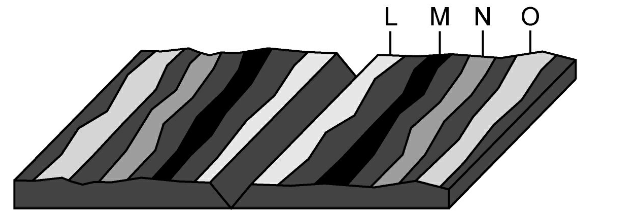
Where would the oldest rock be found?
a)
L
b)
M
c)
N
d)
O
85.
Mountains are created when....
a)
Two continental plates collide
b)
Two oceanic plates pull apart
c)
An Oceanic plate subducts under a Continental Plate
d)
Two continental plates pull apart
86.
This layer of Earth is solid Iron and Nickel
a)
Outer Core
b)
Mantle
c)
Inner Core
d)
Crust
87.
This layer of Earth is the thickest part
a)
crust
b)
outer core
c)
mantle
d)
inner core
88.
The Great Rift Valley in Africa and the Mid-Ocean Ridge were all created by this boundary
a)
Divergent
b)
Convergent
c)
Reform
d)
Transform
89.
What are the two types of crust
a)
continental and oceanic
b)
ocean and upper
c)
lower and upper
d)
pizza and subway
90.
subduction zones in the ocean can create which features?
a)
islands
b)
volcanoes
c)
earthquakes
d)
all of the above
91.
Earthquakes and volcanoes are most likely found in which locations?
a)
At plate boundaries
b)
in oceans
c)
in the middle of continents
d)
in the middle of plates
92.
When an oceanic plate and a continental plate collide, which one will subduct?
a)
oceanic
b)
continental
c)
neither
93.

What is this image...
a)
Revolving boundary
b)
San Andreas (Transform)
c)
Convergent
94.
This landform can occur at a divergent plate boundary.
a)
ocean trench
b)
mid-ocean ridge
c)
tall mountains
d)
transform fault
95.

Which of these events can ONLY happen on a DIVERGENT BOUNDARY?
a)
Rift Valley
b)
Mountain
c)
A peninsula
d)
An Insanely complex, long answer that you will click out of instinct.
96.

What type of boundary is the SAN ANDREAS FAULT on?
a)
Covergent
b)
Transformers
c)
Divergent
d)
Transform
97.

Scientists think that convection currents that move the plates flow in Earth's
a)
Continental crust
b)
Oceanic crust
c)
Asthenosphere
d)
Lithosphere
98.
The area around the pacific plate where boundaries form is called...
a)
death ring
b)
fire zone
c)
ring of fire
d)
zone of fire
99.
Which is true about hotter material in the mantle?
a)
more dense, sinks
b)
less dense, sinks
c)
less dense, rises
d)
more dense, rises
100.
The hottest layer
a)
crust
b)
inner core
c)
mantle
d)
outer core
101.
The coolest layer
a)
crust
b)
inner core
c)
mantle
d)
outer core
102.
The thinest layer
a)
crust
b)
inner core
c)
mantle
d)
outer core
103.
The thickest layer
a)
crust
b)
inner core
c)
mantle
d)
outer core
104.
Supporting Evidence: discovery of Mid-Atlantic Ridge, core rock samples showing older rocks the farther that you get from the mid ocean ridge
a)
Continental Drift
b)
Seafloor Spreading
c)
Plate Tectonics
105.
Who is known as the "Father of Continental Drift"?
a)
Harry Hess
b)
Abraham Ortelius
c)
Alfred Wegner
d)
John Tuzo Wilson
106.
According to Wegener's hypothesis of continental drift,
a)
Earth's surface is made up of seven major landmasses
b)
the continents DO NOT move
c)
Earth is slowly cooling and shrinking
d)
the continents were once joined together in a single landmass
107.
Most geologists rejected Alfred Wegener's idea of continental drift because...
a)
it did not agree with their current theory
b)
Wegener was interested in what Earth was like millions of years ago
c)
Wegener used several different types of evidence to support his hypothesis
d)
Wegener could not identify the force that moved the continents
108.
The youngest rocks on the seafloor are most likely found...
a)
closest to a mid-ocean ridge
b)
farthest from a mid-ocean ridge
c)
near the coastlines
d)
closest to a deep sea trench
109.
What were magnetic stripes on the ocean floor used to show?
a)
the seafloor was spreading outward from the mid-Atlantic ridge
b)
the seafloor was spreading inward toward the mid-Atlantic ridge
c)
the seafloor was effectively stationary
d)
natural magnetic rocks always form in the mantle of the Earth
110.
Rising magma that results from subduction may produce...
a)
fossil layers
b)
volcanic island arcs
c)
deep-sea sediment
d)
seafloor spreading
111.

Which liquid is the least dense?
a)
oil
b)
water
c)
syrup
d)
plastic bottle
112.

Which box has a higher density?
a)
Box A
b)
Box B
c)
cannot be determined
d)
they are the same
113.

Once magma reaches the earth's surface it is called.....
a)
Silica
b)
Rock
c)
lava
114.
Where is the point on the Earth’s surface directly above the focus of an earthquake?
a)
Epicenter
b)
Fault
c)
Hypocenter
d)
Tremor
115.

An area where magma melts through the crust in the middle of a plate is called a ________.
a)
island arc
b)
hot spot
c)
geyser
d)
pipe
100 %

