wayground logo

Free Printable Worksheets

NEW

Font size

S
M
L
XL
Worksheets

EOC Review Game

Total questions: 39

Worksheet time: 26mins
Name
Class
Date
1.
What do viruses need to reproduce?
a)
they need genetic material
b)
They need a host cell
c)
They need  bacteria
d)
They need insulin
2.
Which biomolecule is responsible for insulation and energy storage?
a)
Protein
b)
Nucleic Acid
c)
Lipid
d)
Carbohydrate
3.
What biomolecule do enzymes belong to? 
a)
Carbohydrate
b)
Lipid
c)
Nucleic Acid
d)
Protein
4.
What is the function of a nucleic acid?
a)
Stores genetic information
b)
Stores energy
c)
Quick source of energy
d)
Builds structures
5.
Which biomolecule is made of amino acids?
a)
Nucleic Acid
b)
Carbohydrate
c)
Protein
d)
Lipid
6.

Loriciferans are microscopic multicellular animals that live in various marine sediments. Before this discovery, some prokaryotes and some unicellular eukaryotes were known to inhabit anaerobic environments. Scientists determined that organisms of the genus Spinoloricus were eukaryotes and not prokaryotes because Spinoloricus cells have –

a)

flagella

b)

herediatry material

c)

cell walls

d)

nuclear membranes

7.

Which of these statements best explains the process of energy conversion that takes place in the mitochondria?

a)

Energy is required for carbon dioxide molecules to form six-carbon sugar molecules

b)

Water molecules and radiant energy are necessary for anaerobic respiration to take place

c)

Oxygen molecules release energy in the form of heat during combustion reactions

d)

The energy in the bonds of glucose molecules is transferred to the phosphate bonds in ATP

8.

A laboratory assistant was told to watch the mitosis of a eukaryotic cell under the microscope and inform the lead scientist when the cell entered metaphase. What should the assistant expect to look for to indicate that the cell is in metaphase?

a)

The chromosomes gather at opposite ends of the cell and uncoil, and then two new nuclear envelopes form around this genetic material.

b)

The sister chromatids separate into individual chromosomes and are moved apart

c)

The chromosomes line up across the center of the cell, and each chromosome is connected to a spindle fiber

d)

The chromatin condenses into chromosomes, the nuclear envelope breaks down, and a spindle begins to form

9.

Which of these must occur during S phase of the cell cycle so that two daughter cells can be produced during M phase?

a)

The DNA must be replicated

b)

The chromosomes must be joined

c)

The cytoplasm must be separated

d)

The cell membrane must be expanded

10.

A photograph of a virus is shown.

The projections on the surface of this virus allow the virus to —

a)

move inside a host cell

b)

attach to a host cell

c)

control a host cell’s DNA

d)

signal other viruses to infect a host cell

11.
Fruit fly body cells have 8 chromosomes. After mitosis, you would expect a resulting fruit fly daughter cell to have ...
a)
16 chromosomes.
b)
46 chromosomes.
c)
8 chromosomes.
d)
4 chromosomes.
12.
Name the phase:
a)
Anaphase
b)
Telophase
c)
Metaphase
d)
Prophase
13.
A single-celled organism that lacks a membrane-bound nucleus, mitochondria, or any other membrane -bound organelle .
a)
Prokaryote
b)
Eukaryote
c)
Nucleus
d)
Single-celled organism
14.
How does a cell maintain homeostasis?
a)
Regulates what enters and leaves the cell
b)
Flexibility
c)
Protective barrier
d)
Structure and support
15.
What is the function of a carbohydrate?
(Why do I need this before a workout?)
a)
Quick energy
b)
Movement
c)
Stores genetic information
d)
Speeds up reactions
16.

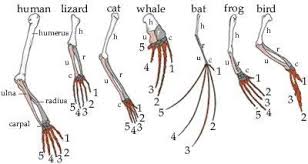
The similarities of the bones provide evidence that

a)

the organisms may have evolved from a common ancestor

b)

all species have one kind of bone structure

c)

the cells of the bones contain the same type of mutations

d)

all structural characteristics are the same in animals

17.

According to the classification chart, which two organisms are most closely related?

a)

Organisms 1 and 3

b)

Organisms 2 and 3

c)

Organisms 1 and 4

d)

Organisms 2 and 4

18.

Which characteristics do members of the Kingdoms Eubacteria and Archaebacteria share?

a)

Prokaryotic and multicellular

b)

Eukaryotic and unicellular

c)

Eukaryotic and multicellular

d)

Prokaryotic and unicellular

19.

Five general characteristics of organisms in kingdoms Plantae or Fungi are listed in the box. Which table correctly lists the characteristics of the organisms in the two kingdoms?

a)
b)
c)
d)
20.

The Linnaean taxonomic system classifies organisms into divisions called taxa. If two organisms belong to the same taxonomic group, they are related. Similarity at which of these levels indicates the closest relationship?

a)

Kingdom

b)

Class

c)

Order

d)

Genus

21.
Two different populations of birds live in the same area and eat the same types of food. Which most likely describes the relationship between these two populations of birds? 
a)
competition
b)
mutualism
c)
parasitism
d)
predator-prey
22.
A strand of DNA has these bases:
 AGC CAT GTA TAC What is the complementary DNA strand?
a)
ACG GAT CTA TAG
b)
TCG GTA CAT ATG
c)
TGC CTA GAT ATC
d)
UCG CUA CAU AUG
23.
Why is meiosis important for sexual reproduction?
a)
It allows the zygote formed from fertilization to have triple the chromosome number of the organism. 
b)
It allows gametes to have twice the original number of chromosomes of the organism.
c)
It allows gametes to have half the original number of chromosomes of the organism. 
d)
It allows the zygote formed from fertilization to have half the original number of chromosomes of the organism. 
24.
Which best explains why muscle cells are different from blood cells? 
a)
A mutation occurs during the development of muscle cells but not in blood cells.
b)
Different genes are activated in muscle cells than in blood cells. 
c)
Muscles cells experience different environmental influences than blood cells. 
d)
Muscle cells are produced by the brain, but blood cells are produced by the heart.
25.
How do viruses reproduce?
a)
They copy their own genetic material inside a protein coat.
b)
They kill a cell and reproduce inside it.
c)
They invade a living cell and use the cell's functions to replicate their genetic material.
d)
They do not reproduce because they are not technically living things.
26.

Which stage of mitosis is shown in image E?

a)

prophase

b)

metaphase

c)

anaphase

d)

telophase

27.
What is the function of the vascular system in plants?
a)
photosynthesis
b)
reproduction
c)
responding to stimuli
d)
transporting water and nutrients
28.
What process uses carbon dioxide water and sunlight as reactants and produces glucose and oxygen?
a)
cellular respiration
b)
photosynthesis
c)
making proteins
d)
transciption
29.
Which process using sugar and oxygen as reactants and produces carbon dioxide, water and ATP?
a)
Cellular Respiration
b)
Photosynthesis
c)
Transcription
d)
Translation
30.
This diagram shows the cell cycle.

Which of the following activities occur in the S phase?
a)
Replication of the DNA
b)
Growth of the cell
c)
Formation of the mitotic spindle
d)
Breakdown of the nuclear membrane
31.

When an area of a chromatid is exchanged with the matching area on a chromatid of its homologous chromosome, _________________ occurs

a)

Crossing over

b)

Mutagenesis

c)

Fertilization

d)

Hybridization

32.
Which statement summarizes the relationship between photosynthesis and respiration? 
a)
Photosynthesis and respiration have the same reactants but different products
b)
The reactants of photosynthesis are the products of respiration
c)
Photosynthesis releases energy, respiration stores energy
d)
Photosynthesis releases energy, respiration uses energy
33.
Natural selection is sometimes described as survival of the fittest. In this sence, what is meant by the fitness of an organism>
a)
The strength of the organism
b)
the intelligence of an organism
c)
the ability to survive and reproduce 
d)
the tendency to grow larger than others
34.
What is this an example of?
a)
vestigial structures
b)
embryology
c)
homologous structures
d)
fossil record
35.
As ecosystems move through the stages of succession, the populations of organisms in them change. Which of the following describes the stage of succession likely to have the most species diversity?
a)
A newly formed volcanic island
b)
An agricultural field that has not been plowed for one year
c)
A temperate forest that has never been cleared by logging
d)
A field that is regularly mowed
36.
Which of the following is an example of primary succession?
a)
lichens growing on rocks after a volcanic eruption
b)
grasses growing after a forest fire
c)
oak trees replacing pine trees in a forest
d)
non-native species introduced into a climax community
37.
Which of the following is a symbiotic relationship where both organisms benefit?
a)
mutualism
b)
commensalism
c)
parasitism
d)
competition
38.
Ticks feed off the blood of animals such as deer, dogs and even humans.  These animals are harmed and could transmit diseases from the ticks.  What type of relationship is described?
a)
predation
b)
parasitism
c)
commensalism
d)
competition
39.
Bacteria and fungi feed on a dead log.  As they feed, the organisms break down the matter in the log and return vital nutrients to the ecosystem.  What is the role of the bacteria and fungi in the environment?
a)
producers
b)
habitat
c)
decomposers
d)
parasites