Wayground logo

Free Printable Worksheets

Font size

S
M
L
XL
Worksheets

Pressure Systems

Total questions: 35

Worksheet time: 30mins
Name
Class
Date
1.
Which weather tool measures air pressure?
a)
thermometer
b)
barometer
c)
anemometer
d)
psychrometer
2.
What kind of weather is usually associated with a high pressure system?
a)
Sunny weather
b)
Precipitation (rain, snow, etc.)
3.
Which condition usually means cloudy, stormy weather?
a)
high pressure
b)
low pressure
4.
What does this symbol on a weather map indicate? 
a)
High pressure system
b)
Low pressure system
c)
Cold front
d)
Warm front
5.
A _____ is a large, swirling, low-pressure system that forms over the Atlantic Ocean.
a)
blizzard
b)
cold front
c)
tornado 
d)
hurricane
6.
Air pressure is greatest:
a)
closer to Earth
b)
farther from Earth
7.
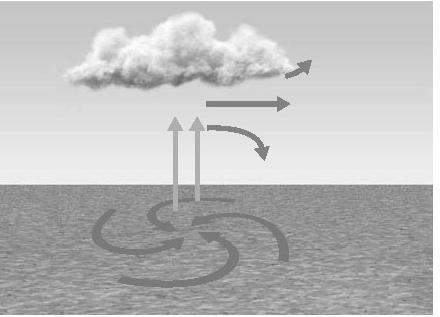
Which type of pressure system is pictured?
a)
high
b)
low
c)
medium
d)
none
8.
What type of weather would you expect with the pressure system pictured?
a)
clear
b)
cloudy
c)
severe storms
d)
hot
9.
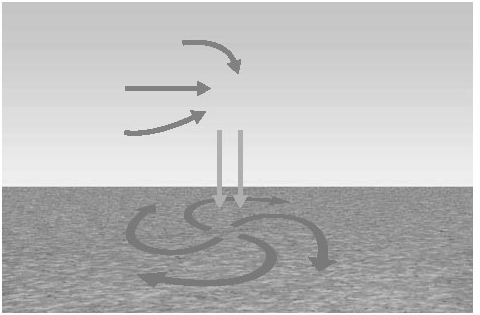
Which type of pressure system is pictured?
a)
high
b)
low
c)
medium
d)
none
10.
What type of weather would you expect from the pressure system pictured?
a)
clear
b)
cloudy
c)
hot
d)
stormy
11.
In _______ pressure systems, air rises
a)
high
b)
low
c)
medium
d)
none
12.
In _________ pressure systems, air sinks:
a)
high
b)
low
c)
medium
d)
none
13.
In what direction do winds always blow?
a)
From areas of high pressure to areas of low pressure
b)
From areas of low pressure to areas of high pressure
14.
what kind of pressure predicts good weather?
a)
high
b)
low
c)
cold
d)
stationary
15.
Which condition usually means cloudy, stormy weather?
a)
high pressure
b)
low pressure
16.
What does this symbol on a weather map indicate? 
a)
High pressure system
b)
Low pressure system
c)
Cold Front
d)
Warm Front
17.
I am the weather tool used to measure air pressure in inches of mercury or millibars (mb). What am I?
a)
barometer
b)
anemometer
c)
sling psychrometer
d)
rain gauge
18.

Closely spaced isobars indicate a __________ pressure gradient and __________ winds.

a)

weak; high

b)

weak; low

c)

steep; high

d)

steep; low

19.

Wind in the Northern hemisphere turn to the ______________ because of the Coriolis Effect.

a)

right

b)

left

c)

top

d)

south

20.
As you climb up a mountain what happens to the air pressure?
a)
decreases
b)
increases
c)
stays the same
21.
The barometer shows the air pressure is dropping.  What kind of weather will likely pass through our area in the coming days?
a)
clear, fair weather
b)
cloudy, rainy weather
22.
Convection takes place because
a)
warm air is more dense than humid air
b)
warm and cold air have the same density
c)
cold air is less dense than warm air
d)
cold air is more dense than warm air
23.
What causes winds?
a)
differences in precipitation
b)
differences in humidity
c)
differences in air pressure
24.

Three factors that combine to control wind are

a)

heat, pressure differences and gravity

b)

heat, pressure differences and friction

c)

the Coriolis effect, pressure differences and friction

d)

the Coriolis effect, pressure differences and gravity

25.

What is the ultimate energy source for most wind?

a)

Moon

b)

Sun

c)

Ocean

d)

Waves

26.

Lines on a map that connect places of equal air pressure are called

a)

Isotherms

b)

Isobars

c)

Isotemps

d)

Isocream

27.
The weight of air as it presses down on Earth's surface
a)
front
b)
air pressure
c)
air mass
d)
evaporation
28.
_____ heats quickly and _____ cools quickly.
a)
Water, water
b)
Land, water
c)
Land, land
d)
Water, land
29.

Where does the air move in an ANTICYCLONE?

a)

Upwards

b)

Downwards

30.

Where does the air move in a CYCLONE?

a)

Upwards

b)

Downwards

31.

This instrument shows the wind direction.

a)

anemometer

b)

barometer

c)

wind vane

d)

rain gauge

32.
The picture represents a land breeze
a)
True
b)
False
c)
Not enough information
d)
Maybe
33.
What is the purpose of an isobar?
a)
to show the areas that have the different air pressure.
b)
to show the areas that have the same air pressure.
34.

In a cyclone, or low pressure system, winds move

a)

Clockwise and outward

b)

Clockwise and inward

c)

Counter-clockwise and outward

d)

Counter-clockwise and inward

35.

In an anticyclone, or high pressure system, winds move

a)

Clockwise and outward

b)

Clockwise and inward

c)

Counterclockwise and outward

d)

Counterclockwise and inward