
 Worksheets
STAAR Review - Earth and Space
Total questions: 69
Worksheet time: 1hrs 8mins
Name
Class
Date
1.
Which type of plate boundary would cause mountains to form
a)
Transform
b)
Convergent
c)
Divergent
d)
Reform
2.
The Great Rift Valley in Africa and the Mid-Ocean Ridge were all created by this boundary
a)
Divergent
b)
Convergent
c)
Reform
d)
Transform
3.
When one plate sides under neath another, it _________ and the magma _________.
a)
hardens, sinks
b)
melts, sinks
c)
hardens, rises
d)
melts, rises
4.
When an oceanic plate and a continental plate collide, which one will subduct?
a)
oceanic
b)
continental
c)
neither
5.
Which of the following causes Earth's tectonic plates to move?
a)
Energy from the Sun
b)
Magnetic Pole Reversal
c)
Convection currents in the mantle
d)
Faults in Mountain Ranges
6.

What type of event will occur at this boundary?
a)
Earthquake
b)
Volcano Eruption
c)
Tornado
d)
Mountain Building
7.

When the visible (lit) portion of the moon is increasing, the moon is:
a)
waning
b)
full
c)
waxing
d)
new
8.

When the Earth is between the moon and sun, it is most likely a:
a)
new moon
b)
full moon
c)
waxing crescent
d)
waxing gibbous
9.

Approximately how much time passes between the new moon and full moon?
a)
one month
b)
two weeks
c)
3 days
d)
24 hours�
10.
Why do we always see the same side of the moon from Earth?
a)
because the phases change
b)
because it rotates and revolves at the same rate
c)
because half of the moon always receives sunlight
d)
The moon changes positions�
11.

The Moon orbits Earth in a ________________ direction
a)
clockwise
b)
counterclockwise
c)
upwards
d)
downwards
12.
Define Gibbous
a)
Less than half of moon visible
b)
More than half of moon visible
c)
All of moon visible
d)
None of moon visible
13.

Name the moon phase
a)
Waning Crescent
b)
Waxing Crescent
c)
Waning Gibbous
d)
Waxing Gibbous
14.
In order to have an eclipse, the Moon, Sun and Earth have to be?
a)
Below each other
b)
Above each other
c)
In alignment
15.
A solar eclipse can occur only during the _________________.
a)
Full moon
b)
New moon
c)
Quarter moon
16.
Which type of eclipse occurs when the Earth comes directly between the Sun and Moon?
a)
Lunar eclipse
b)
Solar eclipse
17.
What type of tide occurs during a new and full moon?
a)
Neap tides
b)
Spring tides
c)
Normal tides
18.

In the diagram given, what happens as we move to the left?
a)
Stars Get Larger
b)
Stars get Colder
c)
Stars get hotter
19.
Tides are caused mainly by what?
a)
Moon’s gravitational pull
b)
Sun’s gravitational pull
c)
Earth’s gravitational pull
20.

As a whole, Giants are considered hotter than White Dwarfs.
a)
True
b)
False
21.
Which category is our Sun located in?
a)
White Dwarfs
b)
Supergiants
c)
Main Sequence
d)
Giants
22.
A large cloud of gas and dust in interstellar space; the predecessor to stars...
a)
Constellation
b)
Black hole
c)
Nebula
d)
Galaxy
23.
Which of the following best describes the tilt of the earth when it is summer in the southern hemisphere?
a)
The northern hemisphere is tilted toward the sun
b)
The northern hemisphere is tilted away from the sun
c)
The norther hemisphere is tilted neither toward or away from the sun
d)
Why are you talking about the northern hemisphere when you asked about the southern hemisphere?
24.

Which of the following best describes the tilt of the earth during the spring and fall equinoxes?
a)
The earth is tilted away from the sun (Northern hemisphere)
b)
The earth is tilted neither toward or away from the sun (tilt is side to side)
c)
The earth is tilted toward the sun (Northern hemisphere)
d)
The earth is not tilted during spring and fall
25.
One rotation of Earth is equal to
a)
a day.
b)
a year.
26.
When the frequency of a wave increases, what happens to the wavelength?
a)
The wavelength is not directly affected by the frequency of a wave.
b)
The wavelength increases.
c)
The wavelength decreases.
d)
More specific information is needed to form a conclusion about the wavelength.
27.
If a star is being observed from Earth and it's light has shifted towards the red side of the electromagnetic spectrum it would be...
a)
Moving towards the Earth
b)
Moving away from the Earth
c)
This is a trick question that cannot be answered
d)
It isn't a star, it is a very large blueberry.
28.
A common type of galaxy that is large, three dimensional and shaped like a football in most cases.
a)
Spiral Galaxies
b)
Elliptical Galaxies
c)
Sports Galaxies
d)
Corona
29.
Unit representing the distance light travels in one year, used to record distances between stars and galaxies.
a)
Spiral Galaxies
b)
Nebula
c)
Light-Year
d)
White Dwarf
30.

The folded mountains in this model form at which type of plate boundary?
a)
transform boundary
b)
divergent boundary
c)
subduction boundary
d)
convergent boundary
31.
What is one condition that is necessary for a hurricane to form?
a)
Warm ocean water
b)
A strong cold front
c)
Cold ocean water
d)
A strong warm front
32.

**
a)
peninsula
b)
volcano
c)
delta
d)
plateau
33.

**
a)
the mass of a the plates
b)
the weight of the plates
c)
unbalanced force
d)
gravitational force
34.

**
a)
Barnard’s Star is less bright than the sun, has a surface temperature below 3,800 K, and is red.
b)
Barnard’s Star is less bright than the sun, has a surface temperature above 3,800 K, and is red.
c)
Barnard’s Star is brighter than the sun, has a surface temperature below 5,300 K, and is yellow.
d)
Barnard’s Star is brighter than the sun, has a surface temperature above 5,300 K, and is yellow
35.

**
a)
no longer tilted on its axis
b)
stopped rotating on its axis
c)
took an additional month to orbit the sun
d)
revolved around the sun in the opposite direction
36.

Using the weather map shown, which city has most likely seen an increase in temperature?
a)
Houston
b)
Oklahoma City
c)
Boston
d)
Los Angeles
37.

lines on a map that connect areas of the same elevation
a)
longitude lines
b)
latitude lines
c)
contour lines
d)
contour interval
38.
a slightly oval shaped galaxy
a)
elliptical
b)
milky way
c)
irregular
d)
spiral
39.
As the moon's shape appears to get smaller, we say that the moon is _.
a)
swelling
b)
waxing
c)
waning
d)
disappearing
40.

What moon phase is this picture?
a)
This is the waning crescent phase.
b)
This is the waxing gibbous phase.
c)
This is the waning gibbous phase.
d)
This is the new moon phase.
41.

Process that forms new oceanic crust and moves it.
a)
seafloor spreading
b)
convergent plate
c)
divergent plate
d)
mid-ocean ridge
42.
What is the highest tide?
a)
High Tide
b)
Low Tide
c)
Spring Tide
d)
Neap Tide
43.

A student stands at the point marked X on the topographic map below.
What height in meters must the student climb in order to reach the top of the hill?
What height in meters must the student climb in order to reach the top of the hill?
a)
245 m
b)
253 m
c)
236 m
d)
260 m
44.

What plate boundary feature is also shown?
a)
A ridge formed by an inactive convergent boundary
b)
A valley forming at an active divergent boundary
c)
A fault forming at an active transform boundary
d)
A volcano formed by an active transform boundary
45.

The _________ is the thinnest layer of Earth.
a)
outer core
b)
inner core
c)
mantle
d)
crust
46.
What do scientists believe is the force behind plate movement?
a)
gravity
b)
inertia
c)
convection currents
d)
magnetic pole reversals
47.
A boundary where two plates pull apart?
a)
convergent boundary
b)
divergent boundary
c)
transform boundary
d)
insurgent boundary
48.

Which feature will most likely form at the location marked by an X?
a)
a desert
b)
a volcano
c)
a rift valley
d)
a transform fault
49.

Find the contour interval:
a)
5 ft
b)
10 ft
c)
20 ft
d)
25 ft
50.

A body of sediment that is deposited at the mouth of a river or stream where it meets an ocean or lake.
a)
Island
b)
Delta
c)
Estuary
d)
Plataea
51.
Process by which water, wind, and ice wear down rocks and other exposed surfaces.
a)
Weathering
b)
Erosion
c)
Deposition
d)
No clue
52.
What do contour lines that are farther apart represent?
a)
waterfall
b)
steep area
c)
gentle slope
d)
river
53.

Which topographic map matches formation C?
a)
1
b)
2
c)
3
d)
4
54.
A[n] ___________ tide occurs when the sun, Earth, and the moon are nearly in a line.
a)
spring
b)
high
c)
low
d)
neap
55.
What do we call a tide that has largest range; highest high and lowest low?
a)
gravity
b)
wind
c)
spring
d)
neap
56.

Which phase of the moon is represented in this diagram?
a)
new moon
b)
first quarter
c)
full moon
d)
last quarter/third quarter
57.
Waning phases are when the light is being:
a)
Gained
b)
Lost
58.

What is it called when you are able to see half the moon and the light on the moon is decreasing?
a)
New moon
b)
1st quarter
c)
Full Moon
d)
3rd quarter
59.

What is it called when more than half of the moon is lit on the right side and light is increasing?
a)
Waxing cresent
b)
Waxing gibbous
c)
Waning gibbous
d)
Waning cresent
60.

What Moon phase is this?
a)
Old Moon
b)
Far Side of the Moon
c)
New Moon
d)
Waxing Gibbous
61.

What Moon phase is this?
a)
Waxing Crescent
b)
Waning Gibbous
c)
Waning Crescent
d)
Waxing Gibbous
62.
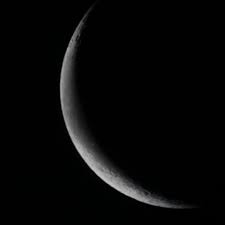
Name the moon phase
a)
waning crescent
b)
waxing crescent
c)
waning gibbous
d)
waxing gibbous
63.

Which moon phases are "crescents"?
a)
1 and 5
b)
2 and 8
c)
4 and 6
d)
3 and 7
64.

Which star has the lowest luminosity?
a)
A
b)
B
c)
C
d)
D
65.

Which planet is the largest?
a)
Jupiter
b)
Saturn
c)
Uranus
d)
Neptune
66.
The order of the planets is:
a)
Mars,Venus,Earth,
Mercury,Saturn
Jupiter, Uranus, Neptune
Mercury,Saturn
Jupiter, Uranus, Neptune
b)
Earth,Venus,Mars
Jupiter, Neptune,
Mercury,Saturn,
Uranus
Jupiter, Neptune,
Mercury,Saturn,
Uranus
c)
Mercury,Venus,Earth
Mars,Jupiter,
Saturn,Uranus
Neptune
Mars,Jupiter,
Saturn,Uranus
Neptune
67.
Which planet is fifth from the sun?
a)
Saturn
b)
Jupiter
c)
Mars
d)
Earth
68.
Which planet is seventh from the sun?
a)
Saturn
b)
Earth
c)
Venus
d)
Uranus
69.
which planet is the third from the sun?
a)
Mercury
b)
Neptune
c)
Pluto
d)
Earth
100 %

