
 Worksheets
Water Cycle
Total questions: 69
Worksheet time: 1hrs 17mins


2.Groundwater
2. The remains of the water is soaked into the ground.
2. Transpiration happens to the plants.
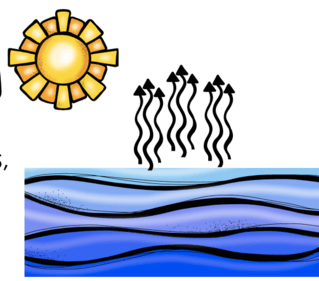
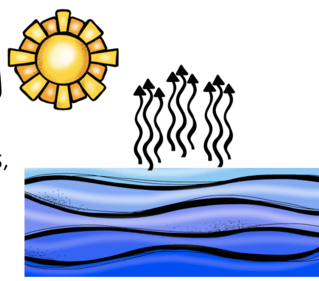
2. Evaporation







water entering or sinking into the ground
Runoff
Infiltration
Ground Water
Water Table
A model used to illustrate the movement and changes of state of water at and near Earth’s surface
Nitrogen Cycle
Carbon Cycle
Hydrologic Cycle
Life Cycle
water that cannot infiltrate will move along Earth's surface to streams, creeks, etc.
Runoff
Infiltration
Ground Water
Water Table
subsurface water that is found beneath the water table
Runoff
Infiltration
Ground Water
Water Table
mostly freshwater and is important for our homes, industry and agriculture.
Runoff
Infiltration
Ground Water
Water Table
boundary between the zone of aeration and zone of saturation
Ground Water
Water Table
Vadose Zone
Infiltration
the area of land drained by any one stream.
Runoff
Water Table
Watershed
Ground Water
% of open space in a material compared to its total volume
Permeability
Porosity
Relative humidity
Capillarity
the degree to which a liquid can pass through a material
Porosity
Permeability
Capillarity
Rate of permeability
The process of water movement through a plant and its evaporation from aerial parts, such as leaves, stems and flowers.
Precipitation
Infiltration
Condensation
Transpiration
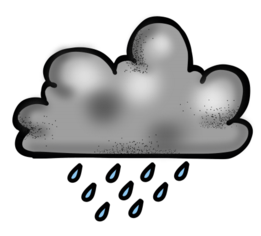
Clouds are formed when water vapor cools and condenses in a liquid state. Eventually, the air in the cloud becomes saturated with water. The water droplets that create the cloud combine, forming larger droplets which become heavier. What happens next?
The water droplets fall to the Earth as rain.
The water droplets evaporate and become water vapor again.
The water's weight causes the cloud to move, which we feel as wind.
The water is absorbed into the atmosphere.
Which step in the water cycle involves returning of fresh water to the Earth?
evaporation
condensation
precipitation
respiration

