wayground logo

Free Printable Worksheets

Font size

S
M
L
XL
Worksheets

American History Final 2

Total questions: 65

Worksheet time: 1hrs 3mins

Name
Class
Date
1.
Washington advised against political parties. The New Republic should go in the same direction, political parties would offer differing views and tear the country in half. Which document was this advice given?
a)
Monroe Doctrine
b)
Farewell Address
c)
Missouri Compromise
d)
Democratic-Republican
2.
Which president did NOT believe in political parties?
a)
George Washington
b)
John Adams
c)
Thomas Jefferson
d)
James Madison
3.
Who was George Washington's vice president?
a)
Edmund Randolph
b)
Thomas Jefferson
c)
Henry Knox
d)
John Adams
4.
Which two members of Washington's cabinet were considered political rivals?
a)
Alexander Hamilton & Thomas Jefferson
b)
Edmund Randolph & Henry Knox
c)
Thomas Jefferson & Edmund Randolph
d)
John Adams & Alexander Hamilton
5.
In his Farewell Address, George Washington warned against 2 things.  What were they?
a)
political parties and native americans
b)
permanent alliances & native americans
c)
political parties and permanent alliances
d)
native americans and the national bank
6.
Alexander Hamilton held which public office?
a)
President
b)
Secretary of the Interior
c)
Secretary of State
d)
Secretary of the Treasury
7.
who shot alexander hamilton
a)
john lurrans
b)
philip schyler
c)
aaron burr
d)
george washinton
8.
What was Hamilton's job in Washington's cabinet (executive branch)?
a)
Secretary of State
b)
Secretary of the Treasury
c)
Vice President
d)
Chief of Staff
9.
Alexander Hamilton's political party  
a)
Democratic-Republicans 
b)
Federalist 
c)
Whigs 
d)
Republicans 
10.
Why was Thomas Jefferson against Alexander Hamilton's National Bank plan 
a)
He did not like the increase in taxes the National Bank would bring
b)
He thought the National bank would give the states too much power
c)
He believed it was unconstitutional
d)
He had his own idea for a National Bank and wanted his own plan to work
11.
Before their duel, what was the relationship between Aaron Burr and Alexander Hamilton?
a)
Burr and Hamilton were friends until Hamilton supported Burr's rival for the presidency.
b)
Burr disliked the power that Hamilton had as secretary of the treasury and called him dangerous.
c)
Burr and Hamilton strongly disliked each other, and Burr blamed Hamilton for his election loss.
d)
Burr asked for Hamilton's support in approving the Constitution, but Hamilton refused to give it.
12.
Which person was for the National Bank?
a)
Jefferson
b)
Roosevelt
c)
Clinton
d)
Hamilton
13.
Who was against the idea of a National Bank?
a)
Jefferson
b)
Lincoln
c)
Trump
d)
Raegan
14.
Washington crushed an uprising over whiskey taxes using the new federal army
a)
Judiciary Act of 1789
b)
Farewell Address
c)
Whiskey Rebellion
d)
Battle of Fallen Timbers
15.
What was the most significant threat facing the Early Republic when Washington became President?
a)
Debt
b)
Native Americans
c)
British
d)
French
16.

Rebels were angry in the Whiskey Rebellion because the Government...

a)

taxed only the selling of whiskey

b)

taxed whiskey really high to make revenue in order to pay off debt

c)

taxed the selling and making of whiskey

d)

taxed whiskey really high just show the farmers who's boss out of boredom

17.
1794 A protest of small farmers in Pennsylvania against new taxes on whiskey
a)
Bank of the United States
b)
French Revolution
c)
Whiskey Rebellion
d)
Political Parties
18.
What president arranged the Louisiana Purchase?
a)
Thomas Jefferson
b)
George Washington 
c)
Andrew Jackson
d)
William Henry Harrison
19.
The United States purchased the Louisiana Territory from what country?
a)
Great Britain
b)
France
c)
Russia
d)
Spain
20.
Why did the Americans want the Louisiana territory?
a)
For control of the Mississippi ports
b)
To spy on the Spanish
c)
To control Haiti
d)
For gold and silver
21.
How did the Louisiana Purchase effect the geography of the United States?
a)
it tripled the size of the U.S.
b)
it had no effect
c)
it doubled the size of the U.S.
22.
What is Manifest Destiny?
a)
The belief that it was America's destiny to control and civilize all of North America
b)
The belief that their destiny was to manifest
c)
A religious term used to explain how to be saved
23.
Who won the Battle of the Alamo?
a)
Mexico
b)
Texans
24.

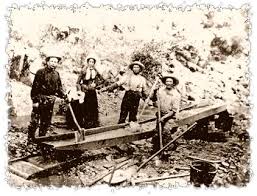
What were gold hunters also known as?

a)

Forty niners

b)

gold lookers

c)

East Coast Miners

25.
What was the first thing miners did when they arrived to California?
a)
stake a claim for their land
b)
take a shower
c)
start gold panning
d)
try to meet friends
26.
Did most gold miners strike it rich?
a)
yes
b)
no
27.
Oregon Trail 
a)
a route used during the US migration westward
b)
a person who went to California for the gold rush
c)
a giving up ( as in territory or rights ) to another
d)
a government in which citizens rule through elected representatives
28.
Texans fought for independence against what country?
a)
United States
b)
Mexico
c)
France
d)
Great Britain
29.
A belief in manifest destiny, the Mexican - American War and the completion of the Transcontinental railroad are most closely associated with the
a)
rise of big business
b)
growth of the labor movement
c)
abolitionist movement
d)
expansion and settlement of the West
30.
Which group of people were persecuted, or badly treated, by their neighbors in Ohio, Missouri, and Illinois, and then decided to move to Utah?
a)
Mormon pioneers
b)
Goshute Native Americans
c)
Pioneers headed to Oregon
d)
The Donner-Reed party
31.

Mountain men made their living as

a)

Merchants

b)

Missionaries

c)

Surveyors

d)

Trappers

32.

What was the largest single migration in American history

a)

forty-niners to California

b)

Mormons to Utah

c)

mountain men to Oregon

d)

traders to Mexico

33.

By 1860 where were most of the country's goods manufactured?

a)

Northeast

b)

Northwest

c)

Southeast

d)

Southwest

34.
The invention of the ____________ made it possible to send messages to citites in minutes.  
a)
telegraph
b)
steamboat
c)
railroad
d)
business
35.
What invention solved the problem of the difficult and time-consuming process of removing seeds from short-staple cotton?
a)
Seed Separator
b)
Cotton Reaper
c)
Steel plow
d)
Cotton Gin
36.
The growing demand for labor after the invention of the cotton gin led to increase use of WHAT labor?
a)
child
b)
expensive
c)
factory
d)
slave
37.

What was the industrial revolution?

a)

A period of rapid growth in using people for manufacturing and production that began in the mid-1700s.

b)

A period of rapid growth in using children for manufacturing and production that began in the mid-1700s.

c)

A period of rapid growth in using machines for manufacturing and production that began in the mid-1700s.

d)

A period of rapid growth in using money for manufacturing and production that began in the mid-1700s.

38.

What did Samuel B. Morse invent?

a)

telegraph

b)

safety pin

c)

Morse Code

d)

sewing machine

39.
fabric that is woven
a)
technology
b)
textile
c)
economy
d)
industrialization
40.
Why were railroads so important during this time?
a)
they moved goods more quickly and less expensively over greater distances
b)
they were fun to ride on to go visit family in other states
c)
people could ride on railroads to get to their jobs in another city
41.
What was Stowe's first full length novel?
a)
To Kill a Mockingbird
b)
The Slave Catcher
c)
Uncle Tom's Cabin
d)
The Last of the Mohicans
42.

Who wrote Uncle Tom’s Cabin?

a)

Harriet Tubman

b)

Harriet Beacher Stow

c)

Robert E Lee

d)

Fredrick Douglas

43.

What did Uncle Tom’s Cabin convince the North of?

a)

That it was ok to own a slave

b)

That you shouldn’t have more than two slaves

c)

That Uncle Tom had a nice cabin

d)

That slavery was wrong

44.

A person who fights to end slavery.

a)

Preacher

b)

Suffragist

c)

Conductor

d)

Abolitionist

45.

Fought between 1861-1865 in the United States, it was fought between the North and the South.

a)

American Revolutionary War

b)

Vietnam War

c)

Civil War

d)

War of 1812

46.
The economy in the northern part of the United States was ________ and depended on manufacturing.
a)
agricultural
b)

industrial

c)
union
47.

Because the war disrupted their supply of cotton, the South expected support from which two countries?

a)

Britain and France

b)

France and Canada

c)

France and Spain

d)

Spain and Mexico

48.
Where is the capital of the Confederacy?
a)
Washington D.C.
b)
Montgomery
c)
Richmond
d)
Charleston
49.
The capital of the Confederacy was ____.
a)
Washington
b)
Williamsburg
c)
Richmond
50.
The first Battle of Bull Run (Manassas) was the first major battle of the Civil War. _______ played a major role in this battle.
a)
Andrew Jackson
b)
John Brown
c)
Thomas "Stonewall" Jackson
51.
The majority of the battles of the Civil War were fought where?
a)
North
b)
South
c)
West
d)
Union
52.

What Union general is famous for his 'march to the sea' from Atlanta to Savannah?

a)

Ulysses S. Grant

b)

William Tecumseh Sherman

c)

Robert E. Lee

d)

Stonewall Jackson

53.

What helped lincoln win the 1864 election?

a)

Lee's surrender

b)

Promotion of Grant

c)

Sherman's capture of Atlanta

d)

Winning at Gettysburg

54.
The place where Confederate General Robert E. Lee surrendered his army to General Ulysses S. Grant.
a)
Fort Sumter
b)
Sherman's March to Sea
c)
Appomattox Court House
d)
Uncle Tom's Cabin
55.
Which of the following was an advantage that the Union had?
a)
Smarter Generals
b)
Defensive Strategy
c)
More Troops
d)
Highly Motivated
56.
Where did the south finally surrender unconditionally?
a)
Antietam
b)
Gettysburg
c)
Richmond
d)
Appomatox
57.
The Civil War began when Confederate forces launched an attack at which location?
a)
Fort Sumter
b)
Fort Williams
c)
Fort Western
d)
Fort Apache
58.
Southern General from Virginia who led the South's largest army and lost a major battle at Gettysburg, Pennsylvania.
a)
Jefferson Davis
b)
Robert E. Lee
c)
Abraham Lincoln
d)
Ulysses S. Grant
59.
The Union General that forced General Lee to surrender at Appomattox.
a)
Fort Sumter
b)
Abraham Lincoln
c)
Robert E. Lee
d)
Ulysses S. Grant
60.
What was Sherman's strategy of total war?
a)
destroying all civilian and military resources
b)
killing prisoners of war
c)
attacking from land and sea
d)
killing all the slaves in the south
61.
This gave slaves their freedom.
a)
The Compromise of 1850
b)
The Gettysburg Address 
c)
The Battle of Antietam 
d)
The Emancipation Proclomation
62.
What was nickname for Union soldiers in the North?
a)
Abraham Lincoln
b)
Rebel
c)
Yankees
d)
outfit
63.
What was the nickname for Confederate soldiers in the South?
a)
Yankees
b)
Rebels
c)
Antietam
d)
Harriet Tubman
64.

People killed or wounded are called

a)

Casualties

b)

Rebels

c)

Yankee's

d)

Resistance

65.

In a protected postition

a)

entrenched

b)

casualties

c)

resistance

d)

Yankees