

wayground logo

Free Printable Worksheets

Font size

S
M
L
XL
Worksheets

FTCE Science

Total questions: 86

Worksheet time: 1hrs 24mins
Name
Class
Date
1.
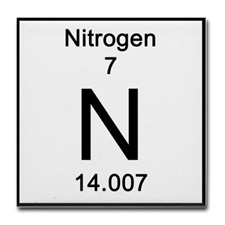
What is the number of protons that the element in this image contain?
a)
14
b)
7
c)
15
d)
18
2.
What is the atomic mass of "F"
a)
9
b)
18
c)
17
d)
19
3.
all matter is made of what 
a)
energy 
b)
atoms 
c)
electrons 
d)
compounds 
4.
The positive particles of an atom are 
a)
electrons 
b)
positrons 
c)
neutrons 
d)
protons 
5.
the central region of an atom where its neutrons and protons are is its 
a)
nucleus 
b)
electron cloud
c)
core 
d)
center 
6.
Particles in an atom that are neutral and have no charge are 
a)
negatrons 
b)
electrons 
c)
neutrons 
d)
protons 
7.
What is the atomic number for an element with three protons?
a)
2
b)
1
c)
3
d)
6
8.
A particle that moves around the nucleus is a(n)...
a)
Proton
b)
Neutron
c)
Electron
d)
Quark
9.
The atomic number of an elements is the total number of which particles in the nucleus?
a)
neutrons
b)
protons
c)
electrons
d)
protons and electrons
10.
What are the horizontal rows on the periodic table called?
a)
Groups
b)
Periods
c)
Rows
d)
Classifications
11.
What is the mass of an atom if it has 11 protons, 12 neutrons, and 11 electrons?
a)
22
b)
11
c)
34
d)
23
12.
What are the three states of matter?
a)
solid, volume, mass
b)
density, volume, mass
c)
solid, liquid, gas
d)
density, gas, volume
13.
Something that takes up space and has mass.
a)
volume
b)
matter
c)
mass
d)
density
14.
A measure of how much mass is contained in a given unit of volume.
a)
mass
b)
density
c)
volume
d)
matter
15.
The amount of space something takes up
a)
density
b)
volume
c)
mass
d)
matter
16.
Shape is a ____ that helps identify an object.
a)
physical property
b)
chemical property
c)
mass
d)
matter
17.
Iron + oxygen = rust is an example of a ___________.
a)
physical property/change
b)
chemical property/change
c)
mass
d)
volume
18.
The idea that everything is made up of small particles called atoms...
a)
Big idea
b)
Atomic Theory
c)
Einstein's Theory
19.
Type of matter made of two or more elements...
a)
element
b)
mixture
c)
compound
20.
Substance with NO definite volume or shape...
a)
solid
b)
liquid
c)
gas
21.
Substance with a DEFINITE volume, but NO definite shape...
a)
solid
b)
liquid
c)
gas
22.
Substance with a DEFINITE shape and DEFINITE volume...
a)
solid
b)
liquid
c)
gas
23.
Lucky Charms and milk is an example of a...
a)
Mixture
b)
Solution
24.
Lemonade is an example of a...
a)
Mixture
b)
Solution
25.
What is a solute?
a)
The substance that does the dissolving in a solution.
b)
The substance that is dissolved into the solution.
c)
The mixing of different substances.
d)
The process in which neutral molecules lose or gain electrons
26.
What is a solvent?
a)
The substance that does the dissolving in a solution.
b)
The substance that is being dissolved in a solution.
c)
The mixing of different substances.
d)
The process in which neutral molecules lose or gain electrons
27.
Which is an example of a solute?
a)
Egg whites
b)
Sugar
c)
Water
d)
Acetone
28.
In the modern periodic table elements are arranged by:
a)
atomic mass
b)
atomic number
c)
valence electrons
d)
number of isotopes
29.
Each column in the periodic table is called a 
a)
period
b)
group
c)
cluster
d)
unit
30.
The atomic number tells you what?
a)
number of electrons
b)
number of protons
c)
number of neutrons
d)
both electrons and protons in an atom.
31.
What does the 1.00794 stand for?
a)
Hydrogen
b)
atomic number
c)
atomic mass
d)
atomic explosion
32.
How many protons are in Beryllium?
a)
4
b)
9
c)
5
d)
2
33.
Why is water NOT on the periodic table?
a)
It is naturally occuring
b)
It is a compound, not an element
c)
It exists as a solid, a liquid, and a gas
d)
Its chemical formula doesn't fit
34.
_______ are the ROWS on the periodic table.
a)
Families
b)
Groups
c)
Periods
d)
Elements
35.
What does the atomic mass tell you?
a)
Basically,the number of electrons and protons
b)
The number of neutrons
c)
Basically, the number of protons and neutrons
d)
The number of protons.
36.
Which scientist saw the atom as a positively charged sphere with negative particles (electrons) embedded within?
a)
J.J. Thomson
b)
Niels Bohr
c)
John Dalton
d)
Ernest Rutherford
37.
Which scientist proposed a model of the atom in which the electrons are orbiting at different levels?
a)
Niels Bohr
b)
James Chadwick
c)
John Dalton
d)
Ernest Rutherford
38.
Bohr's model of the atom proposed that ___.
a)
electrons move around the nucleus in fixed orbits
b)
neutrons move around the nucleus
c)
neutrons do not exist, but are just paired protons and electrons
d)
the nucleus spins
39.
J.J. Thomson's model of the atom is given this name because he believed that electrons were spread randomly throughout a positive sphere.
a)
plum pudding model
b)
orbital model
c)
Thomson's model
d)
plasma model
40.
Order the atomic models below from the oldest to the mot recent.
a)
2, 1, 3, and 4
b)
1, 2, 4, and 3
c)
3, 2, 4, and 1
d)
3, 1, 2, and 4
41.
The rate at which a radioactive element decays is its ____.
a)
quarter life
b)
whole life
c)
wonderful life 
d)
half life
42.
Energy in the sun is produced as a result of nuclear ____ reactions.
a)
fusion
b)
fission
c)
waste
d)
sub
43.
Both a fusion reaction and a fission reaction produce 
a)
heat (energy)
b)
light
c)
sound
d)
magnetism
44.
If the half life of a radioactive element is 100yrs, how long would it take for the radioactivity to reduce by one half?
a)
200yrs
b)
100yrs
c)
50yrs
d)
300yrs
45.
What is nuclear fission?
a)
Big nucleus splits to small nuclei
b)
Small nuclei fuse into a bigger nucleus
c)
Stars
d)
Making compounds
46.
A benefit to using nuclear fission power is that it:
a)
supplies a lot of electricity
b)
conserves organic fuels, like oil, coal, and wood
c)
eliminates huge quantities of sulfur dioxides, which pollute our air
d)
all of the choices
47.
In nuclear fusion, smaller atoms are forced together to create larger atoms. Does this process release, absorb or maintain energy?
a)
Absorb energy
b)
Maintain energy
c)
Release energy
48.

In a ___________change, a substance changes into a different substance.

a)

Physical

b)

Chemical

49.

The Law of Conservation of Mass states

a)

that matter exists in all states and reacts the same

b)

that matter can only be changed into new substances by introducing a catalyst

c)

that matter exists in the same state throughout any chemical change

d)

that matter cannot be created or destroyed and that the mass of the products must equal the mass of the reactants

50.

Which of these is NOT a sign that a chemical change has occurred?

a)

A loss of transparency

b)

An unexpected color change

c)

A temperature change

d)

The formation of a precipitate

51.

An gel ice pack getting cold after you put it in the freezer for an hour.

a)

Chemical change

b)

Physical change

52.

Which of the following IS a physical change?

a)

Getting a haircut

b)

Rusty metal

c)

sour milk

d)

A compound

53.

___________________ are the elements or compounds that leave (are formed in) a chemical reaction.

a)

Polymers

b)

Bonds

c)

Reactants

d)

Products

54.
In the following equation, what are the reactants?
CaO + 3 C → CaC2 + CO
a)
CaO + 3 C
b)
CaC2 + CO
c)
3 C → CaC2
d)
the stuff on the outside
55.
In the following equation, what are the products?
HCl + Zn → H2 + ZnCl2
a)
HCl + Zn
b)
H2 + ZnCl2
c)
Zn → H2
d)
the stuff on the outside
56.
H2 + O2 -> 2 H2O
Which kind of reaction is this?
a)
synthesis
b)
decomposition
c)
single displacement
d)
double displacement
57.
Mn + _ HNO3 → Mn(NO3)2 + H2
Which kind of reaction is this?
a)
synthesis
b)
decomposition
c)
single displacement
d)
double displacement
58.
FeS + HCl ---> FeCl2 + H2S
Which kind of reaction is this?
a)
synthesis
b)
decomposition
c)
single displacement
d)
double displacement
59.
H2CO3 → H2O + CO2
Which kind of reaction is this?
a)
synthesis
b)
decomposition
c)
single displacement
d)
double displacement
60.
4Si + S8 --> 2Si2S4
a)
Synthesis
b)
Decomposition
c)
Single displacement
d)
Double displacement
61.
3Ca + 2AlCl3 --> 3CaCl2 + 2Al
a)
Synthesis
b)
Decomposition
c)
Single diplacement
d)
Double displacement
62.
3Mg + N2 --> Mg3N2
a)
Synthesis 
b)
Decomposition
c)
Single displacement
d)
Combustion
63.
2NO2 --> N2 + 2O2
a)
Synthesis
b)
Decomposition
c)
Single displacement
d)
Combustion
64.
Which chemical reaction breaks down into 2 substances?
a)
Double Replacement
b)
Single Replacement
c)
Synthesis
d)
Decomposition
65.
Which chemical reaction switches 2 elements?
a)
Double Replacement
b)
Single Replacement
c)
Combustion
d)
Decomposition
66.
A + B = AB
a)
Double Replacement
b)
Synthesis
c)
Combustion
d)
Decomposition
67.
AB + CD = AD + CB
a)
Double Replacement
b)
Single Replacement
c)
Combustion
d)
Decomposition
68.
A + BC = B + AC
a)
Single Replacement
b)
Combustion
c)
Double Replacement
d)
Synthesis
69.
Which chemical reaction takes place when 2 substances react to form a single product?
a)
Decomposition
b)
Double Replacement
c)
Single Replacement
d)
Synthesis
70.
AB = A + B
a)
Decomposition
b)
Single Replacement
c)
Combustion
d)
Synthesis
71.
What is the left part of a chemical equation called?
H2 + O → H2O
a)
Reactants
b)
Products 
c)
Yields 
d)
Chemical Equation 
72.
What is the right part of a chemical equation called?
H2 + O H2O
a)
Reactants
b)
Products 
c)
Yields 
d)
Chemical Equation 
73.
Ca + AlCl3→ CaCl2 + Al
a)
Synthesis (combination)
b)
Decomposition
c)
Single replacement
d)
Double replacement
74.
CH4 + 2 O2 → CO2 + 2H2O
 In this equation, CH4 is a
a)
product
b)
reactant
c)
displacement
75.
NO2 →N2 + O2
a)
Synthesis (combination)
b)
Decomposition
c)
Single replacement
d)
Combustion
76.
Type of reaction ?
C5H9O +  O2 -->
 CO2 + H2O
a)
Double Replacement
b)
Single Replacement
c)
Combustion
d)
Decomposition
77.
FeCl3 + NaOH --> Fe(OH)3 + NaCl
a)
Double Replacement
b)
Single Replacement
c)
Combustion
d)
Decomposition
78.
Which are the four organic compounds found in living things?
a)
Carbohydrates, Lipids, Proteins, Nucleic Acids
b)
Fats, Proteins, Atoms, Osmosis
c)
Eating, Sleeping, Breathing, Talking
d)
Anything without Carbon in it
79.
What makes something inorganic
a)
It does not contain Hydrogen
b)
It contains Carbon
c)
It does not contain Carbon and Hydrogen
d)
It has more than one element
80.
Bleach is a strong base, what is the pH level of bleach?
a)
13
b)
14
c)
1
d)
2
81.
Which food is the most acidic?
a)
bananas
b)
lemon juice
c)
orange juice
82.
What is another name for a base?
a)
Acid
b)
Alkaline
c)
pH
83.
On the pH scale what numbers are neutrals?
a)
8-14
b)
0-7
c)
7
d)
1
84.
On the pH scale what numbers are acids?
a)
8-14
b)
0-7
c)
7
d)
1
85.
On the pH scale what numbers are bases?
a)
8-14
b)
0-7
c)
7
d)
1
86.
The pH scale measures...
a)
...the strength of an acid.
b)
...the strength of hydrogen ions.
c)
...the concentration of hydrogen ions.
d)
...the concentration of an acid
