
 Worksheets
Unit 2 NGSS Review
Total questions: 84
Worksheet time: 1hrs 16mins
Name
Class
Date
1.
What is at the center of the Solar System?
a)
Earth
b)
Moon
c)
Sun
d)
Jupiter
2.
How many planets orbit the Sun?
a)
1
b)
4
c)
8
d)
10
3.
The sun is a glowing ball of _______.
a)
water
b)
liquid
c)
gases
d)
rocks
4.
The light from the sun....
a)
only reaches part of the moon because of clouds
b)
lights up the whole moon but Earth's shadow gets in the way sometimes
c)
lights up 1/2 the moon and we see different portions of the 1/2 lit moon
d)
illuminates different amounts of the moon because the distance from the sun changes
5.
The sun appears to move across the sky each day. What causes this?
a)
the spinning of the Earth's axis
b)
The path of the sun around the Earth
c)
the production the nuclear energy around the sun
d)
the tilt of the Earth on its axis
6.

What is the sun made from?
a)
Heat
b)
Hydrogen and Helium gas
c)
Nitrogen gas
d)
Fire and heat
7.
Day and night is caused by the _____________ of earth on its axis.
a)
revolution
b)
orbit
c)
rotation
d)
dance moves
8.
What are the reasons for the seasons?
a)
Earth's tilt and rotation.
b)
Earth's rotation and revolution.
c)
Earth's tilt and revolution.
d)
Earth's tilt and resolution
9.

Because the earth revolves around the sun on a tilted axis...
a)
we have seasons
b)
we see different constellations in the sky different times of year
c)
the vertical ray of the sun travels from 23.5N to 23.5S
d)
All of the above
10.
The force of gravity between any two objects is greatest if their masses are
a)
small and distance is small
b)
smalls and distance is great
c)
large and distance is small
d)
large and distance is great
11.
The force of attraction between objects that have mass.
a)
Force
b)
Gravity
c)
Weight
d)
Density
12.
How does changing the distance between objects affect the force of gravity?
a)
Decreasing distance increases gravity
b)
increasing distance increases gravity
c)
Distance does not affect gravity
13.
What is gravity?
a)
a force between objects that pushes them apart
b)
a force between any two objects that pulls them together
c)
a force that causes objects to remain at rest
d)
potato salad
14.

At position A, which hemisphere would have summer?
a)
Northern hemisphere
b)
Southern hemisphere
15.

The hemisphere where you live
a)
equator
b)
southern
c)
northern
d)
eastern
16.

Which season(s) have the same amount of daylight hours as nighttime hours?
a)
More hour of light during spring, less in fall
b)
More hours of light during summer, less in winter
c)
None of the seasons have equal daylight hours
d)
All are equal
17.

In winter, the axis of the earth is pointed away or toward the sun?
a)
towards
b)
up
c)
down
d)
away
18.

In summer, the axis of the earth is pointed away or toward the sun?
a)
towards
b)
up
c)
down
d)
away
19.

In spring/summer, the axis of the earth is pointed away or toward the sun?
a)
towards
b)
Neither away or toward
c)
away
20.

Why is it warmer in the summer?
a)
Closer to the sun
b)
More direct light from Earth's tilt
c)
Stronger light from the sun
d)
Earth spins slower
21.

What season is depicted in the picture?
a)
summer
b)
winter
c)
fall
d)
spring
22.

Why is the Equator warmest?
a)
Because it is closest to the sun.
b)
Because it receives the most direct sunlight
c)
Because no clouds form here.
d)
Because it is far from the sun
23.

What season is depicted in the picture?
a)
summer
b)
winter
c)
fall
d)
spring
24.

Which season is taking place in the Southern Hemisphere in Position 1?
a)
Winter
b)
Spring
c)
Summer
d)
Fall
25.

Which season is taking place in the Northern Hemisphere in Position 1?
a)
Winter
b)
Spring
c)
Summer
d)
Fall
26.

Which season is taking place in the Northern Hemisphere in Position 2?
a)
Winter
b)
Spring
c)
Summer
d)
Fall
27.

Which season is taking place in the Northern Hemisphere in Position 3?
a)
Winter
b)
Spring
c)
Summer
d)
Fall
28.

Which season is taking place in the Northern Hemisphere in Position 4?
a)
Winter
b)
Spring
c)
Summer
d)
Fall
29.
If its ____ in the Northern hemisphere, then its fall in the Southern hemisphere.
a)
spring
b)
summer
c)
fall
d)
winter
30.

If its ____ in the Northern hemisphere, then its summer in the Southern hemisphere.
a)
spring
b)
summer
c)
fall
d)
winter
31.
Where is the equator?
a)
at the North Pole
b)
halfway between the North and South Poles
c)
at the South Pole
d)
in the Western hemisphere
32.
What is a force field?
a)
The lines of force around an object that can affect other
objects within it.
objects within it.
b)
The lines of energy around an object that can affect other objects within it.
c)
The entire mass of an object.
33.
What does the word attractive mean?
a)
Particles with different charge signs move towards each other.
b)
Particles with the same charge signs move towards each other.
c)
Particles with different charge signs move away from each other.
34.

Is this attractive or repulsive?
a)
Attractive
b)
Repulsive
35.

Is this attractive or repulsive?
a)
Attractive
b)
Repulsive
36.

Is this attractive or repulsive?
a)
Attractive
b)
Repulsive
37.

Is this attractive or repulsive?
a)
Attractive
b)
Repulsive
38.
How do force field lines travel?
a)
They travel in both directions.
b)
From south to north pole.
c)
From north to south pole.
39.

Which electromagnet would be the strongest?
a)
Electromagnet A
b)
Electromagnet B
40.

Which electromagnet would be the weakest?
a)
Electromagnet C
b)
Electromagnet D
41.
How can you increase the strength of an electromagnet?
a)
By adding more wire turns to the nail.
b)
By taking away wire turns on the nail.
c)
By having an even number of turns on the nail.
d)
By having an odd number of turns on the nail.
42.

What would be the electric force for the particles shown?
a)
Attractive
b)
Repulsive
43.

What would be the electric force for the particles shown?
a)
Attractive
b)
Repulsive
44.

What would be the electric force for the particles shown?
a)
Attractive
b)
Repulsive
45.

What would be the electric force for the particles shown?
a)
Attractive
b)
Repulsive
46.

What would be the electric force for the particles shown?
a)
Attractive
b)
Repulsive
47.

What would be the electric force for the particles shown?
a)
Attractive
b)
Repulsive
48.

Which graph shows the correct relationship between distance and electrical force?
a)
Graph B
b)
Graph C
49.

Which diagram shows the objects that will have a greater gravitational force between them?
a)
Diagram 1
b)
Diagram 2
c)
Both Diagrams 1 & 2
50.
How can you increase the gravitational force between objects?
a)
Increase the distance between them.
b)
Decrease the mass of the objects.
c)
Increase the mass of the objects.
51.

What will happen when these magnets are brought close together?
a)
They will attract each other.
b)
They will repel each other.
c)
Both magnets will turn to the left
d)
Both magnets will turn to the right
52.
True or False: All metals stick to magnets.
a)
True
b)
False
53.
What happens when two north poles of a magnet are placed together?
a)
they repel
b)
they attract
c)
they cancel each other out
d)
the strength of the magnet is doubled
54.
A north pole and a south pole will attract.
a)
True
b)
False
55.
Electricity is the flow of _________.
a)
Protons
b)
Neutrons
c)
Electrons
56.
What two variables can increase or decrease gravitational pull?
a)
mass and direction
b)
velocity and distance
c)
mass and distance
d)
size and velocity
57.
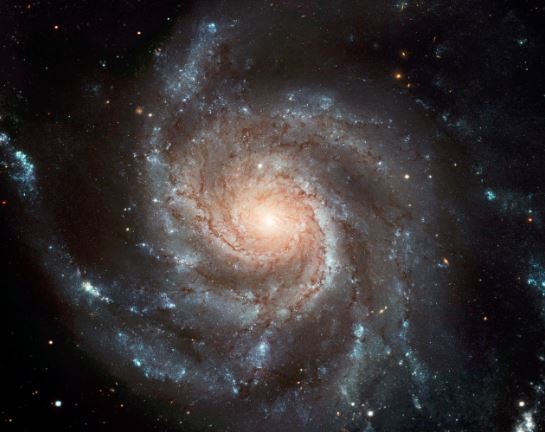
Without gravity, the stars, planets and all celestial objects in the universe would _?_.
a)
continue to orbit each other
b)
move in a random direction
c)
move in a straight line
d)
stop moving
58.
The spinning of an object on its axis is called a(n) _?_.
a)
orbit
b)
rotation
c)
revolution
d)
phase
59.
A(n) _?_ is the gravitationally curved path of an object around a point in space.
a)
orbit
b)
rotation
c)
revolution
d)
phase
60.
A(n) _?_ is the time it takes an object to travel once in a one complete orbit.
a)
phase
b)
rotation
c)
revolution
d)
axis
61.
If you increase the mass of the Sun slightly, what happens to the time it takes the Earth to complete one revolution? (experiment #1)
a)
It decreases.
b)
It stays the same.
c)
It increases.
62.

Why do planets orbit the sun?
a)
Gravitational attraction
b)
Magnetic pull
c)
Attached by strings
d)
They don't orbit the sun
63.

TRUE or FALSE: all planets have unique characteristics?
a)
True
b)
False
64.
How many planets are in the our solar system?
a)
9
b)
7
c)
8
d)
10
65.
TRUE or FALSE: Planets orbit the sun on the same path.
a)
True
b)
False
66.
All of the following can be can example of a physical characteristic EXCEPT...
a)
Ice covered planet
b)
Gaseous planet
c)
Desert covered planet
d)
8th planet from the sun
67.

Moons orbit planets because...
a)
they do not orbit planets.
b)
they have gravitational pull.
c)
they have craters.
d)
they are magnetically attracted.
68.

Neptune is the _____ planet form the sun.
a)
7th
b)
5th
c)
2nd
d)
8th
69.
The 3rd planet from the sun is ______.
a)
Mercury
b)
Venus
c)
Earth
d)
Jupiter
70.

What planet is closes to the sun?
a)
Earth
b)
Venus
c)
Mercury
d)
Saturn
71.
When planets have different properties and traits from other planets, they are called ____________.
a)
unique characteristics
b)
same characteristics
c)
common characteristics
d)
usual characteristics
72.
Which moon phase is when you can't see the moon at all?
a)
Waning crescent
b)
Full moon
c)
Waxing gibbous
d)
New moon
73.
About how long does it take the moon to make one complete cycle around the earth?
a)
65 days
b)
8 days
c)
365 days
d)
28 days
74.
Phases of the moon in which the moon appears to be getting larger are referred to as _.
a)
waxing
b)
waning
c)
new
d)
eclipse
75.

What Moon phase is this?
a)
Full Moon
b)
Waxing Gibbous
c)
New Moon
d)
Half Moon
76.

What Moon phase is this?
a)
Waxing Crescent
b)
Waning Gibbous
c)
Waning Crescent
d)
Waxing Gibbous
77.

What Moon phase is this?
a)
Last Quarter
b)
New Moon
c)
Third Quarter
d)
First Quarter
78.

What Moon phase is this?
a)
Waxing Gibbous
b)
Waning Crescent
c)
Waning Gibbous
d)
Full Moon
79.

What Moon phase is this?
a)
Old Moon
b)
Far Side of the Moon
c)
New Moon
d)
Waxing Gibbous
80.

What Moon phase is this?
a)
Waning Crescent
b)
Waxing Crescent
c)
Waxing Gibbous
d)
Waning Gibbous
81.

What Moon phase is this?
a)
Waxing Crescent
b)
Waning Gibbous
c)
Waxing Gibbous
d)
Waning Crescent
82.

What phase comes AFTER this one?
a)
Waning Crescent
b)
Waning Gibbous
c)
Waxing Crescent
d)
Third Quarter
83.

What phase comes BEFORE this one?
a)
Waxing Gibbous
b)
Waxing Crescent
c)
Waning Gibbous
d)
Waning Crescent
84.
The complete cycle of the moon lasts about a _.
a)
day
b)
year
c)
week
d)
month
100 %

