
Font size
S
M
L
XL
 Worksheets
2D Geometry Review
Total questions: 94
Worksheet time: 2hrs 54mins
Name
Class
Date
1.

What type of angle is shown?
a)
acute
b)
obtuse
c)
right
d)
straight
2.

What type of angle is shown?
a)
acute
b)
obtuse
c)
right
d)
straight
3.
Which could be the measurement of an acute angle?
a)
0
b)
35
c)
180
d)
90
4.

What type of angle is shown?
a)
acute
b)
obtuse
c)
right
d)
straight
5.
If you were to add a right angle plus a right angle it would equal what ____
a)
90
b)
91
c)
181
d)
180
6.

Which type of angle is pictured?
a)
Acute
b)
Right
c)
Obtuse
d)
Straight
7.
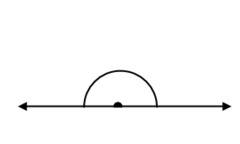
What type of angle is shown?
a)
acute
b)
obtuse
c)
right
d)
straight
8.
Angles that have a measure more than 90 degrees and less than 180 degrees are called ______ ______.
a)
right angles
b)
acute angles
c)
obtuse angles
d)
straight angles
9.
What could be the measurement of an obtuse angle?
a)
90
b)
20
c)
130
d)
180
10.
What is the measurement of a straight angle?
a)
100
b)
180
c)
360
d)
240
11.

Which angle type is pictured?
a)
Acute
b)
Right
c)
Obtuse
d)
Straight
12.
Acute angle - an angle that is ______ a 90 degree angle.
a)
more than
b)
less than
c)
equal to
d)
none of the above
13.
Obtuse angle - an angle that is _______ a 90 degree angle.
a)
more than
b)
less than
c)
equal to
d)
none of the above
14.
An angle that is exactly 180o.
a)
right
b)
acute
c)
obtuse
d)
straight
15.
An angle that is exactly 90 degrees.
a)
right
b)
acute
c)
obtuse
d)
straight
16.

This slice of pizza at the bottom makes what kind of angle?
a)
right
b)
acute
c)
obtuse
d)
straight
17.

This lighthouse to the boat makes what type of angle?
a)
right
b)
acute
c)
obtuse
d)
straight
18.
Congruent means:
a)
angles that are opposite from each other
b)
angles that are less than 90o
c)
angles that add up to 180o
d)
angles that have the same measurement
19.
The point where 2 rays meet is called the....
a)
right angle
b)
acute angle
c)
vertex
d)
congruent
20.
What are vertical angles?
a)
Angles that are adjacent to each other
b)
Angles that add up to 180°
c)
Angles that are opposite of each other when lines intersect
d)
Angles that add up to 90°
21.
Vertical angles are always
a)
acute
b)
total 180 degrees
c)
congruent (equal measures)
d)
adjacent angles
22.
What does it mean if two angles are adjacent?
a)
They share a side and a vertex
b)
They are opposite each other across an intersection of two lines
c)
They share only a vertex, not a side
d)
none of the above
23.
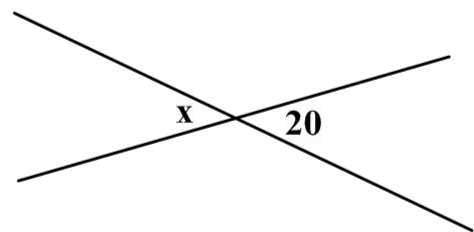
Find the missing angle. Find x.
a)
20o
b)
70o
c)
160o
d)
180o
24.

Identify the vertex and sides of the angle
a)
Vertex: B; Sides: ray BC & ray BA
b)
Vertex: A; Sides: ray AB & ray AC
c)
Vertex: C; Sides: ray CA & ray CB
25.

Classify the angle.
a)
acute
b)
obtuse
c)
right
d)
straight
26.

Classify the angle
a)
acute
b)
obtuse
c)
right
d)
straight
27.

Classify the angle
a)
acute
b)
obtuse
c)
right
d)
straight
28.

Which is NOT a name of this angle?
a)
<HJK
b)
<KJH
c)
<J
d)
<JHK
29.
Two angles added together to produce 90 degrees are ________________ angles.
a)
Supplementary
b)
Complementary
c)
Right
d)
Vertical
30.

These angles are...
a)
Complementary
b)
Supplementary
c)
Neither
31.

Write and solve an equation to find the missing angle.
a)
60
b)
70
c)
50
d)
140
32.

Write and solve an equation to find the missing angle.
a)
43
b)
47
c)
57
d)
67
33.
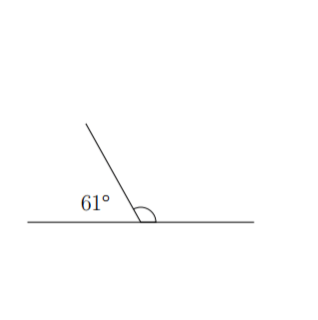
Write and solve an equation to find the missing angle.
a)
39
b)
129
c)
119
d)
129
34.

∠1 and ∠3 are ______________ angles.
a)
complementary
b)
supplementary
c)
vertical
d)
adjacent
35.
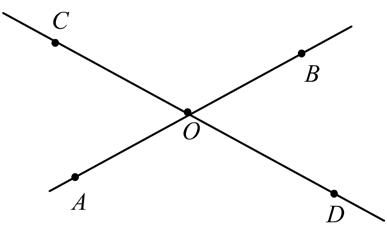
Which are pairs of vertical angles?
a)
∠COB & ∠COA
b)
∠AOD & ∠AOC
c)
∠COB & ∠AOD
d)
∠BOD & ∠AOD
36.

Classify the angles that are labeled and find the measure of x.
a)
60°, complementary
b)
60°, supplementary
c)
120°, vertical
d)
120°, adjacent
37.
Write and solve an equation to find the value of x.
a)
20o
b)
70o
c)
160o
d)
180o
38.

Write and solve an equation to find the value of x.
a)
15o
b)
50o
c)
130o
d)
165o
39.
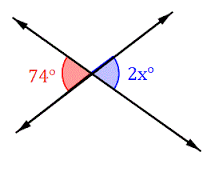
Write and solve an equation to find the value of x.
a)
37
b)
72
c)
108
d)
18
40.
Complementary angles measures _____ degrees.
a)
45
b)
180
c)
90
d)
30
41.
Supplementary Angles measure _____ degrees.
a)
180
b)
55
c)
100
d)
90
42.

How are these angles related?
a)
Vertrical
b)
Complementary
c)
Adjacent
d)
Supplementary
43.
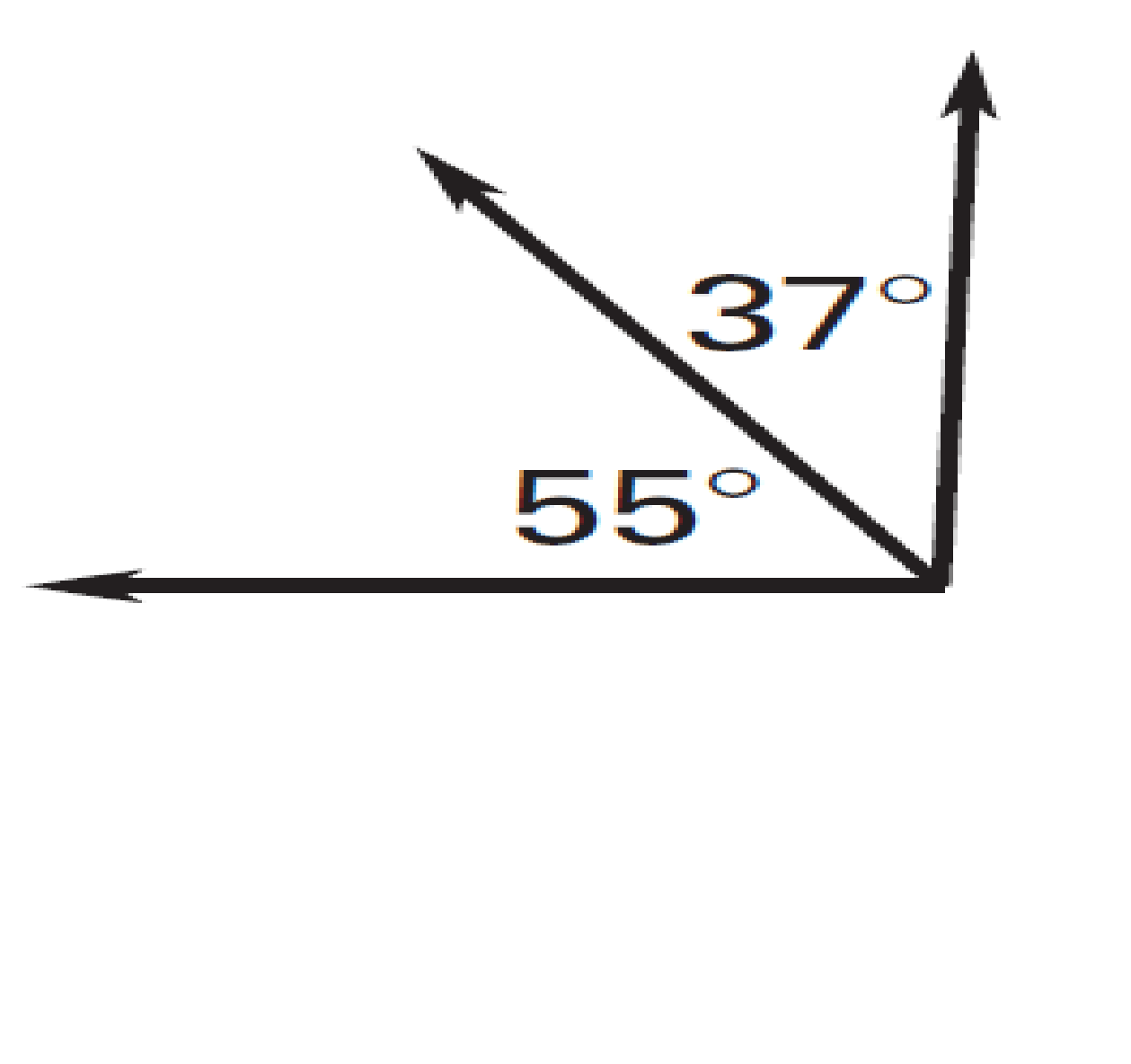
complementary, supplementary, or neither?
a)
Complementary
b)
Supplementary
c)
Neither
44.

If I wanted to name ∠KGL which colored angle am I talking about?
a)
light blue
b)
yellow
c)
blue
d)
green
45.

Name the blue angle
a)
∠GLK
b)
∠L
c)
∠HGL
d)
∠KLH
46.
How many letters do you need to name an angle? (if more than one angle is stemmed from the vertex)
a)
0
b)
2
c)
3
d)
4
47.

There are two right angles shown in this figure. They are
a)
angle WZU and angle XZW
b)
angle WZU and angle YZX
c)
angle XZU and angle WZU
48.

Angle WZU is a
a)
right angle
b)
straight angle
c)
obtuse angle
d)
acute angle
49.

Angle XZU is a
a)
straight angle
b)
obtuse angle
c)
right angle
d)
acute angle
50.
Angle YZW is an
a)
obtuse angle
b)
right angle
c)
acute angle
d)
straight angle
51.

Classify this triangle by its sides.
a)
equilateral
b)
scalene
c)
isosceles
d)
right
52.

Classify this triangle by its sides.
a)
equilateral
b)
scalene
c)
isosceles
53.

Classify this triangle by its angles.
a)
equiangular
b)
acute
c)
obtuse
d)
right
54.

Classify this triangle by its angles.
a)
right
b)
equiangular
c)
acute
d)
obtuse
55.

Classify this triangle by its sides and its angles.
a)
obtuse scalene
b)
equilateral equiangular
c)
acute right
d)
right isosceles
56.

Classify this triangle by its sides and angles.
a)
obtuse scalene
b)
right isosceles
c)
obtuse isosceles
d)
acute isosceles
57.

Classify this triangle by its sides and angles.
a)
equilateral equiangular
b)
acute isosceles
c)
acute scalene
d)
right equilateral
58.

Classify this triangle by its sides and angles.
a)
obtuse scalene
b)
acute scalene
c)
equilateral equiangular
d)
acute isosceles
59.

Classify this triangle by its sides and angles.
a)
obtuse scalene
b)
equilateral equiangular
c)
right isosceles
d)
obtuse equilateral
60.

Classify this triangle by its sides and angles.
a)
right isosceles
b)
acute scalene
c)
obtuse scalene
d)
acute isosceles
61.

Classify this triangle by its sides and angles.
a)
right scalene
b)
obtuse equilateral
c)
right isosceles
d)
obtuse isosceles
62.

Classify this triangle by its sides and angles.
a)
right isosceles
b)
obtuse scalene
c)
equilateral equiangular
d)
obtuse isosceles
63.
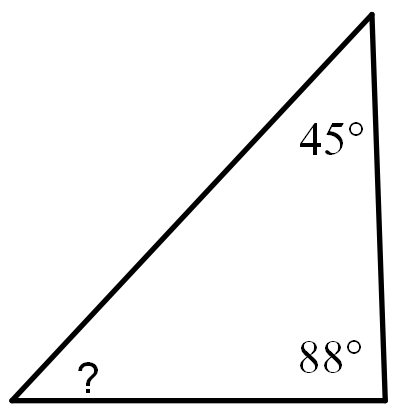
Find the measure of the missing angle.
a)
47
b)
57
c)
53
d)
133
64.
If 2 of the angles of a triangle are 30 and 70 degrees, the third angle measures...
a)
80
b)
100
c)
60
d)
90
65.
Classify this triangle by its sides and angles.
a)
right isosceles
b)
acute scalene
c)
obtuse scalene
d)
acute isosceles
66.

Find the measure of the indicated angle.
a)
95
b)
85
c)
35
d)
45
67.

Find the measure of angle D.
a)
140 degrees
b)
16 degrees
c)
40 degrees
d)
90 degrees
68.

Find the missing angle.
a)
29°
b)
39°
c)
49°
d)
59°
69.
The Triangle Sum Theorem states that the if you add all angles in a triangle you will get the magic number ______.
a)
45°
b)
90°
c)
180°
d)
360°
70.
What is/are the formula(s) to find the circumference of a circle?
a)
3π6
b)
4π
c)
2πr πd
71.
What is pi (π)?
a)
An irrational number
b)
A natural number
c)
An integer
d)
A whole number
72.
What is the radius of a circle with a diameter of 67?
a)
15
b)
21.8
c)
33.5
73.
What is/are the formula(s) to find the area of a circle?
a)
πr2
b)
2πr
c)
√π
74.
What is the area of a circle with a radius of 3?
a)
9π
b)
5π
c)
91π
d)
34π
75.

What is the radius of the circle?
a)
240
b)
16
c)
8
d)
4
76.
What is Circumference?
a)
π
b)
The distance around the outside of a circle
c)
The amount of space on the inside of a circle
77.

What is the area of the circle?
a)
15.7 cm²
b)
78.5 cm²
c)
31.4 cm²
d)
5 cm²
78.

What is the circumference of the circle?
a)
25.12 in.
b)
12.56 in.
c)
50.24 in.
79.

What is the area of the circle?
a)
31.4 cm²
b)
15.7 cm²
c)
78.5 cm²
d)
10 cm²
80.

What is the circumference of the circle?
a)
50.24 cm
b)
200.96 cm
c)
25.12 cm
d)
16 cm
81.
A DVD has a diameter of 15 millimeters. Which equation would help you determine the circumference?
a)
c = 15π
b)
C = 2π15
c)
c = 15 ÷ π
d)
c = 15 π
82.
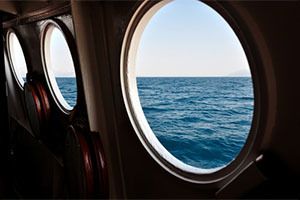
A cruise ship has a large, circular window. It has a diameter of 8 meters. What is the window's area?
a)
31.25 m2
b)
29.55 m2
c)
30.36 m2
d)
50.27 m2
83.
If the problem ask you to find the distance around a circle, which formula should you use?
a)
r = 1/2d
b)
d = 2r
c)
C = πd
d)
A = πr²
84.
If the word problem is asking you to find the space inside the circle, which formula should you use?
a)
r = 1/2d
b)
d = 2r
c)
C = πd
d)
A = πr²
85.
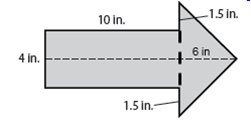
The arrow shown is on a sign. What is the area of the arrow?
a)
17 in2
b)
40 in2
c)
52 in2
d)
61 in2
86.
The arrow shown is on a sign. What is the area of the arrow?
a)
17 in2
b)
40 in2
c)
52 in2
d)
61 in2
87.
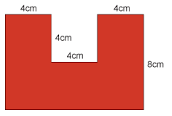
What is the area of the composite figure?
a)
80 cm2
b)
16 cm2
c)
96 cm2
d)
32 cm2
88.
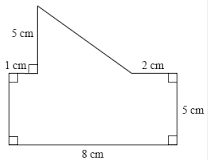
What is the area of the composite figure?
a)
40 sq cm
b)
65 sq cm
c)
52.5 sq cm
d)
25 sq cm
89.

Find the area of the figure:
a)
276 cm2
b)
114 cm2
c)
247 cm2
d)
390 cm2
90.
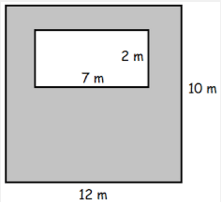
What is the area of the shaded region?
a)
14 m2
b)
120 m2
c)
106 m2
d)
134 m2
91.
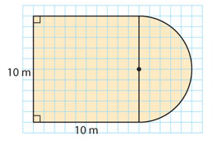
Find the area of the composite figure.
a)
100
b)
400
c)
137.5
d)
175
92.

The diagram shows the spot on a basketball court called the “key”. What is the area of the key? Use 3.14 for ∏ .
a)
284.52 ft2
b)
228 ft2
c)
317 ft2
d)
116.71 ft2
93.

Tell whether the angles are complementary or supplementary. Then find the value of x.
a)
Complementary; x=3.4
b)
Complementary; x=45
c)
Supplementary; x=20
d)
Supplementary; x=175
94.

What equation would you use to find the value of x?
a)
2x-6=7x+4
b)
2x-6+7x+4=90
c)
2x-6+7x+4=180
d)
2x-6+7x+4=360
Reset

