Wayground logo

Free Printable Worksheets

Font size

S
M
L
XL
Worksheets

MAP: End of Year Review - Part 2

Total questions: 50

Worksheet time: 33mins

Name
Class
Date
1.
The part of your eye that gives it its color.  It is a muscle that controls the size of your pupil.
a)
cornea
b)
lens
c)
pupi
d)
iris
2.
What is this?
a)
Cornea
b)
Choroid
c)
Cones
d)
Lens
3.
What is #9?
a)
Cochlea
b)
Stirrup
c)
Round Window
d)
Eustachian Tube 
4.
What is D?
a)
external auditory canal
b)
cochlea
c)
Eustachian tube
d)
stapes
5.
What is 5?
a)
retina
b)
cornea
c)
iris
d)
optic disc
6.

inflammation of the middle ear

a)

otitis media

b)

otitis externa

c)

meningitis

d)

encephalitis

7.
Released from the pancreas; causes liver to convert glycogen to glucose
a)
Glucagon
b)
Insulin
c)
Estrogen
d)
Adrenaline
8.
Released from the pituitary; this hormone helps to regulate the body's water balance
a)
TSH
b)
Oxytocin
c)
Aldosterone
d)
ADH
9.
If you have diabetes, you most likely have a problem with this hormone.
a)
ADH
b)
Glucagon
c)
Insulin
d)
PTH
10.

Which of the following conditions develops from an overproduction of growth hormone in a child?

a)

alexiomegly

b)

dwarfism

c)

congenital hypothyroidism

d)

gigantism

11.
The gland labeled 4 in the diagram is?
a)
the thymus gland
b)
the thyroid gland
c)
the parathyroid glands
d)
the adrenal glands
12.
Identify which of these would result due to constantly high insulin levels.
I. Weight loss
II. Type 2 Diabetes
III. Type 1 Diabetes
IV. Insulin Resistance
V. Harder to lose weight
VI. Feeling full
a)
II
b)
All of these
c)
I, II, IV, and VI
d)
II, IV, V
13.

Which part of human blood carries hormones and nutrients?

a)

plasma

b)

platelets

c)

red blood cells

d)

white blood cells

14.
Which blood cells are the most numerous?
a)
RBC
b)
WBC
c)
platelets
15.
B cells, T cells, and natural killer cells are ______.
a)
monocytes
b)
basophils
c)
eosinophils
d)
lymphocytes
16.
Where does hemopoesis occur?
a)
Yellow marrow
b)
red marrow
c)
inside muscles
d)
inside blood vessels
17.
The three steps of hemostasis are:
1. vascular spasm
2. ___________
3. coagulation
a)
platelet plug formation
b)
agglutination
c)
dilation
d)
erythropoieten formation
18.
What type of tissue is blood?
a)
nerve
b)
muscle
c)
epithelial
d)
connective
19.

What are the oval-shaped structures that store lymphocytes and filter out pathogens?

a)

Lymph

b)

Lymph Vessels

c)

Lymph Nodes

d)

Lymph Glands

20.
Which type of cells make antibodies?
a)
A cells
b)
B cells
c)
M cells
d)
T cells
21.

What type of immunity is a result of having and recovering from an illness?

a)

Innate Immunity

b)

Passive Acquired Immunity

c)

Inactive Acquired Immunity

d)

Active Acquired Immunity

22.
Which of the following are the blood vessels that helps blood flow away from the heart?
a)
Veins
b)
Arteries
c)
Cappillaries
23.
What is the name of the part labelled 1?
a)
Right Atrium
b)
Left Atrium
c)
Right Ventricle
d)
Left Ventricle
24.
What is the function of a valve?
a)
Helps blood to clot
b)
Keeps blood flowing in all directions
c)
Keeps blood flowing in one direction
d)
Stops blood from flowing
25.
This is the thickest layer of the heart
a)
Pericardium
b)
Endocardium
c)
Myocardium
d)
Epicardium
26.
What is the pressure inside the arteries during contraction called.
a)
systolic
b)
diastolic
27.
When you breathe, your lungs take in ___ and remove ___. 
a)
air/oxygen
b)
oxygen/carbon dioxide 
c)
carbon dioxide/waste 
d)
waste/air 
28.
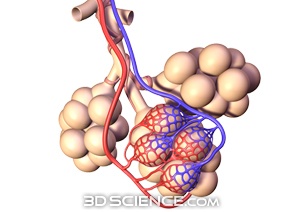
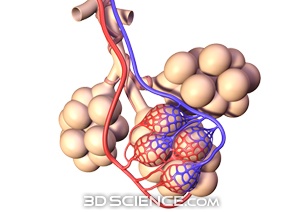
The air sacs that are covered with capillaries where gas exchange takes place
a)
bronchi
b)
lungs
c)
oxygen
d)
alveoli
29.
Flap of skin that covers the opening to the windpipe during swallowing
a)
Stomach
b)
Trachea
c)
Pancreas
d)
Epiglottis
30.
Given the following structures:
1. larynx
2. nasal cavity
3. pharynx
4. trachea
Which of the following is the correct order that air would flow during inhalation. 
a)
1,2,3,4
b)
2,3,1,4
c)
2,1,3,4
d)
4,2,3,1 
31.

What is the name of this structure?

a)

epiglottis

b)

bronchi

c)

trachea

d)

bronchioles

32.

What is the primary function of mucus and cilia in the nostrils?

a)

Filtration

b)

Temperature control

c)

Sound production

d)

Respiration

33.
What is the volume of one breath called?
a)
minute ventilation
b)
inspiratory capacity
c)
tidal volume
d)
vital capacity
34.
Bile is made by which digestive organ?
a)
Gallbladder
b)
Stomach
c)
Rectum
d)
Liver
35.
Nutrients from digested food are absorbed in which digestive organ?
a)
Small Intestine
b)
Stomach
c)
Large Intestine
d)
Gallbladder
36.
Which organ pushes food down to the stomach?
a)
Mouth
b)
Esophagus
c)
Rectum
d)
Large intestine
37.
What is the hard outer covering of the tooth called?
a)
pulp
b)
cementum
c)
dentine
d)
enamel
38.
First straight part of small intestines
a)
Duodenum
b)
Ileum
c)
Jejunum
d)
Pyloric Sphincter Valve
39.
Which is a function of the large intestine? 
a)
Produces digestive enzymes
b)
Holds a supply of bile
c)
Absorbs water
d)
Digests food
40.
Enzyme which helps to digest fats in the small intestine.  Secreted by the liver.
a)
bile
b)
pepsin
c)
gastrin
d)
amylase
41.

The transport of urine from the renal pelvis into the urinary bladder is the function of the

a)

urethra

b)

efferent arteriole

c)

afferent arteriole

d)

renal pyramids

e)

ureters

42.

The kidneys

a)

help regulate blood volume

b)

help control blood pressure

c)

secrete erythropoietin

d)

help control blood PH

e)

All these are correct

43.

The cortex, medulla, and renal pelvis are all structures of the:

a)

ureter

b)

bladder

c)

urethra

d)

kidney

44.

Choose the disorder that most closely matches the definition given: inflammation of the urinary bladder

a)

cystitis

b)

glomerulonephritis

c)

incontinence

d)

diabetes insipidus

45.

What is located at #3?

a)

urinary bladder

b)

kidney

c)

urethra

46.
Identify Letter G
a)
Ureter
b)
Renal Capsule
c)
Renal Coretx
d)
Renal Medulla
47.
a)
Proximal convoluted tubule
b)
Distal convoluted tubule
c)
Glomerulus
d)
Glomerular capsule
48.
How does the glomerulus filter blood into the Bowman's capsule? 
a)
High pressure 
b)
Concentration Gradient 
c)
Active transport 
d)
Passive transport 
49.
After traveling through the epididymis, sperm travel through the 
a)
prostate gland
b)
vas deferens
c)
efferent ductules
d)
rete testes
50.
Identify structure number 3.
a)
Uterus
b)
Vagina
c)
Fallopian Tube
d)
Ovary