wayground logo

Free Printable Worksheets

Font size

S
M
L
XL
Worksheets

Energy (VA SOL PS.5) Gr8 Science SOL Review

Total questions: 71

Worksheet time: 1hrs 1mins

Name
Class
Date
1.

What type of energy is the diver displaying?

a)

kinetic

b)

potential

2.

Which of the following actions would increase the potential energy of the diver?

a)

placing the diving board lower

b)

placing the diving board higher

c)

placing the boy on the ground

d)

replacing the boy with a smaller boy

3.

In the picture, which ball has the greatest potential energy?

a)

A

b)

B

c)

C

4.

Which energy conversion is taking place?

a)

kinetic to potential (mechanical energy)

b)

potential to kinetic (mechanical energy)

5.

What is true about a roller coaster car as it is going down a hill?

a)

The kinetic energy is increasing.

b)

The speed of the car is not changing.

c)

The car is not transferring energy.

d)

The potential energy is increasing.

6.

A pendulum at point B...

a)

KE is at its highest and PE is at its lowest.

b)

PE is at its highest and KE is at its lowest.

c)

PE is at its lowest and KE is at its lowest.

d)

KE is at its highest and PE is at its highest.

7.
What kind of energy is in a moving skateboard?
a)
Potential
b)
Kinetic
8.
What kind of energy is in a rock at the edge of a cliff?
a)
Potential
b)
Kinetic
9.
What kind of energy is in a battery?
a)
Potential
b)
Kinetic
10.
How much potential energy is at the top of a hill on a rollar coaster ride
a)
100%
b)
50%
c)
0%
d)
20%
11.
The faster an object moves, the ________ kinetic energy it has. 
a)
more
b)
less
c)
none of the above
d)
all of the above 
12.

Gravitational potential energy depends on the ________ and ________ of the object. CHOOSE 2

a)

mass

b)

velocity/speed

c)

height/distance

13.

When you stretch a rubber band, you are storing __________ energy.

a)

kinetic

b)

potential

14.

Food has _________ energy.

a)

Potential

b)

Kinetic

15.

What type of energy is in this picture?

a)

Kinetic

b)

Potential

16.
what type of energy is stored in a battery?
a)
electrical
b)
chemical
c)
thermal
d)
mechanical
17.
Electrical Energy is transferred to _____ Energy.
a)
Thermal
b)
Solar
c)
Electrical
d)
None
18.
Which energy transformation occurs in a toaster?
a)
chemical to electric
b)
electric to thermal
c)
kinetic to chemical
d)
thermal to potential
19.
A battery converts what type of energy to another?
a)
sound to kinetic
b)
light to heat
c)
mechanical to electrical
d)
chemical to electrical
20.
The roller coaster cart has the most gravitational potential energy at position-
a)
W
b)
X
c)
Y
d)
Z
21.
Which items would have this energy transformation: chemical energy -> mechanical energy?
a)
person running
b)
candle burning
c)
windmill turning
d)
playing a violin
22.
A hairdryer converts -- 
a)
electrical energy into chemical
b)
electrical energy into thermal
c)
chemical energy into mechanical
d)
thermal energy into mechanical
23.
The diagram shows a complete circuit with a battery and a buzzer making noise. This circuit works by transforming -
a)
chemical energy to electrical to sound.
b)
electrical energy to thermal to light.
c)
sound energy to electrical to chemical.
d)
mechanical energy to electrical to sound.
24.
What machine changes electrical energy into light and sound energy?
a)
battery
b)
lightbulb
c)
alarm clock
d)
apple
25.
"Energy can be transformed from one form into another or transformed from one region or another, but energy cannot be created or destroyed."
Which law is this?
a)
Law of Conservation of Mass
b)
Newton's Second Law
c)
Law of Conservation of Energy
d)
Newton's Third Law
26.
A student listens to music with a digital music player, similar to the one shown below. Which best describes the energy transformations that take place in the music player?
a)
Mechanical to chemical to electrical
b)
Chemical to sound to electrical
c)
Chemical to electrical to sound
d)
Electrical to heat to sound
27.
Which of the following chemical energy to sound and radiant energy?
a)
solar calculator
b)
windmill
c)
glow stick
d)
firecracker
28.
Energy from light waves.
a)
Radiant Energy 
b)
Chemical Energy 
c)
Nuclear Energy 
d)
Radiation 
29.
Which of these is an example of light energy being transformed into chemical energy?
a)
A glow stick lights up when broken.
b)
Water heated by the sun evaporates.
c)
A plant makes sugar in the sunlight.
d)
A battery causes a buzzer to vibrate.
30.
What is energy?
a)
The ability to cause a change
b)
A force
c)
Electricity
d)
The ability to transform work
31.

The splitting of a nucleus of an atom is called____

a)

nuclear fission

b)

nuclear fusion

32.

Nuclear power plants use __ as fuel.

a)

Uranium

b)

Krypton

c)

Barium

d)

Hydrogen

33.

What are some beneficial aspects of nuclear energy? CHOOSE ALL THAT APPLY

a)

Uranium (the fuel) is a renewable source of energy.

b)

It releases tremendous amounts of energy.

c)

It creates very little toxic waste.

d)

It creates much less air pollution than fossil fuels.
34.

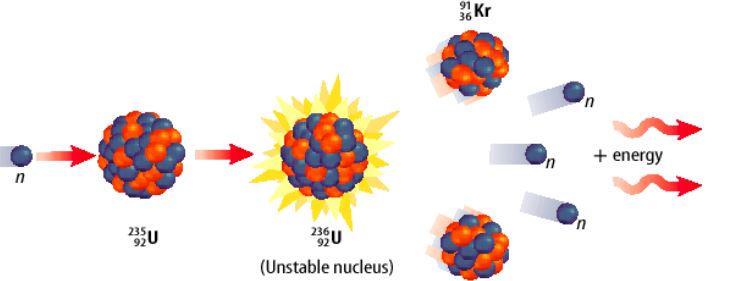
This is an example of...

a)

Fission reaction

b)

Fusion reaction

35.

Some of the drawbacks of nuclear fission reactors are--- CHOOSE ALL THAT APPLY

a)

the safe disposal of the radioactive waste

b)

finding large water sources to cool the nuclear reactors

c)

it is a large source of energy

d)

the fuel (Uranium) is nonrenewable

e)

it produces more air pollution than coal or other fossil fuels

36.

This is an example of ---

a)

Nuclear Fusion

b)

Nuclear Fission

37.
What concern might a community have if a nuclear power plant was going to be built in their community?
a)
Flooding would occur because of the large water source needed
b)
The pollution given off would cause breathing problems.
c)
The radiation given off would cause cancer
d)
Workers would leave other companies in the community
38.
The combining of 2 nuclei to form a larger nucleus is called___.
a)
Fission
b)
Fusion
c)
Radioactive waste
d)
Compounds
39.

The sun and other stars turn ____ energy into radiant energy.

a)

chemical

b)

mechanical

c)

thermal

d)

nuclear

40.

The atoms in the sun and other stars release energy due to which kind of nuclear reaction?

a)

fusion

b)

fission

41.
Conduction is heat transfer by -
a)
Touch
b)
Circles
c)
Waves
42.
Convection is heat transfer by-
a)
Touch an object
b)
The heating and cooling of a fluid
c)
Electromagnetic Waves
43.
Warm air rises and the cool air sinks demonstrates this type of heat transfer. 
a)
conduction
b)
convection
c)
radiation
d)
Insolation 
44.
The heat from a hot burner to a pot is transferred by ______.
a)
convection
b)
insulation
c)
radiation
d)
conduction
45.
When the 2nd story of a house is warmer than the 1st floor of a house is heat transfer through 
a)
conduction
b)
convection
c)
radiation
d)
thermal equilibrium
46.
The sun warming your skin is an example of heat transfer through 
a)
conduction
b)
convection
c)
radiation
d)
thermal electricity
47.
Heat transfer through electromagnetic waves is called 
a)
conduction
b)
convection
c)
radiaton
d)
thermal
48.
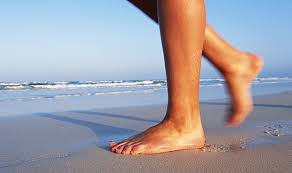
Walking on the warm sand sand with your bare feet demonstrates this type of heat transfer. 
a)
conduction
b)
convection
c)
radiation
49.
Thermal energy from the sun travels to the earth by ______.
a)
conduction
b)
convection
c)
radiation
50.
Hot coffee is stirred with a spoon; the spoon gets hot due to
a)
conduction
b)
convection
c)
radiation
51.
What type of heat transfer takes place in solids?
a)
Conduction
b)
Convection
c)
Radiation
52.
What type of heat transfer takes place in liquids and gasses?
a)
Conduction
b)
Convection
c)
Radiation
53.
As you touch a hot stove the heat transfers -
a)
from your hand to the stove
b)
from the stove to your hand
c)
it doesn't transfer
54.
Heat transfer always goes from-
a)
cold to hot
b)
hot to cold
c)
heat doesn't transfer
d)
none of the above
55.
What happens to particles as they heat up?
a)
they slow down and move closer together
b)
they speed up and move farther apart
c)
they don't move
d)
none of the above
56.
What happens to particles as they cool down?
a)
they slow down and move closer together
b)
they speed up and move farther apart
c)
they don't move
d)
none of the above
57.
Mittens help keep your hands warm in winter because:
a)
They are conductors of heat.
b)
They are fuzzy.
c)
They are conductors of electrical energy.
d)
They are insulators.
58.
Conductors are materials that...
a)
allow heat to pass through
b)
stop heat from passing through
c)
allow cold to pass through
d)
stop cold from passing through
59.
Which of the following is an example of heat transfer through radiation?
a)
a pot of soup warming of a hot  burner
b)
a crayon melting on a hot sidewalk
c)
beach sand getting warmed by the sun
60.
Which sentence explains why a cold metal spoon placed in a pot of boiling water becomes hot?
a)
Thermal energy is transferred from the spoon to the water.
b)
Thermal energy is transferred from the water to the spoon.
c)
Thermal energy in the water is transformed into kinetic energy in the spoon.
d)
Thermal energy in the spoon is transformed into kinetic energy in the water.
61.
A student was doing a science investigation in school.  Her teacher asked her to fill two beakers with water.  What would be the temperature of the water when it started to boil?
a)
100 degrees celsius
b)
50 degrees celsius
c)
32 degrees celsius
d)
20 degrees celsius
62.
The chart below shows objects that conduct heat and objects that insulate heat. Which answer choice best completes the chart? 
a)
glass block 
b)
gold ring
c)
plastic spoon
d)
none of the above
63.
Three jars are filled with the same amount of water and placed in the freezer over night. The next day, a different type of material is wrapped around each jar and placed in a pan of hot water. Students observe the ice in each jar and discover that the jar wrapped in aluminum foil melts first, and the jar wrapped in cotton melts last. Which property of the different types of materials are the students most likely investigating? 
a)
ability to produce thermal energy 
b)
ability to conduct electricity
c)
states of matter
d)
ability to insulate thermal energy
64.
_________________________ is a measure of the average kinetic energy of the particles in a material.
a)
thermal
b)
friction
c)
temperature
d)
expansion
65.
The most common temperature scale used in the physical sciences where temperatures are 273 degrees more than temperatures on the Celsius scale, and 0 is based on the concept of absolute zero, is called the _______________ scale.
a)
Fahrenheit
b)
Kelvin
c)
Pound
d)
Celsius
66.
Thermal energy stops moving when the objects have the same temperature.
a)
True
b)
False
67.
What is the difference between heat and temperature?    
a)
temperature measures the average speed of particles, and heat is the transfer of thermal energy (total motion of the particles)
b)
temperature is measured by a thermometer, and heat is measured by a barometer
c)
heat is measured in calories, and temperature is measured in joules
d)
heat is caused by the sun, and temperature is caused by conditions in the atmosphere
68.
Why is there more thermal energy in an iceberg than in a pot of boiling water?  
a)
the pot insulates the heated molecules
b)
most icebergs are fairly warm to the touch
c)
icebergs contain many more molecules than pots of water
d)
water does not hold heat very well
69.
Which of the thermometers shows the Celsius scale?
a)
1
b)
2
c)
3
70.
If all three beakers were filled with water that was the same temperature, which one would have the most total heat/thermal energy?
a)
800 mL
b)
150 mL
c)
260 mL
d)
all would have the same amount of total heat/thermal energy
71.
Compare the two beakers, one with cold water and one with warm water. Which one would have the greatest total heat/thermal energy?
a)
warm
b)
cold
c)
the would both have the same amount of total thermal energy/heat