
 Worksheets
Waves and Sound Review
Total questions: 70
Worksheet time: 1hrs 10mins

What do all waves transfer?
Matter
Heat
Electricity
Energy

Which of the following can waves transfer energy through?
solid
liquid
gas
empty space
all of the above

What are the two types of waves?
longitudinal and transverse
sound and light

What is the number of complete waves passing a fixed point in a given amount of time?
Amplitude
Intensity
Wavelength
Frequency

What is frequency measured in?
Milliseconds
Miles
Hertz
Kilograms

Period of a wave refers to...
how long it takes for the event to repeat.
how strong a wave is.
how long a wave is.
how much energy a wave has.

Which type of waves have the longest wavelength?
Visible light
Radio waves
X-rays
Gamma-Rays

Wavelengths are usually measured in ....
seconds
Hz
inches
meters

Shorter wave lengths can carry more energy. Which of these probably carries the MOST energy:
Infrared light
Visible light
X-rays
UV light

What is the distance between the calm sea and the highest wave called?
Wave
Frequency
Amplitude
Magnitude

What does #1 represent?
Period
Frequency
Wavelength
Amplitude

What does #2 represent?
Period
Frequency
Wavelength
Amplitude

What does #3 represent? (Time it takes for one waves to go by)
Period
Frequency
Wavelength
Amplitude
What wave has particles that move perpendicularly to the direction of the wave?
Transverse waves
Longitudinal waves
Sound waves
Light waves
What does a wave carry from place to place?
energy
matter
people
The highest point on a transverse wave is the
compression
crest
rest position
trough
The lowest point on a transverse wave is the
compression
crest
rest position
trough
The number of waves that pass somewhere in a second is:
amplitude
frequency
wavelength
A wave that can travel through matter and empty space is a:
electromagnetic wave
longitudinal wavy
transverse wave

This picture is an example of which type of wave?
transverse wave
longitudinal wave
ocean wave

Which image represents a longitudinal wave?
A
B
Amplitude reflects the amount of _______________ in a wave.
energy
speed
number of cycles
number of troughs
What is a wave?
a disturbance that transfers matter from place to place
a disturbance that transfers energy, but not matter

The higher the frequency of a wave, the ______________ the wavelength
shorter
longer

When you increase the amplitude of a wave, its frequency _____
increases
decreases
stays the same

Musical notes travel through the air as waves. Higher frequency notes travel _________ lower frequency notes.
faster than
at the same speed as
slower than

If a wave has a frequency of 2 cycles per second and its wavelength is 5 meters, the wave speed is
2.5 meters per second
2.5 meters
10 meters per second
10 meters

a longer string makes a ____________ -pitched sound than a short string
higher
lower

The amplitude of a sound is
how loud it is
how high or low it is
both
Can you hear sound in outer space?
yes
no
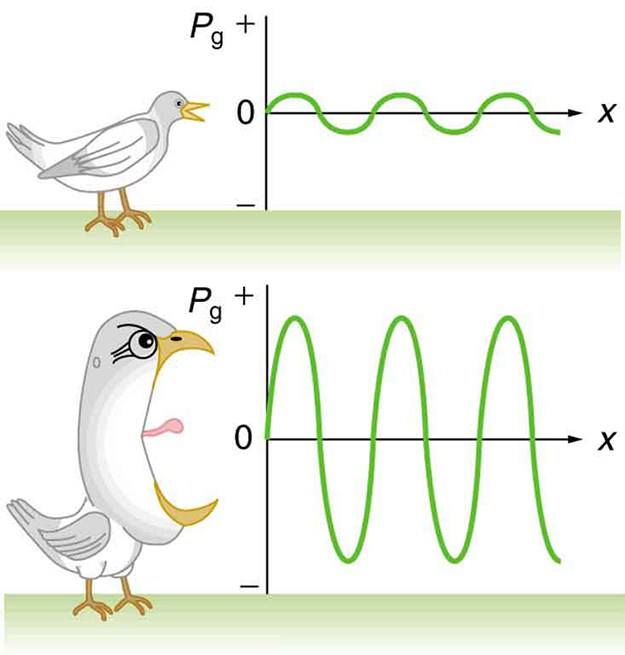
Sound waves travel as ________ waves.
Transverse
Longitudinal
Surface
In which of these types of media will sound travel fastest?
Solid
Liquid
Gas
Which temperature causes sound to travel more slowly?
Hot
Cold
Loudness of waves is measured in
Hertz
Decibels
Watts
The maximum safe level for loudness is
0 db
60 db
85 db
What is the range of frequencies audible to the human ear?
20hz
20hz-2000hz
20hz-20,000hz
20,000hz
Sound does not travel in the following....
Liquids
Solids
Vacuum
Gases
The decibel is the unit the measuring.......
Pitch
Loudness
Frequency
Quality

What does the picture show?
Echolocation
Ultrasound
Radar
Transducer
Which animal makes ultrasonic sounds?
Elephant
Whale
Mouse
Rhino
Which animal makes infrasonic sounds?
Dolphins
Bats
Elephant
Moths
Which animal can hear through their feet?
Elephants
Bats
Giraffes
Dolphins
What part of the ear makes vibrations?
The ear canal
The eardrum
The ear lobe
The auditory nerves
What do we call sounds that are greater than humans can hear? E.g. sounds above 20,000Hz
Infrasonic sounds
Ultrasonic sounds
What do humans use ultrasound scans for?
To make a picture of the inside the human body
To find animals in the wild
To understand the human ear
To make echoes
When a crest interferes with another crest to produce a larger amplitude crest what is this process called?
Constructive interference
Destructive interference
When a crest and crest or trough and trough of two different waves interact you _________ the amplitudes.
add
subtract
multiply
divide
What is the process called when a crest interferes with a trough to lessen or cancel the amplitude of a wave.
Constructive interference
Destructive interference
True or false: constructive interference can make sounds much louder.
True
False
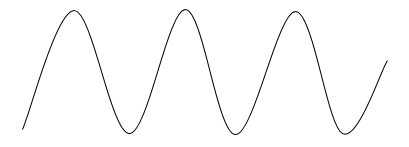
Which of these waves represents the highest pitch?




After reading the table then select the statement that is true about the data.
Sound goes faster through gases than metals
Sound goes fastest through any form of water
Sound goes faster through a given material if the temperature is higher
Sound travels fastest when the temperature is somewhere between 30 and 40 degrees

Which of these animals hear the highest pitched sounds?
seals
cats
bats
rodents

The normal hearing range for humans is 20 Hz to 20,000 Hz. Which of the following creatures has a hearing range most like a human?
elephants
horses
grasshoppers
dolphins
What factors affect how fast a sound wave travels?
The medium or material in is moving through
The amplitude
The wavelength
The perpendicular motion in which it travels to the direction of the wave.

The region of the Electromagnetic Spectrum where color can be seen is called visible light. Which of the following is correct?
The lowest frequency is red and the highest is violet
The highest is red and the lowest is violet
green has the highest frequency
Yellow has the highest frequency.
A _____________ is any disturbance that transmits energy.
Amplitude
Frequency
Transverse
Wave
A __________ is a substance through which a wave travels.
Medium
Longitudinal wave
Transverse Wave
Wave speed
___________ waves NEED a medium.
Mechanical
Transverse
Crest
frequency




What is the Doppler effect?
The observed change in frequency of sound or light because of the relative motion of a wave source and the observer.
The observed change in amplitude of sound or light because of the relative motion of a wave source and the observer.
The observed change in wave speed of sound or light because of the relative motion of a wave source and the observer.
The observed change in equilibrium position of sound or light because of the relative motion of a wave source and the observer.

