wayground logo

Free Printable Worksheets

Font size

S
M
L
XL
Worksheets

Life Science Study Guide

Total questions: 63

Worksheet time: 44mins
Name
Class
Date
1.
Behavioral changes of individuals of a species that allow for better survival. (Acquired traits)
a)
Variation
b)
Adaptation
c)
Behavior
d)
Environment
2.
Where the better adapted organisms survive to pass traits along to offspring.
a)
Evolution
b)
Natural Selection
c)
Extinction
d)
Artifical Selection
3.
Which characteristic is inherited?
a)
hair color
b)
sleeping late
c)
enjoying hiking
d)
loving to read
4.
Where does an off spring get its traits in asexual reproduction?
a)
From both parents
b)
From only one parent
c)
From neither parent
d)
There are no traits handed down
5.
When a starfish grows a new body off a broken arm, what kind of reproduction is this?
a)
Sexual
b)
Differentiation
c)
Asexual 
d)
Specialization
6.
Which is a type of Asexual Reproduction
a)
Sexual 
b)
Binary fission
c)
Cells 
d)
organism 
7.
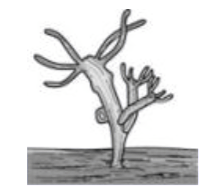
Many invertebrate animals, such as the hydra, reproduce asexually. What form of reproduction in this stage of the life cycle of the hydra is shown in the diagram? 
a)
binary fission
b)
budding
c)
fragmentation 
d)
vegetation propagation
8.

Asexual reproduction in plants in known as

a)

regeneration

b)

vegetative propagation

c)

binary fission

d)

sporulation

9.
The part of a chromosome that carries information for a certain trait is called a 
a)
protein
b)
gene 
c)
nucleus
d)
gametes
10.
"powerhouse of the cell" breaks down sugar molecules to release energy, site of cellular respiration, double membrane, self-replicating, contains own DNA, cristae
a)
Mitochondria
b)
Chloroplast
c)
Cell Wall
d)
Vesicle
11.
food making structure of the plant cell
a)
chloroplasts
b)
cell wall
c)
vacuole
d)
cell membrane
12.

Where are the codes for traits stored?

a)

chromosomes

b)

cytoplasm

c)

mitochondria

d)

chloroplast

13.
The passing of traits from parent to offspring 
a)
Heredity 
b)
Genetics 
c)
Hybrid 
d)
Probability 
14.
Who was the father of genetics 
a)
Sagan 
b)
Issac Newton 
c)
Gregor Mendel 
d)
C.jenkins 
15.
The study of heredity and the variation of inherited characteristics 
a)
gene
b)
genetics 
c)
meiosis 
d)
hybrid 
16.
Which of the following statements is not part of the cell theory?
a)
Cells are the basic unit of structure and function in all living things.
b)
All cells are produced from other cells.
c)
Only animal cells are composed of cells.
d)
All living things are composed of cells.
17.
What is one way in which all living things on Earth are alike?
a)
All living things have hair.
b)
All living things are made of cells and come from other cells.
c)
The cells of all living things have chloroplast.
d)
All living things can move. 
18.
Which statement reflects one of the major components of the cell theory?
a)
All living things are multi-cellular.
b)
Organs are the basic unit of structure and function for all living things.
c)
All cells come from previously existing cells.
d)
Every organism has a reproductive system to ensure survival of the species.
19.
What is the top layer of the skin called?
a)
Dermis
b)
Hypodermis
c)
Epidermis
d)
Subcutaneous
20.
What is the largest organ in the human body?
a)
Skin
b)
Hair
c)
Nails
d)
All of the Above 
21.
The _______________ system has been called both a membrane, because it covers the body, and an organ, because it contains several types of tissues. However, most refer to it as a system.
a)
respiratory 
b)
integumentary
c)
cardiovascular
d)
muscular
22.
Which of the following is NOT part of the integumentary system?
a)
Skin
b)
Cartilage 
c)
Nails
d)
Hair
23.
What is a vertabrate?
a)
An animal that has a spinal cord or backbone
b)
An animal that has lungs
c)
A human that can play Soccer
d)
An animal that has bones
24.
A drought has hit this grassland biome. How will this effect the rabbit population?
a)
The rabbits will increase in number.
b)
The rabbit population will stay the same.
c)
The rabbit population will decrease.
d)
The rabbit population will become extinct immediately.
25.
Brown trout consume (eat) more tadpoles when the fly larvae reduce in number (decrease).  This proves...
a)
The dependence of organisms and biodiversity in an ecosystem
b)
Diversity increases as organisms decrease
c)
Losing an animal is good for ecosystems
d)
Changes in ecosystems create new organisms
26.
In this tundra food web, if grasses were removed what would happen to the sustainability of the ecosystem?
a)
There would be an overpopulation of arctic hares and lemmings.
b)
Polar bears would move to a new ecosystem
c)
The ecosystem would collapse because it lost its main producer
d)
Wildflowers would die out from the ecosystem
27.

Succession type?

a)

primary succession

b)

secondary succession

c)

tertiary succession

d)

variable succession

28.

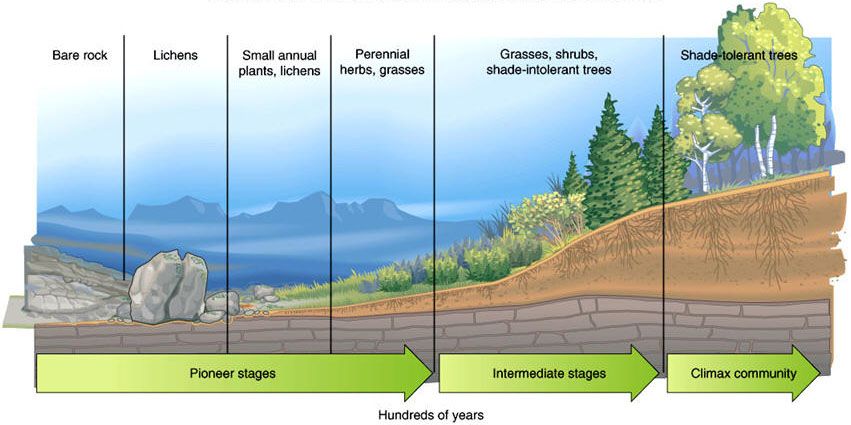
The picture shows what type of succession?

a)

primary

b)

secondary

c)

tertiary

d)

quadanary

29.

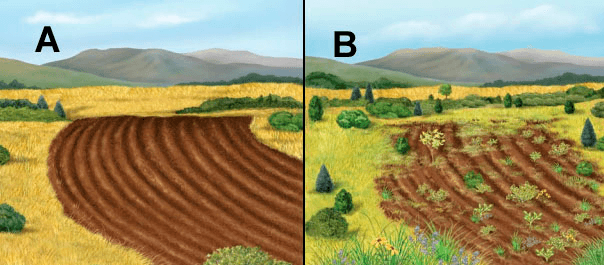
What type of succession is shown going from figure A to figure B?

a)

primary succession

b)

ecological succession

c)

secondary succession

d)

intermediate species

30.

After a volcanic eruption, lava covers the land. What is the order that plants grow to repopulate the area?

a)

Lichens → Shrubs → Grasses → Trees

b)

Lichens → tree → shrubs→Grasses

c)

Grasses → Lichens → Shrubs → Trees

d)

Lichens → Grasses → Shrubs → Trees

31.
What is NOT a way to cause pollution
a)
picking up litter
b)
spilling oil in the river
c)
throwing trash on the ground
d)
driving a gas gussler
32.
Which is NOT a harmful change?
a)
pollute the water
b)
cut down trees
c)
plant flowers
d)
pollute the air
33.
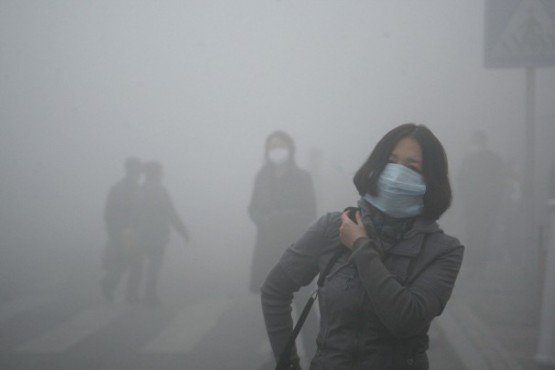
This picture shows people walking through a highly-polluted city in China. From what type of pollution are they protecting themselves based on what they are wearing?

a)
air pollution
b)
water pollution
c)
land pollution
d)
noise pollution
34.

What would improve the air quality in large Texas cities?

a)

limiting the number of cars on the roads

b)

switching to wood stoves for home heating

c)

requiring large vehicles to use diesel fuel

d)

maintaining filters in large buildings

35.
The natural chemical or physical processes that breaks down rock on Earth's surface.
a)
weathering
b)
erosion
c)
deposition
d)
jackhammering
36.
Chewing food is an example of _____________.
a)
chemical digestion
b)
physical digestion
37.
Chewing food with teeth is an example of a
a)
physical change
b)
chemical change
38.
Changes the size, shape, or color of food:
a)
Physical digestion
b)
Chemical Digestion
39.
Acids and enzymes are used in 
a)
physical digestion
b)
chemical digestion
40.
Chew
a)
Physical
b)
Chemical
c)
Both
41.
Grind
a)
Physical
b)
Chemical
c)
Both
42.
A producer?
a)
Eats other plants and animals
b)
Makes its own food
c)
Eats dead plants or animals
d)
Makes toys for kids
43.
A consumer?
a)
Makes its own food
b)
Eats dead plants and animals
c)
Eats plants and other animals for energy
d)
Buys toys for kids
44.
A decomposer?
a)
Eats dead plants or animals and breaks down to put nutrients in the soil
b)
Eats plants or other animals for food
c)
Makes its own food
d)
Machine that gathers trash
45.
What major energy transformation occurs during photosynthesis?
a)
Thermal --> Chemical
b)
Kinetic --> Radiant
c)
Chemical --> Radiant
d)
Radiant --> Chemical
46.

Which two systems work together to allow for movement of the body? Select those that apply

a)

circulatory system

b)

nervous system

c)

muscular system

d)

digestive system

e)

Skeletal system

47.

What are the functions of the skeletal system

a)

support

b)

protect organs

c)

circulate blood

d)

Transport nutriets

48.

Ligaments attach

a)

bone to muscle

b)

bone to tendons

c)

bone to bone

d)

muscle to muscle

49.

Tendons attach

a)

bone to muscle

b)

bone to tendons

c)

bone to bone

d)

muscle to muscle

50.

Adrenaline is produced in the ...

a)

urethra

b)

thyroid

c)

adrenal glands

d)

thymus

e)

pituitary

51.

Insulin is produced in the...

a)

pancreas

b)

thyroid

c)

adrenal glands

d)

thymus

e)

pituitary

52.

The entire human body is covered by this type of tissue

a)

ligament

b)

muscle

c)

epithelial

d)

nerve

53.
What is the function of the kidneys in the excretory/urinary system?
a)
store urine before it is eliminated from the body.
b)
break down food into smaller pieces through chemical digestion
c)
filter blood of cellular waste material as a result of cellular respiration
d)
control thoughts, voluntary actions, and other sensations of the five senses.
54.
One major function of the excretory system is to clean the what?
a)
urine
b)
blood
c)
kidneys
d)
bladder
55.
These organs are responsible for what?
a)
storing urine
b)
storing water
c)
filtering blood
d)
they don't have a particular job 
56.

The excretory system works with what system to filter blood.

a)

endocrine

b)

muscular

c)

circulatory

d)

skeletal

57.

Overies produce and secrete hormones in addition to eggs. To what human body systems do ovaries belong?

a)

Integumentary and reproductive

b)

excretory and muscular

c)

endocrine and reproductive

d)

nervous and digestive

58.

What are the functions of the muscular system? Select all that apply

a)

Allows movement in the body

b)

Maintain posture

c)

Stabilize joints

d)

Converts food into nutrients

59.

What system does the largest human body organ that serves as a barrier belong to?

a)

circulatory

b)

integumentary

c)

endocrine

d)

digestive

60.
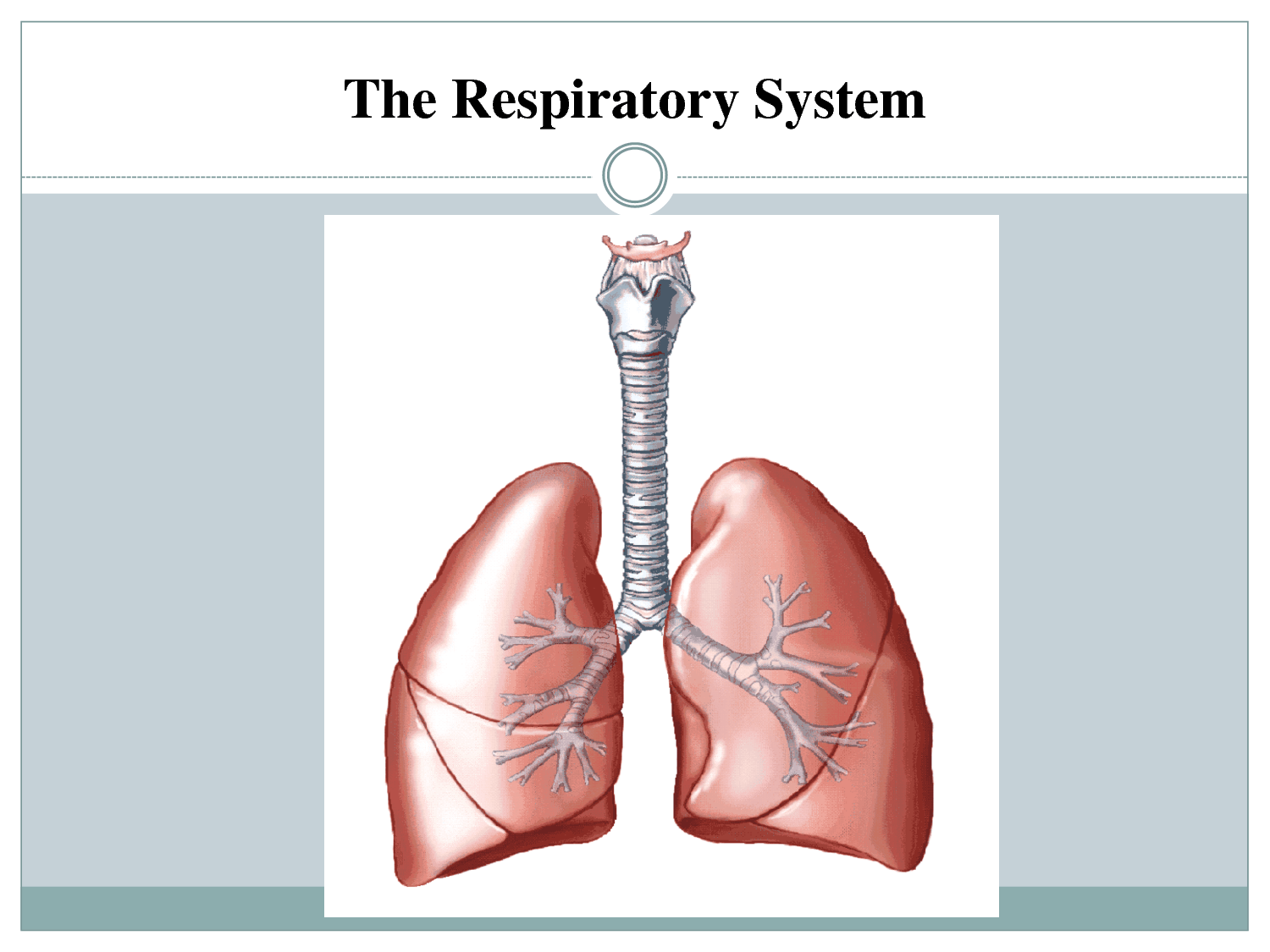
What is the main function of the respiratory system?
a)
to provide oxygen and remove carbon dioxide from the body
b)
to bring oxygen to the body
c)
to break down food and absorb nutrients
d)
to remove oxygen from the body and deliver carbon dioxide
61.

How much energy is passed on to the next level of an energy pyramid?

a)

10%

b)

90%

62.

What is the producer in this energy pyramid?

a)

grass

b)

snake

c)

frog

d)

snake

63.

Which level of an energy pyramid has the most energy available?

a)

primary consumer

b)

secondary consumer

c)

tertiary consumer