
 Worksheets
Forensic science review
Total questions: 42
Worksheet time: 42mins
Name
Class
Date
1.
What is forensic science?
a)
When scientists improve plants by using DNA
b)
The use of science in growing trees
c)
Any legal action that requires a police investigation
d)
When science is used for the purposes of the law
2.
A house burned to the ground with one victim inside. What is the BEST way for forensic scientists to identify the victim?
a)
Eyewitness account
b)
Blood analysis
c)
Teeth
d)
Personal documents
3.
Blood spatter can help determine...
a)
Size and type of wound
b)
direction and speed with which the perpetrator or victim was moving
c)
the type of weapon used to create the blood spill
d)
All of the above
4.
DNA is the abbreviation for?
a)
Ribonucleic Acid
b)
Deoxy Acid
c)
Deoxyribosomal Acid
d)
Deoxyribonucleic Acid
5.
The technique by which DNA fragments are placed in a gel and charged with electricity is referred to as?
a)
DNA profiling
b)
DNA electrophoresis
c)
DNA typing
d)
DNA Fragmenting
6.
The study of poisons and drugs and their effect on human and animal populations is defined as?
a)
Forensic science
b)
Toxicology
c)
Autopsy
d)
Serology
7.
Type of evidence that can be traced back to one person
a)
Testimonial
b)
class
c)
logical
d)
individual
8.
Type of evidence that can be traced back to many people
a)
testimonial
b)
class
c)
logical
d)
individual
9.
Type of fingerprint where the ridges enter in one side of the finger, exit from the opposite side
a)
loop
b)
whorl
c)
arch
d)
ulnar loop
10.
Type of fingerprint in which the ridges enter and exit from the same side of the finger
a)
loop
b)
arch
c)
whorl
d)
radial arch
11.
The sides of the DNA ladder are made up of
a)
4 nitrogen bases
b)
sugar and phosphates
c)
C,T,A, and G
d)
amino acids
12.
The steps of DNA are made of
a)
A,C,T, and G's
b)
sugar and phosphates
c)
sugar units
d)
amino acids
13.
When making a DNA fingerprint, the job of restriction enzymes is to
a)
copy the DNA
b)
Help made the bands
c)
allow electricity to travel
d)
cut the DNA
14.

Forensic investigators find a blood stain that is elongated and suspect it was caused by a forceful blow or gunshot. This is an example of a ..
a)
passive blood stain
b)
projected blood stain
c)
angular blood stain
d)
circular blood stain
15.

Who stated that there is always evidence left behind and taken away from a crime scene?
a)
My dad
b)
Locard
c)
Darwin
d)
J Edgar Hoover
16.
the scientific study of insects
a)
entomology
b)
pathology
c)
postmortem
d)
toxicology
17.
Which of the following is NOT an example of physical evidence?
a)
documents
b)
soil
c)
testimony
d)
All of the above are examples of physical evidence
18.
Which of the following is an example of class evidence?
a)
DNA
b)
Fingerprints
c)
Blood Type
d)
Handwriting
19.
Database containing criminal history and fingerprints for nearly 50 million people
a)
NIBIN
b)
CODIS
c)
IAFIS
d)
SICAR
20.

Which suspect matches the sample taken from the crime scene?
a)
Suspect 1
b)
Suspect 2
c)
Suspect 3
d)
Suspect not included
21.
Which is not a type of fingerprints?
a)
Arch
b)
Whorl
c)
Swirl
d)
Loop
22.
Which sequence of DNA bases would pair with this partial strand
ATG TGA CAG
ATG TGA CAG
a)
ATG TGA CAG
b)
TAC ACT GTC
c)
GTA AGT GAC
d)
CAT TCA CTG
23.
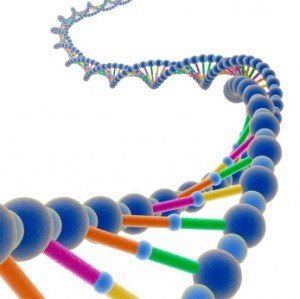
Which of the following best describes a DNA molecule?
a)
double helix
b)
contains ribose
c)
made of amino acids
d)
contains Uracil
24.
Adenine bonds with ______________.
a)
Guanine
b)
Thymine
c)
Cytosine
d)
Adenine
25.
Guanine bonds with ______________.
a)
Adenine
b)
Guanine
c)
Cytosine
d)
Thymine
26.
which blood type is the universal donor (all people can receive it)?
a)
O
b)
AB
c)
A
d)
B
27.
Which blood type is he universal recipient (a person with this blood type can get blood from any other type)?
a)
O
b)
AB
c)
A
d)
B
28.
Alcohol is considered a...
a)
stimulant
b)
depressant
c)
hallucinogen
d)
date-rape/club drug
29.
Decreases pulse, heart rate, and generally slows brain activity
a)
narcotics
b)
depressants
c)
stimulants
d)
hallucinogen
30.
These increase the activity of the central nervous system, causing increased alertness and energy
a)
narcotics
b)
hallucinogens
c)
opiates
d)
stimulants
31.
What does PCR stand for?
a)
Polymerase Chronic Reagent
b)
Principle Chorionic Reliability
c)
Polymerase Chain Reaction
d)
Probably Cannot React
32.

What type of fingerprint is shown in the diagram below?
a)
Plain arch
b)
Plain whorl
c)
Central Pocket whorl
d)
Double Loop whorl
33.

What pattern is this?
a)
Tented Arch
b)
Arch
c)
Loop
d)
Whorl
34.

What kind of fingerprint is this?
a)
Arch
b)
Whorl
c)
Loop
35.

Identify this fingerprint
a)
Arch
b)
Loop
c)
Whorl
d)
Swirl
36.
How fast does the hair on your head grow every month?
a)
1/4 inch
b)
1/2 inch
c)
1 inch
d)
1 centimeter
37.
The central core of the hair is called the...?
a)
Medulla
b)
Cuticle
c)
Cortex
d)
Shaft
38.
Which schedule(s) have no currently acceptable medical use?
a)
Schedule I
b)
Schedule I and II
c)
Schedule I, II and III
d)
All the Schedules
39.

How many bones does an adult human have?
a)
300
b)
306
c)
206
d)
602
40.

How would you describe this blood stain?
a)
Wipe
b)
Swipe
c)
Cast off
d)
Transfer
41.
Which of these isn't in the fire triangle?
a)
Fuel
b)
Heat
c)
Oxygen
d)
Carbon dioxide
42.
The minimum temperature at which a liquid fuel will produce enough vapor to burn is called the:
a)
flash point
b)
ignition temperature
c)
flammable range
d)
sublimation temperature
100 %

