
 Worksheets
science review 4th
Total questions: 59
Worksheet time: 35mins
Name
Class
Date
1.
What is the process of moving sediments from location to another?
a)
Deposition
b)
Erosion
c)
Weathering
d)
Compaction
2.
The process of breaking up Earth's surface into sediment is called...
a)
sediment
b)
erosion
c)
weathering
d)
deposition
3.
What is sediment?
a)
the process of rocks being broken down and carried away
b)
bits of rock, sand, and silt caused by the weathering of rocks
c)
the top layer of the soil
d)
decaying plant or animal material
4.
Which of these is an example of erosion
a)
Light Shinning onto a mountain
b)
Rain breaking down rock
c)
Wind blowing away sediment
d)
All of the above
5.
Which type of climate will have faster chemical weathering?
a)
Hot and Wet
b)
Cold and Dry
c)
Hot and Cold
d)
Cold and Wet
6.
The process that breaks down rocks and other materials on Earth's surface is called
a)
weathering
b)
erosion
c)
soil conservation
d)
decomposition
7.
How does freezing water cause the weathering of rocks? The freezing water—
a)
keeps the rocks in place
b)
makes the rocks last longer
c)
expands cracks and breaks rocks
d)
causes rocks to fall in landslides
8.
How does vegetation in the soil affect the rate of erosion?
a)
It doesn't affect erosion.
b)
It decreases erosion.
c)
It increases erosion.
9.
What is an enormous mass of ice moving over land?
a)
Ice wedging
b)
Glacier
c)
Iceberg
d)
Dune
10.
Wind blowing sand from one location to another
a)
Weathering
b)
Erosion
c)
Deposition
11.
What do you call an animal that is hunted by another animal?
a)
prey
b)
predator
c)
producer
d)
herbivore
12.
What do you call an animal that only eats other animals?
a)
herbivore
b)
prey
c)
predator
d)
carnivore
13.
This adaptation helps animals hide for either predators or prey. What is it?
a)
warning coloration
b)
camouflage
c)
instinct
d)
migration
14.
What do you call an animal that eats both plants and other animals?
a)
vegetarian
b)
herbivore
c)
omnivore
d)
carnivore
15.
Any physical structure (body part or covering) or behavior that helps an animal survive:
a)
habitat
b)
instinct
c)
fur
d)
adaptation
16.
Some animals move great distances as the seasons change. What is this called?
a)
hibernation
b)
migration
c)
habitat
d)
coloration
17.
An animal that only eats plants is called a ...?
a)
predator
b)
carnivore
c)
omnivore
d)
herbivore
18.
An animal's body covering helps it to survive. Which group below is made up of body coverings?
a)
fur, teeth, feathers, skin
b)
bones, teeth, feet, eyes
c)
feathers, fur, skin, scales
d)
scales, fur, claws, skin
19.
Which answer is an adaptation of a bat?
a)
It has sharp claws for catching prey.
b)
It has a singer to catch prey.
c)
It uses sound waves (echolocation) to catch prey.
d)
It uses its wings to knock down prey.
20.
In what layer of the Earth do you find magma?
a)
crust
b)
mantle
c)
outer core
d)
inner core
21.
A tsunami is a series of...
a)
rocks
b)
clouds
c)
waves
22.
Earthquakes are caused because the _________ in the Earth move and collide.
a)
continents
b)
countries
c)
layers
d)
tectonic plates
23.
Which of these is a SLOW change?
a)
volcano erupting
b)
earthquakes
c)
weathering
d)
tsunamis
24.
The outer layer of the earth is called the _______.
a)
Crust
b)
Mantle
c)
Core
25.
There are ____ layers of the earth.
a)
1
b)
2
c)
3
d)
4
26.
Which is not a layer of our earth?
a)
Magma
b)
Mantle
c)
Crust
d)
Core
27.
What is the shaking of the Earth’s crust caused by a release of energy?
a)
Earthquake
b)
Epicenter
c)
Fault
d)
Plate
28.
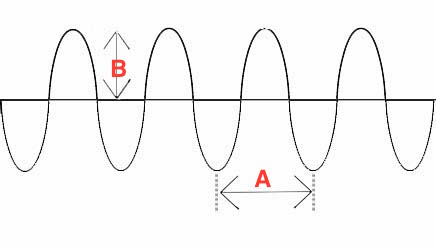
What property of the wave is represented by the letter "B"?
a)
amplitude
b)
crest
c)
trough
d)
wavelength
29.
The highest point on a wave is:
a)
the crest
b)
the trough
c)
the top
d)
the coast
30.
Which of the following can sound travel through?
a)
solid
b)
liquid
c)
gas
d)
all of the above
31.
which material does sound travel the fastest?
a)
solid
b)
liquid
c)
gases
32.
When a wave strikes and object and bounces off. (example echo)
a)
medium
b)
refraction
c)
reflection
d)
interference
33.
Material that allows light to pass through allowing you to see "clearly" to the other side
a)
opaque
b)
translucent
c)
transparent
34.
Wax paper or a foggy window is an example of what type of material.
a)
transparent
b)
translucent
c)
opaque
35.
Light travels in a straight line
a)
True
b)
False
36.
Visible light is ...
a)
Light bulb
b)
sun
c)
light that we can see with our natural eye
d)
fire
37.
What is reflection in simple terms?
a)
Soaks up light
b)
Passes through
c)
light bounces off
38.
What does refract mean?
a)
To shrink
b)
To bend
c)
To widen
d)
To enlarge
39.
If work stays the same and distance is increased, then ___________ force will be needed.
a)
Less
b)
The same
c)
More
d)
None
40.
The unit for power is?
a)
Watt
b)
Seconds
c)
Joules
d)
Grams
41.
A downhill skier is at the top of a slope waiting for the gate to open and allow him to race down energy can be described as
a)
Chemical
b)
Kinetic
c)
Potential
d)
Mechanical
42.
Energy due to motion
a)
Chemical Potential Energy
b)
Potential Energy
c)
Work
d)
Kinetic Energy
43.
Energy stored by things that are above the Earth.
a)
Simple Machine
b)
Mechanical Energy
c)
Gravitational Potential Energy
d)
Potential Energy
44.
The ability to do work.
a)
Energy
b)
Power
c)
Joules
d)
Work
45.
Stored energy due to a position.
a)
Mechanical Energy
b)
Chemical Potential Energy
c)
Velocity
d)
Potential Energy
46.
Energy that is not created or destroyed.
a)
Law of Conservation of Energy
b)
Law of Newton's
c)
Law of Work
d)
Saving Eneryg
47.
The ability to cause an object to move.
a)
Pushing
b)
Force
c)
Motion
d)
Work
48.
What form of energy is being used when a person hits a tennis ball with a tennis racket?
a)
thermal energy
b)
sound energy
c)
light energy
d)
mechanical energy
49.
How does light travel?
a)
it bounces off objects
b)
in a zigzag pattern
c)
in a straight line
d)
it swirls upward
50.
Will electrical energy flow in an open circuit?
a)
yes
b)
no
51.
What kind of energy is associated with vibrations?
a)
mechanical energy
b)
electrical energy
c)
light energy
d)
sound energy
52.
Which of the following would sound travel through the fastest?
a)
water
b)
oxygen
c)
wood
d)
koolaid
53.
How are shadows formed?
a)
When translucent objects block light
b)
When transparent objects block light
c)
When opaque objects block light
d)
When sunglasses block light
54.

The picture is a good example of which of the following?
a)
refraction
b)
a broken pencil
c)
opaque
d)
the glass is broken
55.
Almost all light comes from......
a)
glow worms
b)
the sparkle in your eyes
c)
the sun
d)
light bulbs
56.

What could be added to this picture to make the light bulb work?
a)
an open switch
b)
a closed switch
c)
a rubberband
d)
a wooden sticks
57.

What is the power source in the picture?
a)
battery
b)
copper wire
c)
switch
d)
light
58.

Balanced forces......
a)
stay still
b)
light up
c)
move
d)
laugh out loud
59.

The boy tossed the ball it fell to the ground. Why?
a)
magnetism
b)
because of buoyancy
c)
because of gravity
d)
because of friction
100 %

