wayground logo

Free Printable Worksheets

Font size

S
M
L
XL
Worksheets

MCAS Science Review

Total questions: 96

Worksheet time: 1hrs 16mins

Name
Class
Date
1.
The general name for organisms like animals and fungi that get their energy from eating other organisms.
a)
Producers
b)
Consumers
c)
Detritivores
d)
Carnivores
2.
The moon seems to change shape from day to day in a cycle that lasts about a month as it goes through _.
a)
revolutions
b)
phases
c)
rotations
d)
eclipses
3.
As the moon's shape appears to get smaller, we say that the moon is _.
a)
swelling
b)
waxing
c)
waning
d)
disappearing
4.
The Earth takes about __________________ hours to complete one rotation of its axis.  
a)
12
b)
24
c)
14
d)
28
5.
Which layer would be the oldest?
a)
siltstone
b)
sandstone
c)
conglomerate
d)
mudstone
6.
This layer of Earth is the thickest part
a)
crust
b)
outer core
c)
mantle
d)
inner core
7.

An organelle that contains chlorophyll which captures the sun's energy to produce glucose in a process called photosynthesis

a)

Chloroplast

b)

Cell Membrane

c)

Cell Wall

d)

Nuclear Membrane

8.
The basic unit of structure and function in an organism.
a)
cell
b)
nucleus
c)
cytoplasm
d)
chromosomes
9.
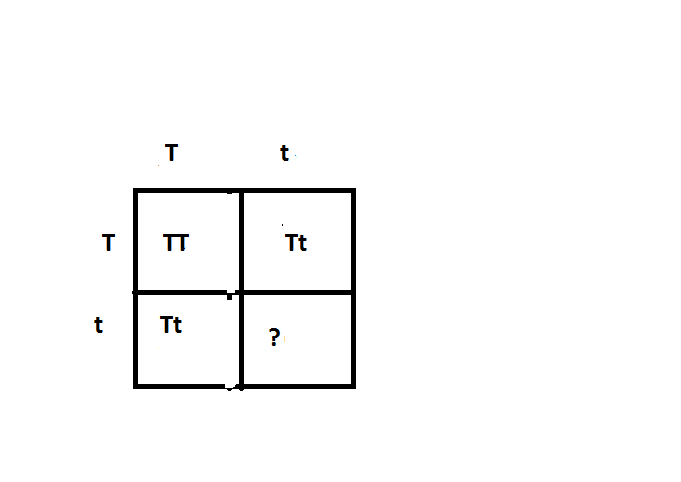
T - tall and t = short
In the punnett square below, what belongs in the missing square
a)
tt
b)
Tt
c)
Bb
d)
TT
10.
The burning of wood is a physical change
a)
true
b)
false
11.
What charge does an electron have?
a)
positive
b)
negative
c)
neutral
12.
What are the states of matter?
a)
solid, liquid, and juice
b)
solid and liquid
c)
solid and gas
d)
solid, liquid, and gas
13.
Which form of matter fills the space like it has in the balloon?
a)
liquid
b)
string
c)
solid
d)
gas
14.
What is mass?
a)
the force of an object caused by gravity
b)
the amount of space something takes up
c)
the amount of matter in an object
d)
how fast something is moving
15.
_________ is described as the energy of motion.
a)
Potential Energy
b)
Chemical Energy
c)
Kinetic Energy
d)
Gravitational Potential Energy
16.
__________ is described as the stored energy in an object due to its position or composition.
a)
Potential Energy
b)
Thermal Energy
c)
Kinetic Energy
d)
Mechanical Energy
17.
What is the most basic unit of life?
a)
Tissue
b)
Cell
c)
Organ
d)
Organ System
18.
Which of the following shows biological systems from least to most complex?
a)
Cells, tissue, organ, organ system
b)
Tissue, cells, organ, organ system
c)
Organ system, cells, organism, tissue
d)
Organ system, organ, tissue
19.
What is the function of the nucleus within a cell?
a)
Containing a cell's DNA and acting as the cell's "brain"
b)
Manufacturing proteins
c)
Completing photosynthesis
d)
Storage space
20.
Where do plants receive the energy necessary to carry out photosynthesis?
a)
Heat from the sun
b)
Gamma radiation
c)
Light from the sun
d)
Wind
21.
Besides energy from the sun, what else does a plant require to complete photosynthesis?
a)
Wind energy
b)
Oxygen and carbon dioxide
c)
Oxygen and water
d)
Water and carbon dioxide
22.

Which organism is a decomposer?

a)

frog

b)

worm

c)

oak tree

d)

grasshopper

23.

Which organisms will you find the most of in an ecosystem?

a)

Consumer

b)

Producer

c)

Decomposer

24.

Plants use photosynthesis to make

a)

water

b)

sunlight

c)

carbon dioxide

d)

sugar

25.
having two of the same genes for the trait (sometimes called purebred).
a)
homozygous
b)
hetrozygous
c)
protein
d)
chromosome
26.

The pattern of weather an area experiences over a long period of time

a)

Climate

b)

Weather

c)

Conditions

d)

Atmosphere

27.

An imaginary line that passes through Earth's center and its North and South Poles

a)

Axis

b)

Equator

c)

Tilt

d)

Orbit

28.
Why do we have night and day?
a)
Earth's rotation
b)
Earth's revolution around the Sun
c)
The Sun rotating
d)
The moon block the sun
29.
The cycle that powers the ocean currents, weather, and tectonic plates it called
a)
conduction current
b)
radiation
c)
condition current
d)
convection current
30.
The energy from the sun is transmitted through movement of electromagnetic waves by
a)
conduction
b)
convection
c)
contraction
d)
radiation
31.
The main reason that we have currents in the ocean and air is
a)
the sun heats the air and ocean evenly everywhere
b)
the heat inside the earth heats the ocean and the ocean heats the air
c)
the sun cannot heat both the air and water, so one must heat the other
d)
the sun heats air and water more at the equator because it receives more direct sunlight
32.
In convection, WARM air
a)
Rises
b)
Sinks
33.
Heat transfers from an area of ____temperature to an area of ___ temperature.
a)
high to low
b)
low to high
c)
high to high
d)
It can travel high to low and low to high. 
34.
Warm air is __________ dense than cold air and rises creating convection currents.
a)
more
b)
less
35.
[Physical Science] Which of the following diagrams best represents a mixture?
a)
A
b)
B
c)
C
d)
D
36.
[Earth Science] What are the reasons for the seasons?
a)
Earth's tilt and rotation.
b)
Earth's rotation and revolution.
c)
Earth's tilt and revolution.
d)
Earth's tilt and resolution
37.
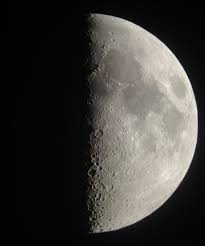
[Earth Science] Name the moon phase
a)
First Quarter
b)
Last Quarter
c)
New Moon
d)
Full Moon
38.
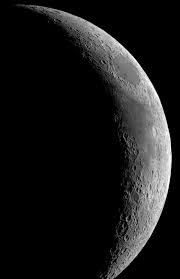
[Earth Science] Name the moon phase
a)
waning crescent
b)
waxing crescent
c)
waning gibbous
d)
waxing gibbous
39.
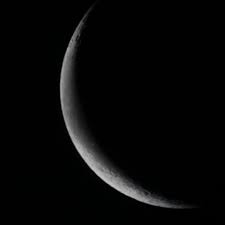
[Earth Science] Name the moon phase
a)
waning crescent
b)
waxing crescent
c)
waning gibbous
d)
waxing gibbous
40.
A solar eclipse only happens during a ________ moon.
a)
New
b)
Cresent
c)
Gibbous
d)
Full
41.
a)
solar eclipse
b)
lunar eclipse
42.
a)
solar eclipse
b)
lunar eclipse
43.

Wha type of tide would this arrangement of earth-moon-sun create?

a)

full moon tide

b)

new moon tide

c)

neap tide

d)

spring tide

44.
What type of tides would this arrangement of earth-moon-sun create?
a)
neap tide
b)
spring tide
c)
new moon tide
d)
full moon tide
45.
Tides are caused by
a)
strong winds that blow over ocean waters.
b)
the relative position of Earth, the moon and the sun.
c)
the shifting of the plates on the ocean floor.
d)
variations in the salinity of ocean water
46.
The bulge of water on the side of the Earth closest to the moon produces ___________.
a)
high tide
b)
low tide
c)
neap tide
d)
spring tide
47.
Which body has the greater effect on Earth's tides?
a)
Sun
b)
Saturn
c)
Moon 
d)
Venus
48.
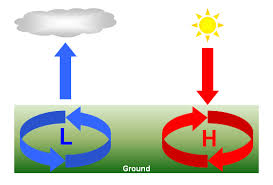
What does this symbol on a weather map indicate? 
a)
High pressure system
b)
Low pressure system
c)
Cold front
d)
Warm front
49.
What does this symbol on a weather map indicate? 
a)
High pressure system
b)
Low pressure system
c)
Cold Front
d)
Warm Front
50.
When two air masses meet, what happens?
a)
The weather changes and precipitation usually occurs.
b)
wind
c)
water
d)
volcano
51.

The boundary of two air masses is called a __________________.

a)

front

b)

gathering

c)

air mass

52.
Which system results in drier, fairer weather?
a)
high pressure
b)
low pressure
c)
hurricane
d)
weather system
53.
What type of weather does a low pressure system bring?
a)
stormy, cloudy weather
b)
clear skies
54.

Which one shows a cold front?

a)
b)
c)
d)
55.

Which one shows a warm front?

a)
b)
c)
d)
56.

Which one shows a stationary front?

a)
b)
c)
d)
57.

Which one shows an occluded front?

a)
b)
c)
d)
58.

The organelles that are responsible for digesting food, and getting rid of other cellular wastes are called ___________________.

a)

Mitochondria

b)

Vacuoles

c)

Lysosomes

d)

Chlororplasts

59.

What is one basic function of the vacuoles?

a)

circulating oxygen

b)

producing food

c)

controlling cell processes

d)

storing food and water

60.
All cells need energy to function.  Which cell organelle is responsible for producing energy in the cell?
a)
chloroplasts
b)
mitochondria
c)
nucleus
d)
vacuoles
61.
What is the function of a cell wall?
a)
to protect and support the cell
b)
to perform different functions in each cell
c)
to prevent water from passing through it
d)
to prevent oxygen from entering the cell
62.
In what part of the plant cell does the process of photosynthesis take place?
a)
nucleus
b)
mitochondria
c)
chloroplasts
d)
vacuoles
63.

Click on the two organelles that are found in plant cells but not in animal cells

a)

nucleus

b)

cell wall

c)

chloroplast

d)

vacuole

e)

mitochondria

64.
Particles move quickest
a)
solid
b)
liquid
c)
gas
d)
solid, liquid and gas
65.
Salt water is:
a)
A Compound
b)
An element
c)
A mixture
d)
An atom
66.
Spaghetti and meatballs is an example of a:
a)
compound
b)
element
c)
mixture
d)
molecule
67.
15. gold
a)
A. MIXTURE
b)
B. COMPOUND
c)
C. ELEMENT
68.
Baking soda (NaHCO3)
a)
A. MIXTURE
b)
B. COMPOUND
c)
C. ELEMENT
69.
What is a pure substance made of two or more elements that are chemically combined called?
a)
A. element
b)
B. compound     
c)
C. mixture
d)
D. solution
70.
Which of the following is NOT a mixture? 
a)
NaCl + H2O
b)
C6H12O6 + H2O
c)
C6H12O6
d)
SiO2 +H2O
71.
A mixture can be separated by ________ means. 
a)
physical
b)
chemical
72.
A new substance is formed when you are working with compounds because a _________ reaction occurs. 
a)
physical
b)
chemical
73.
A _________ is a substance made of two or more DIFFERENT elements chemically combined. 
a)
mixture
b)
compound
c)
substance 
74.
True or false: NO new substance is formed in a mixture.  
a)
True
b)
False
75.
A _________ has two or more different types of matter that are near one another, but the matter does NOT chemically combine. 
a)
mixture
b)
compound
c)
property
d)
atom
76.
Element or Compound?
Au
a)
Element
b)
Compound
77.
Element or Compound?
H2SO4
a)
Element
b)
Compound
78.
Which of the following represents an element?
a)
H2O
b)
H2
c)
NaCl
d)
CaCO3
79.
Element or Compound?
Salt (NaCl)
a)
Element
b)
Compound
80.
This picture represents which of the following?
a)
element
b)
compound
c)
mixture
81.
Is salt dissolving in water a physical or chemical change?
a)
Physical
b)
Chemical
82.
Is melting iron a physical or chemical change?
a)
Physical
b)
Chemical
83.
Is sour milk a physical or chemical change?
a)
Physical
b)
Chemical
84.
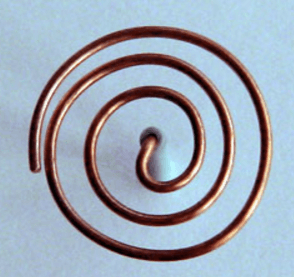
Is bending copper wire a physical or chemical change?
a)
Physical
b)
Chemical
85.
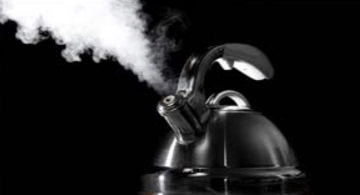
Is steam a physical or chemical change?
a)
Physical
b)
Chemical
86.
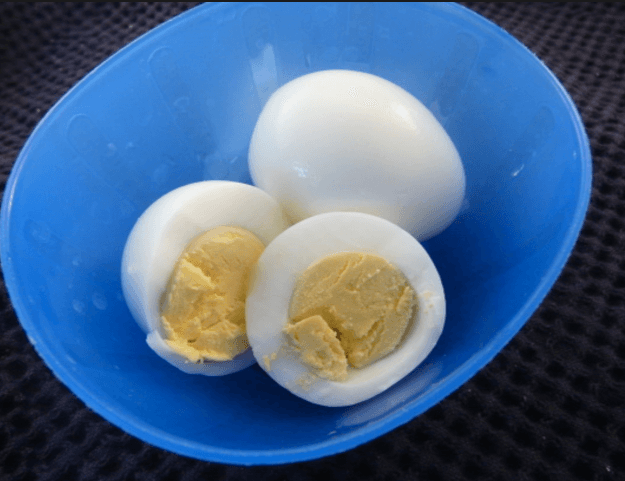
Are hard boiled eggs a physical or chemical change?
a)
Physical
b)
Chemical
87.
Is melting butter a physical or chemical change?
a)
Physical
b)
Chemical
88.
Is adding sugar to your coffee a physical or chemical change?
a)
Physical
b)
Chemical
89.
When baking soda and vinegar mix it creates a bubbly mess. Is this a chemical or physical change?
a)
Physical
b)
Chemical
90.
Cutting paper
a)
Chemical Change
b)
Physical Change
91.
Mixing oil and vinegar
a)
Chemical Change
b)
Physical Change
92.
Fireworks
a)
Chemical Change
b)
Physical Change
93.
Freezing water
a)
Chemical Change
b)
Physical Change
94.
A nail rusting
a)
Chemical Change
b)
Physical Change
95.
Combining hydrogen and oxygen to create water
a)
Chemical Change
b)
Physical Change
96.

The general name for organisms like animals and fungi that get their energy from eating other organisms.

a)

Producers

b)

Consumers

c)

Detritivores

d)

Carnivores