wayground logo

Free Printable Worksheets

Font size

S
M
L
XL
Worksheets

Pre-Algebra Final Exam Review '17-'18

Total questions: 100

Worksheet time: 5hrs 32mins
Name
Class
Date
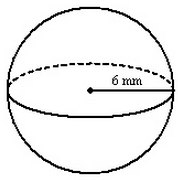
1.

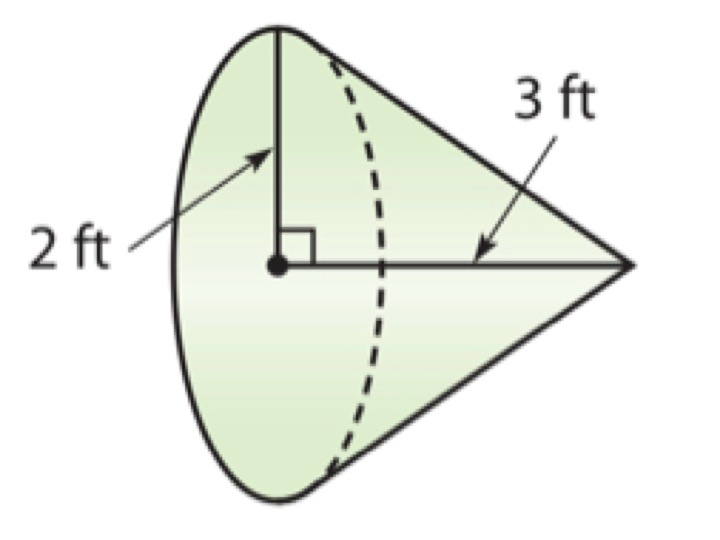
What is the surface area?

a)

6658.56 mm2

b)

452.16 mm2

c)

904.32 mm2

d)

108.8 mm2

2.

For a sphere with a radius of 8, what is the Surface Area?

a)

803.84

b)

10096.2304

c)

2143.573

d)

100.48

3.

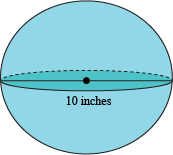
Find the surface area of the sphere, given diameter is 10.

a)

314.16 in2

b)

314 in2

c)

166.67 in2

d)

521.24 in2

4.
a)
Volume of Spheres
b)
Volume of Cones
c)
Surface area of spheres
d)
surface area of cones
5.
What is this formula?
a)
suface area of a cone
b)
surface area of a sphere
c)
volume of a cone
d)
volume of a sphere
6.
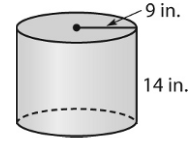
What is the surface area of the cylinder to the nearest square inch
a)
625 in2
b)
1300 in2
c)
1046 in2
d)
414 in2
7.
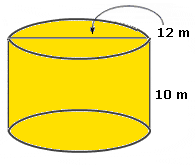
find the total surface area of the cylinder .
a)
456.33m2
b)
1445.1m2
c)
1245.m2
d)
6789m2
8.
What is the surface area formula for a cylinder?
a)
A = πrl + πr2
b)
A = 2πrh + 2πr2
c)
A = 4πr2
d)
A = πr2
9.
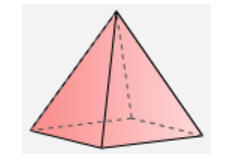
Name this figure.
a)
Square Pyramid
b)
Triangular Prisim
c)
Square Prisim
d)
Triangular Pyramid
10.
What is the surface area of the cylinder to the nearest square inch
a)
625 in2
b)
1300 in2
c)
1046 in2
d)
414 in2
11.

Find the surface area

a)

252.58 yd2

b)

163.2 yd2

c)

365.68 yd2

d)

157.2 yd2

12.
V = ?
a)
14.13 in3
b)
56.52 in3
c)
169.56 in3
13.

Find the surface area.

a)

6658.56 mm2

b)

452.16 mm2

c)

904.32 mm2

d)

108.8 mm2

14.
Find the lateral surface area of the prism.
a)
100.53 square inches
b)
351.86 square inches
c)
251.33 square inches
d)
50.27 square inches
15.

Find the Surface Area. Round your answer to the nearest tenth.

a)

490.6 in2

b)

295.6 in2

c)

221.7 in2

d)

753.7 in2

16.

What is the surface area formula for a cone?

a)

SA = πrl + πr2

b)

SA = 2πrh + 2πr2

c)

SA = 4πr2

d)

SA = πr2h

17.
Find the surface area of the cylinder with the following dimensions: 
radius = 4 in
height = 10 in 
a)
360.4 in squared
b)
300.78 in squared
c)
351.68 in squared
d)
89.743 in squared
18.
Find the volume to the nearest tenth using 3.14 instead of Pi.
a)
282.6 in3
b)
94.2 in3
c)
235.5 in3
d)
78.5 in3
19.
Find the volume to the nearest hundredth using 3.14 instead of Pi.
a)
418.00 cm3
b)
139.33 cm3
c)
130.62 cm3
d)
1671.98 cm3
20.
Find the volume to the nearest hundredth using 3.14 instead of Pi.
a)
5572.45 cm3
b)
506.59 cm3
c)
126.65 cm3
d)
1393.11 cm3
21.
Find the volume to the nearest hundredth using 3.14 instead of Pi.
a)
179.50 cm3
b)
205.15 cm3
c)
51.29 cm3
d)
1436.03 cm3
22.
Find the volume to the nearest hundredth using 3.14 instead of Pi.
a)
12.56 ft3
b)
37.68 ft3
c)
18.84 ft3
d)
6.28 ft3
23.
 Find the volume of the solid shown in the figure?
a)
7230
b)
6621
c)
1130
d)
907
24.
You have a globe that has a radius of 11 inches. Find the volume of your globe. 
a)
523 in3
b)
16,717 in3
c)
5,575 in3
d)
7,235 in3
25.
Find the volume to the nearest whole number using 3.14 instead of Pi.
a)
151 ft3
b)
152 ft3
c)
150 ft3
d)
150.72 ft3
26.
Use pi=3.14.  Round to the nearest hundredth.
a)
9.42km3
b)
9.42km
c)
9.4km3
d)
9.42cm3
27.
Use pi=3.14.  Round to the nearest hundredth.
a)
803.84km
b)
803.84km3
c)
200km
d)
200.96km3
28.
What shape is this?
a)
Pyramid
b)
Cylinder
c)
Circle
d)
Cube
29.
What shape is this?
a)
Cylinder
b)
Cone
c)
Sphere
30.
What shape is this?
a)
Cone
b)
Sphere
c)
Cube
d)
Pyramid
31.
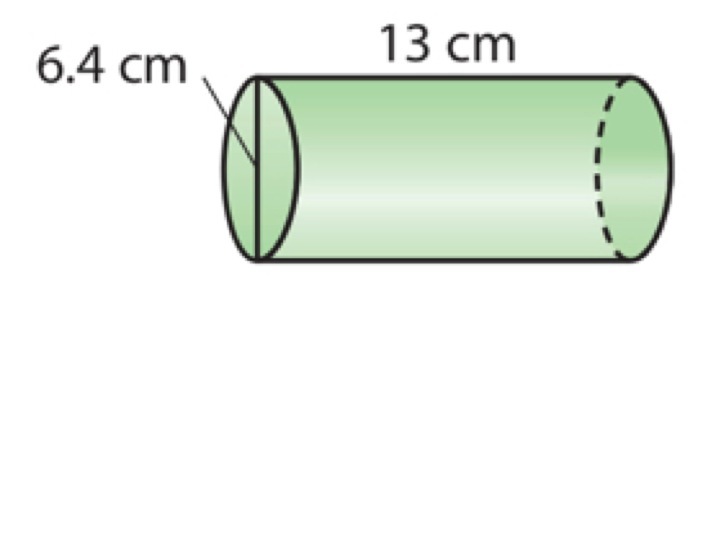
 Find the volume of the Cylinder
a)
7230
b)
6621
c)
1130
d)
907
32.
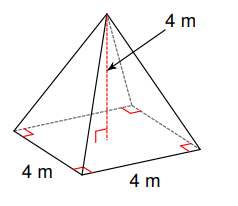
What is the volume of this pyramid?
a)
484 cm3
b)
121 cm3
c)
1452 cm3
d)
726 cm3
33.
What is the volume of this pyramid?
a)
1425 in3
b)
2904 in3
c)
4356 in3
d)
49 in3
34.
Calculate the volume of the pyramid in the picture.  Round to the nearest whole number if necessary.
a)
21 m3
b)
64 m3
c)
32 m3
d)
11 m3
35.
Calculate the volume of the pyramid in the picture.  Round to the nearest whole number if necessary.
a)
120 ft3
b)
96 ft3
c)
288 ft3
d)
 192 ft3
36.
Find the volume of the figure. Round to the nearest whole number.
a)
317 units³
b)
635 units³
c)
1,904 units³
d)
890 units³
37.
Identify the 3D solid.
a)
cube
b)
square prism
c)
square pyramid
d)
triangular pyramid
38.
Find the volume of the figure. Round to the nearest whole number.
a)
317 units³
b)
635 units³
c)
1,904 units³
d)
890 units³
39.
Find the volume.
a)
147
b)
588
c)
84
d)
294
40.
What is the type of correlation?
a)
Negative 
b)
no association
c)
positive 
41.
What type of correlation does this graph have?
a)
positive
b)
negative
c)
none
d)
all of the above
42.
What type of correlation does this graph show?
a)
Positive
b)
negative
c)
none
d)
all of the above
43.
What type of correlation does this scatter plot show?
a)
positive linear association
b)
negative linear association
c)
no association
d)
nonlinear association
44.
In a scatterplot, an outlier...
a)
...is something we didn't learn 8th grade
b)
...is a puppet with a long nose named Pinocchio
c)
...is a point that is far outside the main cluster of points/ordered pairs
d)
...is a really naughty point who doesn't tell the truth when outside
45.
If a scatterplot has no association then...
a)
...it has no ordered pairs
b)
...it has ordered pairs that have a negative pattern
c)
...its ordered pairs have no predictable pattern
d)
...if it makes a lion on a graph (roar!)
46.
Which statement is true about the given scatter plot?
a)
It has positive association because all of the points have positive coordinates
b)
It has negative association because the practice length is always less than the number of baseballs in the cart.
c)
It has positive association becouse the points on the graph go towards 50.
d)
It has negative association because as the practice length increases the number of baseballs decreases.
47.
What kind of correlation?
a)
Positive
b)
Negative
c)
No
48.
What kind of correlation?
a)
Positive
b)
Negative
c)
No
49.
What kind of correlation?
a)
Positive
b)
Negative
c)
No
50.
What is the correlation?
a)
Positive linear
b)
Negative linear
c)
Non-linear
d)
No correlation
51.
What is the correlation?
a)
Positive linear
b)
Negative linear
c)
Non-linear
d)
No correlation
52.
What is the correlation?
a)
Positive linear
b)
Negative linear
c)
Non-linear
d)
No correlation
53.
What is the correlation?
a)
Positive linear
b)
Negative linear
c)
Non-linear
d)
No correlation
54.
What is the correlation?
a)
Positive linear
b)
Negative linear
c)
Non-linear
d)
No correlation
55.
The following scatter plot shows Pam's training as she prepares to run a 6 mile race at the end of the month.  Which of the following would be a reasonable approximation for the length of time it would take for her to run 6 miles? 
a)
A. 50 min
b)
B. 80 min
c)
C. 45 min
d)
D. 60 min
56.
The scatter plot shows the relationship between the number of chapters and the total number of pages for several books.  Use the trend line to predict how many chapters would be in a book with 180 pages. 
a)
12 chapters
b)
15 chapters
c)
18 chapters
d)
21 chapters
57.
Mrs. Collins made a scatterplot to show the relationship between the number of absences and a student’s final exam score. Based on this scatterplot, a student with 6 absences should get approximately what score on the final exam? 
a)
85
b)
92
c)
70
d)
76
58.
If Gold's Gym paid $250 for each TV, how many did they buy?
a)
35
b)
30
c)
45
d)
20
59.
Which scatter plot shows a negative relationship?
a)
Graph A
b)
Graph B
c)
Graph C
d)
Graph D
60.
Which scatter plot shows no relationship?
a)
Graph A
b)
Graph B
c)
Graph C
d)
Graph D
61.
In the scatter plot, does the image shows a "Line of Best Fit"?
a)
Yes
b)
No
62.
In the scatter plot, does the image shows a "Line of Best Fit"?
a)
Yes
b)
No
63.
In the scatter plot, does the image shows a "Line of Best Fit"?
a)
Yes
b)
No
64.
State the line of reflection.
a)
Reflection across y-axis
b)
Reflection across x-axis
c)
Reflection across x = 1
d)
Reflection across y = 1
65.
Find K' if the figure is reflected across the x-axis
a)
(4, 1))
b)
(-1, -4)
c)
(1, -4)
d)
(1, 4)
66.
Reflect the point (2, -4) over the y-axis.
a)
(-4, 2)
b)
(-2, 4)
c)
(-2, -4)
d)
(2, 4)
67.
Which answer shows a reflection across the x-axis?
a)
d
b)
c
c)
b
d)
a
68.
∆QRS contains the points: Q(4, 2) R(5, 1) S(3,7). If the triangle is reflected across the y-axis, what will S' be?
a)
S'(3, 7)
b)
S'(-3, 7)
c)
S'(-3, -7)
d)
S'(3, 7)
69.
Determine where X' would be if you translated X 3 units to the left and 9 units down.
a)
(-4, 4)
b)
(-10, 2)
c)
(-4, -5)
d)
(-1, 5)
70.
Determine where T' would be if you translated T 3 units to the right and 6 units up.
a)
(5, 1)
b)
(2, -5)
c)
(-1, 1)
d)
(8, -2)
71.
How is trapezoid ABCD translated to trapezoid A'B'C'D'?
a)
Translated 5 units down and 5 units to the right
b)
Translated 5 units down and 1 to the right
c)
Translated 8 units down and 5 units to the right
d)
Translated 5 units down and 4 units to the right
72.
How would you translate point P to P'?
a)
Translate 2 units to the right and  8 units down
b)
Translate 3 units down and 2 units to the right
c)
Translate 4 units down and 4 units to the left
d)
Translate 8 units to the right and 2 units down
73.
What does a translation do to an image?
a)
Turns it 90* clockwise
b)
Mirrors it
c)
Shrinks it
d)
Slides it
74.
A point is translated 3 units left and 4 units up. What is the correct translation rule?
a)
T(x,y)→(x+3,y+4)
b)
T(x,y)→(x-3,y-4)
c)
T(x,y)→(x+3,y-4)
d)
T(x,y)→(x-3,y+4)
75.
If you were to rotate ABCD 180°  about the origin, what would the coordinate of A' be?
a)
(-5, 5)
b)
(-3, -5)
c)
(-5, 3)
d)
(-3, 3)
76.
If you were to rotate ABCD 180° about the origin, what would the coordinates of B' be?
a)
(0, 0)
b)
(-6, -5)
c)
(-1, 3)
d)
(-6, 2)
77.
What is this picture an example of? 
a)
An angle
b)
A cat vertex 
c)
Rotation 
d)
Dilation
78.
The image A'B'C' is a rotation of ABC.
a)
True
b)
False
79.
How many degrees was the figure rotated?
a)
90 degrees counterclockwise 
b)
180 degrees
c)
90 degrees clockwise
80.
What is the angle of rotation for this counterclockwise rotation about the origin?
a)
90°
b)
180°
c)
270°
d)
360°
81.
What type of rotation does this represent (from red to blue)?
a)
270⁰ clockwise
b)
360⁰
c)
90⁰ counterclockwise
d)
180⁰
82.

Triangle A is rotated 90° clockwise with the origin as the center of rotation to create a new figure. Which triangle shows the new location?

a)

A

b)

B

c)

C

d)

D

83.
Triangle D is rotated 90° clockwise with the origin as the center of rotation to create a new figure. Which triangle shows the new location?
a)
A
b)
B
c)
C
d)
D
84.
Triangle B is rotated 90° clockwise with the origin as the center of rotation to create a new figure. Which triangle shows the new location?
a)
A
b)
B
c)
C
d)
D
85.
Triangle A is rotated 270° counterclockwise with the origin as the center of rotation to create a new figure. Which triangle shows the new location?
a)
A
b)
B
c)
C
d)
D
86.
If a system of equations has no solution, what does the graph look like? 
a)
intersecting lines
b)
parallel lines
c)
skew lines
d)
intersecting lines
87.
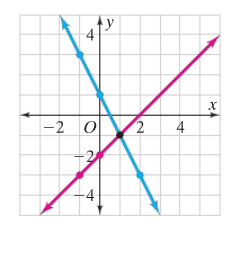
What is the solution?
a)
(1, -1)
b)
(-1, 1)
c)
(0, -2)
d)
(0, 1)
88.
How many solutions does this system of equations have?
a)
One Solution
b)
No solution
c)
Infinitely Many Solutions
d)
Two Solutions
89.
If a system of linear equations has one solution, what does this mean about the two lines? 
a)
Parallel lines
b)
the same line 
c)
Intersecting lines
90.
This system has _____ solutions
a)
0
b)
1
c)
2
d)
Infinitely many
91.
Determine if (4, 1) is a solution for the system of equations.
y = -x + 5
y = 2x - 7
a)
yes
b)
no
92.
Solve the system by elimination. 
−4x − 4y = 0
4x + 4y = 0 
a)
(−6, −4) 
b)
Infinite number of solutions  
c)
(−6, 10) 
d)
(6, 4) 
93.
Solve the following system by graphing.  What is the solution?
a)
(-4, 2)
b)
(4, 2)
c)
(2, -4)
d)
(2, 4)
94.
What is the solution to this system of equations?
a)
(4, -1)
b)
(-1, 4)
c)
(-4, 1)
d)
(-4, -1)
95.
Solve the system of equations.
x + 2y = -3
x - y = -12
a)
(-9, 3)
b)
(-7 ,5)
c)
(3, 15)
d)
(9, 6)
96.
Solve the system of equations.
y = 4x+1
3x + 2y = 13
a)
(1, 5)
b)
(5, 1)
c)
(0.25, 2)
d)
97.
Solve for x and y
y = 2x + 1
y = 4x - 1
a)
(1,3)
b)
(-1,-3)
c)
(-1,3)
d)
(3,1)
98.

If a system of linear equations has infinitely many solutions, what does this mean about the two lines?

a)

They are intersecting lines.

b)

They are the same line.

c)

They are parallel lines.

99.

Solve by using the Substitution Method.

y = 2x + 1

3x + y = 16

a)

x = 3

b)

(2, 7)

c)

(3, 5)

d)

(3, 7)

100.

Solve by using the Substitution Method.

y = 5x + 1

y = 3x + 13

a)

(6, 31)

b)

(31, 6)

c)

(4, 21)

d)

(2, 11)