wayground logo

Free Printable Worksheets

NEW

Font size

S
M
L
XL
Worksheets

S2 FInal Exam Review Part 1

Total questions: 70

Worksheet time: 59mins

Name
Class
Date
1.
The color of a mineral in powder form is called the mineral's 
a)
hardness
b)
specific gravity
c)
luster
d)
streak
2.
By definition, a mineral has which of the following characteristic(s)?
a)
definite chemical composition
b)
crystal structure
c)
naturally occuring
d)
all of the above
3.
How light reflects off of a mineral is called the mineral's 
a)
luster
b)
streak
c)
cleavage
d)
fracture
4.
How do you test the hardness of a mineral? 
a)
Throw it against a wall
b)
Step on it
c)
Scratch Test
d)
Kick it until it breaks
5.
A naturally occurring, inorganic solid with a crystal structure and a definite chemical composition is referring to
a)
density
b)
streak
c)
mineral
d)
non silicate mineral
6.
Which type of rock results from melting and cooling of magma?
a)
Igneous
b)
Metamorphic
c)
Sedimentary
d)
Extrusive
7.
Which type of rock forms from extreme heat and pressure?
a)
Igneous
b)
Sedimentary
c)
Organic
d)
Metamorphic
8.
A metamorphic rock changes into an igneous rock by what two processes?
a)
Melting and cooling
b)
Extreme heat and pressure
c)
Compaction and cementation
d)
Weathering and erosion
9.
Wind, water, and ice breaking down rock is called
a)
Erosion
b)
Deposition
c)
Compaction
d)
Weathering
10.
What is the MAIN way rocks are classified?
a)
Their color and shapes
b)
How they form
c)
Mineral bands
d)
Where they form
11.
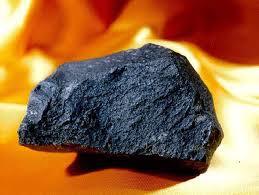
This rock was found near the mouth of a volcano. What type of rock is this?
a)
Sedimentary
b)
Igneous
c)
Metamorphic
12.
What group of minerals is most common (abundant)? 
a)
Carbonates
b)
Silicates
c)
Oxides
d)
Native elements
13.
SiO2 is also know as....
a)
sulfur dioxide
b)
a silicate
c)
carbonate
d)
oxygen
14.
How do minerals form?
a)
from magma or solution
b)
from oceans or caves
c)
from mountain formation and volcanoes
15.

What group of minerals, made up of oxygen and silicon, is most common (abundant)?

a)

Carbonates

b)

Silicates

c)

Oxides

d)

Native elements

16.
Minerals that contain silicon and oxygen are called: 
a)
Carbonates
b)
Silicates
c)
Sulfates
d)
Sulfides
17.
If a volcano's magma is high in silicia, the volcano will probably
a)
erupt quietly
b)
remain dormant
c)
erupt explosively
d)
produce dark color lava
18.
Highly explosive volcanoes tend to have what type of magma?
a)
magma with high silica, high viscosity, and higher gas content
b)
magma with low silica, low viscosity, and lower gas content
c)
magma with low silica, high viscosity, and lower gas content
d)
magma with no silica, high viscosity, and no gas content
19.
Whre is magma not likely to form? 
a)
within the athenosphere
b)
at plate boundaries 
c)
on Earth's surface
d)
under hot spots
20.
Which statement best describes the difference between magma and lava?
a)
Magma is fluid and flows very quickly. Lava is thick and viscous and flows very slowly.
b)
Magma is molten rock beneath earth's surface. Lava is molten rock on the earth's surface.
c)
Magma is molten rock on the earth's surface. Lava is molten rock beneath the earth's surface.
d)
Magma is molten rock. Lava is solid rock.
21.
Magma
a)
rises because it is more dense than unmelted mantle
b)
rises because it is less dense than unmelted mantle
c)
sinks because it is hotter than surrounding mantle
d)
does not really move at all
22.
What type of lava cools quickly and forms rock with jagged edges?
a)
Aa
b)
Magma
c)
Pahoehoe
d)
Pillow Lava
23.
Pyroclastic materials include which of the following? 
a)
pahoehoe
b)
aa
c)
ash
d)
all of the above 
24.
A volcano that has a broad base and gently sloping sides is called a 
a)
shield volcano
b)
cinder cone
c)
caldera
d)
composite volcano
25.
Iceland is one of the few places in the world where a mid-ocean ridge 
a)
is at a plate boundary 
b)
has a rift valley 
c)
is above sea level
d)
has active volcanes 
26.
What is the opening in Earth's crust through which molten rock, gases, and ash erupt?
a)
Divergent Boundary
b)
Magma
c)
Subduction Boundary
d)
Volcano
27.
Most volcanoes occur at which 2 types of plate boundaries? 
a)
convergent w/ subduction and divergent
b)
divergent and transform
c)
divergent and hot spots
d)
convergent w/ subduction and hot spots
28.
Two gases that make up 99% of Earth's atmosphere
a)
carbon dioxide & oxygen
b)
nitrogen & carbon dioxide
c)
nitrogen & oxygen
d)
nitrogen & water vapor
29.
Which layer of the atmosphere is where most weather happens?
a)
Troposphere
b)
Exosphere
c)
Stratosphere
d)
Mesosphere
30.
Within the stratosphere is the ozone layer. What does the ozone layer do?
a)
It protects us from meteors
b)
It protects us from violent solar flares
c)
It protects us from ultra violet radiation
d)
It helps us breathe
31.
In which layer do virtually all weather phenomena take place?
a)
troposphere
b)
mesosphere
c)
stratosphere
d)
thermosphere
32.
What does the Sun emit?
a)
currents
b)
nitrogen
c)
radiation
d)
atmosphere
33.

A measure of the average kinetic energy of the atoms in a substane is its

a)

heat

b)

temperature

c)

radiation

d)

potential energy

34.

How are the soles of your feet heated if you stand barefoot on a sun-warmed sidewalk

a)

radiation

b)

conduction

c)

convection

d)

none of the above

35.
What is the definition of CONDUCTION?
a)
When heat is transferred from objects like rays of light or electromagnetically.
b)
a  hot liquid or air that  expands, becomes less dense, and rises or becomes more dense, and sinks.
c)
When heat transfers from objects that are touching.
d)
When heat transfers through the heater or AC in your house.
36.
What is the definition of CONVECTION
a)
When heat transfers through waves.
b)
When heat transfers from objects that are touching.
c)
a  hot liquid or air that  expands, becomes less dense, and rises or becomes more dense, and sinks.
d)
Heat traveling from the sun
37.
What kind of heat transfer happens when the sun is heating your body?
a)
Conduction
b)
Radiation
c)
Convection
d)
Density
38.
What heat transfer happens when you burn your hand by touching a fire?
a)
Radiation
b)
Conduction
c)
Convectio
d)
I don't know!!!!!!!!!!!
39.
Why is it colder near the poles than near the equator?
a)
At the poles, sunlight is blocked by global warming.
b)
At the poles, light hits Earth at a perpendicular angle.
c)
At the poles, the beam of sunlight is concentrated in a small area.
d)
At the poles, the beam of sunlight is spread out over a larger area.
40.
What does the Sun emit?
a)
currents
b)
nitrogen
c)
radiation
d)
atmosphere
41.
what type of cloud is shown?
a)
cumulus
b)
cirrus
c)
stratus
42.
These clouds are the closest to the ground. Their name means layer- or sheet like. They bring rain or snow and cover most of the sky. 
a)
Cirrus
b)
Stratus
c)
Cumulonimbus
d)
Cumulus
43.
What happens when something condenses?
a)
It warms up.
b)
It cools down. 
44.
Rain, snow, sleet, and hail are all types of ______________________, which comes from some clouds.
a)
precipitation
b)
condensation
c)
evaporation
d)
runoff
45.

Which of the following is not a type of precipitation?

a)

rain

b)

snow

c)

fog

d)

sleet

46.
Flat, gray, layered clouds; rain or drizzle likely
a)
stratus
b)
cirrus
c)
cumulus
d)
cumulonimbus
47.
What is the dew point??
a)
The temp where condensation begins
b)
When frost turns to dew
c)
The temp in a cloud
d)
The temp when a storm begins
48.
Which best describes why winds at the beach change direction between day and night?
a)
because the temperatures over land and over water change
b)
because warm air over land sinksand stays in place over land
c)
because cool air rises and isreplaced by warm air from the ocean
d)
because cool air sinks and staysin place over land
49.
Which term best describes the type of wind which would most likely be present while playing on a sunny beach during the day?
a)
hurricane
b)
land breeze 
c)
sea breeze
50.
If you wanted to visit an area with very little wind, where might you go? 
a)
The doldrums around the equator
b)
the jet streams in the northern and southern hemisphere 
c)
the North or South Pole 
d)
the area around the Mediterranean Sea 
51.
What is the warming of Earth's atmosphere by gases like carbon dioxide and water vapor trapping the Sun's energy called?
a)
the Greenhouse effect
b)
the Coriolis effect
c)
prevailing westerlies
d)
Gulf Stream
52.
What kind of breeze is this and when would it form?
a)
Land breeze - daytime
b)
Land breeze - nighttime
c)
Sea breeze - daytime
d)
Sea breeze - nighttime
53.
What causes warm air to rise?
a)
the fact that it's less dense than cold air 
b)
The fact that it weighs more than cold air 
c)
The fact that it has higher pressure than cold
d)
the fact that its more dense than cold air 
54.
Winds are named for the direction they are blowing from?
a)
True
b)
False
55.
Which statement correctly defines wind?
a)
Wind is the movement of air from an area of low pressure to an area of high pressure
b)
Wind is the movement of air to a colder area in the atmosphere.
c)
Wind is the movement of air from an area of high pressure to an area of low pressure.
d)
Wind is the movement of air pushed around and bouncing off Earth's surface.
56.
The curving of air to the right in the Northern hemisphere is caused by ___________ and is called the _________ effect.
a)
Earth's rotation...Coriolis
b)
Earth's revolution...Coriolis
c)
Earth's rotation...Doppler
d)
Earth's revolution...Doppler
57.
Which global winds have the greatest impact on the weather in the US?
a)
trade winds
b)
prevailing westerlies
c)
doldrums
d)
polar easterlies
58.
Uneven heating of the Earth's atmosphere causes which of the following?
a)
Greenhouse Effect
b)
Local and global winds
c)
Infrared Radiation
d)
Global temperature increase
59.

The effect of Earth’s rotation on the direction of winds and currents is called the _______________ .

a)

La Niña

b)

El Niño

c)

Coriolis effect

d)

Currents

60.

What causes global winds and convection in the atmosphere?

a)

The tilt of Earth's axis

b)

The revolution of the Earth around the sun

c)

The Moon's gravitational pull

d)

Unequal heating of the Earth by the sun

61.

Based on the map, name the wind that will be blowing between the major pressure systems.

a)

North

b)

West

c)

South

d)

East

62.
What does this symbol on a weather map indicate? 
a)
High pressure system
b)
Low pressure system
c)
Cold front
d)
Warm front
63.
What does this symbol indicate on a weather map? 
a)
High pressure system
b)
Low pressure system
c)
Cold front
d)
Warm front
64.
Which weather tool measures air pressure?
a)
thermometer
b)
barometer
c)
anemometer
d)
psychrometer
65.
What kind of weather is usually associated with a high pressure system?
a)
Sunny weather
b)
Precipitation (rain, snow, etc.)
66.
The boundary  between two air masses is known as:
a)
front
b)
storm
c)
climate
d)
flood
67.
name this front
a)
warm front
b)
cold front
c)
stationary front
d)
occluded front
68.
The amount of water vapor present in the air is called ________________.
a)
weather
b)
humidity
c)
air mass
d)
dew point
69.
 Where do tropical storms start? 
a)
northpole
b)
on the coast
c)
in the ocean, near the equator
d)
in the ocean, near land
70.
What might be a reason why scientists track tornadoes? 
a)
to encourage more people to use radar technology
b)
to warn people against living in “Tornado Alley”
c)
to lower the number of tornadoes that happen every year
d)
to gather information that is used to warn people that a tornado is approaching