Worksheets
Organisms and Environments
Total questions: 64
Worksheet time: 52mins
The 6th Grade students are conducting an investigation of the possible creation of new substances. They will be working with a partner in the lab mixing chemicals according to the teacher's directions. Which of the following is considered an unsafe lab practice?
tying back long hair
wearing loose clothing and jewelry
wearing goggles, apron, and gloves
wearing closed-toe shoes
When mixing chemicals in a beaker that produces a gas, the correct procedure to observe the odor is to --
place a fan above the beaker and then smell the odor.
waft the odor toward your face with hand and then smell.
close one nostril and then inhale
hold the beaker directly under nose and inhale
After an investigation, student were disposing of left over substances. One student poured all of the liquids down the sink drain. A few seconds later, a white could formed above the sink and the student's eyes began to burn. Which statement accurately describes what caused this occurrence?
The student did not wait 2 minutes in between pouring each liquid down the drain.
The student did not allow water to run in the sink after pouring each liquid down the drain.
A physical change occurred resulting in the formation of a new substance
A chemical change occurred resulting in the formation of a new substance
Sam is visiting the desert. He is standing beside a cactus watching a snake move across the sand. There is a lizard basking in the sun on a rock nearby. Which of the following correctly identifies the biotic and abiotic parts of the ecosystem.
Abiotic: Rock, Sand, Sun
Biotic: Cactus, Lizard, Sam, Snake
Abiotic: Cactus, Rock, Sam
Biotic: Lizard, Sand, Snake, Sun
Abiotic: Cactus, Rock, Sand, Sun
Biotic: Lizard, Sam, Snake
Abiotic: Cactus, Lizard, Sam, Snake
Biotic: Rock, Sand, Sun
Which of the following does not correctly describe biotic factors?
Create ecosystems
Include the Sun
Include producers and decomposers
Contain both living and once living organisms

Examine the diagram. If the size of the space represents the size of the group, place the following words in the correct locations:
Community Ecosystem Organism Population
1 - Community, 2 - Ecosystem, 3 - Population, 4 - Organism
1 - Organism, 2 - Ecosystem, 3 - Community, 4 - Population
1 - Organism, 2 - Population, 3 - Community, 4 - Ecosystem
1 - Population, 2 - Community, 3 - Ecosystem, 4 - Organism

The diagram represents the levels of organization within an ecosystem. The center circle represents an individual animal and each larger circle represents a larger ecological group. The outer circle would represent a/an ____________.
Community
Ecosystem
Organism
Population
Abiotic and biotic factors continually interact in ecosystems. Which of the following is an example of a Biotic/Abiotic interaction?
A lion resting under a tree.
A deer drinking water from a stream.
Water and ice eroding land.
An eagle nesting in a tree.
Which organism is in the Domain Eukarya but not in the Kingdom Fungi?
Yeast
Algea
Mildew
Mold

Eukaryotes are classified into four kingdoms according to certain characteristics. The diagram shows some characteristics of the four kingdoms. Which of these is the plant kingdom?
Kingdom 1
Kingdom 2
Kingdom 3
Kingdom 4
A science student working on a laboratory assignment needs to observe the organelle where photosynthesis takes place. Which equipment best assists in this task?
Using a glass slide containing a cheek cell.
Using a dissecting microscope and a leag.
Using a hand lends with an onion root.
Using a compound microscope and plant cell slides
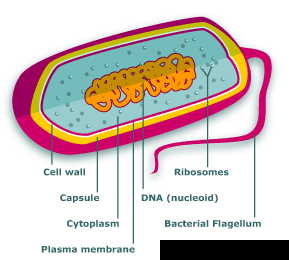
During a lab exam a student looked through the microscope and identified the following cell parts: circular DNA, ribosomes, cell wall, and cytoplasm. What type of cell did she identify?
Eurkaryotic
Endosplasmic
Prokaryotic
None of the above
Four of The State of Texas' Symbols are the Pecan tree, the Mockingbird the Horned Lizard, and the Monarch Butterfly. All of these are multicellular organisms. One way organisms can be classified is by their mode of reproduction. How do all of these reproduce?
Asexually
Spontaneously
Sexually
Monogamously
You discover an organism. Upon examination, you discover that it is multicellular and autotrophic. It is composed of cells that have nuclei and cell walls. The organism reproduces sexually. You determine that the organism belongs to either the kingdom Plantae or Animalla. Which piece of evidence will you now use to identify the correct kingdom?
The organism reproduces sexually
The organism contains cells that have nuclei and cell walls.
The organism is multicellular
All piece of evidence place the organism in the kingdom Animalla
Which of the following questions is used to classify organisms into Domains?
Are the organisms unicellular or multicellular?
Are the organisms eukaryotic or prokaryotic?
Are the organisms nocturnal or diurnal?
Are the organisms autotrophic or heterotrophic?
Which of the following organism is not an autotroph?
mushroom
grass
tree
moss
Which of the following is not made of cells?
bone
salt
lettuce
skin
What type of organism is composed of cells lacking membrane-bound nuclei?
prokaryotes
eukaryotes
heterotrphs
autotrophs

The organism shown is in the Animal Kingdom of the genus Alligator. Why would this organism be listed in the Eukarya Domain?
Its cells have not nuclear membrane and are found in extremem conditions
Its cells have no nuclear membrane and are found in all living organisms
Its cells have a nuclear membrane and are found in all living organisms
This organism would not be classified under this domain
What is the best explanation for classifying the six kingdoms into three domains?
Because organisms are becoming extinct at a faster pace
Because more organisms are being discovered every day
Because scientific tools are more precise and have expanded our understanding of the differences between organisms
Because new and improved organisms are being created by cloning techniques and robotics.

A student is completing an investigation using several different types of cells. Below is the data the student collected. Based on the data collected, which cell is the prokaryotic cell?
A
B
C
All of the above
Which of the following levels of classification includes the largest amount of organisms?
Kingdom
Class
Phylum
Domain
Which taxonomic domain contains the following kingdoms: Plantae, Animallia, Protista, Fungi?
Bacteria
Eukarya
Archaea
None of the above
Which taxonomic domain contains microbes that have no cell nucleus or any other membrane covered organelles within their cells?
Bacteria
Eukarya
Archaea
None of the above

Which taxonomic domain would the following organism be classified?
Bacteria
Eukarya
Archaea
None of the above
During a science investigation using microscopes, students recorded the following observations over their slide specimen:
Nucleus is present
Definite shaped organelles
a cell wall
Based on these observations, in which taxonomic domain should the classify this organism?
Bacteria
Eukarya
Archaea
None of the above

What kind of cell is shown?
Prokaryotic
Eukaryotic
Archaebateria
Autotrophic

According to the chart below, which of the following would you expect to find in all protists, fungi, plants, and animals?
nuclei
cell walls
ribosomes
chloroplasts
A science class is discussing prokaryotic and eukaryotic organisms. Which of the student statements below could describe both a prokaryotic organism and a eukaryotic organism?
Student 1 recalls looking into a microscope and seeing an organism that was multicellular
Student 2 discusses a day when they were trying to identify genetic material (DNA or RNA) within a cell
Student 3 recalls seeing a cell with a nucleus and organelles that resembled mitochondria of a nucleus or chloroplasts
Student 4 describes looking trough the microscope and seeing one cell with no evidence of a nucleus or organelles.
In Yellowstone Nation Park, USA you find a unicellular, prokaryotic organisms living beneath the extremely hot water in the hot springs.
In the Great Salt Lake in Salt Lake City Utah, you can find prokaryotic, unicellular organisms that are capable of living in the extremely salty conditions.
Which of the following would be found in both of these organisms.
Cytoplasm, DNA, Nucleus, Ribosomes
DNA, Nucleus, Ribosomes, Plasma Membrane
Nucleus, Cytoplasm, Plasma Membrane, RNA
Ribosomes, Plasma Membrane, RNA, Cytoplasm