
 Worksheets
Semester 2 Review
Total questions: 119
Worksheet time: 1hrs 22mins
Name
Class
Date
1.
How many parents do you have in asexual reproduction?
a)
1
b)
3
c)
2
d)
4
2.
How many parents do you have in sexual reproduction
a)
1
b)
2
c)
3
d)
4
3.
How much DNA do you receive from one parent in asexual reproduction?
a)
25%
b)
50%
c)
75%
d)
100%
4.
How much DNA do you receive from one parent in sexual reproduciton
a)
25%
b)
50%
c)
75%
d)
100%
5.
In sexual reproduction offspring look___________from their parent.
a)
Identical
b)
different
c)
the opposite
d)
happy
6.
In asexual reproduction the offspring look ________ as their parent.
a)
identical
b)
different
c)
the opposite
d)
as happy
7.
Inherited traits are things that you ________________.
a)
choose
b)
learn and practice
c)
are born with
d)
eat
8.
An acquired trait is something that you _________.
a)
cannot change
b)
eat
c)
are born with
d)
learn, or practice.
9.
Grace got a scar from cutting her finger with a knife when she was eight. Her scar is an _____________.
a)
inherited trait
b)
acquired trait
c)
sexual reproduction
d)
asexual reproduction
10.
Jasper and his dad both have very thick hair. Is Jasper's thick hair acquired or inherited?
a)
acquired
b)
inherited
11.
Which of the following is an advantage of sexual reproduction for a species.
a)
It produces more offspring
b)
Offspring can better adapt to changing environments because they are diverse
c)
Off spring are more likely to die because they are all 100% identical to their parent.
d)
It produces fewer offspring
12.
What is a disadvantage to asexual reproduction?
a)
It produces more offspring
b)
It produces fewer offspring
c)
They are all the same and do not have diversity
d)
They are all different and have diversity
13.
Who was the father of genetics
a)
Sagan
b)
Issac Newton
c)
Gregor Mendel
d)
C.jenkins
14.
The study of heredity and the variation of inherited characteristics
a)
gene
b)
genetics
c)
meiosis
d)
hybrid
15.
which is heterozygous ?
a)
Tt
b)
TT
16.
Which is homozygous ?
a)
Zz
b)
SS
17.
the genetic makeup of an organism
a)
heterozygous
b)
punnet square
c)
genotype
18.
what predicts the outcome
a)
genetic engineering
b)
punnet square
c)
probability
19.
A homozygous dominant dog with brown fur is crossed with a heterozygous dog with brown fur. What are the percentages of the possible genotypes?
a)
100% BB
b)
75% BB and 25%Bb
c)
50 % BB and 50% Bb
d)
50% Bb and 50% bb
20.

An offspring will receive how many alleles from each parent to determine a specific trait?
a)
one
b)
two
c)
three
d)
five
21.
Which of the following is a phenotype?
a)
BB
b)
Bb
c)
bb
d)
Blue eyes
22.
What is a phenotype
a)
The genetic make up (code)
b)
The physical trait
23.
having two of the same genes for the trait (sometimes called purebred).
a)
homozygous
b)
hetrozygous
c)
protein
d)
chromosome
24.
having two different genes for a trait (sometimes called hybrid).
a)
protein
b)
homozygous
c)
heterozygous
d)
genotype
25.
Magda is a tall, 11 year old drummer. She has a scar on her right cheek. She is good at swimming. Which of her traits did Magda most likely inherit?
a)
height
b)
the scar
c)
ability to swim
d)
ability to play drums
26.
Two brown eyed parents (Bb) have a baby. What is the chance the baby is blue eyed?
a)
0 %
b)
25%
c)
50%
d)
75%
27.
G = green, g = yellow
The genotype for a yellow plant is...
The genotype for a yellow plant is...
a)
GG
b)
Gg
c)
gg
d)
all of the choices result in yellow
28.
An allele whose trait only shows up when no dominant allele is present.
a)
hidden allele
b)
dominant allele
c)
recessive allele
d)
present allele
29.
Which answer best describes codominant alleles?
a)
Both are equally dominant
b)
Both are equally recessive
c)
Neither are dominant or recessive
30.
Behavioral changes of individuals of a species that allow for better survival. (Acquired traits)
a)
Variation
b)
Adaptation
c)
Behavior
d)
Environment
31.
When every organism of a species has died.
a)
Evolution
b)
Natural Selection
c)
Extinction
d)
Artificial Selection
32.
Where the better adapted organisms survive to pass traits along to offspring.
a)
Evolution
b)
Natural Selection
c)
Extinction
d)
Artifical Selection
33.
Why are advantageous traits more likely to be passed onto offspring?
a)
Because they are more likely to survive and reproduce.
b)
Because they come from dominant alleles.
c)
Because they come from recessive alleles.
d)
Because the trait is an acquired phenotype.
34.

Which of the following is NOT an example of a fossil?
a)
a petrified dinosaur bone
b)
a footprint captured in mud
c)
a seashell found on the beach
d)
an insect stuck in amber
35.
In which kind of rock do we usually find a fossil?
a)
sedimentary rock
b)
metamorphic rock
c)
igneous rock
36.
In order for a fossil to form, which of the following events must happen FIRST?
a)
Slowly, minerals in the water replace the bone.
b)
Sediment covers the bone.
c)
An animal dies.
d)
The bone is no longer a bone, but a rock copy.
37.
Where can the oldest layer be found?
a)
The top layer
b)
The middle layer
c)
They are all the same age
d)
The bottom layer
38.
How are fossils created?
a)
Traces of organisms get turned into stone.
b)
Dead organisms are quickly buried for millions of years.
c)
Animals get trapped.
d)
All of the above
39.

Which layer formed first?
a)
Rock Layer W
b)
Rock Layer X
c)
Rock Layer Y
d)
Rock Layer Z
40.
Sedimentary rocks form when broken bits of other rock are deposited and then -
a)
buried and squeezed and cemented together
b)
melted by the heat of the Earth's core
c)
completely dissolved in the salt water of the ocean
d)
used by humans as a natural resource
41.
Fossils give us evidence about which of the following?
a)
plants and animals that lived long ago
b)
how weathering and erosion break down rocks
c)
the other planets in our solar system
d)
the transfer of energy from one form to another
42.
Finding the fossils of trees in an area that is currently a desert without much life might tell us that the area, millions of years ago -
a)
was heavily eroded by strong winds
b)
received enough rain to support a forest
c)
suffered very powerful earthquakes
d)
was destroyed by the impact of meteorites
43.
Several wooly mammoth fossils have been found. Mammoths, which lived hundreds of thousands of years ago, were covered with thick fur. Based on the evidence, mammoth fossils tell us that the area in which they are found -
a)
has too many humans
b)
no longer has large animals
c)
was, at one time, very cold
d)
receives more rain that it used to
44.
Finding fossils in an area can help us learn what about that location?
a)
Which places in the region receive the most sunlight
b)
The effect of the climate on the formation of the soil
c)
How modern plants and animals interact there
d)
The kinds of organisms that lived there long ago
45.
An area is currently a forest. What evidence would best indicate that this area was covered by water millions of years ago?
a)
An increase in rainfall in the forest over time
b)
The presence of plants in the forest that need water to live
c)
Fossils of fish discovered in rock below the forest
d)
Insects in the forest that lay their eggs in the water
46.
In which type of rock are most fossils found?
a)
igneous
b)
sedimentary
c)
volcanic
d)
metamorphic
47.

Which term describes this fossil?
a)
amber
b)
cast
c)
mold
d)
bone
48.
What replaces the wood of a once-living tree to form petrified wood?
a)
amber
b)
a cast
c)
a mold
d)
minerals
49.
Produced when sediments fill in a cavity made when an object decayed
a)
cast
b)
mold
c)
original remains
50.
Cavity in a rock made when an organism decayed
a)
cast
b)
mold
c)
original remains
51.
Process that uses the properties of atoms in rocks and other objects to determine their ages
a)
relative dating
b)
radioactive decay
c)
absolute dating
52.
Principle that states in a sequence of undisturbed rocks, the oldest rocks are on the bottom and the rocks become progressively younger toward the top
a)
superposition
b)
uniformitarianism
c)
half-life
53.
Formed when original material in skeletal remains are replaced by minerals
a)
original remains
b)
fossil
c)
permineralized remains
54.
Fossils of species that existed for short periods and were widespread
a)
trace fossils
b)
index fossils
c)
original remains
55.

Correctly sequence the layers of rocks oldest to youngest
a)
C,E,D,A,B
b)
C,E,D,A,B
c)
C,E, D,B,A
56.

These are dinosaur footprints. What is this a example of?
a)
All of the below!!!!!
b)
index fossil
c)
permineralized remains
d)
trace fossil
57.

What type of fossil is this?
a)
preservation of actual remains
b)
replacement of mineral matter
c)
molds,casts,imprints
58.
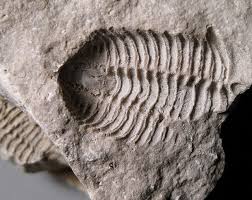
Which fossil is an impression left by the original organism?
a)
cast
b)
mold
c)
trace
d)
preserved remains
59.

What type of fossil is this?
a)
Mold
b)
Carbon flim
c)
Cast
d)
Original Remains
60.

This rock was formed when magma cooled very slowly inside the Earth. What specific type of rock is it?
a)
Intrusive Igneous Rock
b)
Extrusive Igneous Rock
c)
Foliated Metamorphic Rock
d)
Clastic Sedimentary Rock
61.

This rock formed when bits of other rocks became pressed into a solid. What type of rock is it?
a)
Sedimentary Rock
b)
Metamorphic Rock
c)
Igneous Rock
62.

This rock formed when lava cooled very quickly on Earth's surface. What specific type of rock is it?
a)
Extrusive Igneous Rock
b)
Intrusive Igneous Rock
c)
Non-Foliated Metamorphic Rock
d)
Biochemical Sedimentary Rock
63.
What are the 3 major types of rocks?
a)
Igneous, Metamorphic, Sedimentary
b)
Metamorphic, Igneous, Cementation
c)
Brown, Red, Gray
d)
Streak, Hardness, Breakage
64.
Two ways to describe types of igneous rocks are _____
a)
Extrusive and Intrusive
b)
Foliated and Non-Foliated
c)
Clastic and Biochemical
d)
Black and Gray
65.
Which of the words below describe broken up rock?
a)
stalactites
b)
magmas
c)
metamorphs
d)
sediments
66.
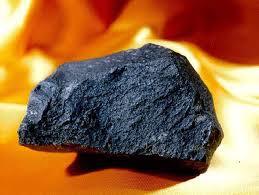
This rock was found near the mouth of a volcano. What type of rock is this?
a)
Sedimentary
b)
Igneous
c)
Metamorphic
67.
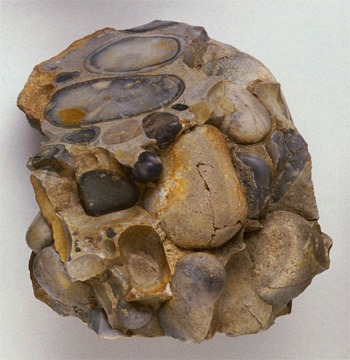
This rock was formed by smaller pieces of rock that settled at the bottom of a lake millions of years ago. What type of rock is this?
a)
Sedimentary
b)
Igneous
c)
Metamorphic
68.

The process when rocks break into smaller pieces due to exposure to natural elements is called
a)
erosion
b)
weathering
c)
sediments
d)
deposition
69.
What is deposition?
a)
Dropping off sediment
b)
Movement of sediment
c)
Breaking down of sediment
70.
The movement of weathered material (sediment) is called?
a)
weathering
b)
erosion
c)
deposition
d)
cementation
71.
Which type of rock is formed from INTENSE heat and pressure?
a)
igneous
b)
sedimentary
c)
metamorphic
72.

Is the following metamorphic rock foliated or non-foliated?
a)
Foliated
b)
Non-foliated
c)
Neither
73.
Frost wedging causes mechanical weathering of rock by means of....?
a)
heating and cooling
b)
plant growth
c)
animal actions
d)
freezing and thawing
74.

What landform is this a picture of?
a)
Mountain
b)
Island
c)
Volcano
d)
Valley
75.

What landform is this a picture of?
a)
Cavern
b)
Island
c)
Canyon
d)
Valley
76.
The type of plate boundary where two plates come together is a .....
a)
Convergent Boundary
b)
Divergent Boundary
c)
Transform Boundary
d)
Plate Boundary
77.
Which of the following causes Earth's tectonic plates to move?
a)
Energy from the Sun
b)
Magnetic Pole Reversal
c)
Convection currents in the mantle
d)
Faults in Mountain Ranges
78.
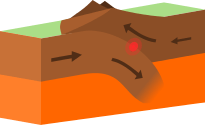
What type of plate boundary is this?
a)
Plate
b)
Divergent
c)
Convergent
d)
Transform
79.

What type of event will occur at this boundary?
a)
Earthquake
b)
Volcano Eruption
c)
Tornado
d)
Mountain Building
80.
A divergent boundary occurs when plates ....
a)
Pull apart
b)
Come together
c)
Slide past each other
d)
subducting
81.
Which of the following is the name of the ancient supercontinent formed 28 Million Years ago.
a)
Pangea
b)
Gondwanda
c)
Laurasia
d)
Neverland
82.
Which of the following is NOT evidence to support the theory of plate tectonics?
a)
Fossils
b)
Mountains
c)
Glaciers
d)
Sand Erosion
83.
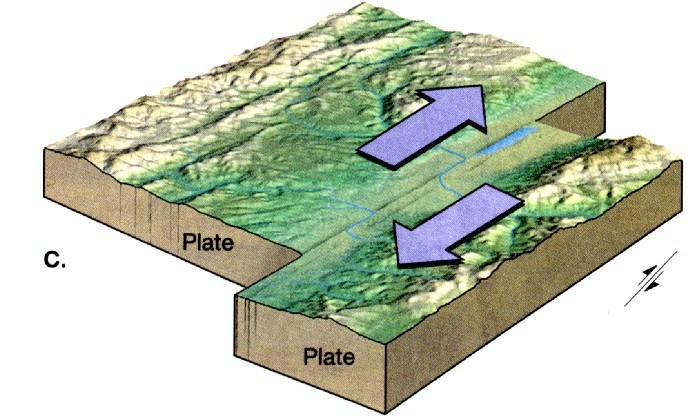
What type of plate boundary is this?
a)
Transform
b)
Convergent
c)
Divergent
d)
Plate
84.
The theory that says Earth's continents once made up an ancient supercontinent, and have been drifting apart ever since, is called the theory of...
a)
Pangea
b)
Plate Tectonics
c)
Natural Selection
d)
Gravity
85.
Oceanic Trenches are formed by _______ plate boundaries
a)
Convergent
b)
Transform
c)
Plate
d)
Divergent
86.
A fault is formed by the movement of a __________ plate boundary
a)
Transform
b)
Convergent
c)
Divergent
87.
Islands can from from magma which is pushed up at a __________ plate boundary
a)
Divergent
b)
Convergent
c)
Transform
88.
How is it possible for new crust to be formed without increasing the surface area of the Earth?
a)
Crust is destroyed at the same time it is created
b)
New crust is underwater where it sinks
c)
New crust breaks more easily than old crust
89.
Mountains are created when....
a)
Two continental plates collide
b)
Two oceanic plates pull apart
c)
An Oceanic plate subducts under a Continental Plate
d)
Two continental plates pull apart
90.
This layer of Earth is solid Iron and Nickel
a)
Outer Core
b)
Mantle
c)
Inner Core
d)
Crust
91.
Which type of plate boundary would cause mountains to form?
a)
Transform
b)
Convergent
c)
Divergent
d)
Reform
92.
The Great Rift Valley in Africa and the Mid-Ocean Ridge were all created by this boundary
a)
Divergent
b)
Convergent
c)
Reform
d)
Transform
93.
This layer of Earth is the thickest part
a)
crust
b)
outer core
c)
mantle
d)
inner core
94.
What are the two types of crust
a)
continental and oceanic
b)
ocean and upper
c)
lower and upper
d)
pizza and subway
95.
Which layer has convection currents?
a)
Inner Core
b)
Outer Core
c)
Mantle
d)
Crust
96.
Earthquakes and volcanoes are most likely found in which locations?
a)
At plate boundaries
b)
in oceans
c)
in the middle of continents
d)
in the middle of plates
97.
When one plate sides under neath another, it _________ and the magma _________.
a)
hardens, sinks
b)
melts, sinks
c)
hardens, rises
d)
melts, rises
98.
When an oceanic plate and a continental plate collide, which one will subduct?
a)
oceanic
b)
continental
c)
neither
99.
Which of the following is NOT a tectonic boundary?
a)
Convergent
b)
Divergent
c)
Sedergent
d)
Transform
100.
This landform can occur at a divergent plate boundary.
a)
ocean trench
b)
mid-ocean ridge
c)
tall mountains
d)
transform fault
101.

As you travel from the inner core to the crust, how would temperature, pressure and density of the material change?
a)
They would all increase
b)
They would all decrease.
c)
They would stay the same.
d)
Temperature would decrease, but pressure and density would increase.
102.
The mantle of Earth is made partly of magma. When magma rises and sinks, this is called ______________.
a)
a conduction current
b)
a hot spot
c)
a volcanic eruption
d)
a convection current
103.
Which is true about hotter material in the mantle?
a)
more dense, sinks
b)
less dense, sinks
c)
less dense, rises
d)
more dense, rises
104.
Which of the following is where one plate slides under another plate?
a)
submarine zone
b)
divergence zone
c)
subduction zone
d)
lower zone
105.
Associated with transform boundaries.
a)
Volcanoes
b)
mountains
c)
trenches
d)
earthquakes
106.
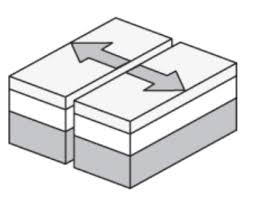
Name the boundary
a)
convergent boundary
b)
divergent boundary
c)
transform boundary
d)
sergent boundary
107.

Name the boundary
a)
convergent boundary
b)
divergent boundary
c)
transform boundary
d)
sergent boundary
108.
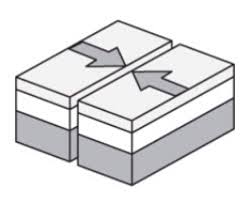
Name the boundary
a)
convergent boundary
b)
divergent boundary
c)
transform boundary
d)
sergent boundary
109.
The hottest layer
a)
crust
b)
inner core
c)
mantle
d)
outer core
110.
The tectonic plates float on the
a)
lithosphere
b)
lower mantle
c)
outer core
d)
asthenosphere
111.
The part of the earth that includes the crust and the upper mantle and is split into tectonic plates is the
a)
lithosphere
b)
crust
c)
asthenosphere
d)
mantle
112.
The thinest layer
a)
crust
b)
inner core
c)
mantle
d)
outer core
113.
The least dense layer
a)
crust
b)
inner core
c)
mantle
d)
outer core
114.
The most dense layer
a)
crust
b)
inner core
c)
mantle
d)
outer core
115.
This layer is completely liquid
a)
crust
b)
inner core
c)
mantle
d)
outer core
116.
This layer is a mix between solid and liquid
a)
crust
b)
inner core
c)
mantle
d)
outer core
117.
This layer is completely solid due to the intense pressure it is under
a)
crust
b)
inner core
c)
mantle
d)
outer core
118.
The name for the actual lithospheric plates
a)
Tectonic Plates
b)
Plate Tectonics
c)
Pangaea
d)
Continental Drift
119.
Hot spots are volcanically active areas that are not near tectonic plate boundaries.
a)
True
b)
False
100 %

