wayground logo

Free Printable Worksheets

Font size

S
M
L
XL
Worksheets

3rd Quarter Exam Review

Total questions: 118

Worksheet time: 1hrs 25mins

Name
Class
Date
1.
Food making structure of the plant cell
a)
chloroplasts
b)
cell wall
c)
vacuole
d)
cell membrane
2.
Provides extra support for the plant cell and gives in shape
a)
chlorophyll
b)
chloroplast
c)
cell wall
d)
vacuole
3.
A storage structure- in an animal cell there are many small ones, but in a plant cell there is just one large one.
a)
vacuole
b)
ribosomes
c)
golgi body
d)
chloroplast
4.
Acts like a gatekeeper- allowing some materials to pass through it, but not others. 
a)
cytoplasm
b)
cell membrane
c)
mitochondria
d)
vacuoles
5.
What structure is in  plant cells but not animal cells. 
a)
cell membrane
b)
mitochondria
c)
cell wall
d)
vacuole
6.
This structure regulates the passage of water, food and waste into and out of the cell.
a)
nucleus
b)
vacuole
c)
cytoplasm
d)
cell membrane
7.
Which organelle is in a plant cell but not in an animal cell?
a)
cytoplasm 
b)
chloroplast 
c)
mitochondrion
d)
cell membrane
8.
A gel-like fluid it takes up most of the space inside the cell. 
a)
cytoplasm
b)
cell membrane
c)
vacuoles
d)
golgi body
9.
Where the genetic material is found in the cell 
a)
nucleolus
b)
cytoplasm
c)
nucleus
d)
chloroplast
10.
I am the brain of the cell and control all cell functions.
a)
nucleus
b)
nucleolus
c)
ribosomes
d)
chloroplast
11.
I store food, water, or enzymes for later use.
a)
cell wall
b)
cytoplasm
c)
vacuole
d)
chloroplast
12.
The basic unit of structure and function in an organism.
a)
cell
b)
nucleus
c)
cytoplasm
d)
chromosomes
13.
plants don't have chloroplasts
a)
true
b)
false
14.
What is the job of mitochondria in a cell.
a)
make ribosomes
b)
control the cell
c)
produce energy
d)
make protien
15.
animals have chloroplasts
a)
false
b)
true
16.
what is the job of chloroplasts in the cell
a)
produce protien
b)
catch sunlight and turn it into energy
c)
nothing
d)
clean up
17.
The powerhouse of the cell is the...It converts energy from food into energy the cell can use
a)
Mitochondrion
b)
Golgi body
c)
Nucleus
d)
Ribosomes
18.
Where are proteins made? These are small, grain-like or rod shaped organelles.
a)
Golgi body
b)
Mitoichondrion
c)
Chromosomes
d)
Ribosomes
19.
This organelle is in both plants and animals. It is a barrier between the cell and the environment.  It controls what goes in and out of a cell.
a)
cell wall
b)
cell membrane
c)
cell organelles
d)
mitochondria
20.
This cell part is in ALL cells. It is the gel-like substance that provides cell shape.
a)
Chloroplasts
b)
Chromosomes
c)
Cytoplasm
d)
Mitochondria
21.
This structure is only in plant cells. It is outside of the cell membrane and adds more support/structure to the plant.
a)
Cell membrane
b)
Cell Nucleus
c)
Cell Wall
d)
Endoplasmic Reticulum
22.
Tiny cell structures that carry out specific functions within the cell.
a)
membranes
b)
nucleus
c)
organelles
d)
animalicules
23.
This structure is a storage area for the cell. Plants usually have one large one.
a)
Lysosome
b)
Vacuole
c)
Ribosome
d)
Golgi Body
24.
Letter C represents what cell part?
a)
nucleus
b)
nucleolus
c)
nuclear membrane
d)
cytoplasm
25.
Letter L represents what cell part?
a)
nucleus
b)
nucleolus
c)
nuclear membrane
d)
cytoplasm
26.
Letter A represents what cell part?
a)
nucleus
b)
nucleolus
c)
nuclear membrane
d)
cytoplasm
27.
Letter D represents which cell organelle?
a)
smooth ER
b)
rough ER
c)
golgi body
d)
vacuole
28.
Letter E represents which cell organelle?
a)
smooth ER
b)
rough ER
c)
golgi body
d)
vacuole
29.
Letter F represents which cell organelle?
a)
smooth ER
b)
rough ER
c)
golgi body
d)
vacuole
30.
Letter G represents which cell organelle?
a)
cell wall
b)
cell membrane
c)
cytoplasm
d)
chloroplast
31.
Letter H represents which cell organelle?
a)
cell wall
b)
cell membrane
c)
cytoplasm
d)
chloroplast
32.
Letter I represents which cell organelle?
a)
cell wall
b)
cell membrane
c)
cytoplasm
d)
chloroplast
33.
Letter J represents which cell organelle?
a)
cell wall
b)
cell membrane
c)
cytoplasm
d)
mitochondria
34.
Letter M represents which cell organelle?
a)
cell wall
b)
cell membrane
c)
cytoplasm
d)
mitochondria
35.
Letter L represents which cell organelle?
a)
golgi body
b)
cell membrane
c)
cytoplasm
d)
mitochondria
36.
What are two major differences found in plant and animal cells?
a)
Plant cells have a cell wall and chloroplasts, while animal cells do not.
b)
Plant cells have a nucleus and vacuoles, while animal cells do not.
c)
Plant cells have no mitochondria or cytoplasm, while animal cells do.
d)
They are the same.
37.
Label 1 is pointing to the...
a)
Chloroplasts
b)
Nucleus
c)
Vacuole
d)
Cell wall
38.
Label 6 is pointing to the...
a)
Chloroplasts
b)
Nucleus
c)
Vacuole
39.
Label 3 is pointing to the...
a)
Chloroplasts
b)
Nucleus
c)
Vacuole
d)
Cell membrane
40.
Label 4 is pointing to the...
a)
Chloroplasts
b)
Nucleus
c)
Vacuole
d)
Cell membrane
41.
Label 2 is pointing to the...
a)
Chloroplasts
b)
Nucleus
c)
Vacuole
d)
Cytoplasm
42.
Label 5 is pointing to the...
a)
Chloroplasts
b)
Nucleus
c)
Vacuole
d)
Cytoplasm
43.
I store food, water, or enzymes for later use.
a)
cell wall
b)
cytoplasm
c)
vacuole
d)
chloroplast
44.
I am the brain of the cell and control all cell functions.
a)
nucleus
b)
nucleolus
c)
ribosomes
d)
chloroplast
45.
The ___________ is the basic unit of life
a)
organ
b)
cell
c)
atom
d)
tissue
46.
When many organ systems work together it can form...
a)
organ
b)
cells
c)
organ system
d)
organism 
47.
This is a example of........ 
a)
organ system
b)
cells
c)
organ
d)
tissue
48.
This is a example of ........
a)
cell
b)
organ system
c)
organ
d)
tissue
49.
The brain is a part of which organ system?
a)
nervous
b)
skeletal
c)
muscular
d)
digestive 
50.
The lungs and the kidneys are examples of
a)
cells
b)
organs
c)
tissues
d)
organ systems
51.
A group of tissues that work together to perform a similar function is called_____. (Examples include the heart, lungs or stomach)
a)
cells
b)
tissues
c)
organs
d)
organ system
52.
 A group of cells that have similar functions? Examples are nervous, epithelial, muscle and connective
a)
cells
b)
tissues
c)
organs
d)
atoms
53.
Organs that work together to perform a related function is called _____________?
a)
cells
b)
tissues 
c)
organ system
d)
organs
54.
Which system acts as a barrier from the sun and helps regulate body temperature?
a)
integumentary
b)
muscular
c)
digestive
d)
circulatory
55.
Which system controls voluntary and involuntary movement?
a)
muscular
b)
skeletal
c)
immune
d)
excretory
56.
This system transports oxygen and nutrients around the body.
a)
circulatory
b)
respiratory
c)
skeletal
d)
digestive
57.
This system breaks down food into nutrients that the body can absorb.
a)
digestive
b)
excretory
c)
reproductive
d)
immune
58.
This system fights pathogens (germs) and produces and stores white blood cells.
a)
immune
b)
muscular
c)
endocrine
d)
integumentary
59.
This system supports the body and protects vital organs.
a)
skeletal
b)
muscular
c)
circulatory
d)
nervous
60.
Which system sends electrical messages that helps control the body's responses to internal and external changes?
a)
nervous
b)
endocrine
c)
reproductive
d)
integumentary
61.
Which system sends electrical messages that helps control the body's responses to internal and external changes?
a)
nervous
b)
endocrine
c)
reproductive
d)
integumentary
62.
Which system sends electrical messages that helps control the body's responses to internal and external changes?
a)
nervous
b)
endocrine
c)
reproductive
d)
integumentary
63.
Lungs are the primary organs of this system.
a)
muscular system
b)
nervous system
c)
circulatory system
d)
respiratory system
64.
Which of these is the least complex level of organization?
a)
earthworm
b)
digestive system
c)
skin cell
d)
stomach
65.
Which example best shows structures that make up the digestive system in the human body? 
a)
Lungs, Heart, Arteries
b)
Brain, Spinal Cord, Nerves
c)
Stomach, Intestines, Esophagus
d)
Nose, Lungs
66.
What is included in the nervous system?
a)
Heart
b)
Skin
c)
Brain
d)
Lungs
67.
What is the function of the digestive system?
a)
Helps different parts of the body to move
b)
Carries digested food, water and oxygen in the blood to all parts of the body
c)
Carries waste materials away from different parts of the body
d)
Breaks down food into simple substances
68.
What is the function of the skeletal system?
a)
Supports the body
b)
Removes air from the body
c)
Absorbs substances so that they can be used by the body
d)
Breaks down food into simple substances
69.
Which system absorbs oxygen and releases carbon dioxide?
a)
respiratory
b)
excretory
c)
endocrine
d)
immune
70.
Which organ system includes these major organs: hair, skin, and nails
a)
digestive
b)
circulatory
c)
integumentary
d)
skeletal
71.
Which organ system includes these major organs: bones
a)
integumentary
b)
skeletal
c)
circulatory
d)
nervous
72.
Which organ system includes these major organs: trachea, bronchi, and lungs
a)
circulatory
b)
skeletal
c)
digestive
d)
respiratory
73.
Which organ system includes these major organs: brain, spinal cord, and nerves
a)
nervous
b)
skeletal
c)
integumentary
d)
respiratory
74.
removes carbon dioxide and water from the body
a)
respiratory
b)
circulatory
c)
nervous
d)
digestive
75.
regulates body temperature
a)
circulatory
b)
respiratory
c)
digestive
d)
integumentary
76.
Which of these are both male reproductive structures?
a)
Stigma and Style
b)
Anther and Filament
c)
Style and Ovary
d)
Stigma and Anther
77.
What part of a flower produces female reproductive cells (OVULES)?
a)
anther
b)
ovary
c)
sepal
d)
filament
78.
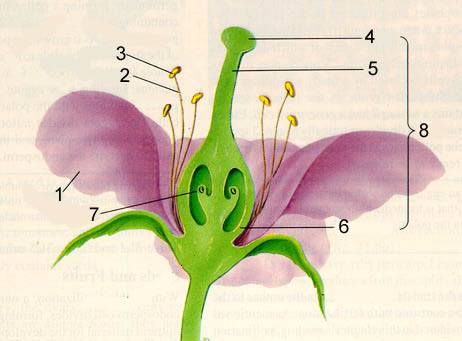
What is #2 pointing to?
a)
anther
b)
filament
c)
ovary
d)
style
79.
What is the sticky part of the flower that catches pollen?
a)
style
b)
stigma
c)
ovary
d)
petal
80.
Where is pollen made?
a)
ovary
b)
petal
c)
pistil
d)
anther
81.
What are the small leaves called that protect the bud?
a)
sepal
b)
petal
c)
leaves
d)
seed
82.
What is #8 pointing to?
a)
petal
b)
stamen
c)
pistil
d)
ovary
83.
The part of the flower on which the pollen grains land.
a)
pistil
b)
stamen
c)
sepals
d)
stigma
84.
Why are flowers very colorful (and why do they produce odor?)
a)
So people buy them
b)
To make gardens look good
c)
To attract pollinators
d)
To attract sunlight
85.
What part of the flower will turn into a seed if fertilized by a pollen grain?
a)
ovary
b)
anther
c)
ovule
d)
filament
86.
The filament___________
a)
holds up the anther
b)
protects the petal
c)
is the male part of the flower
d)
catches pollen
87.
Name part X.
a)
anther
b)
stigma
c)
ovule
d)
ovary
88.
The part of a flower that produces the male reproductive cells (pollen).
a)
anther
b)
style
c)
stigma
d)
filament
89.
In asexual reproduction, all of the offspring are:
a)
Physically Identical
b)
Genetically Identical
c)
Physically and Genetically Identical
d)
Not Identical
90.
What is #3 pointing to?
a)
anther
b)
filament
c)
ovary
d)
style
91.
What is #5 pointing to?
a)
anther
b)
filament
c)
ovary
d)
style
92.
What is #6 pointing to?
a)
anther
b)
filament
c)
ovary
d)
style
93.
The purpose of meiosis is to form ________ cells.
a)
body
b)
sex
c)
somatic
94.
If a somatic (body) cell in a butterfly contains 24 chromosomes, a butterfly egg would contain
a)
3
b)
6
c)
12
d)
24
95.
What is a gamete? 
a)
body cell
b)
sex cell 
96.

Reproduction involving a single organism where genetic copies of itself are made.

a)

Sexual Reproduction

b)

Asexual Reproduction

c)

Budding

d)

Pollination

97.

Reproduction that combines genetic material of two organisms

a)

Sexual Reproduction

b)

Asexual Reproduction

c)

Fertilization

d)

Budding

98.
Sexual reproduction requires _____ parents and asexual reproduction requires ___ parents
a)
1,1
b)
2,2
c)
2,1
d)
1,2 
99.
When comparing the offspring of sexually and asexually reproducing organisms, we would expect the genetic material (DNA) of the sexually reproducing organism to -
a)
contain fewer mutations
b)
be lesser in quantity
c)
be simpler overall
d)
show more variation
100.
What type of asexual reproduction is taking place?
Fishermen work hard to catch and remove all the starfish that get into their favorite shell fishing beds and the “underwater farms” where they raise clams and oysters. In the past, they put the starfish into their boats, cut them up with knives, and then throw the pieces of starfish overboard. They thought this would kill the starfish. What they did not know was that each piece of starfish will grow into a whole new animal.
a)
Regeneration
b)
Vegetative propagation
c)
Budding
d)
Fission
101.
The ENTIRE female part of the flower
a)
pistil 
b)
stamen
102.
The ENTIRE male part of the flower
a)
pistil 
b)
stamen
103.
In asexual reproduction, all of the offspring are:
a)
Physically Identical
b)
Genetically Identical
c)
Physically and Genetically Identical
d)
Not Identical
104.
A hydra reproduces when an outgrowth, or bud, forms and continues to develop until if falls off of the parent. This is an example of:
a)
Binary Fission
b)
Sporulation
c)
Budding
d)
Vegetative Propagation
105.

What is Binary Fission?

a)

develops an outgrowth which is detached from the parent and becomes a new individual.

b)

the organism produce its own spores. These spores are genetically identical to the parent

c)

during this type of reproduction the organism divides in half

d)

Organisms can be produced from unfertilized eggs

106.

What is budding?

a)

the organism produce its own spores. These spores are genetically identical to the parent

b)

only one parent provides DNA for the new organism, which would make the new organism or offspring genetically identical to its one parent.

c)

A new organism is created from the roots, stems or leaves.
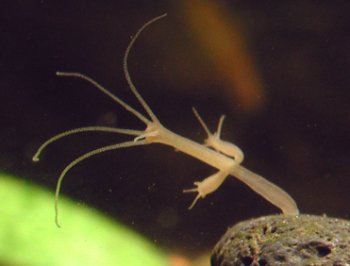
d)

develops an outgrowth which is detached from the parent and becomes a new individual.

107.

What is Regeneration?

a)

develops an outgrowth which is detached from the parent and becomes a new individual.

b)

the organism produce its own spores. These spores are genetically identical to the parent

c)

Helps repair or grow lost body parts. Some of these animals can also grow new organisms from the individual pieces

d)

A new organism is created from the roots, stems or leaves.

108.
This is when a new organism grows by cell division on the body of its parent. The bud, or offspring is identical to the parent. The bud, when large enough, can break off of the parent and live on its own.  Examples of this include yeast, hydra and potatoes.
 
a)
Regeneration
b)
Vegetative propagation
c)
Fission
d)
Budding
109.
a)
budding
b)
binary fission
c)
sporulation
d)
regeneration
110.
Heterozygous is when...
a)
the alleles are the same
b)
the alleles are different
c)
the alleles are absent
d)
the alleles are present
111.
In a heterozygous genotype, the ___________ allele takes over in the phenotype.
a)
recessive
b)
dominant
c)
lower case letter
d)
both 
112.
T - tall and t = short
In the punnett square below, what belongs in the missing square
a)
tt
b)
Tt
c)
Bb
d)
TT
113.
G = green, g = yellow
The genotype for a yellow plant is...
a)
GG
b)
Gg
c)
gg
d)
all of the choices result in yellow
114.
B = brown fur  b = white fur
In the punnett square, what is the probability for white fur? 

a)
0%
b)
25%
c)
50%
d)
75%
115.
In plants, tall (T) is dominant to short (t). Perform the following cross: Tt x Tt. What is the probability of producing a short plant?
a)
0%
b)
25%
c)
50%
d)
75%
116.
Two brown eyed parents (Bb) have a baby. What is the chance the baby is blue eyed?
a)
0 %
b)
25%
c)
50%
d)
75%
117.
Which of the following alleles is homozygous (purebred) recessive?
a)
Tt
b)
tt
c)
TT
d)
t
118.
Which of the following is NOT a genotype?
a)
heterozygous
b)
a trait
c)
Bb
d)
homozygous recessive