wayground logo

Free Printable Worksheets

Font size

S
M
L
XL
Worksheets

THS Pre AP Biology

Total questions: 120

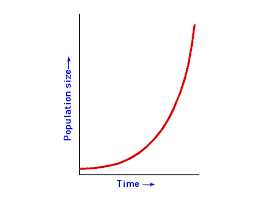
Worksheet time: 2hrs 59mins

Name
Class
Date
1.
All energy for life comes from ______________.
a)
the sun
b)
the decomposers
c)
the Producers
d)
Mr. Cook
2.
A bear hunts a fish out of a stream.  The bear is a (n) _______ and ______.
a)
herbivore, consumer
b)
carnivore, autotroph
c)
carnivore, consumer
d)
vegetarian, vegan
3.
Pyramid B is _________ . 
a)
numbers
b)
biomass
c)
energy
d)
carbon cycle
4.
Pyramid B is not a pyramid shape because...
a)
a single producer (mature tree) can support a large number of consumers
b)
Mr. Cook said so!
c)
Life is hard
d)
Insects are gross
5.
If you add a limiting nutrient to a pond habitat, what will happen to the algae and producer populations? 
a)
increase
b)
decrease
c)
disappear
d)
stay the same
6.
 ___________ convert Nitrogen gas in the atmosphere into usable Nitrogen through the process of ___________.  ___________ convert usable nitrogen into nitrogen gas through the process of ___________.
a)
bacteria, nitrogen fixation
bacteria, dentrification
b)
bacteria, denitrification
bacteria, nitrogen fixation
c)
producers, nitrogen fixation
bacteria denitrificaiton
d)
bacteria, nitrogen fixation
producers, dentirificaiton
7.
Different species can share the same habitat, but competition among them is reduced if they 
a)
divide resources and occupy different niches
b)
cant happen, nature is mean
c)
increase population
d)
eat each other
8.
Which of the following is a characteristic of parasitism?
a)
Two organisms live together, neither is harmed.
b)
Two organisms feed side by side for the same food.
c)
One organism kills and consumes another organism.
d)
One organism benefits by living in or on another organism.
9.
Energy _______, matter __________.
a)
deceases and is one direction, recycles and is multidirectional
b)
is recycled, decreases
c)
= mass x the speed of light squared, matters
d)
does not change, does not change
10.
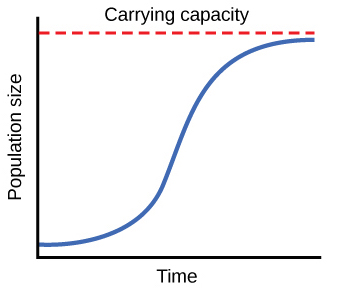
What type of growth is shown in the diagram?
a)
exponential growth
b)
logistic growth 
c)
predator-prey cycle
d)
boom-bust curve
11.
The  number of individuals a habitat can sustain with the resources it has available
a)
Carrying capacity
b)
Limiting factors
c)
Resources
d)
Population
12.
What kind of factor: flood?
a)
density-independent
b)
density-dependent
13.
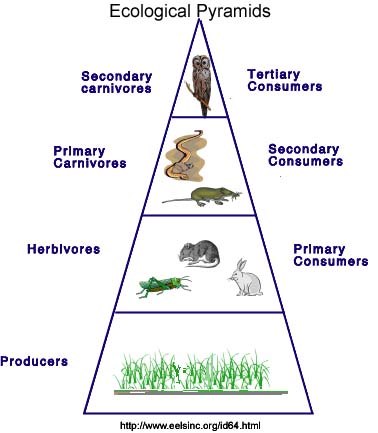
The diagram represents a model of a food pyramid.  Which statement best describes what happens in this food pyramid?
a)
More organisms die at higher levels than at lower levels, resulting in less mass at higher levels.
b)
Energy is lost to the environment at each level, so less mass can be supported at each higher level.
c)
When organisms die at higher levels, their remains sink to lower levels, increasing the mass of lower levels.
d)
Organisms decay at each level, and thus less mass can be supported at higher levels
14.
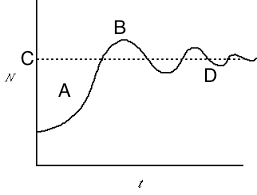
What point on the graph represents the carrying capacity?
a)
A
b)
B
c)
C
d)
D
15.
If the primary producers have 10,000 kcal how much do the secondary consumers have?
a)
1,000 kcal
b)
100 kcal
c)
10 kcal
d)
1 kcal
16.
When a population grows past the ecosystem's carrying capacity, what happens to the population?
a)
Continues to grow
b)
The population starts to die off to return to carrying capcity
c)
The population will go extinct due to lack of resources
d)
The population grows then finds a new carrying capacity
17.
The largest number of individuals in a species that an environment can support long term
a)
carrying capacity
b)
emigration
c)
immigration
d)
population density
18.
Any thing or organism that regulates the size of a population is known as __________.
a)
a limiting measure
b)
a limiting factor
c)
carrying capacity
d)
biodiversity
19.
What is the carrying capacity of this population?
a)
100
b)
200
c)
300
d)
400
20.
What type of growth curve is pictured?
a)
exponential 
b)
logistic
c)
predator-prey
d)
invasive
21.
Which type of growth is best illustrated by this rabbit population?
a)
exponential
b)
logistic
c)
S-shaped
d)
predator-prey
22.
What is the approximate carrying capacity of Paramecium aurelia cultured alone?
a)
150
b)
400
c)
450
d)
500
23.
Cattle egrets forage (feed) in fields among cattle. The egret gets easy access to flying insects stirred up by the cattle, and the cattle don't care if they are there or not.
a)
mutualism
b)
commensalism
c)
competition
d)
parasitism
24.
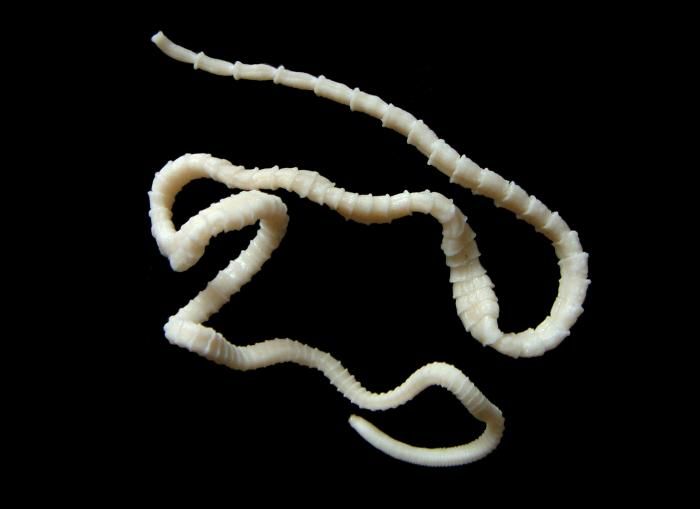
A tapeworm and a cat have this type of relationship.
a)
mutualism
b)
parasitism
c)
commensalism
d)
competition
25.
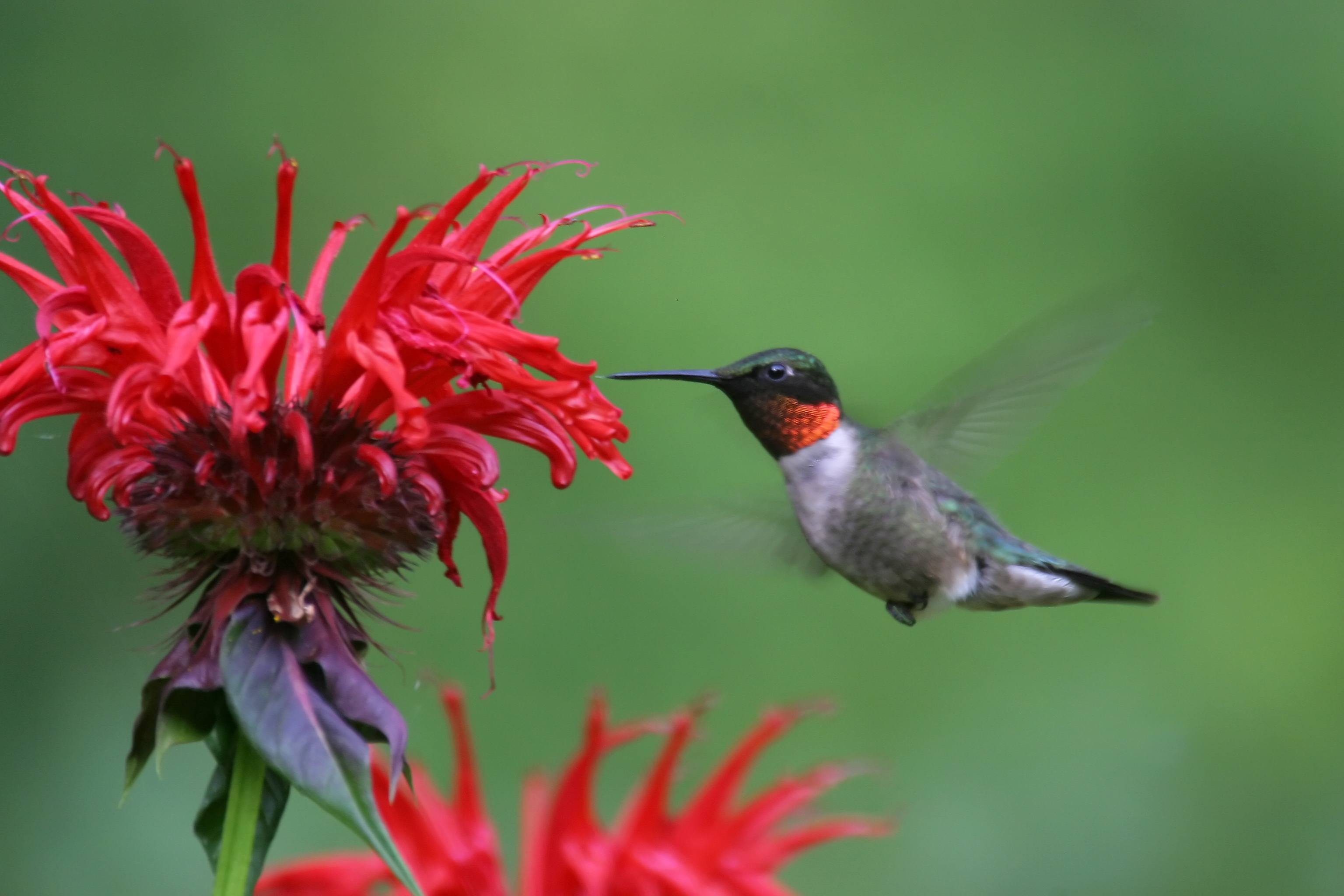
What type of symbiosis?  Hummingbirds feed on nectar from flowers.  The flowers are pollinated by hummingbirds as they move from flower to flower.
a)
commensalism
b)
mutualism
c)
parasitism
d)
predation
26.
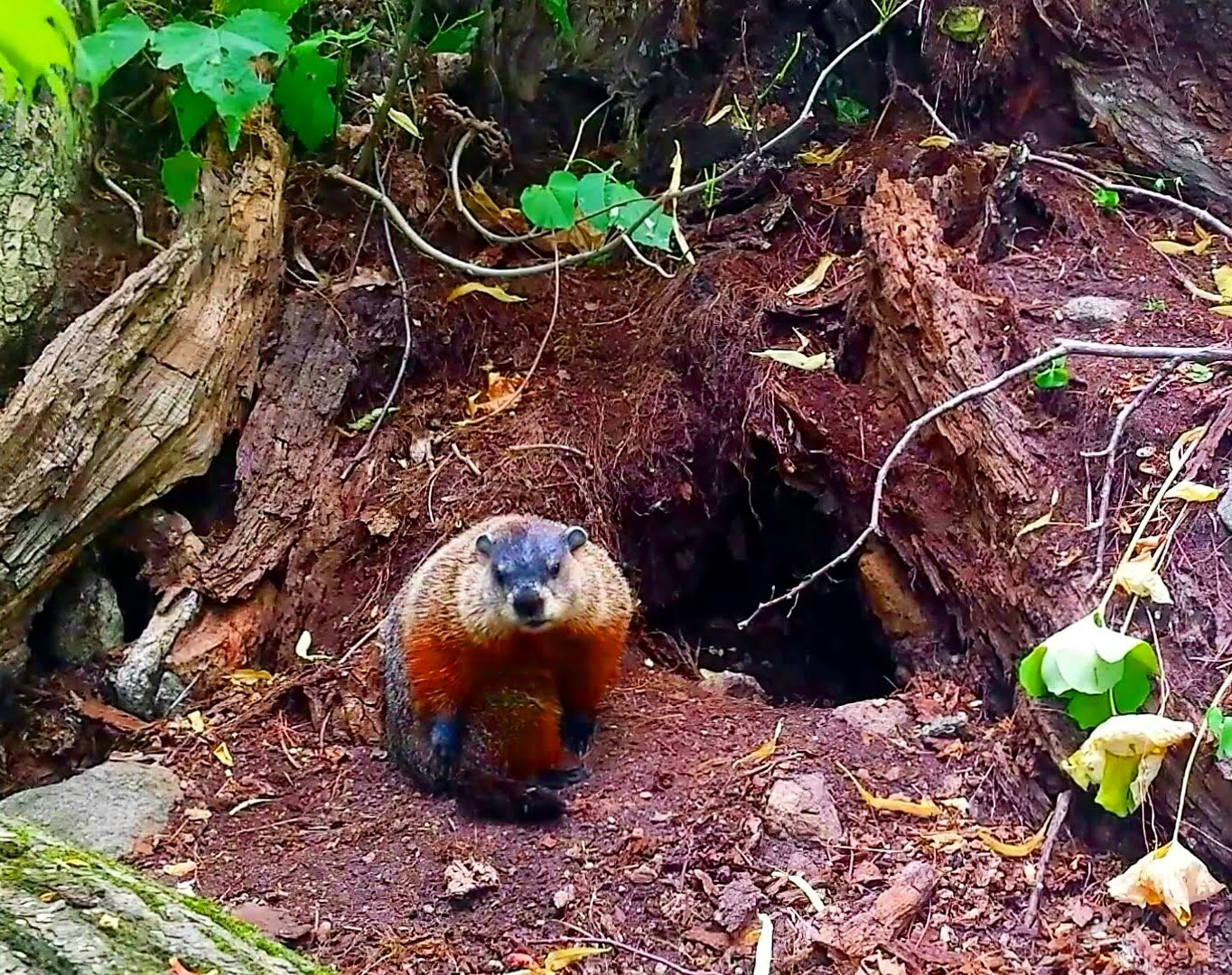
What type of symbiosis?  Skunks often live in burrows that have been dug and abandoned by woodchucks.  
a)
commensalism
b)
mutualism
c)
parasitism
d)
predation
27.
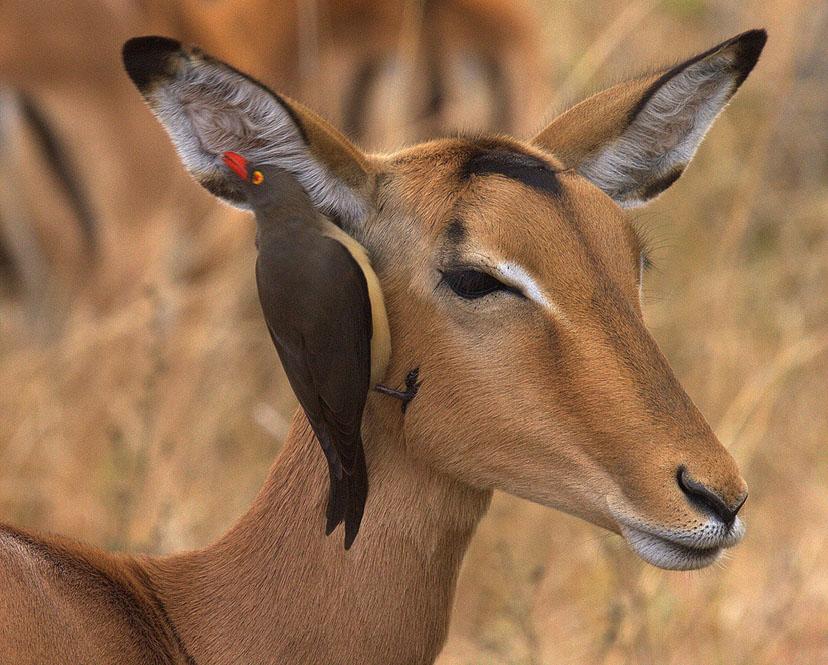
Red-billed oxpeckers are birds that often feed on parasites that infest impala.  This is an example of _______.
a)
commensalism
b)
mutualism
c)
neutralism
d)
competition
28.
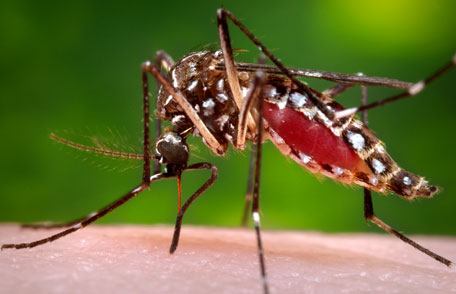
When a mosquito bites you, you are the __________ and the mosquito is the  ____________.
a)
host, hostess
b)
parasite, host
c)
host, parasite
d)
prey, predator
29.

Aphids are tiny insects that live on and eat the leaves of plants, removing vital nutrients from the plants.

a)

Predation

b)

Parasitism

c)

Commensalism

d)

Mutualism

30.
What type of symbiosis?
  * Hummingbirds feed on nectar from flowers.
 * 
Flowers are pollinated by hummingbirds as they move from flower to flower.
a)
commensalism
b)
mutualism
c)
parasitism
d)
predation
31.
What type of symbiosis?
*
Snapping Shrimp have poor and depend on their goby fish roommate to give the danger signal when predators come and guide them
back home if they wander too far.   
*
  Goby fish who don't have a place to hide are quickly eaten. They find a Snapping Shrimp roommate who digs a hole for both to live in.
a)
commensalism
b)
mutualism
c)
parasitism
d)
predation
32.
What type of symbiosis?
*Mycorrhizal fungi invade and live in or among roots cells of many plants. The plant provides nutrients to the fungi.
*
The Mycorrhizal fungi help the host plant absorb inorganic nitrogen and phosphorus from the soil. Some mycorrhizal  fungi also secrete antibiotics which may help protect their host from invasion by parasitic fungi and bacteria.
a)
commensalism
b)
mutualism
c)
parasitism
d)
predation
33.
What type of symbiosis?
*
Remora use suckers to attach temporarily to large marine animals such as sharks, manta rays, whales, turtles, or large fish.
*
The shark provides free transportation, protection, and dropped food and feces which the remora feeds on. The host is not injured.
a)
commensalism
b)
mutualism
c)
parasitism
d)
predation
34.
Which level of organization is more complex than a population and less complex than an ecosystem?
a)
organism
b)
population
c)
community
d)
ecosystem
35.
which is the correct order of the levels of organization from simple to complex?
a)
organism, population, community, ecosystem
b)
ecosystem, community, population, organism
36.
A group of all the organisms living together and interacting together is
a)
ecosystem
b)
community
c)
population
d)
species
37.
A group of interacting organisms living in the same area made up of similar species is called
a)
organism
b)
population
c)
mutualism
d)
community
38.
Food, water, sunlight, air, soil are resources that are often __________.
a)
limiting factors
b)
wet
c)
messy
d)
found in rocks
39.
One way to measure the size of a population is in terms of ___________.
a)
Population
b)
Population Density
c)
Emmigration
d)
Carrying Capacity
40.
Which limiting factor would increase due to the number of individuals in a population?
a)
Unusual weather
b)
Natural disaster
c)
Births
d)
Disease
41.
About 10% of the energy at one trophic level is passed to the next level. What usually happens to the energy that is not passed to the next trophic level or used to carry out life processes?
a)
It is given off as heat.
b)
It is stored as vitamins
c)
It is used in reproduction.
d)
It is used in protein synthesis.
42.
Which limiting factor is independent of the number of individuals in a population?
a)
competition
b)
parasitism/disease
c)
stress
d)
natural disasters
43.
What kind of factor: predation?
a)
density-independent
b)
density-dependent
44.
What kind of factor: temperature?
a)
density-independent
b)
density-dependent
45.
The mouse in this food web would be considered a:
a)
Primary Consumer
b)
Producer
c)
Tertiary Consumer
d)
Secondary Consumer
46.
What is an organism that breaks down & absorbs dead matter so nutrients can be recycled into the soil?
a)
Consumer
b)
Decomposer
c)
Producers
d)
Scavenger
47.
__________ is an organism that eats BOTH plants and animals for energy.
a)
Omnivore
b)
Darnivore
c)
Carnivore
d)
Herbiovre
48.
What is this called?
a)
Food Web
b)
Food Chain
c)
Abiotic Factors
49.
Which of the following is a herbivore?
a)
cricket
b)
frog
c)
hawk
d)
shrew
50.
If the grasshopper were to be removed completely from the food web, what organism would be most effected?
a)
The squirrel
b)
The shrew
c)
The deer
d)
The rabbit
51.
Which organism recieves the least amount of energy from the producer?
a)
Owl
b)
Grasshopper
c)
Lilypad
d)
Mouse
52.
The largest group of organisms found in a food web would be:
a)
Primary Consumers
b)
Producers
c)
Decomposers
d)
Tertiary Consumers
53.
How many herbivores are in this web?
a)
1
b)
2
c)
3
d)
4
54.
Which of the following would be the most likely effect, if there were a sudden increase in the cricket population?
a)
There would be a decrease in the small bird population.
b)
There would be a decrease in the grass/flowers population.
c)
There would be a decrease in the mice population.
d)
There would be an increase in the grass/flowers population.
55.
How many carnivores are shown in this food web?
a)
6
b)
4
c)
5
d)
3
56.
What percentage of energy is passed on to each tropic level?
a)
10%
b)
50%
c)
90%
d)
100%
57.
In the energy pyramid here, how much of the energy in the producers gets passed to the herbivores?
a)
10%
b)
20%
c)
80%
d)
90%
58.
In the energy pyramid below, which organism has the least amount of energy available?
a)
Producers
b)
Herbivores
c)
Carnivores
d)
Top Predator
59.
In the energy pyramid here, how much of the energy in each level gets lost as heat or used by the organism for survival?
a)
80%
b)
90%
c)
10%
d)
20%
60.
If there is 1000 Kcal available in the producers in trophic level 1, how much energy is available in the herbivores in trophic level 2?
a)
10 Kcal
b)
1 Kcal
c)
100 Kcal
d)
1000 Kcal
61.
The diagram is intended to show relationships in an ecosystem. What do the arrows represent?
a)
The direction of population migration
b)
Differences in dietary habits
c)
Progressively smaller organisms
d)
The direction of the energy flow
62.
If these organisms were arranged in a food pyramid, which organism would have the least amount of total energy available?
a)
coyote
b)
insect
c)
lizard
d)
shrub
63.
Which organism has the most energy and which organism has the least amount of energy? Choose the best answer. 
a)
mosquito and grass
b)
mouse and grass
c)
grass and owl
d)
grass and small bird
64.

What is a suitable way to sample plants in a field?

a)

Counting Random Plants

b)

Using Quadrates

c)

Using Pooters

d)

Using Pitfall traps

65.

Which of the following is true about quadrates?

a)

quadrats should be placed randomly so that a representative sample is taken

b)

you should look at the results from several quadrats in an area to reduce the effect of an unusual distribution

c)

the results are more reliable when you look at the results from many quadrats

d)

All the above are true

66.

What type of population would you ESTIMATE using a quadrat?

a)
b)
c)
d)
67.

Ten 1m2 quadrats were placed in a 40m2 field. On average 2 snails were found in every quadrat. Estimate the population size of the whole field.

a)

2

b)

10

c)

40

d)

80

e)

20

68.

These four 1m2 squared quadrats were place in a 8m2 garden. Estimate the total population of flowers in the whole garden.

a)

16

b)

17

c)

8

d)

40

e)

20

69.

Which organism can be measured with a quadrat?

a)

lion

b)

flies

c)

rat

d)

dandelion plants

e)

fish

70.

Which organism can be measured with a quadrat?

a)

deer

b)

butterfly

c)

mouse

d)

snail

e)

fish

71.

Can a quadrat be used on a large land organism that moves around in a herd?

a)

yes - use a quadrat

b)

no - you can't use a quadrat

72.

What can a quadrat be used to measure?

a)

length

b)

weight

c)

population density

d)

volume

e)

time

73.

This 1m2 squared quadrat was place in a 3m2 beach. Estimate the total population of crabs in the whole beach.

a)

15

b)

12

c)

18

d)

6

e)

5

74.

An area of 5m2 was sampled using a quadrat to find a total of 10 sunflowers. If the area of the field was 200m2 , what is the estimated number of sunflowers in the field?

a)

50

b)

20

c)

40

d)

400

75.
True or False: Climate change can have global, not just local, impacts on biodiversity.
a)
true
b)
false
76.
The illegal capture or killing of an organism, often for money, is called...
a)
poaching
b)
harvesting
c)
fragementation
d)
extinction
77.
What is NOT factor that threatens biodiversity?
a)
Population growth
b)
Habitat Loss
c)
Overexploitation
d)
Clean water
78.
What is the most impactful cause of biodiversity loss world wide?
a)
habitat loss
b)
pollution
c)
invasive species
d)
overharvesting
79.
Pollution damages ecosystems and decreases biodiversity by doing what?
a)
Causing  genetic diversity
b)
Causing species diversity
c)
causes mutations
d)
Releasing harmful substances
80.
What is the difference between biotic and abiotic?
a)
Biotic are non-living things
b)
Abiotic are living organisms
c)
Biotic is life,
Abiotic is non-living
d)
Biotic is non-living, Abiotic is living
81.
Which option is abiotic?
a)
Plants
b)
Bacteria
c)
Water
d)
Fungi
82.
Which option is biotic?
a)
Plants
b)
Air
c)
Water
d)
Energy
83.
All living and nonliving things in an environment and the many ways they interact are called ______
a)
ecosystem
b)
community
84.
the trend of increasing global temperatures
a)
global warming
b)
ozone layer
c)
greenhouse effect
d)
acid rain
85.

An organism that is currently living where they are not native

a)

invasive species

b)

keystone species

c)

species diversity

d)

all species

86.
Why do populations of invasive species grow so quickly?
a)
Invasive species have many different natural predators
b)
Invasive species have no natural predators
c)
Invasive species are harmful to the ecosystem
d)
Invasive species populations don't grow quickly
87.
1. What makes a species invasive?
a)
Moving to a new ecosystem and taking resources from natives 
b)
Not having papers
c)
Species that can't adapt
d)
Plants that take up too much space
88.
What is the original source of almost all energy in most ecosystems?
a)
carbohydrates
b)
sunlight
c)
water
d)
carbon
89.
What are the major differences between a species and a population
a)
Populations consist of ALL of the individual organisms within a species in a given area/ecosystem that are fertile
b)
Populations are a collection of many different types of species that are not related to each other
c)
Populations are just a larger amount of individuals
d)
Populations are the number of individuals within a species that are identical 
90.
Different populations living and interacting with each other in the same area
a)
Biome
b)
Ecosystem
c)
Community
d)
Niche
91.
Organisms that look similar and can produce fertile offspring
a)
Species
b)
Fish
c)
Community
d)
Trees
92.
All of the living and nonliving things in an area that interact with each other are called a/an ______.
a)
community
b)
habitat
c)
population
d)
ecosystem
93.
An area where an organism finds food, shelter and water in a specific arrangement
a)
niche
b)
biosphere
c)
biome
d)
habitat
94.
Why is only 10% of the energy passed along to the next trophic level?
a)
90% is lost through heat, reproduction, and movement
b)
90% is gained
c)
90% is lost in light energy
d)
because only 10% is lost
95.
Which of the following best explains why there are seldom more than five trophic levels in a food chain?
a)
Most carnivores function at more than one trophic level
b)
Trophic levels about this numbers contain too many individuals
c)
Energy is lost from each trophic level
d)
The ecosystem contains too much biomass
96.
Which letter shows the the exponential growth of a population?
a)
A
b)
B
c)
C
d)
D
97.
The two species, Paramecium aurelia and Paramecium caudatum, which do not prey upon each other, fighting to grow in the same test tube is an example of which of the following?
a)
Competition
b)
Predation
c)
Commensalism
d)
Exclusion
98.
Primary consumer's energy is 54,000 joules. How much energy was provided to secondary consumers?
a)
53,460 J
b)
540 J
c)
5,400 J
d)
54 J
99.
A team of ecologists observed feeding patterns of several populations in the desert. The energy pyramid shown below depicts the feeding patterns the ecologists observed. Which of the following best explains the difference in the amount of available energy in the trophic levels of the desert ecosystem?
a)
There is less energy available in the producers because their tissues are less dense than those at higher trophic levels. 
b)
There is more energy available in the second trophic level because less energy is needed for hunting compared to the higher trophic levels. 
c)
There is less available energy in the fourth trophic level because of the loss of energy through metabolism in each of the lower trophic levels. 
d)
There is more available energy in the birds of prey because they have greater muscle mass for storing energy than organisms in lower trophic levels have. 
100.
A species that exerts a large, positive impaction on its ecosystem is known as a:
a)
Keystone species
b)
Invasive species
c)
Indicator species
d)
Poached species
101.
Kudzu has overgrown many parts of southern Missouri and native ground plants have disappeared from the area. This is an example of:
a)
Parasitism between kudzu and the native plants
b)
A predator prey relationship between ground plants and kudzu
c)
Competition occurring between the native and invasive species
d)
Commesalism occurring between the kudzo and native plants
102.
Which of the following would be most likely to occur if a disease killed off all of the grasshoppers in an area?
a)
An increase in mice.
b)
A decrease in the number of snakes.
c)
An increase in fox.
d)
A decrease in grass.
103.

What is the carrying capacity of the following population?

a)

1000

b)

8000

c)

800

d)

600

104.
__________ growth shows growth of a population under environmental constraints (carrying capacity-K) that sets a maximum population size 
a)
logistic
b)
exponential
c)
niche
d)
uniform
105.
J-Shaped curves
a)
show a decline after an increase
b)
display populations that have reached carrying capacity
c)
represent exponential growth
d)
does not depend on the numbe rof resources
106.
A certain plant needs moisture, carbon dioxide, oxygen, light, and minerals to survive. This scenario shows that this particular living organism depends on .
a)
Biotic and Abiotc Factors
b)
Biotic Factors 
c)
Abiotic Factors 
d)
None of the Above
107.

Predator population lags behind prey population because:

a)

Increase in predators leads to decrease in prey

b)

Increase in predators leads to increase in prey

c)

Increase in predators leads to decrease in producers

108.
What is this a picture of?
a)
Nitrogen cycle
b)
carbon cycle
c)
water cycle
d)
plant cycle
109.

How does N2 get into soil?

a)

N2 diffuses into the pore spaces between the soil particles

b)

Legumes pull it in.

c)

gravity. It's not just a good idea, it's the Law.

d)

1st Law of Thermodynamics

110.
How does carbon dioxide leave the atmosphere?
a)
Through transpiration
b)
Through photosynthesis
c)
Through factory emission
d)
Sunlight
111.
Which process takes Carbon Dioxide from the air and converts it into a form of carbon used by living things?
a)
Precipitation
b)
Photosynthesis
c)
Respiration
d)
Bioremdiation
112.

Cellular respiration is the process by which ____________ is consumed and _______________ is produced.

a)

Carbon, Oxygen

b)

Oxygen, Carbon dioxide

c)

H20, oxygen

d)

Carbon, H2O

113.
A particular golf course is using large amounts of nitrogen fertilizer. What process could move this nitrogen into a local stream?
a)
volatilization
b)
nitrogen fixation
c)
runoff
d)
ammonification
114.
Which of the following describes the role of nitrogen-fixing bacteria in the nitrogen cycle? Nitrogen-fixing bacteria convert
a)
nitrates intro nitrogen gas
b)
ammonia into proteins
c)
nitrogen gas into ammonia
d)
proteins into nitrates
115.
Growing legumes such as alfalfa or soy beans increases
a)
denitrification
b)
nitrogen fixation
c)
ammonification
d)
ammonium oxidation
116.
Organisms use nitrogen to form
a)
carbohydrates and lipids
b)
proteins and lipids
c)
lipids and nucleic acids
d)
proteins and nucleic acids
117.

The nitrogen cycle is a biogeochemical cycle because it moves ?

a)

only between living things (biosphere)

b)

only in the soil (geosphere)

c)

between living things, the soil, and air

d)

only in the air (atmosphere)

118.
Carbon dioxide is added to the atmosphere by
a)
Burning fossil fuels 
b)
Cellular respiration
c)
Decomposing organic matter
d)
All answers are correct
119.
The process of plants losing water through their leaves is called ____.
a)
condensation
b)
evaporation
c)
transpiration
d)
exhaling
120.
What are the swellings found on the roots of legumes called?
a)
noodles
b)
nodularisms
c)
nodules
d)
tubers