
 Worksheets
EOC Review
Total questions: 122
Worksheet time: 2hrs 41mins
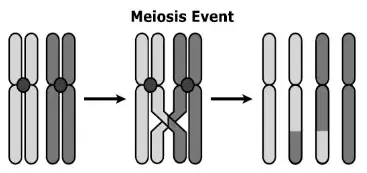
The figure shows an event involving chromosomes that occurs during meiosis. How does this event affect the genetic variation of a population?
It reduces genetic variation in a population by creating new chromosomes that contain less DNA.
It reduces genetic variation in a population by creating genetically identical daughter cells from a parent cell.
It increases genetic variation in a population by creating DNA mutations that can be passed on to offspring.
It increases genetic variation in a population by creating gametes that contain new combinations of alleles.
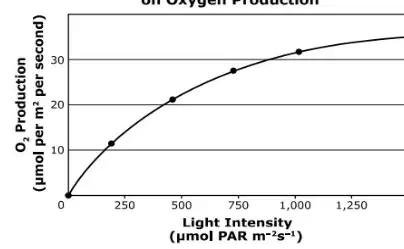
While studying photosynthesis, a group of scientists measured the rate of oxygen production of bean plant leaves exposed to different light intensities, as shown in the graph. The scientists observe that the rate of photosynthesis does not increase at a constant rate as light intensity increases. Based on the trend shown in the graph, what will likely happen to the rate of oxygen production if the scientists increase the light intensity on the bean plants to 1,400 μmol PAR m⁻²s⁻¹?
The rate of oxygen production will decline rapidly.
The rate of oxygen production will be reduced by half.
The rate of oxygen production will remain fairly constant.
The rate of oxygen production will nearly double.
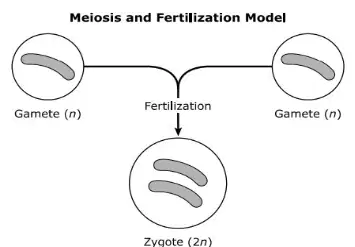
A student draws a simplified model to represent meiosis and fertilization. Which three changes should the student make to the model to better represent how meiosis and fertilization promote genetic diversity?
Double the number of chromosomes in the 2n zygote.
Use different shades for the chromosomes from each gamete to show that fertilization combines genes from both parents.
Remove one of the gametes to show that some organisms can reproduce without fertilization.
Add a step at the beginning to show the diploid parent cell for each gamete.
Add steps at the beginning to show that information is exchanged before the gametes are formed.
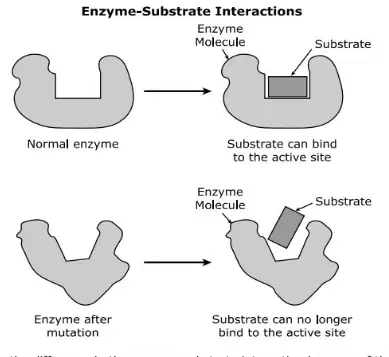
How is the difference in the enzyme-substrate interaction because of the mutation best explained?
A. The mutation changed the amino acid sequence of the protein, which resulted in a structural change in the active site.
B. The mutation changed the active site on the substrate, preventing collisions between the enzyme and the substrate.
C. The mutation created a new type of enzyme with a different active site that does not recognize the substrate.
D. The mutation affected the speed of the enzyme colliding with the substrate which affected the shape of the enzyme.
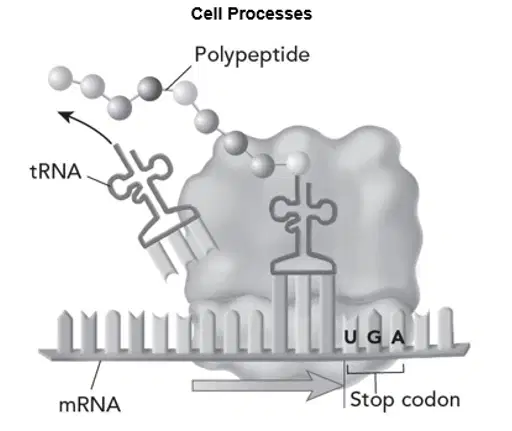
This model shows a process that occurs inside the cell.
A student claims that this process is part of the essential functions of life described by central dogma theory. Which sentence best responds to the student's claim?
It is incorrect because this process is part of transcription, which is not part of central dogma theory.
It is correct because this process is part of translation, and central dogma theory includes this process.
It is correct because this process is a part of DNA replication, and central dogma theory includes this process.
It is incorrect because this process is a part of cytokinesis, which is not a part of central dogma theory.
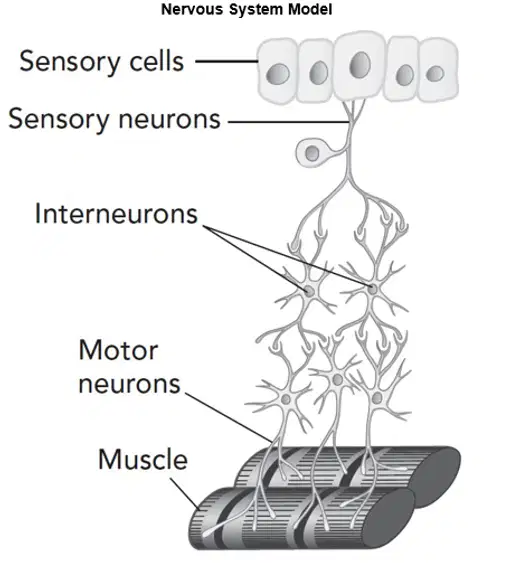
A student wants to use this model to explain how the nervous system is involved in skeletal muscle movement. The student writes these three statements to include in the explanation.
I. Interneurons are located in the central nervous system.
II. The brain sends signals to the motor neurons, which results in the movement of the muscles.
III. Sensory cells are not involved in muscle movement.
Which statement(s) should the student include in their explanation?
I, only
II, only
I and II
I, II, and III
Photosynthesis can be modeled by its overall chemical reaction. A student evaluates the roles of the following substances in photosynthesis.
Which substances are reactants of photosynthesis?
SUGARS
CARBON DIOXIDE
NITROGEN
WATER
OXYGEN
Photosynthesis can be modeled by its overall chemical reaction. A student evaluates the roles of the following substances in photosynthesis.
Which substances are products of photosynthesis?
SUGAR
CARBON DIOXIDE
NITROGEN
WATER
OXYGEN
Photosynthesis can be modeled by its overall chemical reaction. A student evaluates the roles of the following substances in photosynthesis.
Which substance is neither a reactant or product of photosynthesis?
SUGAR
CARBON DIOXIDE
NITROGEN
WATER
OXYGEN
Cellular processes require energy to take place. What is the source of this energy?
the separation of daughter cells during telophase of mitosis
the breakdown of glucose into ATP during cellular respiration
the use of enzymes to attach new nucleotides during DNA replication
the conversion of water into oxygen during photosynthesis
A student is analyzing feedback mechanisms that maintain homeostasis in the human body. The student follows the procedure that is listed below.
I. Invite a healthy test subject to participate in the investigation.
II. Measure and record the pulse and breathing rate of the subject.
III. Have the test subject exercise vigorously for 1 minute, such as by running in place.
IV. Repeat Step 2.
What result would provide the strongest evidence of homeostasis in the body of the subject?
Pulse and breathing rate remain the same after exercise.
Breathing rate, not pulse, increases after exercise.
Pulse, but not breathing rate, increases after exercise.
Both pulse and breathing rate increase after exercise.
A student is analyzing feedback mechanisms that maintain homeostasis in the human body. The student follows the procedure that is listed below.
I. Invite a healthy test subject to participate in the investigation.
II. Measure and record the pulse and breathing rate of the subject.
III. Have the test subject exercise vigorously for 1 minute, such as by running in place.
IV. Repeat Step 2.
Why is Step 3 useful for the purpose of the student's investigation?
Exercise increases the body's demand for oxygen.
Exercise increases the body's demand for food and nutrients.
Exercise does not affect the body's demand for oxygen, food, and nutrients.
Exercise causes an increase in the pH of blood and other body fluids.
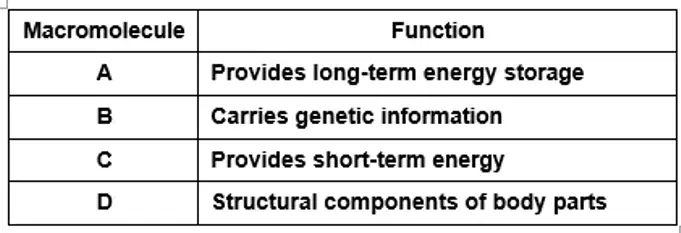
A student needed to describe the basic functions of the four main categories of macromolecules. They made the chart shown here. Which of the following identifies macromolecules A–D, based on their functions?
A: carbohydrate; B: protein; C: nucleic acid; D: lipid
A: protein; B: lipid; C: nucleic acid; D: carbohydrate
A: lipid; B: nucleic acid; C: carbohydrate; D: protein
A: nucleic acid; B: protein; C: lipid; D: carbohydrate

Which table correctly identifies how the cell membrane contributes to the maintenance of cellular homeostasis?
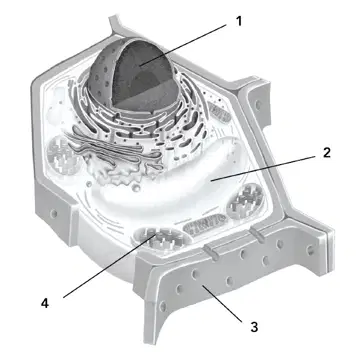
Model of a Cell
The diagram is a model of the structure of a certain type of cell. Like all models, the diagram is accurate in many ways, but it does not show all features or properties. For example, the structure labeled 2 may take on a variety of sizes, depending on the amount of water available to the cell. The structure labeled 4 occurs in different numbers in different examples of the cell. It has a characteristic green color and is involved in energy transformation.
Which claim about this model is correct?
It is an animal cell because it has a nucleus and a cell membrane.
It is a plant cell because it has structures that convert light energy to
chemical energy.
It is a prokaryotic photosynthetic cell because it lacks a nucleus and it
has chloroplasts.
It is a prokaryotic cell that does not perform photosynthesis because it has structures that convert chemical energy into ATP.
Model of a Cell
The diagram is a model of the structure of a certain type of cell. Like all models, the diagram is accurate in many ways, but it does not show all features or properties. For example, the structure labeled 2 may take on a variety of sizes, depending on the amount of water available to the cell. The structure labeled 4 occurs in different numbers in different examples of the cell. It has a characteristic green color and is involved in energy transformation.
Which statement best explains the chemical composition of structure 3 and its role in maintaining homeostasis?
It is made of chitin, and it acts to protect and support the cell.
It is made of DNMA and proteins, and it acts to control cell activities.
It is made of cellulose and other carbohydrates, and it acts to protect and support the cell.
It is made of a lipid bilayer and proteins, and it acts to allow the passage of certain substances in and out of the cell.
Model of a Cell
The diagram is a model of the structure of a certain type of cell. Like all models, the diagram is accurate in many ways, but it does not show all features or properties. For example, the structure labeled 2 may take on a variety of sizes, depending on the amount of water available to the cell. The structure labeled 4 occurs in different numbers in different examples of the cell. It has a characteristic green color and is involved in energy transformation.
Which two functions does structure 1 perform for the cell?
It produces glucose for the cell.
It takes matter into the cell.
It is the command center of the cell.
It contains molecules described by the central dogma.
It ships proteins to other parts of the cell.
Model of a Cell
The diagram is a model of the structure of a certain type of cell. Like all models, the diagram is accurate in many ways, but it does not show all features or properties. For example, the structure labeled 2 may take on a variety of sizes, depending on the amount of water available to the cell. The structure labeled 4 occurs in different numbers in different examples of the cell. It has a characteristic green color and is involved in energy transformation.
This cell plays a role in taking in and re-combining macromolecules to perform
life processes. Which role does structure 4 play in this process?
It makes glucose from carbon dioxide and water.
It makes ATP molecules from glucose and oxygen.
It stores excess energy as lipids and fatty acids.
It replicates nucleic acids to make new cells.

Which of the following explanations is best supported by the table?
DNA is found in the cells of all organisms.
DNA contains instructions for producing proteins.
tRNA is an essential component of the process of transcription.
The termination of a polypeptide chain is indicated by a specific sequence of DNA nucleotides.
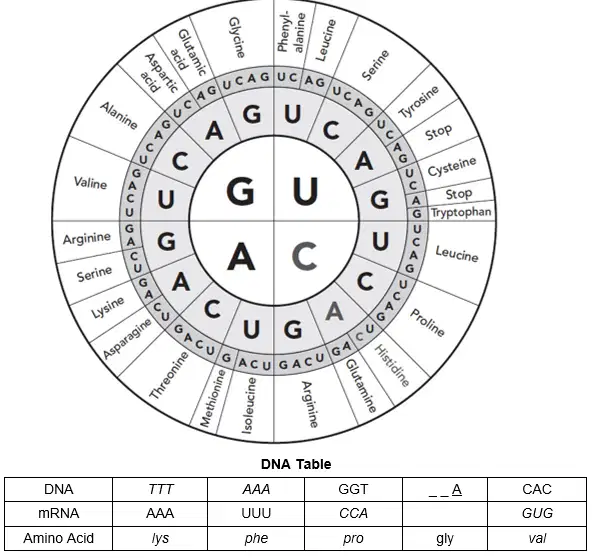
Biology students studying DNA were given a partially completed table. They attempted to complete it using the given information. Their answers are shown
in italics.
Viewing the table along with the codon chart what would be the correct DNA and mRNA that are missing from the table?
DNA: GGA
mRNA: CCU
DNA: TTA
mRNA: GGU
DNA: CCA
mRNA: GGU
DNA: GTA
mRNA: CAU
A multicellular organism generally includes a wide variety of cell types. Examples in vertebrates include blood cells, neurons (cells of the nervous system), and the cells that line the digestive tract.
What is the role of DNA replication and gene expression in cell differentiation?
Only the DNA that a cell will use is replicated, and all of the genes that it contains are always expressed.
Only the DNA that a cell will use is replicated, and gene expression is
tightly controlled.
Nearly all DNA is replicated, and the omissions determine gene expression in the cell.
All DNA is replicated, but gene expression varies widely among cells and
over time.
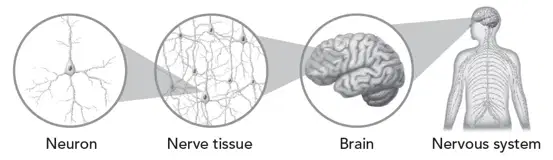
Each level of human body systems is organized into different interacting parts. The diagram shows the hierarchical organization of the nervous system.
Which sentence best describes how the parts represented in this model interact with other organ systems?
The brain, spinal cord, and nerves throughout the body make up the
nervous system.
The spinal cord is made of a bundle of nerve fibers. The brain consists of neurons, supporting cells, blood vessels, and fat.
Signals from the brain travel down the spinal cord to the nerves throughout
the body.
The neurons make up nerves that communicate with the brain to control
muscle movement.
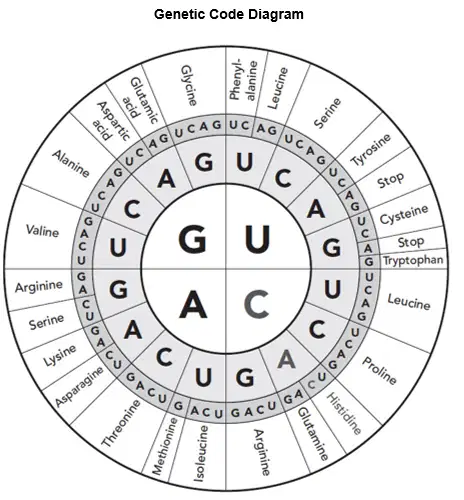
The diagram shows the genetic code, which cells use to translate a nucleotide sequence into an amino acid sequence in a protein. Scientists have studied a huge number of species and have found the same genetic code in use among nearly all of them.
Which is not one of the universal or nearly universal properties of the genetic code?
Each codon consists of three nucleotides, and not two, and not four or more.
Each codon translates to the amino acid or stop message shown in the diagram, regardless of species.
Each codon may be read either forward or backward, so some codons may be translated into two different amino acids.
Each codon is a sequence of nucleotides in messenger RNA (mRNA) and not DNA or another nucleic acid.
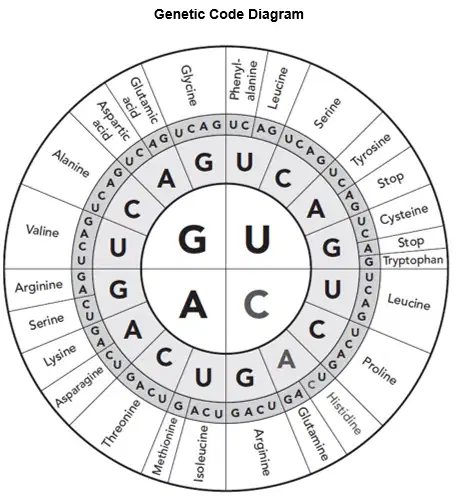
A molecule of mRNA is altered by a point mutation in DNA.
Which change to a codon would have the least effect on the protein that
is produced?
changing UGA to UGU
changing UGA to CGA
changing UAU to UAG
changing UAU to UAC
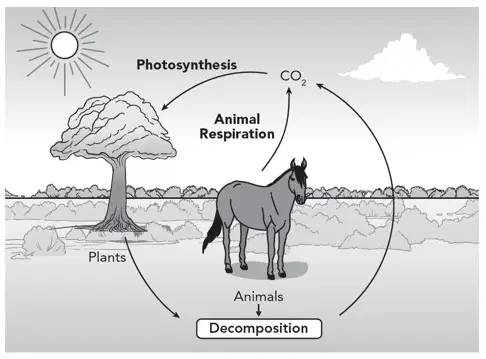
Biology students are developing a model to better understand the role of living things in the carbon cycle.
Which statement best describes how students could improve the model to demonstrate how plant processes influence atmospheric carbon?
They could add the inputs for photosynthesis.
They could add the inputs for cellular respiration.
They could include more examples of animals consuming plant matter.
They could show the waste product of transpiration.
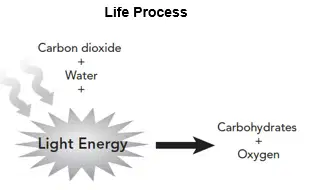
This diagram shows a process that occurs in some organisms.
Life Process
Which two statements describe this model?
The process is photosynthesis, and it takes place in producers.
The process is cellular respiration, and it takes place in producers
and consumers.
This process transfers carbon from the atmosphere to the biosphere.
This process transfers carbon from the biosphere to the geosphere.
This process transfers carbon from the hydrosphere to the biosphere.
A chemist is studying a macromolecule that has been isolated from a cell.
Which observation would provide the strongest evidence that the role of the macromolecule is the storage of energy?
All of the monomers are identical, and they are composed only of carbon, oxygen, and hydrogen.
The monomers have many varieties, and their component elements include nitrogen and sulfur.
The monomers have four varieties, and their component elements include nitrogen and phosphorus.
All of the monomers are identical, and they are composed only of carbon
and fluorine.
A student regularly rides her bike to school and makes sure to have breakfast and water each morning before the trip. The first half of the ride is uphill and requires some rigorous pedaling to maintain a steady pace. The second half of the ride is flat. In total, the student rides about 4.8 km (3 miles) each day, to and from school.
If the student rides at a constant pace, the trip takes about 10 minutes each way. The following reaction equation demonstrates a process that occurs in the
student’s body.
C6H12O6 + 6O2 → 6CO2 + 6H2O + 36ATP
Which statement best explains one of the relationships between the reaction equation and the student’s activity?
The model demonstrates that humans use cellular respiration to convert the energy in oxygen, found in water, into cellular energy to power activity, such as bike riding.
The model demonstrates that humans use cellular respiration to convert the energy in glucose, found in food, into cellular energy to power activity, such as bike riding.
The model demonstrates that humans use fermentation to convert ATP, found in food, into glucose, which the cells can use as energy to power activity, such as bike riding.
The model demonstrates that humans use fermentation to convert glucose, found in food, into oxygen, which is why we breathe faster during rigorous activity, such as bike riding.
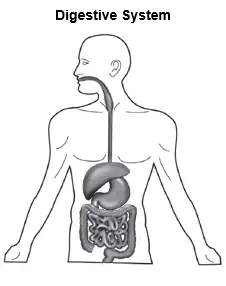
This model shows the digestive system.
How could you best modify this model to show how cell differentiation relates to the structure and function of the digestive system?
Draw a single specialized cell that reproduces by mitosis to form identical cells. These identical cells continue to reproduce to form all of the organs that perform the functions of the digestive system.
Draw a single unspecialized cell that reproduces by meiosis to form cells with different chromosome combinations. This allows for the formation of different cell types that each perform different functions for the digestive system.
Draw a stem cell that reproduces to form different types of specialized cells that have identical DNA, but different gene expressions. Each of these differentiated cells has a specialized function for the digestive system.
Draw a stem cell that reproduces to form identical unspecialized cells with identical DNA and gene expressions. Each of these unspecialized cells can perform multiple functions for the digestive system.
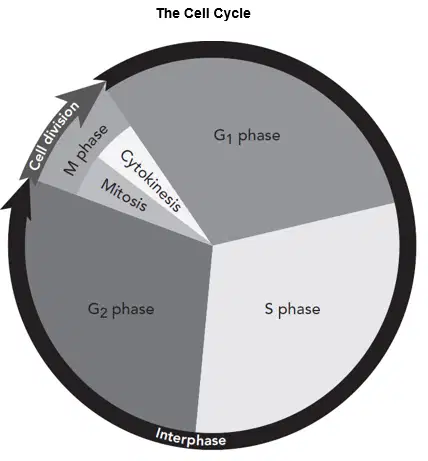
The diagram shows the cell cycle.
According to the diagram, what description best describes the stage that occurs after the G2 stage is complete?
The diploid parent cell divides and creates two diploid daughter cells.
The diploid parent cell divides and creates four haploid daughter cells.
The haploid parent cell divides and creates two diploid daughter cells.
The haploid parent cell divides and creates four haploid daughter cells.
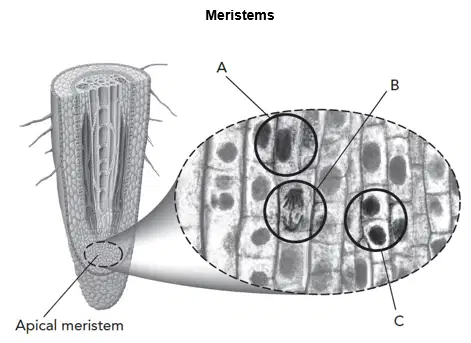
All organisms grow, but the ways in which they grow can vary. Plants can regularly generate new tissue and reproductive organs. The active growth regions of plants are called meristems. Meristems are made up of unspecialized cells, from which new plant parts can grow. Meristems are found in parts of the plant that undergo frequent growth, such as the tips of roots and stems. Roots grow downward to anchor a plant while the rest of the plant grows in the opposite direction.
The growth zone of the root is called the apical meristem, and it is protected by a strong root cap that provides protection for new tissue. For a better understanding of the process of root growth, a thinly sliced onion root can be placed on a slide and observed under a microscope.
Which of the following statements most accurately describes the onion root shown in the slide?
There is a high rate of meiosis in the apical meristem of the onion root because this is where the most growth occurs.
There is a high rate of mitosis in the apical meristem of the onion root because this is where the most growth occurs.
There is a high rate of meiosis in the apical meristem of the onion root because this is where the plant generates reproductive cells.
There is a high rate of mitosis in the apical meristem of the onion root because this is where the plant generates reproductive cells.
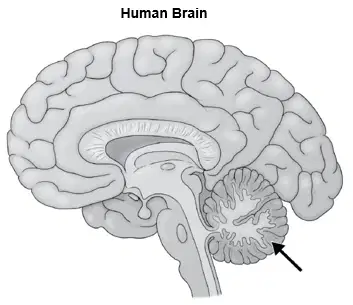
A model of the human brain is shown.
The arrow indicates a part of the brain the student is investigating. The student wants to explain what role this part of the brain plays when a person is riding
a bicycle.
Which statement best explains the role of this structure during this activity?
It sends information to the circulatory and respiratory systems to regulate heart rate, breathing, and blood pressure.
It communicates with the endocrine systems to regulate body temperature.
It receives, interprets, and responds to sensory information that controls the voluntary movement of the skeletal muscles.
It receives, interprets, and responds to sensory information that controls balance and coordination of muscles.
A multicellular organism generally includes a wide variety of cell types. Examples in vertebrates include blood cells, neurons (cells of the nervous system), and the cells that line the digestive tract.
What is the role of DNA replication and gene expression in cell differentiation?
Only the DNA that a cell will use is replicated, and all of the genes that it contains are always expressed.
Only the DNA that a cell will use is replicated, and gene expression is
tightly controlled.
Nearly all DNA is replicated, and the omissions determine gene expression in the cell.
All DNA is replicated, but gene expression varies widely among cells and
over time.
What is the relationship between the cell cycle and the development of
cancer cells?
During metaphase, cancer results from the abnormal distribution of damaged chromosomes when they fail to align properly.
If a mutation has damaged the checkpoints that occur during mitosis, cells can divide uncontrollably and cause cancer.
DNA replication during interphase can cause cancer by forming chromosomes that will produce tumors.
Changes in environmental conditions during cytokinesis cause cells to divide rapidly, leading to cancer.
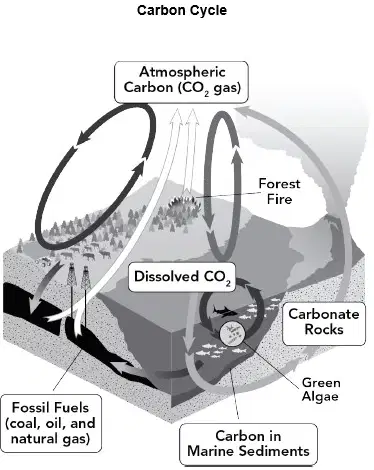
A model of the carbon cycle is shown.
Which statement explains one way that matter moves through the carbon cycle?
Volcanic activity removes carbon from the air after an eruption and incorporates it into bedrock through the rock cycle.
Plants use carbon from the atmosphere for photosynthesis and release carbon back into the atmosphere through respiration.
The breakdown of dead organisms absorbs carbon from the soil and the carbon gets reformed into rocks and minerals.
The oceans take in more carbon through diffusion than they can hold, so some of the carbon gets released through osmosis.
A DNA sample was taken from a newly discovered organism and analyzed to determine its makeup.
Which prediction can be made about the components of this new DNA?
Some of the nitrogenous bases in the DNA will be similar to other organisms, but many will also be entirely new.
The DNA will have the same nucleotides as every other organism because the genetic code is universal.
The DNA will have a series of base pairs that are unique to that species because every organism has different traits.
All but one of the nucleotides will be the same as other organisms, but the identifying nitrogenous bases will be unique.
A developer proposes to build new houses and roads on land that is now part of Mairead Forest, which is a tract of 120 acres that the county has designated as conservation land. The conservation is home to many native species, including large apex predators.
The developer points out that his proposal would keep the size of forested land at 120 acres. However, much of the forest would be divided into small pieces separated by highways, houses, and lawns. The developer states this solution will protect the natural ecosystem by maintaining the natural biodiversity of the forest.
Based on the information, what is the best response to the developer’s claim?
The claim is likely correct because the native biodiversity will likely remain stable since the size of the forested land would remain the same.
The claim is likely correct because the native biodiversity will likely increase since humans and their pets are entering the region.
The claim is likely not correct because many animal species depend on large areas of land to survive and reproduce.
The claim is likely not correct because the best way to protect the natural ecosystem is to reduce biodiversity.

The table shows the classifications of two species.
Which claim can be made about the evolutionary relationship between the killer whale and the bonobo?
The killer whale and bonobo share a common ancestor belonging to the
same class.
The killer whale and bonobo share a common ancestor belonging to the
same species.
The killer whale and bonobo share a common ancestor belonging to the
same genus.
The killer whale and bonobo evolved during the same time period.
A pollutant has caused many organisms in a population to experience mutations in their DNA.
How will these mutations most likely affect genetic diversity?
The mutations will increase genetic diversity because they will introduce new genetic variants into the population.
The mutations will decrease genetic diversity because they will remove disadvantageous traits that would otherwise get passed onto offspring.
The mutations will decrease genetic diversity because they will cause more competition that will eliminate many organisms from the population.
The mutations will increase genetic diversity because they will increase the number of new species that move into the area.

A plant growing in a field produces both thorny and smooth seeds. These seeds are eaten by field mice. When the mice eat the seeds, they break them open to get to the edible parts inside. A researcher counted all of the seeds in one area of the field and tallied whether the seeds were open or closed, and thorny or smooth. The findings are in the table.
Based on the data, will the smooth seeds have greater reproductive success than the thorny seeds?
Yes, because the smooth seeds are better able to protect themselves against being eaten by the mice.
Yes, because there are a greater number of smooth seeds than there are thorny seeds, so the population is larger to start.
No, because the mice eat smooth seeds more often, which suggests being a smooth seed is less advantageous than being a thorny seed.
No, because the smooth seeds are going to be better competitors for open space in the forest due to germinating faster.
How do mitochondria regulate energy in a cell?
Mitochondria transfer energy between cells as energy is needed.
Mitochondria convert energy in nutrients into usable energy.
Mitochondria absorb and convert energy from the sun.
Mitochondria convert energy from the nucleus into usable energy.
All cells need energy (ATP) to function. Which cell organelle is responsible for producing energy in the cell? "The Powerhouse"
chloroplasts
mitochondria
nucleus
vacuoles
Where do new cells come from?
other cells
nucleus
Golgi body
macrophages
Plant and animal cells are examples of
prokaryotic cells
eukaryotic cells
PROKARYOTIC cells do NOT have
membrane bound organelles
cell membrane
DNA
ribosomes
A cytoplasm is found in
prokaryotic cells.
eukaryotic cells.
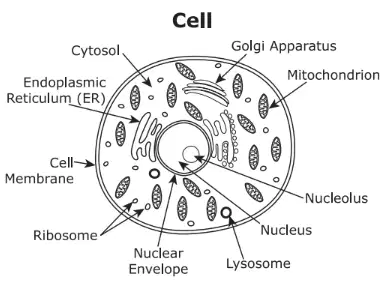
A cell model is shown. Students were instructed to review the types and number of structures that are present in this cell model.
Which three cell could be represented by the model?
human stem cell
plant xylem cell
bacterial cell
sea urchin embryo cell
mammalian white blood cell
A cell has ribosomes, cytoplasm, a cell wall made of peptidoglycan, & can do both cell respiration & photosynthesis, but has NO nucleus. What kind of cell is it?
Plant Cell
Animal Cell
Fungal Cell
Prokaryotic Cell


The human brain contains different regions that control specific body functions and perform specific tasks. Which describes the location and function of the brainstem?
a large lobe near the center of the brain; controls reasoning and memory
a pair of large lobes along the sides of the brain; coordinates muscular movement
a collection of peripheral nerves that extends down the back; carries sensory information
a relatively thin region at the base of the brain; transfers messages to and from the spinal cord
The human brain contains different regions that control specific bodily functions. On a model, how could you identify the region of the brain that is responsible for voluntary activities of the body, intelligence, learning, and judgment?
This region is the thalamus, between the brain stem and cerebrum.
This region is the brain stem, connecting the brain to the spinal cord.
This region is the cerebellum, divided into left and right hemispheres.
This region is the cerebrum, the largest region in the brain.
The human nervous system is made of a huge number of interconnected neurons. The two main divisions of the nervous system are the central nervous system (CNS) and the peripheral nervous system (PNS).
Which describes a common pathway of nerve impulses through the divisions of the nervous system?
CNS -> sensory neurons of the PNS -> motor neurons of the PNS
sensory neurons of the PNS -> CNS -> motor neurons of the PNS
sensory neurons of the PNS -> motor neurons of the PNS -> CNS
motor neurons of the PNS -> CNS -> sensory neurons of the PNS
The hormone calcitonin is involved in calcium regulation. Blood levels of calcitonin are controlled by a mechanism of negative feedback inhibition.
What occurs as blood levels of calcitonin increase?
Calcitonin loses radioactivity and becomes less effective.
Calcitonin is attacked by the immune system.
The release of additional calcitonin is stimulated.
The release of additional calcitonin becomes inhibited.
Which of the following structures transmits nerve impulses between the brain and most motor and sensory neurons?
carotid artery
diaphragm
esophagus
spinal cord
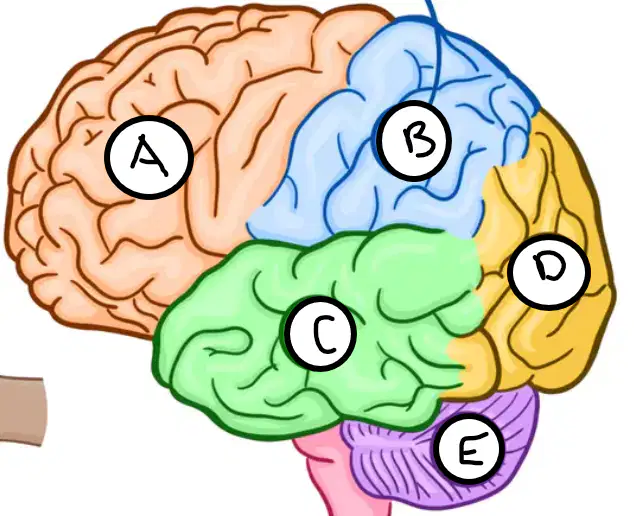
Which letter represents the occipital lobe?
A
B
C
D
E
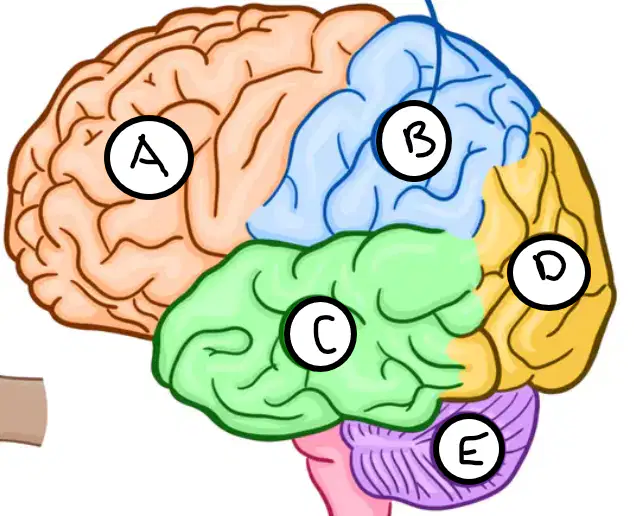
Which letter represents the temporal lobe?
A
B
C
D
E
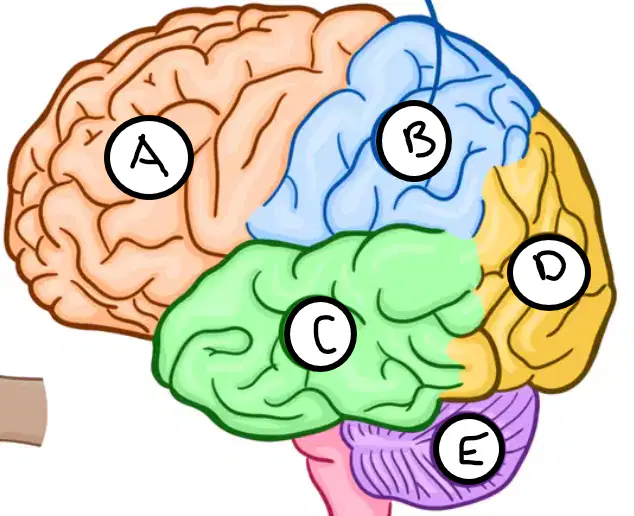
Which letter represents the parietal lobe?
A
B
C
D
E
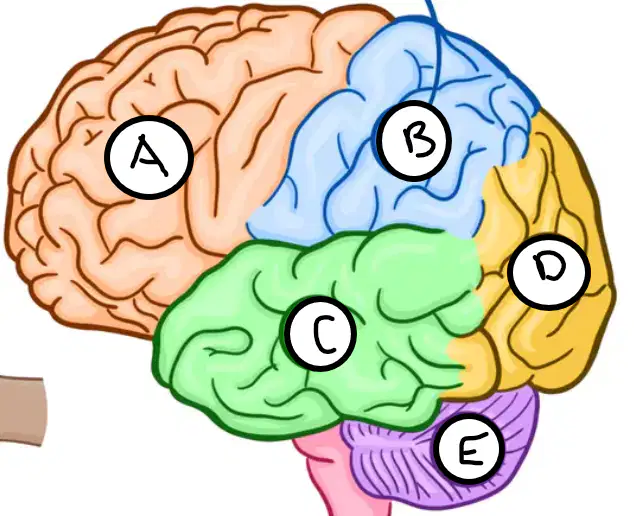
What letter represents the cerebellum?
A
B
C
D
E
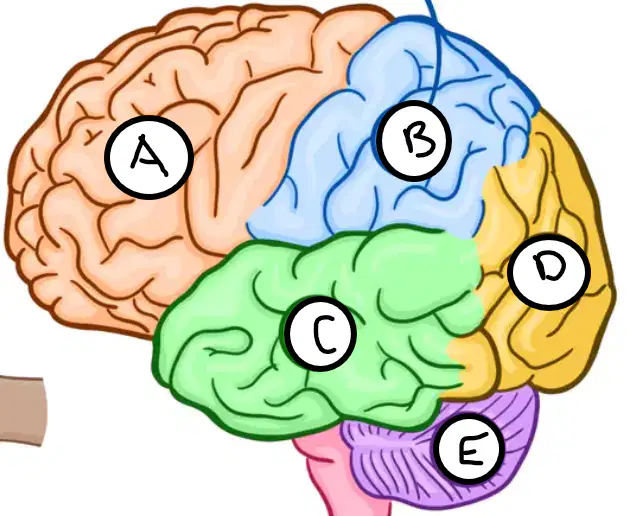
Which letter is the frontal lobe?
A
B
C
D
E
What is the point of a feedback loop?
To provide the body with more energy
To provide the body with more food
To make sure the conditions in the body are always changing
To make sure the conditions in the body remain stable
Where does photosynthesis take place?
Mitochondria
Chlorophyll
Nucleus
Chloroplast
Select the reactants for photosynthesis
oxygen
carbon dioxide
water
glucose
light energy
Select the products of photosynthesis
oxygen
carbon dioxide
glucose
ATP
water
What is the correct formula for cellular respiration?
C6H12O6 + CO2 ----> O2 + H20 + Light energy
CO2 + H20 + light energy ---> C6H12O6 + 02
C6H12O6 + O2 ----> CO2 + H20 + ATP
O2 + H20 + light energy ---> C6H12O6 + C02
What is the correct formula for photosynthesis?
CO2 + H2O + light energy ---> C6H12O6 + O2
C6H12O6 + CO2 ----> O2 + H20 + Light energy
O2 + H2O + light energy ---> C6H12O6 + CO2
C6H12O6 + O2 ----> CO2 + H20 + ATP
Where does cellular respiration take place?
Chloroplast
Mitochondria
Nucleus
Ribosomes
What is the difference between anaerobic respiration and aerobic respiration?
Aerobic respiration needs energy and anaerobic respiration does not need energy
Aerobic respiration does not need oxygen and anaerobic respiration needs oxygen
Aerobic respiration does not need energy and anaerobic respiration needs energy
Aerobic respiration needs oxygen and anaerobic respiration does not
Select the reactants for cellular respiration
carbon dioxide
oxygen
water
glucose
ATP
Select the products for cellular respiration
oxygen
carbon dioxide
water
gluose
ATP

What type of macromolecule is this?
carb
lipid
nucleic acid
protein

What type of macromolecule is this?
carb
lipid
nucleic acid
protein
_____ store genetic information.
Carbohydrates
Lipids
Nucleic Acids
Proteins
What is the monomer of proteins?
Amino Acid
Fatty Acid
Nucleotide
Monsaccharide
What is the monomer of lipids?
Monosaccharide
Fatty Acid
Amino Acid
Nucleotide
What is the monomer of nucleic acids?
Monsaccharide
Nucleotide
Amino Acid
Fatty Acid

Which is shown in the picture?
Monosaccharide
Fatty Acid
Amino Acid
Nucleotide

Which is shown in the picture?
Monsaccharide
Amino Acid
Fatty Acid
Nucleotide
Ends with diploid number of chromosomes
Mitosis
Meiosis
Both
produces identical daughter cells
Mitosis
Meiosis
Both
forms gametes
Mitosis
Meiosis
Both
for growth and repair
Mitosis
Meiosis
Both
produces haploid cells
Mitosis
Meiosis
Both
Forms body cells
Mitosis
Meiosis
Produces daughter cells that are genetically identical to the parent and each other.
mitosis
meiosis
both
could produce an egg cell
mitosis
meiosis
both
Produces liver cells
Mitosis
Meiosis
Both
Cells go through interphase and replicate their DNA before entering _________.
Mitosis
Meiosis
Both Mitosis and Meiosis


Logistic population growth can be described as
growth when resources are limited
a s-shaped curve
reaching carrying capacity
all of the above

Density-independent limiting factors to population growth includes
stress from overcrowding
parasitism
competition
natural disasters
As resources become less available the growth of a population
slows or stops
decreases or increases
up or down
in or out

Exponential Growth occurs when-
populations have plenty of food/space
home to keystone species
have few evasive species in a habitat
have little to no competition or predators
Which of the following is the collection of life's remains found in sedimentary rock?
natural selection
homologous structures
Charles Darwin
the fossil record

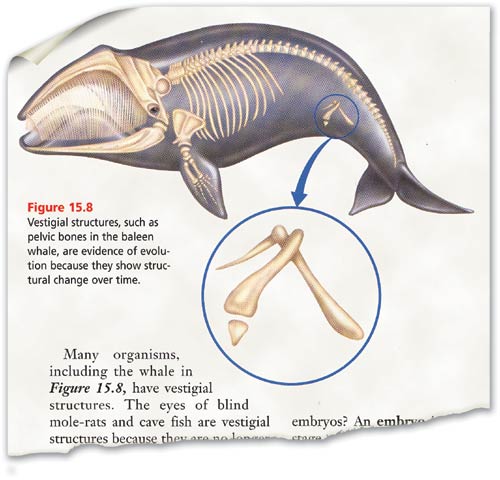
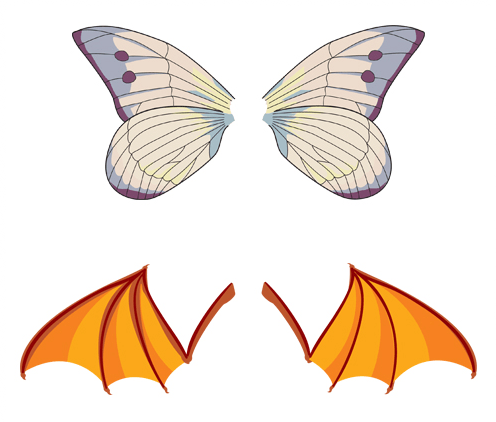
What is this an example of?
Homologous structure
Analogous structure
Vestigial organs
Functional adaption

The picture shows a/an ___________
homologous structure
vestigial structure

What is the purpose of MITOSIS?
to create sex cells
to kill off body cells
to repair or replace body cells
Which statement explains how a population’s genetic variability and diversity can be affected by selective breeding?
Genetic variability and diversity decrease because only select individuals are bred.
Genetic variability and diversity increase because only select individuals are bred.
Genetic variability increases and diversity decreases because only select individuals are bred.
Genetic variability decreases and diversity increases because only select individuals are bred.

