
 Worksheets
Y10 CS EOY_Bio
Total questions: 125
Worksheet time: 2hrs 35mins

I make proteins for the cell. What am I?
ribosome
cell membrane
nucleus
chloroplast
Respiration is...
Releasing energy from food using oxygen
Producing waste
Responding to changes in the environment
Producing offspring
What does the M stand for in MRS GREN
(a)
What does the G stand for in MRS GREN
(a)
What is a tissue?
A group of different cells performing the same function
A group of similar cells performing the same function
A group of different cells performing the same function
A group of different cells performing different functions
What it the correct order, from smallest to largest?
Cell
Organ
Tissue
Organ system
Organism
Tissue
Cell
Organ system
Organ
Organism
Cell
Tissue
Organ
Organ system
Organism
Cell
Tissue
Organ system
Organ
Organism

Which structure in a plant cell would you not find in a root hair cell?
Cell wall
Chloroplast
Vacuole
Cell membrane
The red pigment in red blood cells that is able to bind to oxygen is called (a) .

Name the part of this cell, where the arrow points towards.
vacuole
chloroplast
cell wall
ribosome

Which factor will decrease the rate of diffusion across from the alveoli and into the blood?
Decreasing the temperature
Increasing the differences in concentration
Increasing the surface area of the alveoli
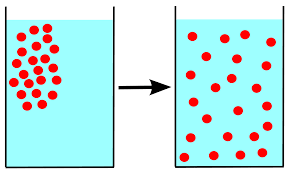

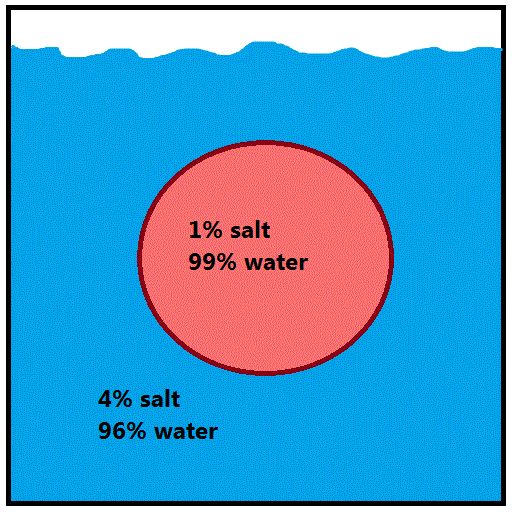
Which one is the definition of active transport?
movement of particles through the cell membrane from a region of lower concentration to a region of higher concentration using energy in the form of ATP.
passage of water molecules from a region of their higher concentration to a region of their lower concentration through a partially permeable membrane
net movement of molecule from a region of higher concentration to region of lower concentration. Molecule down a concentration gradient
net movement of molecule from a region of lower concentration to region of higher concentration. Molecule down a concentration gradient
The monomers of proteins are
nucleotides
amino acids
monosaccharides
fatty acids
Which of the following is NOT a complex carbohydrate ?
Cellulose
Haemoglobin
Glycogen
Starch
What Biological Molecules is responsible for muscle formation?
Carbohydrates
Lipids
Protein
Nucleic Acids
Basic units of lipids.
nucleotides
amino acids
simple sugars
fatty acids and glycerol
What are the elements that make up a protein molecule?
(You may select more than one answer.)
carbon
hydrogen
oxygen
nitrogen
A food sample is known to contain fats.
What will the student observe when a ethanol emulsion test is performed on it?
The solution remains clear.
The solution turns yellow.
A cloudy white emulsion is formed.
A cloudy yellow emulsion is formed.
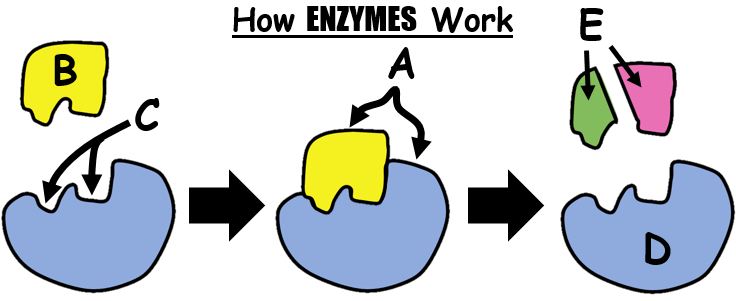
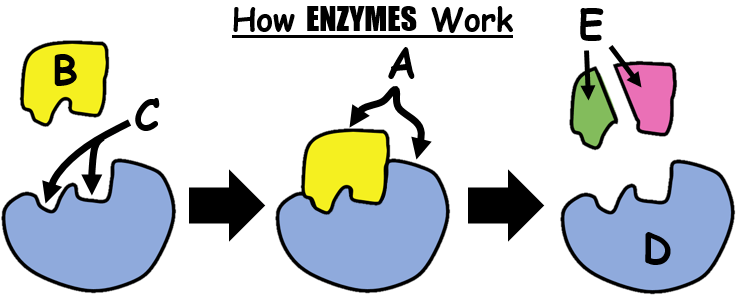
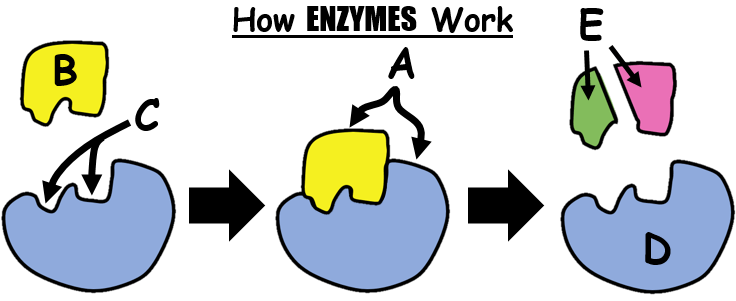
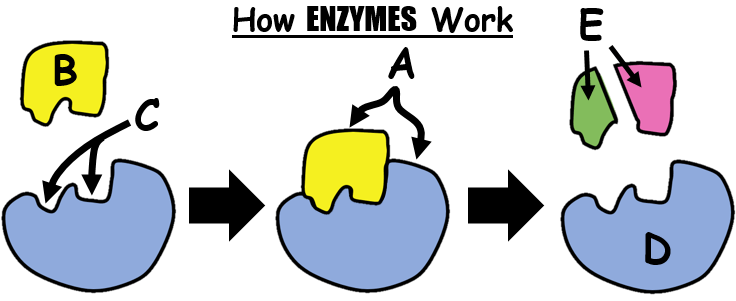
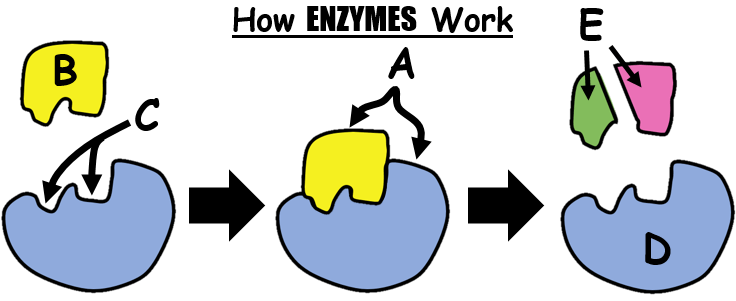
What happens when enzymes are heated to a high temperature?
The enzymes die.
The shape of the enzyme are changed and it denatures
The enzymes' amino acid sequence changes.
The enzymes remain the same
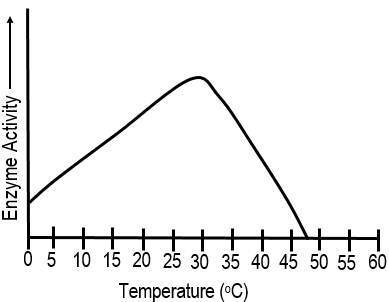
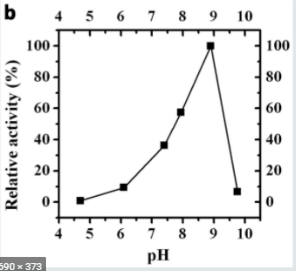
What is the optimal pH for this enzyme?
6
10
9
7
In order to make proteins, plants need to absorb
Magnesium Ions
Nitrate Ions
Sucrose
Carbon Dioxide
Chlorophyll is the ___ pigment found in the chloroplast
Blue
Green
Red
Purple
Part of the leaf which allows the diffusion of gases to occur
Palisade Cells
Spongy Mesophyll Cells
Epidermis
Phloem
This ion is needed for the creation of chlorophyll
Magnesium
Iron
Phosphate
Sulphate
carbon dioxide + _______ = glucose + oxygen
Water
Hydroxide
Chlorophyll
Sunlight
State the balanced symbol equation for photosynthesis
CO2 + H2O -> C6H12O6 + O2
C6H12O6 + 6O2 -> 6CO2 + 6H2O
6CO2 + 6H2O -> C6H12O6 + 6O2
CO2 + H2O -> 6C6H12O6 + O2

What is the name of the water proof layer on the top of the leaf?
Vascular bundle
Cuticle
Palisade mesophyll
Spongy mesophyll
Which of the following factors affect the rate of photosynthesis in plants?
oxygen concentration and light intensity
carbon dioxide and light intensity
nitrogen concentration and light intensity
hydrogen concentration and light intensity


Which lettered graph represents the affect of light intensity on photosynthetic rate?
A
B
C
D
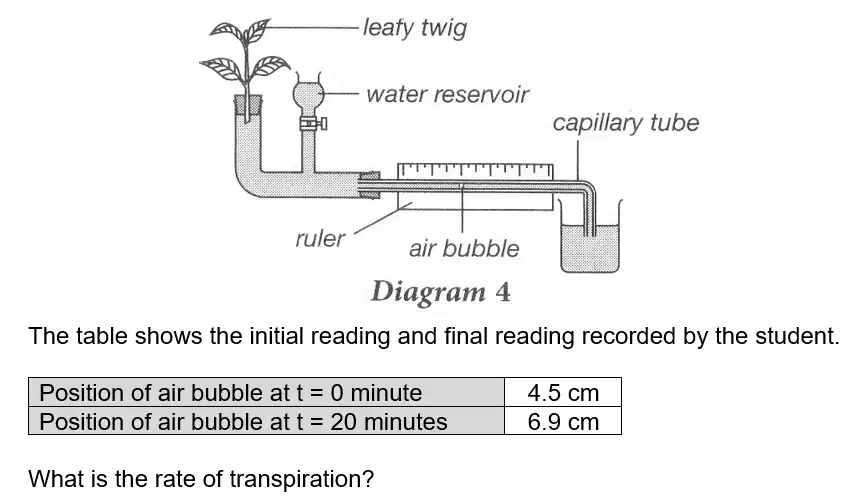
A student carries out an investigation to determine the rate of transpiration in plants by using the potometer in Diagram 4.
1.2 cm per minute
0.012 cm per minute
12 cm per minute
0.12 cm per minute
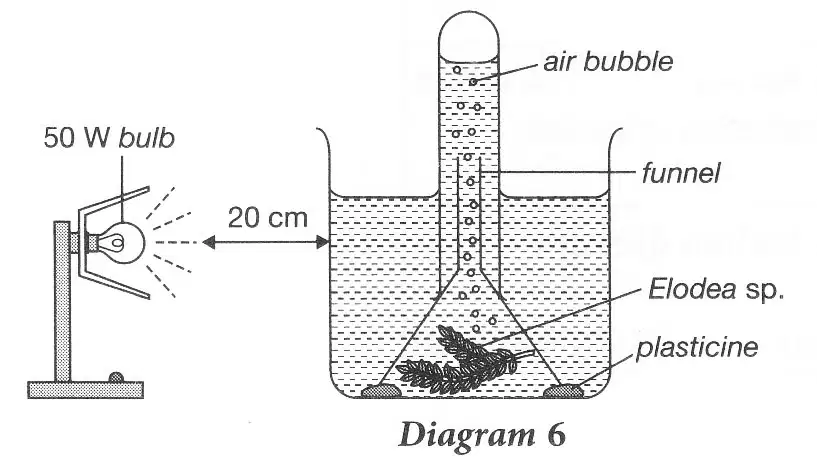
Diagram 6 shows an experiment to study a factor that affects the rate of photosynthesis.
Which step will cause an increase in the number of gas bubbles released per unit time in the test tube?
Immerse the Elodea sp. in water at 85°C
Position the bulb at 5 cm from the plant
Replace the 50 W bulb with a bigger bulb of the same power
Replace the 50 W bulb with a 30 W bulb

Diagram 8 shows an experiment to study the products of respiration and photosynthesis.
A
B
C
D
Which plant organ carries out about 90% of transpiration in plants?
Root
Stem
Leaf
Flower

Which combination of environmental conditions lowers the rate of transpiration in plants?
A
B
C
D

Identify the leaf part.
lower epidermis
upper epidermis
cuticle
spongy layer
Select the picture that shows the upper epidermis.


The xylem and phloem together are know as
vascular bundles.
the mesophyll.
stomates.
guard cells.
Which of the statement is true?
sinks: places where sugar is made
sinks: places where water is made
sinks: places where sugar is delivered to
sinks: places where water is delivered to

what is M
phloem
xylem
Proteins are broken down into _______.
Fatty acids
Glycerol
Glucose
Amino acids
Digestion begins in the ______.
Mouth
Stomach
Small intestine
Gallbladder

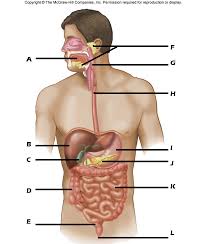
Which digestive organ is represented by the letter B?
Pancreas
Liver
Mouth
Small intestine
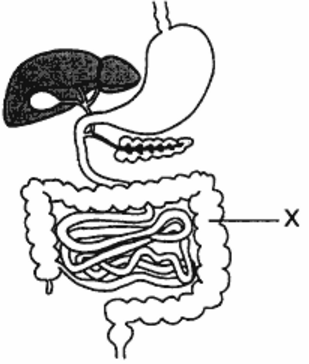
The diagram represents a portion of a human body. The principal function of structure X is to
produce amylase
produce pepsin
absorb water
absorb nutrients
The human alimentary canal consists of
mouth
liver
small intestine
oesophagus
stomach
What enzyme is found in saliva that starts digesting carbohydrates?
amylase
chyme
pepsin
bile
What chemically breaks down food into smaller molecules?
teeth
muscles of the stomach
enzymes
Where is the bile produced?
Liver
Pancreas
Salivary glands
Gall bladder
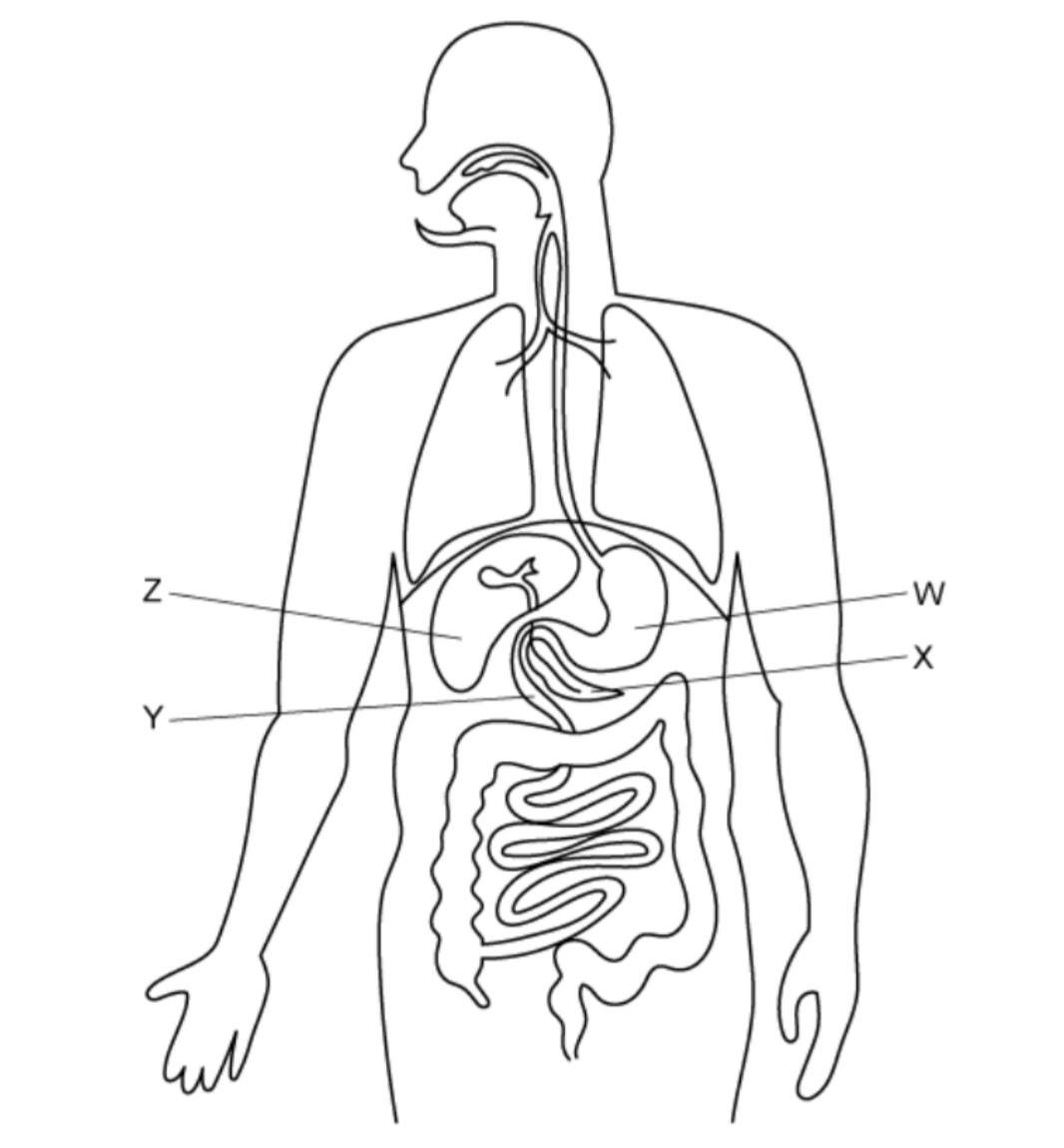
diagram show human digestive system. in which organs does digestion of protein take place
w and y
w only
x and z
y and x
Where does ingestion begin?
duodenum
stomach
mouth
colon
What is the acid produced in the stomach?
Sulphuric acid
Nitric acid
Hydrochloric acid
Acetic acid

A student was given three test tubes, each containing two food substances. The student was asked to identify the food substances present in each test tube. The table shows the results of the student’s tests.
Which conclusion is consistent with the results?
Egg white and maltose are present in test tube X.
Egg white and starch are present in test tube X.
Egg white and starch are present in test tube Z.
Starch and maltose are present in test tube Y.

Essential for making hemoglobin; deficiency lead to anemia; common in red meat.
Iron
Iodine
Copper
Zinc
Deficiency disease of Vitamin D
Scurvy
anemia
Goiter
Rickets
Deficiency disease of VitaminC
Scurvy
anemia
Goiter
Rickets
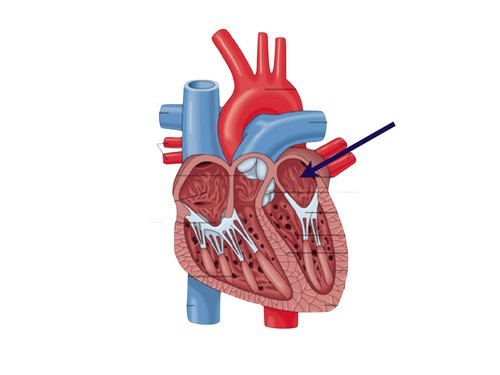
Which main type of white blood cells produces antibodies?
lymphocytes
phagocytes
High blood cholesterol, diabetes and hypertension can cause ....
coronary heart disease
constipation
anemia
leukemia

Structure of the red blood cell is special, it lack of nucleus. this condition provide ... .
more space for hemoglobin
more space for cytoplasm
less space for hemoglobin
less space for cytoplasm
What is the meaning of coronary heart disease (CHD)?
A disease of the damage septum in heart
A disease when you eat a lot of unhealthy food
A disease when your coronary arteries become narrower because the plaque buildup
A disease when you become lazy to do exercise
These are the risk factors for coronary heart disease EXCEPT


Which cell engulfs and digests bacteria/pathogens?
lymphocytes
phagocytes
platelets
These are one cell thick
arteries
capillaries
veins
Oxygen is transported in blood in the form of (a) .
In the lungs, carbon dioxide will diffuse out from the lungs capillaries into the alveolus.
While oxygen will diffuse into the lung capillaries from the alveolus.
True or False?
True
False
Respiring cells need a continuous supply of
(a)

The lungs are made up of many tiny air spaces called (a)
The bronchi pair branch into smaller and smaller tubes called the (a)
The walls of the alveolus and capillaries are (a) cell thick, allowing for ease of diffusion of gases.
What is the site of gas exchange?
alveoli
bronchus
nose
trachea
Which of the following are features of the alveoli that adapt them to gas exchange?
I. High surface area
II. Thin walls
III. Dry surfaces
I and II only
I only
II and III
I, II, and III
What substance do we need to breathe out?
Water
Carbon dioxide
Oxygen
Carbon monoxide
What is the name of the body's fuel?
Protein
Oxygen
Glucose
Carbon dioxide
What is produced by anaerobic respiration?
Lactic acid and energy
Carbon dioxide and energy
Lactic acid and oxygen
Oxygen and energy
Which of the following breaks down lactic acid in the body?
Glucose
Carbon dioxide
Oxygen
Water
What are the name of the blood vessels that surround the alveoli called?
(a)
In an experiment on breathing, the presence of carbon dioxide in inhaled and exhaled air is tested using _____________ ____________
(a)
What is the gas released during respiration in plants?
Carbon monoxide
Oxygen
Carbon dioxide
Nitrogen dioxide
The composition of the oxygen in inhaled air is
21%
16%
4%
0.04%
The composition of carbon dioxide in exhaled air is
79%
21%
4%
0.04%
What are the reactants of cellular respiration?
CO2 + H2O
H2O + O2
C6H12O6 + O2
C6H12O6 + H2O
The correct word equation for Anaerobic respiration is
glucose → lactic acid + oxygen
glucose → lactic acid (+ energy released)
glucose + oxygen → lactic acid (+ energy released)
lactic acid → energy released

What is X?
Trachea
Bronchus
Bronchiole
Epiglottis

Name structure Y.
TRACHEA
BRONCHUS
BRONCHIOLE
ALVEOLUS

