
 Worksheets
Biology Honors Midterm Review
Total questions: 125
Worksheet time: 9hrs 56mins


Which scientist first used the term cell after observing cork through a microscope?
Hooke
Jansen
Pastuer
Virchow
During the microscope labs, we viewed the slides using the 10x eyepiece. If we were using the 4x objective lenws, what is the total magnification power used?
40x
10x
100x
14x
Tasha is testing the effect of different colored lights on the growth of tomato plants. Which is the independent variable in her experiment?
light color
light temperature
growth of plants
number of tomatoes produced
Which of the following are autotrophs? (select ALL correct answers)
Pine tree
Goldfish
Mouse
Grass
What structure is found in a plant cell but not an animal cell?
Mitochondria
Cell wall
Ribosome
Cell membrane

In the hypotonic cell, what is happening?
The salt concentration is low and the water is leaving the cell
The salt concentration is high and the water is entering the cell
The salt concentration is low and salt is leaving the cell
The salt concentration is high and salt is entering the cell
Which of the following is a biotic factor in the environment?
Temperature
amount of bacteria
amount of shelter
amount of water
Which of the following is the correct order of organization of life from SMALLEST to LARGEST on Earth?
organism, ecosystem, biome, population, biosphere, community
organism, population, community, ecosystem, biome, biosphere
organism, biome, biosphere, population, ecosystem, community
organism, community, population, ecosystem, biome, biosphere
Plants release what during photosynthesis?
Carbon Dioxide
oxygen
Which organelle makes proteins?
Ribosome
Mitochondria
Homologous chromosomes are:
Identical
Similar, but may have different alleles from each parent.
A cell has 20 chromosomes. How many will it have after mitosis?
10
20

Which is a primary consumer?
The Squirrel
The cougar
The wolf

The plants in this picture are:
Producers
Consumers

When water moves across the semipermeable membrane, it is considered:
Osmosis
Active transport

What type of solution would make this plant cell low on water?
Hypertonic
Hypotonic
Which is true about passive transport in a cell?
It does not require energy
It requires ATP

What best describes the green and blue shapes?
Substrates
Enzymes

What would likely effect the population of snakes?
Less eagles
More chipmunks
Which is a way to remove carbon dioxide from the atmosphere?
More plants and more photosynthesis
More cows and cattle ranching

What would likely increase the population of foxes?
Less cougars
More deer
All of the following are true facts about enzymes EXCEPT
All living cells have enzymes.
Life would not be possible without enzymes.
Enzymes can speed chemical reactions by 100s to billions of times.
There are a few types of enzymes, but they each perform many types of reactions.
Catalysts will ______________ activation energy of a reaction.
decrease
double
freeze
increase
The long distance water movement, from roots up to leaves, of the water transport in large plants depends on one unique property of water. Water's unique property of ______________ allows water molecules to stick together so they can be pulled upward by the force of transpiration.
adhesion
cohesion
indention
retention
Living matter is at least sixty percent water. It makes sense, then, that cell membranes are made of phospholipids because
phosphates dissolve in water.
the bilayer acts to repels water.
the lipids form an insoluble barrier.
the lipids mix easily in a water environment.
According to the cell theory, where do cells come from?
cells can only come from other, pre-existing cells
cells are formed from the semi-conservative replication of DNA
cells can only arise from the complex chemical environment found in organic solutions
cells come from other cells and, on rare occasions, from the spontaneous action of inorganic enzymes

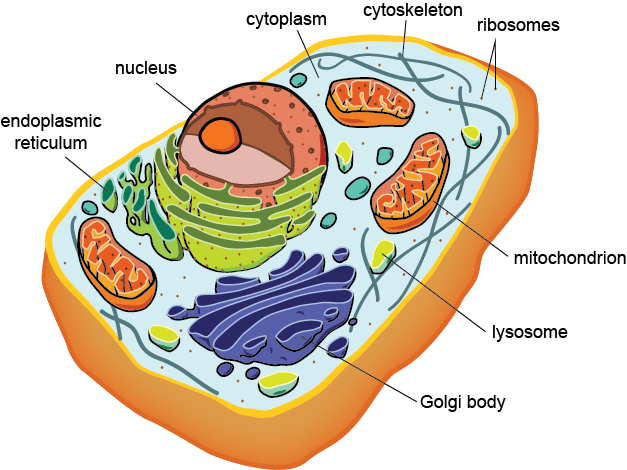
What type of cell is this?
animal
bacterial
fungal
plant

Where does the substrate bind to the enzyme?
Complex
Active Site
Product
Reactant
Which of these statements is true?
Enzymes help speed up reactions by increasing the activation energy needed.
One type of enzyme can bind to many different kinds of substrates
Enzymes are very specific to the substrates they bind with.
Enzymes are used up after they preform their tasks.


Which of the following is a factual conclusion that may be made from the data in the tables?
As the temperature increases in both air and water the speed of sound stays the same
As the temperature increases in both air and water the speed of sound decreases
As the temperature decreases in both air and water the speed of sound increases
As the temperature decreases in both air and water the speed of sound decreases


Selective permeability allows __________ molecules to pass through plasma membrane
some
all
The ____________ mosaic model describes the plasma membrane and its molecules
solid
fluid


*GLUCOSE


The majority of the cell membrane is made of which macromolecule?
Phospholipids
Carbs
Proteins
Nucleic acids
What are the products of cellular respiration?
Energy (ATP) + Water + Carbon Dioxide.
Water + Oxygen
Oxygen + Carbon Dioxide
Water + Energy (ATP)
Which is a reactant of photosynthesis?
oxygen gas
water
glucose
ATP
What are reactants of Photosynthesis?
Carbon Dioxide + Water
Glucose + Oxygen
Sunlight + Oxygen
ATP + Water
Cellular Respiration is aerobic because _____ is a reactant.
carbon dioxide
oxygen
glucose
water

The organelle picture is
Cell Wall
Mitochondrian
Cytoplasm
converts sunlight to energy
cytoskeleton
chloroplast
nucleus
ribosome

contains DNA and directs activities of the cell
chloroplast
chromosome
ribosome
nucleus

converts chemical energy into ATP
endoplasmic reticulum
golgi apparatus
vacuole
mitochondria



In which stage of mitosis are chromosomes lined up at the middle of the cell?
prophase
metaphase
anaphase
telophase

