
 Worksheets
Spring Final Review
Total questions: 154
Worksheet time: 2hrs 35mins

A flag blowing in the wind is an example of a ___ wave
transverse
longitudinal
surface

A wave on a lake is an example of a ___ wave.
Transverse
longitudinal
surface

A sound wave is an example of a ___ wave.
transverse
longitudinal
surface
A wave that has motion perpendicular to the energy is a ___ wave
transverse
longitudinal
surface
A wave that runs parallel to the direction of energy is a ___ wave
transverse
longitudinal
surface
A circular wave is a ___ wave
transverse
longitudinal
surface
Which type of wave requires a medium?
mechanical
electromagnetic
The speed of a wave is determined by the __
frequency
wavelength
medium
amplitude
A mirage or a pencil that looks broken in water is an example of ___
reflection
refraction
diffraction
The property of a wave that allows us to see objects is ___
reflection
refraction
diffraction
Waters behavior as it bends around your legs is due to the property ___.
reflection
refraction
diffraction

When these two waves combine, the amplitude will ___, because of ___ interference.
increase, constructive
decrease, constructive
increase, destructive
decrease, destructive
What type of electromagnetic wave allows us to see bone?
x ray
gamma
visible light
infrared
What type of electromagnetic wave does your cell phone use?
microwave
gamma ray
infrared
ultraviolet
What type of electromagnetic wave kills viruses?
infrared
visible light
ultraviolet
gamma
What type of electromagnetic wave kills cancer cells?
x-ray
gamma ray
radio
microwave
A loud sound (like yelling) is a result of a ___ amplitude.
high
low
As the frequency of a wave decreases, the wavelength ___.
increases
decreases
stays the same
8 waves pass through a point in 2 seconds. What is the period of the wave?
0.25 seconds
4 seconds
16 seconds
Mechanical waves travel the fastest through
solids
liquids
gasses
empty space (vacuum)
Intense light is a result of ___ energy
high
low
When the amplitude of a wave increases, the wavelength will ___.
increase
decrease
stay the same
The frequency of a wave is determined by the ___.
speed of the wave
wavelength of the wave
medium the wave is traveling through
source making the wave
Electromagnetic waves travel the fastest through ___.
solids
liquids
gases
empty space (vacuum)
Which of the following is the best explanation as to why x-rays are used for medical images?
x-rays have a long wavelength and a low frequency making them safe for healthy cells.
x-rays have a short wavelength and a low frequency allowing them to see through bone.
x-rays have a short wavelength and a high frequency making them able to go through tissue, but not bone.
x-rays have a long wavelength and a high frequency making it possible to travel long distances.
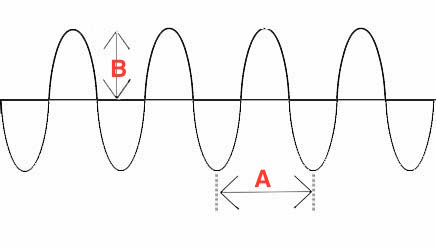
What property of this wave is represented by the letter "A"
amplitude
crest
trough
wavelength

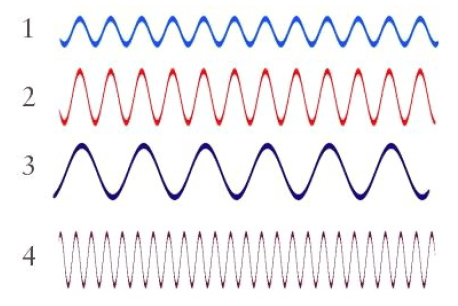


Which type of mechanical wave is shown in the picture?
surface
transverse
longitudinal
sound

The part of a longitudinal wave where the medium is pushed very close together is called a _____.
crest
trough
rarefaction
compression

The part of a longitudinal wave where the particles in the medium are pulled very far apart is called a _____.
crest
trough
compression
rarefaction

What type of energy is in this picture?
Kinetic
Elastic
Electromagnetic
Chemical

What kind of energy does fire posess?
Thermal energy
Electromagnetic
Nuclear energy
Mechanical energy

What kind of energy is in food?
Thermal energy
Nuclear energy
Chemical energy
Mechanical energy

Which form of energy is being released?
Electric
Light
Chemical
Electromagneitc
What form of energy do plants use to make sugar in the photosynthetic process?
heat energy
chemical energy
electromagnetic energy
kinetic energy

The formation of lightning during a thunderstorm is an example of what form of energy?
Electromagnetic energy
Nuclear energy
Mechanical energy
Electrical energy


Where does the rock have the greatest potential energy?
A
B
C
E
True or false. According to physics weightlifting is work.
true
false
Mark and Paul have the same mass. Mark ran up the stairs in 3.4 seconds. Paul ran up the stairs in 3.0 seconds. Who had the greater power?
Mark
Paul
Same
Mark and Paul have the same mass. Mark ran up the stairs in 3.4 seconds. Paul ran up the stairs in 3.0 seconds. Who did more work?
Mark
Paul
Same

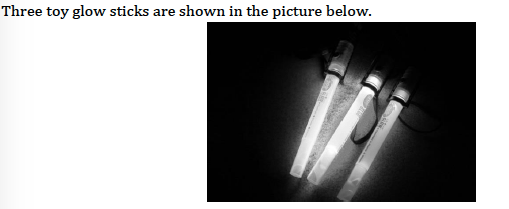
Energy caused by the movement in the particles of matter.
Nuclear energy
Sound energy
Light energy
Thermal energy

A star is a fusion engine. What type of energy runs a star?
Chemical
Nuclear
Electromagnetic
Kinetic

Which pie chart matches position D?


Without considering dissipated energy, which two positions have the same energy pie charts?
A and E
A and C
B and D
B and E

Which pie chart matches position E?


Mrs. Fritzel's arms are tired from carrying her 12 kg granddaughter 805 m. How much work did Mrs. Fritzel do while carrying her granddaughter?
9660 J
67 J
0 J
94,668 J
When Mrs. Fritzel picks up her 14 kg grandson "high in the air" , he moves a distance of about 2.16 m. How much work does it take to move Mrs. Fritzel's grandson?
0.15 J
0 J
30 J
296 J
A 75 kg student insisted that he could jump out the window. The window is 6 meters off the ground. How much potential energy would the student have?
450 J
4410 J
1350 J
26,460 J
A 70 kg student is running across the street at a speed of 4 m/s. How much energy does the student have?
280 J
1120 J
560 J
2744 J
A 1 kg toy car was pushed over the edge of a 1 m table. How much kinetic energy did the car have just before it hit the floor?
9.8 J
0.5 J
1 J
not enough information

When we kick a ball we use...
Chemical energy
Mechanical energy
Nuclear energy
Electrical energy
Robin jumping over a tree stump uses ___ energy
mechanical
thermal
electromagnetic
chemical
Energy is measured in _________.
joules
kilometers
newtons
meters per second
When you ride a playground swing, your potential energy is greatest at the _________ point.
highest
lowest
mid
far
As mass decreases, kinetic energy ________.
decreases
increases
stays the same
is not related
Lowering an object __________ its potential energy.
decreases
increases
does not change
doubles
The sum of potential and kinetic energy in a system is called the ________ energy.
mechanical
solar
chemical
total
Energy from the Sun and energy from food are just different forms of the same thing.
True
False
The kinetic energy of an object increases as its ____ increases.
gravitational energy
heat energy
height
velocity
Increasing the speed of an object ____ its potential energy.
changes
decreases
does not affect
increases
A bus engine transfers chemical potential energy into ____ so that the bus moves.
thermal energy
electrical energy
gravitational potential energy
kinetic energy
According to the law of conservation of energy, the total amount of energy in the universe ____.
remains constant
increases
changes constantly
decreases
Stored energy is also known as ______ energy.
kinetic
potential
mechanical
none of these
Energy stored by things attracted to each other by the force of gravity is called _________ potential energy.
gravitational
elastic
mechanical
none of these
In order for work to be done on an object, the object must ______.
have a force applied in any direction
move in a direction opposite of the applied force
move in the direction of the applied force
none of these

What location on the coaster has the greatest potential energy
W
X
Y
Z

Which location has the least potential energy but the most kinetic energy.
W
X
Y
Z
A ball has 100 J of potential energy when it is on a shelf. What happens to the potential energy and the kinetic energy as the ball falls, and find the amount of kinetic energy the ball has at the instant it hits the floor?
Greater than 100 Joules because it is speeding up
100 Joules if you neglect the energy lost due to friction
Less than 100 Joules because the energy is lost
none of these

Which of the following transforms energy from uranium atoms into electrical energy?
magnetic fields
solar panels
nuclear fission
satellite dish
A dam uses ___ energy to supply us electricity.
mechanical
nuclear
electromagnetic
kinetic

There is the same amount of energy today as when the world began.
True
False

Which of the following nonrenewable energy resources is NOT a fossil fuel?
Natural gas
Coal
Oil
Nuclear
Which is NOT a form of dissipated energy?
sound
light
heat
movement
What are the units for power?
joules
watts
kilograms
newton*meter
What units measure weight?
newtons
kilograms
m/s/s

An object at rest stays at rest because...
All forces acting on it are balanced
Gravity is pulling it down
It has inertia
No unbalanced forces are acting on it
An object will accelerate if...
an unbalanced force is acting on it
balanced forces are acting on it
a force is being applied
The force from a surface that prevents an object from falling is the...
normal force
gravitational force
friction force
tension force
The force that acts against an object moving through the air is...
friction
air resistance
gravity
normal

What is the net force acting on this box?
40 N up
25 N down
15 N up
65 N down

What is the net force acting on this box?
5 N
0 N
11 N
5 N left
6 N up
Which object is accelerating?


Inertia is directly related to...
acceleration
mass
mass and speed
speed
If a car is traveling to the left, the friction force is ____.
also to the left
to the right
Terminal velocity occurs when air resistance is ____ the gravitational force.
greater than
equal to
less than
True or False: Terminal velocity is the same for all objects.
true
false
True or False: All objects fall with the same acceleration.
True
False
Why do some objects fall faster than other objects?
Amount of air resistance
Amount of mass
Amount of weight
Two planets have the same mass. Which one has the smaller gravitational constant?
The one with the smaller radius
The one with the greater radius
The one with the smaller mass
The one with the greater mass
When the mass of an object increases and the force is constant, what happens to the acceleration?
acceleration decreases
acceleration increases
acceleration remains constant
When the force acting on a mass increases, what happens to the acceleration?
acceleration increases
acceleration decreases
acceleration remains constant
Mary (65 kg) and Jill (60 kg) are jogging down the street at 2.5 m/s. Which person has greater momentum?
Mary
Jill
same
not enough info
Two 30 kg dogs are running through the house which has the greater momentum?
The faster dog
The slower dog
same momentum
can't tell
Two football players are running at each other. One has a mass of 115 kg and a speed of 4.5 m/s to the right. The other has a mass of 130 kg and a speed of 3.0 m/s to the left. What is the momentum of the players after the collision?
128 kg*m/s right
128 kg*m/s left
908 kg*m/s right
908 kg*m/s left
A collision that does not have a loss in energy or momentum is a(n) ___ collision.
elastic
inelastic
Frank travels 55 km in 0.25 hrs. How fast is Frank moving?
220 km/hr
13.75 km/hr
0.0045 km/hr

What is the acceleration between 0 and 20 seconds?
20 m/s
2.0 m/s/s
-20 m/s
-2.0 m/s/s

Which velocity-time graph matches the position-time graph below?


Which position-time graph matches the velocity-time graph?


Calculate the slope between 30 and 40 seconds.
5 m/s/s
-5 m/s/s
10 m/s/s
Which scenario or scenarios demonstrate acceleration? (Mark all that apply)
A bicycle skidding to a stop
A runner taking off from a stop.
A car taking a corner at a constant speed.
none of these

What is the velocity between 12 and 16 seconds?
-10 m/s
-2.5 m/s
2.5 m/s
Sam jumped from a plane. His acceleration was -9.8m/s/s. He hit the ground in 30 seconds. What was his velocity just before he hit the ground?
294 m/s
0.32 m/s
-294 m/s
3.1 m/s

Calculate the slope between 20 and 30 seconds.
0 m/s/s
-0.5 m/s/s
10 m/s/s
Sally is on a train moving at 160 km/hr. If she is on the train for 0.65 hours, how far has she travelled?
246 km
104 km
0.0041 km
An escalator is moving up at 1.0 mi/hr. Jared is walking up the escalator at 2.0 mi/hr. What is Jared's resultant (actual) velocity?
1.0 mi/hr down
2.0 mi/hr up
2.24 mi/hr up
3.0 mi/hr up
A car traveling at a speed of 20.0 m/s increases its speed to 30.0 m/s in 5.0 seconds. What is the acceleration of the car?
-2 m/s/s
2 m/s/s
-0.5 m/s/s
0.5 m/s/s

Where is the graph showing a decrease in speed?
0-20 seconds
20-30 seconds
30-40 seconds
40-50 seconds
Mack was skating to the park. He went 1.5 mi north, west for 0.75 mi, south 3 mi, and east 1.25 mi. What is Mack's total displacement?
1.58 mi NW
2.5 mi NE
1.58 SE
1.75 SW

Which direction is the object traveling between 12 and 16 seconds?
forward
backward

