
 Worksheets
untitled
Total questions: 151
Worksheet time: 2hrs 23mins

What is the reading of the vernier caliper shown above?
0.28 cm
0.82 cm
0.28 mm
0.82 mm

What is the reading of the micrometer shown below?
7.17 cm
6.67 mm
5.17 mm
6.50 mm

A
B
C
D
A tunnel has a length of 50 km. A car takes 20 min to travel between the two ends of the tunnel. What is the average speed of the car?
2.5 km / h
16.6 km / h
150 km / h
1000 km / h

pole 1 and pole 2.
pole 2 and pole 3.
pole 3 and pole 4.
pole 4 and pole 5.

A
B
C
D

A
B
C
D

Which speed/ time graph applies to an object at rest?
A
B
C
D
A small steel ball is dropped from a low balcony. Ignoring air resistance, which statement describes its motion?
It falls with decreasing acceleration.
It falls with constant acceleration.
It falls with decreasing speed.
It falls with constant speed.

10 m
20 m
100 m
200 m
A resultant force of 4.0N acts on an object of mass 0.50 kg for 3.0 seconds.
What is the change in velocity caused by this force?
4.0 m / s
6.0 m / s
12 m / s
24 m / s
Which property of an object cannot be changed by a force?
mass
motion
shape
size
Which are the units for acceleration
m/s
m/s2
s/m
m/s3
The cyclist accelerates at 1.4 m/s2.
The mass of the cyclist and bicycle is 60 kg.
Calculate the resultant force.
(a)


The unit of force is...
m/s
m
N
kg
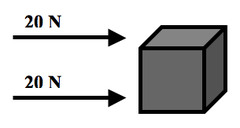
What is the resultant force?
40 N, Left
0 N, Balanced
400 N, Right
40 N, Right

What is the resultant force?
400 N, Up
400 N, Down
800 N, Up
800 N, Down

What is the resultant force?
17 N, Left
6N, Right
11N , Left
12N, Left

What is the resultant force?
40N, Left
40N, Right
0N, Balanced
75N, Right
What is the efficiency of a solar cell if 1000 J of solar energy hits the cell and 200 J are converted into electrical energy?
10%
20%
30%
40%
What is electrical energy converted into when a drill is used?
Kinetic energy
Sound
Heat
All of the above
What is the correct equation for kinetic energy
1/2 x m x v2
m x v2
1 / 2 x v x m2
What is energy?
moving energy
stored energy
renewable energy
The ability to do work.
What is potential energy?
moving energy
stored energy
renewable energy
non renewable energy
What is kinetic energy?
moving energy
potential energy
stored energy
renewable energy

A
B
C
D
What is the unit for wavelength?
(a)
What is the unit for mass?
kg
N
ms-2
W
What is the S.I. unit for time?
century
s
N
J
What is the S.I. unit for distance?
J
m
W
s
Seconds are the S.I. units for ...
distance
velocity
speed
time
What is the unit for speed?
N
ms-1
ms-2
seconds
What is the unit for acceleration?
ms-2
ms-1
Nm
Nm-1
What are the units for Δv?
W
J
ms-2
ms-1
What is the unit for force?
Watt
Newton
kilogram
Henry
What is the unit for weight?
kilogram
Newton
torque
kilograms per second.
What are the units for the spring constant, k, from Hooke's Law
m
N
Nm2
Nm-1
What is the unit for spring extension, x, in Hooke's Law?
Newtons
kilograms
metres
sparkies
What is the unit for centripetal acceleration, ac ?
ms-1
ms-2
rad s-2
Newton
ms-1 is the unit for ...
acceleration
velocity
momentum
force
What is the unit for torque, τ?
Neutrons
Newtons
Newtons per metre
Newton metres
What is the unit for kinetic energy, Ek?
Watt
Joule
Volt
Newton
Joule is the unit for...
Work
Kinetic Energy
Elastic Potential Energy
Gravitational Potential Energy
What is the unit for work, w?
Newton
Torque
Joule
metres per second
What is the unit for ΔEp?
Watt
Newton
Energy
Joule
What is the unit for power, P?
Watt
Volt
Ampere
Joule
What is the unit for momentum, ρ?
Moments
kg ms-1
kg ms-2
inertia

A
B
C
D

A
B
C
D

A
B
C
D

A
B
C
D

A
B
C
D

A
B
C
D

A
B
C
D

A
B
C
D

A
B
C
D

A
B
C
D

A
B
C
D

A
B
C
D
select two correct answers that show:
Average speed?
s = d/t
v = s/t
speed = distance/time
velocity = speed/time
Acceleration?
a = (v-u)/t
d = s/t
v = s/t
F= m/a
v = Δϰ/Δt?
average speed
force needed
average velocity
acceleration
Which formulae shows the relationship between Force, mass and acceleration?
W = mxg
F = mxa
p=mxv
ρ=mxV
Which formulae shows the rate in change of mometum?
F= mxa
F= mxv - mxu / t
F= mxg
F= Fxχ
Formula for Power?
ΔE = Fxd
KE = 1/2mxv2
W = ΔE/t
GPE = mxgxh
ΔE = Fxd?
work = force x distance
Power = Work/ time
Pressure = height x density x gravity
Kinetic energy = 1/2 mass x velocity²
Which is the correct formula for energy efficiency?
Efficiency = total input energy / useful energy output x 100
Efficiency = total input energy / useful energy output / 100
Efficiency = total input energy / useful energy output / 100
Efficiency = useful energy output / total input energy. x100
Select the two that show Refractive index of a material
Refractive index = speed of light in vacuum x speed of light in material
Refractive index = speed of light in vacuum / speed of light in material
n = v1 / v2
n = v1 x v2
Select the two that show the relationship between wave speed, frequency and wavelength
c = f x λ
Wave speed = frequency x wavelength
Wave speed = frequency / wavelength
c = f / λ
Two formulae that show the relationship between Current, charge and time
Current = charge x time
current = charge / time
I = Q x t
I = Q / t
Which will calculate the Power (W) in a circuit?
V = I x R
P = I x V
ΔE = I x V x t
I = Q / t
Which is the correct formula for Energy Transferred in a circuit?
ΔE = I x V x t
ΔE = I / V x t
ΔE = I x V / t
ΔE = I x V

Is this..........
Alpha decay
Beta decay

Is this ......
Alpha decay
Beta decay
Which formulae shows Hooke's Law?
F= mg
F= ma
F = kx
GPE = mgh
What does the relationship between mass, gravity and height show?
Resistance in a circuit
Current in a circuit
Gravitational Potential Energy
Extension of a spring
What is the unit of Work?
Newtons
Joules
Metres
Kg
What is the relationship between moment, force and distance? SELECT TWO CORRECT ANSWERS
M = F x d
M = F / d
d = M x F
F = M/d
What do ohms measure?
Current
potential difference
resistance
power
A resultant force of 4.0N acts on an object of mass 0.50 kg for 3.0 seconds.
What is the change in velocity caused by this force?
4.0 m / s
6.0 m / s
12 m / s
24 m / s
Which property of an object cannot be changed by a force?
mass
motion
shape
size
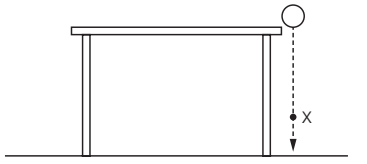
A ball is dropped from a table-top. Air resistance may be ignored.
Which row describes the velocity and the acceleration of the ball at point X
acceleration = constant; velocity = constant
acceleration = constant; velocity = increasing
acceleration = increasing; velocity = constant
acceleration = increasing; velocity = increasing

When the velocity of the car is constant, the force of friction on it is
zero
greater than the driving force
smaller than the driving force
the same size as the driving force
Which are the units for acceleration
m/s
m/s2
s/m
m/s3
The cyclist accelerates at 1.4 m/s2.
The mass of the cyclist and bicycle is 60 kg.
Calculate the resultant force.
(a)

The unit of force is...
m/s
m
N
kg
What is the resultant force?
40 N, Left
0 N, Balanced
400 N, Right
40 N, Right
What is the resultant force?
400 N, Up
400 N, Down
800 N, Up
800 N, Down
What is the resultant force?
17 N, Left
6N, Right
11N , Left
12N, Left
What is the resultant force?
40N, Left
40N, Right
0N, Balanced
75N, Right
A
B
C
D
A tunnel has a length of 50 km. A car takes 20 min to travel between the two ends of the tunnel. What is the average speed of the car?
2.5 km / h
16.6 km / h
150 km / h
1000 km / h
pole 1 and pole 2.
pole 2 and pole 3.
pole 3 and pole 4.
pole 4 and pole 5.
A
B
C
D
A
B
C
D
A small steel ball is dropped from a low balcony. Ignoring air resistance, which statement describes its motion?
It falls with decreasing acceleration.
It falls with constant acceleration.
It falls with decreasing speed.
It falls with constant speed.
Which speed/ time graph applies to an object at rest?
A
B
C
D

A
B
C
D
10 m
20 m
100 m
200 m

150 m
300 m
600 m
1200 m

4.0 s
6.0 s
10 s
16 s

A
B
C
D

A
B
C
D

A
B
C
D

A
B
C
D

A
B
C
D

A
B
C
D

A
B
C
D

A
B
C
D

A
B
C
D


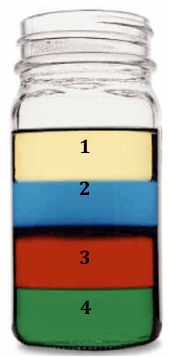
What is the correct equation for calculating the VELOCITY?
d = v / t
v = d / t
d x v = t
v = t / d
Which of the following statements is NOT true:
Speed has both direction and quantity
Speed is a vector
Velocity has direction and quantity
Speed has only quantity
What is the correct unit for velocity:
m/s
m/s^2
m/s/s
km/h/h

Describe the motion at point A:
Negative acceleration
Not moving
Constant speed
Positive acceleration

Describe the motion at point B:
Positive acceleration
Constant speed
Not moving
Negative acceleration

Describe the motion at point C:
Not moving
Acceleration
Constant speed
Deceleration
If an object travels 10 meters in 5 seconds, what is its velocity?
2 m/s
0.5 m/s
50 m/s
20 m/s
What is the distance travelled in the following speed-time graph:
80 m
80 km
160 m
160 km

Speed-time graph
Velocity-time graph
Distance-time graph
Acceleration graph

If you calculated the speed in this graph, what would the units be?
mi/s
km/h
mph
m/s
m/s/s

How do we calculate the DISTANCE covered in a SPEED-TIME graph?
By calculating the area under the graph
By dividing the distance at that point by the time
By looking at a point on where the graph intersects the y-axis
By looking at a point on where the graph intersects the x-axis

How do we calculate the SPEED in a DISTANCE-TIME graph at any point?
By looking at a point on where the graph intersects the y-axis
By calculating the area under the graph
By looking at a point on where the graph intersects the x-axis
By dividing the distance at that point by the time

