
 Worksheets
7th Grade Final Review
Total questions: 46
Worksheet time: 41mins
Name
Class
Date
1.

Name the boundary
a)
convergent boundary
b)
divergent boundary
c)
transform boundary
d)
sergent boundary
2.
Why is coal not a mineral?
a)
It's not a solid
b)
It is man-made
c)
It is not inorganic
d)
It is made of carbon
3.
What process is used to form sedimentary rocks?
a)
Lava cools and hardens to form a rock.
b)
Bits of sand and gravel form layers that turn into rock from pressure.
c)
Extreme heat and pressure from inside the Earth turn rocks into new rocks.
d)
Magma trapped under the Earth's surface cools and solidifies.
4.
Transform boundaries are most likely to produce what phenomenon?
a)
volcanoes
b)
deep sea trenches
c)
underwater mountain ranges
d)
earthquakes
5.
What is Pangaea?
a)
the name of a German scientist
b)
the name of the super-continent that existed millions of years ago
c)
another name for continental drift
d)
the name of an ancient fossil
6.
Which layer of the Earth is the only liquid layer?
a)
Outer Core
b)
Inner Core
c)
Mantle
d)
Lithosphere
7.
The core is mostly made up mostly of which elements?
a)
Oxygen and Silicon
b)
Silicon and Magnesium
c)
Nickel and Iron
d)
Iron and Magnesium
8.
Define Waxing
a)
Moon is increasing and light part appears to be growing
b)
Completely illuminated
c)
dark side is facing earth
d)
Moon is decreasing and light part appears to be shrinking
9.

Name the moon phase
a)
Waxing Gibbous
b)
Waxing Crescent
c)
Waning Crescent
d)
Waning Gibbous
10.
What is the meaning of conduction?
a)
when heat transfers from objects that are not touching
b)
heat rise
c)
cold fall
d)
when heat transfers from objects that are touching
11.
What kind of heat transfer is happening when the sun heats your body?
a)
conduction
b)
convection
c)
density
d)
radiation
12.
Hot air rises.
a)
true
b)
false
13.
Heat energy traveling through space is an example of _____.
a)
convection
b)
density
c)
radiation
d)
conduction
14.

This type of heat transfer causes movement of tectonic plates.
a)
conduction
b)
convection
c)
radiation
d)
Insolation
15.
A naturally occurring, inorganic solid with a crystal structure and a definite chemical composition is referring to
a)
density
b)
rock
c)
mineral
d)
non silicate mineral
16.
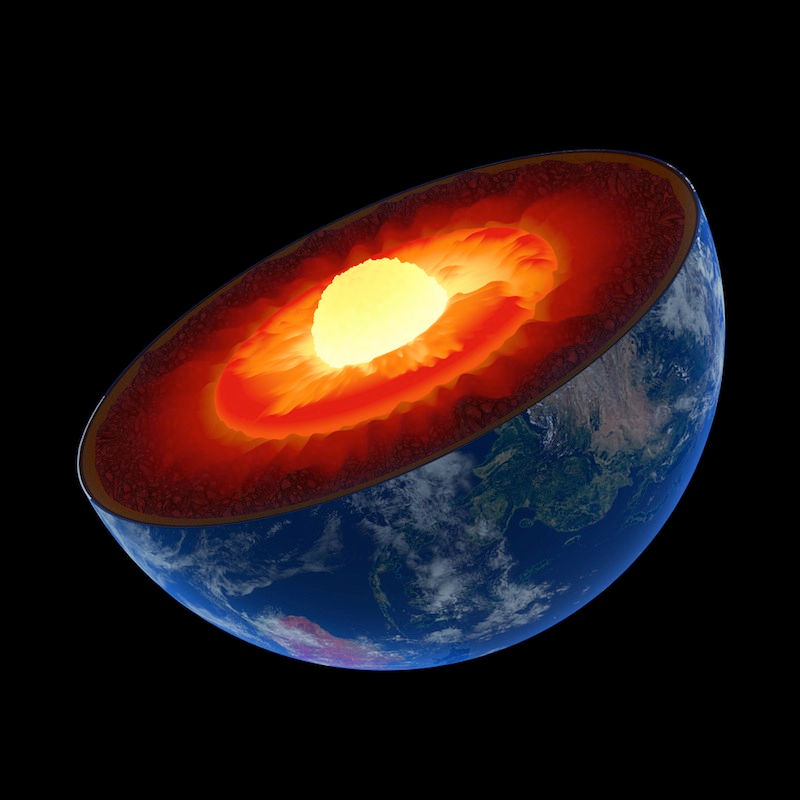
This is the layer that the plates float or move on?
a)
Mesosphere
b)
Asthenosphere
c)
Lithosphere
d)
Core
17.

What causes the seasons to change?
a)
The warming and cooling of Earth's core.
b)
The distance from the sun.
c)
Earth's tilt in relation to the sun.
d)
Earth's rotation on its axis.
18.
One rotation of Earth is equal to
a)
a day.
b)
a year.
19.
What is the longest day of the year?
a)
winter solstice
b)
summer solstice
c)
fall equinox
d)
spring equinox
20.
Equinox means -
a)
Equal light
b)
Longest day
c)
Shortest day
d)
Tilt
21.
What does the strength of gravity between two objects depend upon?
a)
Mass & distance
b)
Mass & weight
c)
Gravity & inertia
d)
Inertia & mass
22.
What keeps the moon in orbit around Earth?
a)
Mass & distance
b)
Mass & weight
c)
Inertia & gravity
d)
Gravity & mass
23.
What are the daily conditions of temperature, humidity and precipitation?
a)
weather
b)
climate
24.
What instrument measure air pressure?
a)
barometer
b)
thermometer
25.
This gas makes up 21% of the atmosphere
a)
ozone
b)
oxygen
c)
nitrogen
d)
water vapor
26.
This layer is where weather occurs.
a)
troposphere
b)
thermosphere
c)
exosphere
d)
stratosphere
27.
The coldest layer of the atmosphere, where meteors break apart is the:
a)
exosphere
b)
mesosphere
c)
stratosphere
d)
thermosphere
28.

This is the symbol for a...
a)
Occluded Front
b)
Stationary Front
c)
Warm Front
d)
Cold Front
29.

An anemometer is used to measure...
a)
air pressure
b)
humidity
c)
precipitation
d)
wind speed
30.
Humidity is the...
a)
Amount of Water Vapor in the Air
b)
Amount of Wind in the Air
c)
Amount of Precipitation in the Air
d)
Amount of Pressure in the Air
31.
What kind of weather is usually associated with a low pressure system?
a)
Fair weather; few clouds
b)
Precipitation (rain, snow, etc.) and clouds
32.
_____ heats slowly and _____ cools slowly.
a)
Water, water
b)
Land, water
c)
Land, land
d)
Water, land
33.
What is the name of the steady winds that flow from west to east between latitudes 30*N and 60*N and 30*S and 60*S?
a)
trade winds
b)
land breeze
c)
westerlies
d)
jet stream
34.
Which statement correctly defines wind?
a)
Wind is the movement of air from areas of low pressure to areas of high pressure
b)
Wind is the movement of air to a colder area in the atmosphere.
c)
Wind is the movement of air from areas of high pressure to areas of low pressure.
d)
Wind is the movement of air pushed around and bouncing off Earth's surface.
35.
Which global winds have the greatest impact on the weather in the US?
a)
trade winds
b)
prevailing westerlies
c)
doldrums
d)
polar easterlies
36.
rapidly moving cold air mass runs into a warm air mass the cold air slides under the warm air. This is called a .....
a)
cold front
b)
warm front
c)
stationary front
37.
______ is the average pattern for weather over a long period of time.
a)
climate
b)
weather
c)
forecast
d)
sunlight
38.
The temperature at which water vapor condenses is the
a)
relative humidity
b)
humidity
c)
freezing point
d)
dew point
39.
Which climate zone has moderate temperatures and rainfall year round? We live in this latitude zone.
a)
tropical
b)
temperate
c)
polar
40.
Warm air mass that does not carry water:
a)
continental tropical
b)
continental polar
c)
maritime tropical
d)
maritime polar
41.
This type of front results in the same weather for several days
a)
warm
b)
cold
c)
stationary
d)
occluded
42.
Which type of rock forms when lava cools on Earth's surface?
a)
Intrusive Igneous
b)
Extrusive Igneous
c)
Sedimentary Intrusive
d)
All of the above
43.
Index fossils help determine relative age through correlating rock layers.
a)
True
b)
False
44.

Scientist think the Earth is ___ years old.
a)
400 million
b)
45,000
c)
4.6 million
d)
4.6 billion
45.
Thermal energy ALWAYS moves from _____ to _____.
a)
solid to liquid
b)
ice to water
c)
hot to cold
d)
solid to gas
46.
Humans have been on Earth for about
a)
20,000 years.
b)
1.2 million years.
c)
5 million years.
d)
200,000 years.
100 %

