wayground logo

Free Printable Worksheets

Font size

S
M
L
XL
Worksheets

Unit 2 Space Science

Total questions: 50

Worksheet time: 35mins

Name
Class
Date
1.
Which season is taking place in the Northern Hemisphere in Position 3?
a)
Winter
b)
Spring
c)
Summer
d)
Fall
2.

Which season is taking place in the Southern Hemisphere in Position 3?

a)

Winter

b)

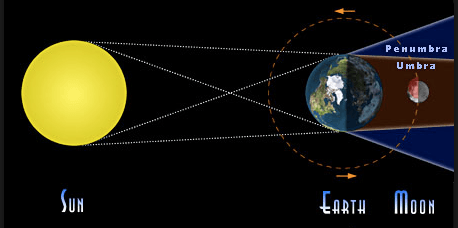
Spring

c)

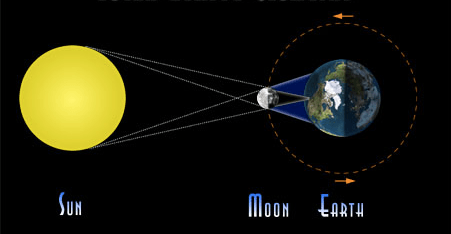
Summer

d)

Fall

3.
Which season is taking place in the Northern Hemisphere in Position 4?
a)
Winter
b)
Spring
c)
Summer
d)
Fall
4.
The Earth's axis is tilted _____ degrees.
a)
23.5
b)
25.3
c)
30.2
d)
24
5.
At position A, which hemisphere would have summer?
a)
Northern hemisphere
b)
Southern hemisphere
6.
What happens when the area in which you live tilts away from the sun?
a)
It is summer.
b)
It is spring.
c)
It is winter.
d)
It is fall.
7.
The term equinox means....
a)
equal amount of day light and equal amount of night
b)
Equal amount of winter and summer
c)
Equal amounts of hot dogs for everyone
d)
The longest day of the year
8.
What do June 21 and December 21 have in common?
a)
equinox dates
b)
the moon is full
c)
solstice dates
d)
the cold fronts blow in
9.
What is the longest day of the year?
a)
winter solstice
b)
summer solstice
c)
fall equinox
d)
spring equinox
10.

Why do we experience the changing of the season on the earth?

a)

distance from the sun

b)

rotation of the earth

c)

change in solar output

d)

tilt of the earth's axis

11.
Why is the Equator warmest?
a)
Because it is closest to the sun.
b)
Because it receives the most direct sunlight
c)
Because no clouds form here.
d)
Because it is far from the sun
12.
Which season is taking place in the Southern Hemisphere in Position 1?
a)
Winter
b)
Spring
c)
Summer
d)
Fall
13.
Which season is taking place in the Northern Hemisphere in Position 1?
a)
Winter
b)
Spring
c)
Summer
d)
Fall
14.
Which season is taking place in the Northern Hemisphere in Position 2?
a)
Winter
b)
Spring
c)
Summer
d)
Fall
15.
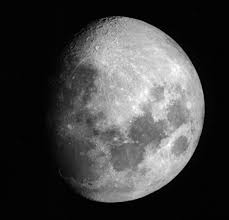
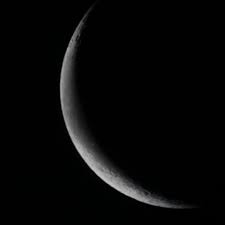
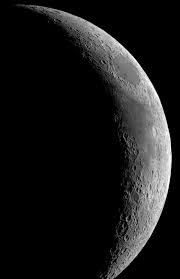
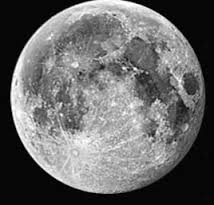
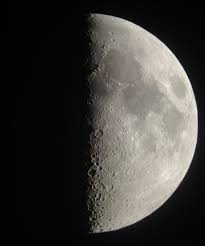
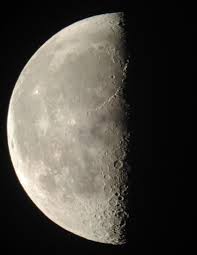
Name the moon phase
a)
waning crescent
b)
waxing crescent
c)
waning gibbous
d)
waxing gibbous
16.
Name the moon phase
a)
waning crescent
b)
waxing crescent
c)
waning gibbous
d)
waxing gibbous
17.
Name the moon phase
a)
waning crescent
b)
waxing crescent
c)
waning gibbous
d)
waxing gibbous
18.
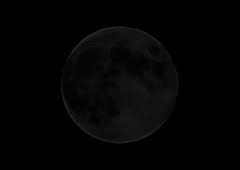
Name the moon phase
a)
First Quarter
b)
Last Quarter
c)
New Moon
d)
Full Moon
19.
Name the moon phase
a)
First Quarter
b)
Last Quarter
c)
New Moon
d)
Full Moon
20.
Name the moon phase
a)
First Quarter
b)
Last Quarter
c)
New Moon
d)
Full Moon
21.
Name the moon phase
a)
First Quarter
b)
Last Quarter
c)
New Moon
d)
Full Moon
22.
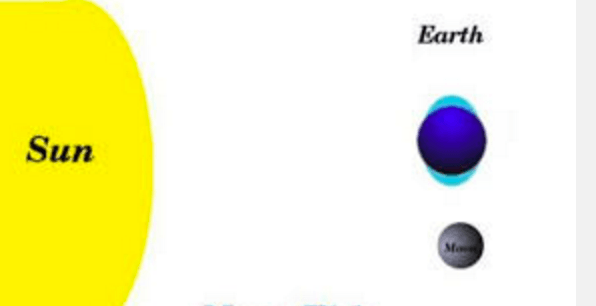
Which moon phase is shown in this diagram?
a)
new moon
b)
1st quarter
c)
full moon
d)
last quarter/3rd quarter
23.
What phase is this?
a)
Waning Gibbous Moon
b)
Waxing Gibbous Moon
c)
Waning Crescent Moon
d)
Waxing Crescent Moon
24.
What phase is this?
a)
First Quarter Moon
b)
Last Quarter Moon
c)
Waxing Gibbous Moon
d)
Waning Gibbous Moon
25.
What phase is this?
a)
Full Moon
b)
First Quarter Moon
c)
Last Quarter Moon
d)
New Moon
26.

Name the phase of the moon for letter e

a)

First Quarter

b)

Last Quarter

c)

Waxing Gibbous

d)

Waning Gibbous

27.

Name the phase of the moon for letter f

a)

Waning Gibbous

b)

Waxing Gibbous

c)

Waning Crescent

d)

Waxing Crescent

28.
Name the moon phase
a)
waning crescent
b)
waxing crescent
c)
waning gibbous
d)
waxing gibbous
29.
What is the darkest inner part of the shadow cone called, where a total eclipse can be viewed.
a)
Total
b)
Umbra
c)
Penumbra
30.
What is the larger outer lighter part of the shadow cone called, where a partial eclipse can be viewed?
a)
Partial
b)
Umbra
c)
Penumbra
31.
Which type of eclipse occurs when the Moon comes directly between Earth and the Sun?
a)
Lunar eclipse
b)
Solar eclipse
32.
Which type of eclipse occurs when the Earth comes directly between the Sun and Moon?
a)
Lunar eclipse
b)
Solar eclipse
33.

What does number 1 in the image to the left represent?

a)

Umbra

b)

Penumbra

34.
What does number 2 in the image to the left represent?
a)
Umbra
b)
Penumbra
35.
Which type of eclipse is shown in this picture?
a)
Solar Eclipse
b)
Orbit
c)
Lunar Eclipse
d)
Total Eclipse
36.
Which type of eclipse is shown in the diagram?
a)
Solar Eclipse
b)
Lunar Eclipse
c)
Total Eclipse
d)
Partial Eclipse
37.

Which planet is the only planet that is less dense than water?

a)

Earth

b)

Jupiter

c)

Saturn

d)

Mercury

38.

Which of the following objects rotate and/or revolve counter-clockwise? Pick all that are correct.

a)

Earth

b)

Sun

c)

Moon

d)

Uranus

39.

Which of the following objects has less gravity than the Earth?

a)

Moon

b)

Sun

c)

Saturn

d)

Neptune

40.

Which of the following planets are classified as outer planets?

a)

Mercury, Mars, Venus and Earth

b)

Saturn, Neptune, Jupiter and Uranus

41.

Which of the following facts is not true about the inner planets?

a)

They are less dense than water.

b)

They are made of rock.

c)

They have only a few moons.

d)

They are small compared to the outer planets.

42.

List the planets in order from the closest to the sun to the farthest away.

a)

Mars, Venus, Earth, Mercury, Jupiter, Saturn, Uranus, Neptune

b)

Mercury, Venus, Earth, Mars, Jupiter, Saturn, Neptune, Uranus

c)

Mercury, Venus, Earth, Mars, Jupiter, Saturn, Uranus, Neptune

d)

Mercury, Earth, Venus, Mars, Saturn, Jupiter, Uranus, Neptune

43.

Which of the following planets is smaller than Earth?

a)

Jupiter

b)

Uranus

c)

Venus

d)

Neptune

44.

How long does it take the Earth to rotate once?

a)

One day

b)

One week

c)

One month

d)

One year

45.

How long does it take the Earth to revolve once?

a)

One day

b)

One week

c)

One month

d)

One year

46.

How long does it take the Moon to revolve once?

a)

One day

b)

One week

c)

One month

d)

One year

47.

How long does it take the moon to go through one quarter of its phases?

a)

One day

b)

One week

c)

One month

d)

One year

48.

Which of the following places these objects in order from biggest to smallest?

a)

Planet, Moon, Star

b)

Moon, Planet, Star

c)

Star, Planet, Moon

d)

Star, Moon, Planet

49.

What would happen to seasons if Earth's axis was not tilted (0O)?

a)

The seasons would be more extreme.

b)

The seasons would be the same as they are now.

c)

There would not be seasons.

50.

Which of the following places these objects in order from biggest to smallest?

a)

Universe, Galaxy, Solar System

b)

Galaxy, Solar System, Universe

c)

Universe, Solar System, Galaxy

d)

Solar System, Universe, Galaxy