
 Worksheets
Evolution
Total questions: 40
Worksheet time: 30mins
Name
Class
Date
1.
What is a change in an organism that allows for it to survive in its environment?
a)
homologous
b)
vestigial
c)
variation
d)
adaptation
2.
When all of the organisms of a species have died it is called
a)
evolution
b)
extinction
c)
adaptation
d)
natural selection
3.
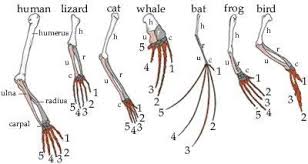
What is this an example of?
a)
vestigial structures
b)
embryology
c)
homologous structures
d)
fossil record
4.

Which layer is the oldest?
a)
1
b)
2
c)
3
d)
4
5.
When the DNA of an organism is altered it is referred to as…
a)
Mutation
b)
Gene Flow
c)
Genetic Drift
d)
Sexual Selection
6.
The cause of artificial selection is…
a)
The environment
b)
Humans
c)
Mutation
d)
Gene Flow
7.
Which of the following is NOT an example of natural selection?
a)
People selectively breeding hamsters.
b)
Insect populations developing resistance to certain pesticides.
c)
Bacteria becoming resistant to antibiotics.
d)
Male birds of certain species developing colorful feathers to attract female mates.
8.
Which term refers to the process by which individuals that are better suited to the environment survive and reproduce therefore passing down their genes to their offspring?
a)
Evolution
b)
Variation
c)
Adaptation
d)
Natural Selection
9.
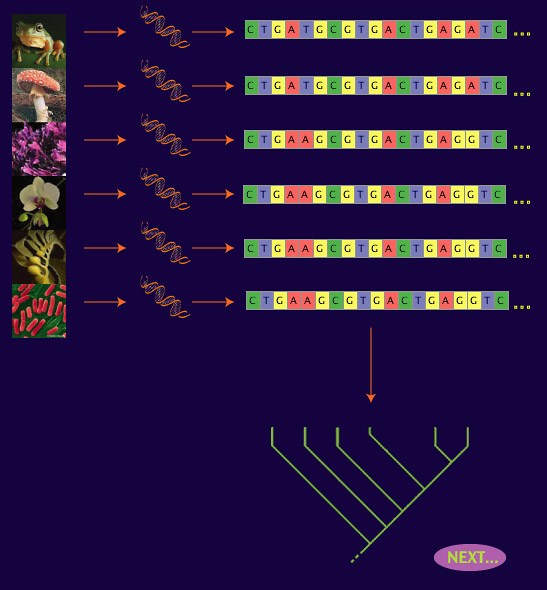
Two organisms that are closely related would have
a)
very similar DNA sequence
b)
exactly the same DNA sequences
c)
no proteins in common
d)
completely different DNA sequence
10.
A remnant or trace of an organism from the past is called a _______.
a)
Ancestor
b)
Skeleton
c)
Fossil
d)
Imprints
11.
Inherited trait that helps an organism survive is a(n) __________.
a)
Fossil
b)
Adaptation
c)
Ancestor
d)
Natural selection
12.
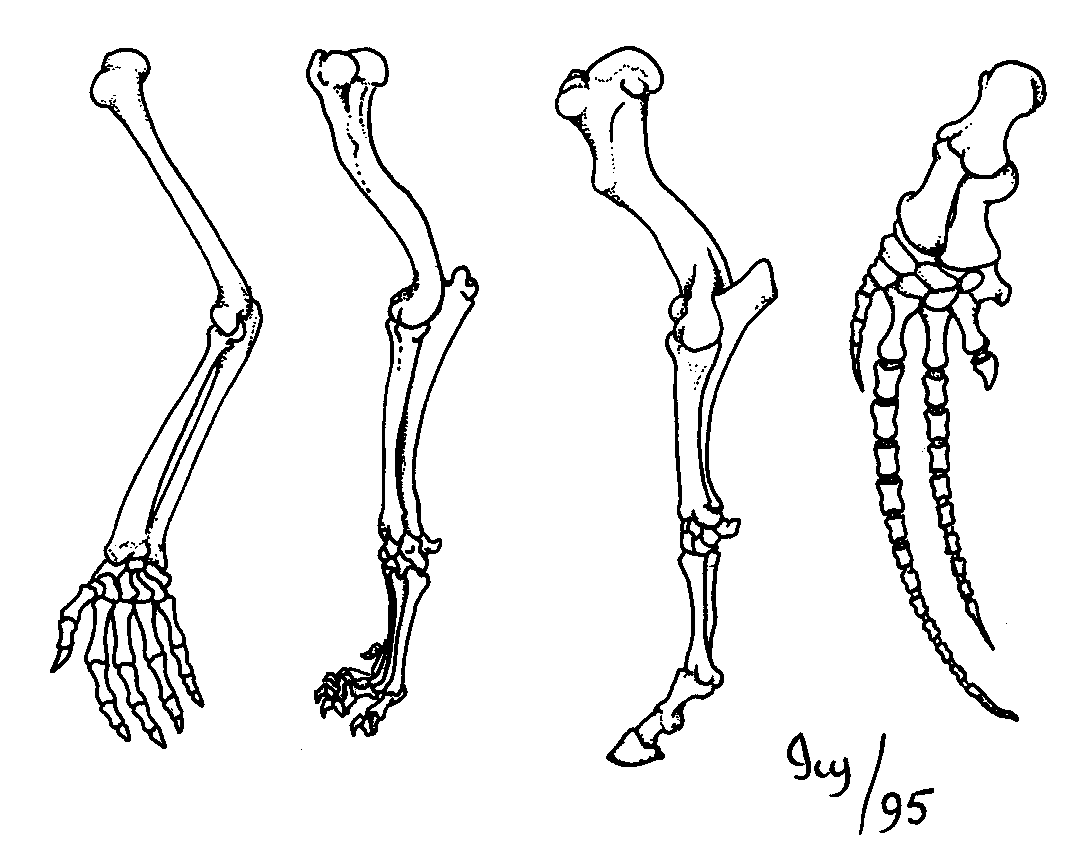
Structures with the same parts have different functions; suggests that organisms share a common ancestry
a)
vestigial structures
b)
homologous structures
c)
adaptive radiation
d)
fossil
13.
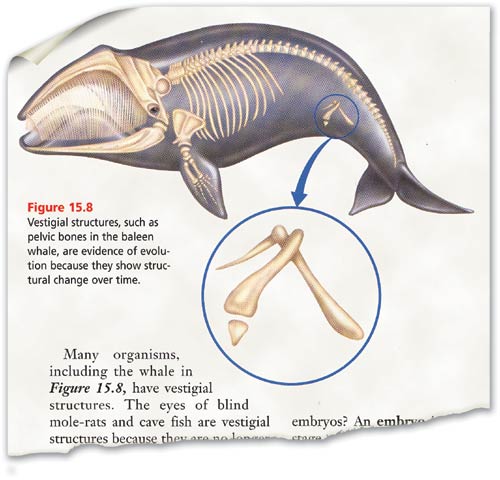
Which of the following is an example of a vestigial structure?
a)
the wings of a red-tailed hawk
b)
the hind limbs of a house cat
c)
the fins of sharks
d)
the tailbone of a human
14.

The diagram shows fossils in different rock layers. Which of these statements about the age of these fossils is most likely correct?
a)
Fossil A and C are the same age
b)
Fossil B is older than fossil C
c)
Fossils A is older than fossil B
d)
Fossil D is older than fossil C
15.

The gradual change in species over time is...
a)
Evolution
b)
Nucleotide
c)
Adaptation
d)
Natural Selection
16.

To adjust to a changing environment
a)
Mutation
b)
Adapt
17.

Darwin wrote that organisms with traits that are best suited to the environment will ________________
a)
increase in number
b)
become extinct
18.

Another word for adapt is ____________.
a)
change
b)
create
19.
The white feathers of a snowy owl allow it to blend in with its environment during the winter months (snow). This is an example of ________________
a)
Species
b)
Environmental Change
c)
Adaptation
d)
Variation
20.
The struggle for existence against other members of an organisms species is
a)
Competition
b)
Natural Selection
c)
gene flow
d)
genetic drift
21.
Which of the following is a fossil?
a)
a plant that has recently died
b)
a group of organisms that can reproduce
c)
a structure or organ that no longer functions
d)
a trace of an organisms that existed in the past
22.
Over time, adaptions can lead populations to experience
a)
environmental changes
b)
genetic changes
c)
geological changes
d)
extinction
23.

All rabbits living in a particular area would be an example of a(n)
a)
population
b)
species
c)
fossil
d)
individual organism
24.
asexual reproduction produces offspring with
a)
half of a single parent's genes
b)
the same genes as the parent
c)
a mix of genes from two parents
d)
lots of genetic variation
25.

the hind leg bones in a whale are examples of
a)
homologous structures
b)
analogous structures
c)
fossils
d)
vestigals
26.
What is the process in which humans breed organisms for certain traits?
a)
natural selection
b)
inheritance
c)
artificial selection
d)
descent withOUT modification
27.
In what kind of rock can fossils be found?
a)
Sedimentary Rocks
b)
Igneous Rocks
c)
Metamorphic Rocks
d)
Granite
28.

Which layer formed first?
a)
Rock Layer W
b)
Rock Layer X
c)
Rock Layer Y
d)
Rock Layer Z
29.

A scientist says that layers Y and M are the same age. How does he know this?
a)
They are found in the same type of rock.
b)
They are the lowest layers.
c)
They have the same type of fossil.
d)
They are near each other.
30.
Scientists use radioactive decay to measure...
a)
relative time
b)
absolute time
c)
half-lives
d)
time of day
31.
How do geologists use relative dating?
a)
Placing rocks in order from youngest to oldest
b)
Placing rocks in order by minerals they contain
c)
Classifying rocks by different textures
d)
Classifying rocks by different isotopes
32.
States that younger rocks lie above older rocks if the layers have not been disturbed
a)
Law of crosscutting
b)
Law of superposition
c)
Relative Dating
d)
Unconformity
33.
The age of something compared to the age of other things. (Not an exact age)
a)
relative age
b)
absolute age
c)
superposition
d)
index
34.
Imprints of the shells of ocean clams are often found in the rocks of the Appalachian Mountains. What do these imprint fossils most likely indicate?
a)
These mountains were once under the ocean
b)
These mountains once had a more rainy climate
c)
Mountain river clams evolved from ocean clams
d)
Ocean clams evolved from mountain river clams
35.

Which is the most likely reason scientists would want to analyze the air trapped in an ice core?
a)
to study how much oxygen was in the ice
b)
to learn how the atmosphere has changed over time
c)
to determine how many gas bubbles were present in the air
d)
to study how many animals lived on Earth when the ice was formed
36.

Which makes a good index fossil?
a)
a fossil not commonly found in rocks
b)
a fossil that lived throughout geologic time
c)
a fossil that lived during three geologic time periods
d)
a fossil that lived during only one geologic time period and commonly found on many continents
37.

People who study fossils are called ____.
a)
meterologists
b)
fossilologists
c)
paleontologists
d)
fossil hunters
38.

Which of the following is NOT an example of a fossil?
a)
a petrified dinosaur bone
b)
a footprint captured in mud
c)
a seashell found on the beach
d)
an insect stuck in amber
39.

this type of fossil provides evidence of the activities of ancient organisms; examples include marks left by footprints or tails
a)
Index
b)
carbon film
c)
trace
d)
cast
40.
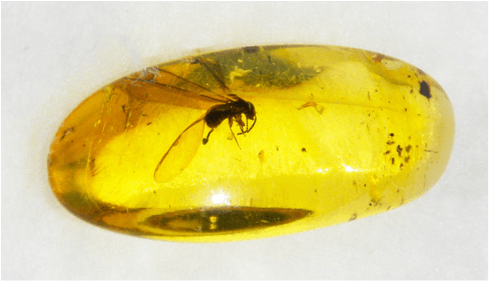
this material does an excellent job of preserving insect remains
a)
cast
b)
amber
c)
mold
d)
carbon film
100 %

