
 Worksheets
Ecology and Astronomy - 4th Benchmark Review
Total questions: 71
Worksheet time: 41mins
Name
Class
Date
1.
What is the original source of almost all energy in most ecosystems?
a)
carbohydrates
b)
sunlight
c)
water
d)
carbon
2.

What does a food web represent?
a)
All connections of energy flow throughout all organisms in a habitat.
b)
The specific ways that mutualism is carried out.
c)
A single pathway or energy flow between organisms.
d)
How carnivores get their food.
3.
Which of the following would be the definition of a detritivore?
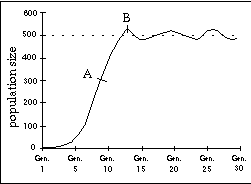
a)
Animals that eat insects.
b)
Organisms that feed on rocks, recycling the nutrients back into the ground.
c)
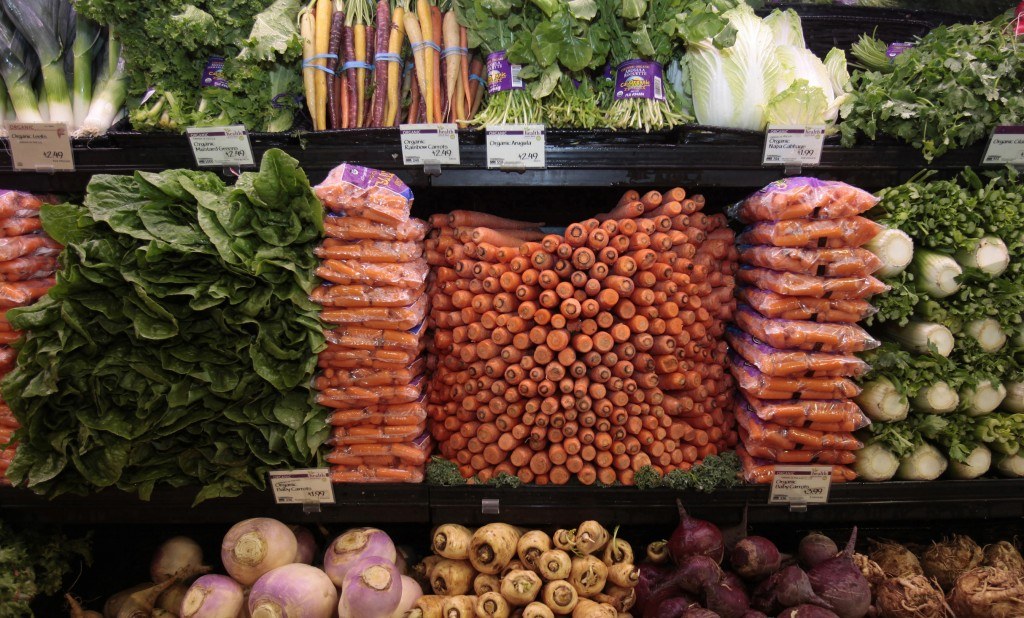
Organisms that eat only pants
d)
Things that feed on dead organisms, recycling the nutrients back into the ground.
4.
The nonliving aspects of an ecosystem.
a)
Abiotic factors
b)
Biotic factors
5.
The living portions of the ecosystem.
a)
Biotic factors
b)
Abiotic factors
6.
Water temperature would be an example of ...
a)
A biotic factor
b)
An abiotic factor
7.
Organisms that can capture energy from inorganic, nonliving sources.
a)
Producers
b)
Consumers
c)
Detritivores
d)
Carnivores
8.

The area between the highest mountain and the deepest ocean where life can be found
a)
Biosphere
b)
Biome
c)
Farm
d)
Ecosystem
9.
This force of nature was responsible for pulling a giant gas cloud together forming our sun.
a)
Gravity
b)
Nebula
c)
Nuclear Fusion
d)
Supernova
10.
This process released huge amounts of heat and light as gravity heated up the core of the sun.
a)
Gravity
b)
Nebula
c)
Nuclear Fusion
d)
Supernova
11.
Liquid water, Highest Density, Supports Life, 1 Moon, strong magnetic field
a)
Jupiter
b)
Venus
c)
Earth
d)
Neptune
12.
Planet acts like a giant magnet because of its fast spin, liquid layers, and metallic core
a)
Magnetosphere
b)
Atmosphere
c)
Orbit
d)
Rotation
13.
The planet lies at an angle to the sun
a)
Orbit
b)
Rotation
c)
Axial Tilt
d)
Magnetosphere
14.
The wobble in Earth's rotation caused by the gravitational pull of the moon is called
a)
barycenter
b)
precession
c)
nutation
d)
convection
15.

This image shows
a)
barycenter
b)
precession
c)
nutation
d)
elliptical orbits
16.
Which statement is true?
a)
A. Earth rotates around the sun and revolves on its axis.
b)
A. The sun revolves around Earth over a 24-hour time period.
c)
A. Earth rotates on its axis, and revolves around the sun.
d)
A. Earth revolves around the sun and the moon.
17.
The central part of the sun, where nuclear fusion occurs
a)
core
b)
photosphere
c)
chromosphere
d)
sunspot
18.
When the Northern Hemisphere is pointing towards the sun, what season is the Southern Hemisphere?
a)
Winter
b)
Spring
c)
Fall
d)
Summer
19.
What causes day and night?
a)
revolution of Earth
b)
rotation of Earth
c)
orbit of Earth
d)
The moon blocks the Sun
20.
What is earth's revolution?
a)
When earth orbits around the sun
b)
When earth bounces
c)
When the sun spins around the earth
d)
When the earth spins on it's axis
21.
Which is the correct hierarchy of the Earth in the universe from SMALLEST TO LARGEST?
a)
Milky Way Galaxy, Earth, solar system, universe
b)
Earth, solar system, universe, Milky Way Galaxy
c)
Earth, solar system, Milky Way Galaxy, universe
d)
universe, Milky Way Galaxy, solar system, Earth
22.
What is barycenter?
a)
The difference in mass between two objects in space
b)
The mass of an object in space
c)
The center of mass between two objects in space
d)
The mass of two objects in space
23.
The process by which hydrogen atoms join together to form helium, releasing energy
a)
nuclear fusion
b)
bonding
c)
solar flare
d)
energy
24.
In what form does the Sun's energy travel to Earth?
a)
Heat
b)
Electrical energy
c)
Electromagnetic radiation
d)
Mechanical energy
25.

The number of individuals a habitat can sustain with the resources it has available
a)
Carrying capacity
b)
Limiting factors
c)
Resources
d)
Population
26.

A supply of materials in a habitat
a)
Resources
b)
Biomes
c)
Organisms
d)
Groceries
27.
Which of the following is an EXAMPLE of a limiting factor?
a)
Water
b)
the color of the sky
c)
Migration
d)
Thick fur
28.
Which of the following is an example of competition?
a)
Two vultures fight over a dead rabbit
b)
A bear eats a fish
c)
Birds migrate south
d)
Pet dog keeps a man company
29.

What is the carrying capacity of the following graph?
a)
1000
b)
8000
c)
800
d)
600
30.
What is the carrying capacity of the graph?
a)
around 500
b)
more than 500
c)
less than 500
d)
around 600
31.

When a population grows past the ecosystem's carrying capacity, what happens to the population?
a)
Continues to grow
b)
The population starts to die off to return to carrying capcity
c)
The population will go extinct due to lack of resources
d)
The population grows then finds a new carrying capacity
32.

If a disease destroying barley plants in a field swept through an ecosystem, what would happen to the barley eating bird population in the the field ?
a)
The bird population would stay the same
b)
The bird population would infinitely increase
c)
The bird population would decrease
33.

Any thing or organism that regulates the size of a population is known as __________.
a)
a limiting measure
b)
a limiting factor
c)
carrying capacity
d)
biodiversity
34.
Which of the following would INCREASE the carrying capacity of an ecosystem?
a)
increase in predators
b)
disease
c)
increase in available food
d)
drought
35.
What is land called that is suitable for farming?
a)
Growable
b)
Fallow
c)
Arable
d)
Plantable
36.
Process by which human activities or climate change make areas more desert-like
a)
Desertification
b)
Domesticated
c)
Arable
d)
Overharvesting
37.
A poison used to destroy pests
a)
Biological Pest Control
b)
Pesticide
c)
Genetic Engineering
d)
Overharvesting
38.
Practice that modifies the genome of living organisms for industrial use
a)
Domesticated
b)
Livestock
c)
Biological pest control
d)
Genetic engineering
39.
Which of the following is NOT a way of conserving topsoil:
a)
Build terraces when planting crops on hillsides
b)
Till down the slope instead of across it
c)
Do not till the soil between plantings
d)
Leave strips of land untilled between fields
40.

Which type of soil conservation strategy is being used in this picture?
a)
windbreaks
b)
contour plowing
c)
alley cropping
d)
terracing
41.

What does biodiversity mean?
a)
Only one species in an area.
b)
The different amount of species in an area
c)
All abiotic life
d)
Nitrogen fixation
42.
Why is biodiversity important in fighting disease in food crops?
a)
It prevents one disease from wiping out an entire food crop.
b)
It prevents habitat loss of native species.
c)
It provides different foods for different populations.
d)
It prevents fungal disease from wiping out corn crops.
43.
The ability to maintain an ecological balance in an ecosystem is
a)
engineering
b)
sustainability
c)
natural ecosystem
d)
balanced ecosystem
44.
What is Irrigation?
a)
´Irrigation can route water to fields, help crops overcome drought, provide drinking water, and support waste removal.
b)
´Irrigation can grow groups be moving water through the air to water individual leaves
c)
Irrigation is the movement of crops through water.
d)
Irrigation is crop movements in a water system through which crops are moved and the water stays still.
45.
If a farmer plants a field with the same crops each year, the soil becomes less fertile, a situation called ___________________.
a)
nutrient depletion
b)
desertification
c)
crop rotation
d)
erosion
46.
New farmland can be created by ____________.
a)
clearing forests
b)
draining wetlands
c)
irrigating deserts
d)
all three of these reasons
47.
Decayed organic material in soil is called______.
a)
Litter
b)
Silt
c)
Humus
d)
Clay
48.
Topsoil which contains the HUMUS is the soil layer best for growing plants.
a)
True
b)
False
49.
Soil's one of the Earth’s most valuable resources. Everything on Earth depends on soil somehow.
a)
True
b)
False
50.
If a farmer over waters (over irrigates) his crops, what will likely happen to the soil?
a)
The soil will become depleted of nutrients.
b)
The soil will be very happy.
c)
The plants will grow bigger.
d)
The soil will increase in richness.
51.
Planets that are closer to the sun
a)
take more time to orbit
b)
take less time to orbit
52.
During the phases of the Moon, the Moon appears to change shape. This change in appearance is due to the Moon...
a)
physically changing size and shape.
b)
moving closer and then farther away from Earth.
c)
reflecting a different amount of light due to alignment with Earth and the Sun.
d)
having craters on its surface.
53.
Complete the sentence: The force of gravity depends on...
a)
Distance and mass
b)
Distance and inertia
c)
Distance and speed
54.
How does distance affect gravity?
a)
Gravity decreases as distance increases.
b)
Gravity increases as distance increases
c)
Gravity stays the same no matter the distance
55.
When mass increases, what happens to the gravity?
a)
Decreases
b)
Increases
c)
Stays the same; mass does not affect gravity
56.

What is the force that pulls the earth towards the sun?
a)
Gravity
b)
Inertia
c)
Love
d)
Distance
57.
An Earth satellite in an elliptical orbit travels fastest when it is
a)
nearest Earth.
b)
farthest from Earth.
c)
everywhere along its orbit.
58.
An Earth satellite in an elliptical orbit has its smallest speed
a)
closest to Earth
b)
when getting farther from Earth.
c)
when farthest from Earth.
d)
need more information
59.
Space and all the matter and energy in it.
a)
Space
b)
Solar System
c)
Universe
d)
Sun
60.
The sun and all of the planets and other bodies that travel around it.
a)
Universe
b)
Galaxy
c)
Star
d)
Solar System
61.
A relatively large spherical body that orbits a star.
a)
Star
b)
Planet
c)
Moon
62.
A large celestial body that is composed of gas and that emits light.
a)
star
b)
black hole
c)
element
d)
big bang
63.
A collection of stars, dust, and gas bound together by gravity.
a)
Nebula
b)
Galaxy
c)
Universe
d)
Protostar
64.
The most commonly accepted theory that explains the beginning of our known universe is the -
a)
Theory of Evolution
b)
Big Bang Theory
c)
Cell Theory
d)
Blackhole theory
65.
Which of the following is the largest?
a)
star
b)
universe
c)
cluster
d)
galaxy
66.
A[n] ______________ tide occurs when the sun is at right angles to the line between Earth and the moon.
a)
high
b)
neap
c)
low
d)
spring
67.
Differences in the moon's and sun's pull on different sides of the Earth cause _________.
a)
gravity
b)
lunar phases
c)
tides
d)
dabbing
68.
A[n] ___________ tide occurs when the sun, Earth, and the moon are nearly in a line.
a)
spring
b)
high
c)
low
d)
neap
69.
The bulge of water on the side of the Earth closest to the moon produces ___________.
a)
high tide
b)
low tide
c)
neap tide
d)
spring tide
70.
Water flows toward the high tides, halfway between them causing ____________.
a)
neap tide
b)
high tide
c)
spring tide
d)
low tides
71.
A neap tide is a tide with the greatest difference between low and high tides
a)
true
b)
false
100 %

