
 Worksheets
Marcos Biology 11 - Plants
Total questions: 60
Worksheet time: 32mins
Which of the following plants is most likely to have swimming sperm?
Mosses
Ferns
Pine Trees
Mosses or ferns
All of the above
Where could you find an angiosperm living?
Underwater only
In wet environments
In dry environments only
In wet or dry environments
Why can gymnosperms grow very large while mosses cannot?
Gymnosperms don’t need water to reproduce
Gymnosperms have a good vascular system
Gymnosperms have cones
Gymnosperms have a multicellular sporophyte
What do apple trees have that both ferns and algae do not?
vascular tissue
spores
gametes
pollen

Which of the stages shown in the life cycle are diploid?
1 and 2
1, 2 and 3
4 and 5
3, 4 and 5

What is the name given to the structure shown at stage 2?
Sporophyte
Gametophyte
Sporangium
Bryophyte
The phloem of a plant is responsible for:
Making the plant trunk thicker
Making the plant grow taller
Carrying water to all parts of the plant
Carrying sugars to all parts of the plant
What would happen if you removed the apical meristem of a root on a new plant?
It wouldn’t grow longer
It wouldn’t grow wider
It wouldn’t be able to perform photosynthesis
It wouldn’t be able to get water
1. Put the following plants in order from the LEAST advanced to the MOST advanced.
I. Ferns
II. Mosses
III. Orange tree
IV. Spruce tree (like a Christmas tree)
II, I, III, IV
I, II, III, IV
II, I, IV, III
I, II, IV, III
A green plant is found which has pollen and cones. Which of the following terms would NOT be an accurate description of this plant?
conifer
vascular plant
autotroph (performs photosynthesis)
angiosperm
Which of the following statements best describes xylem's function in the plant?
transports water and minerals up from the roots to the rest of the plant
transports food down from the leaves to the rest of the plant
transports water and minerals down from the roots to the rest of the plant
transports food up from the leaves to the rest of the plant
Which of the following statements best describes phloem's function in the plant?
transports water and minerals up from the roots to the rest of the plant
transports food down from the leaves to the rest of the plant
transports water and minerals down from the roots to the rest of the plant
transports food up from the leaves to the rest of the plant
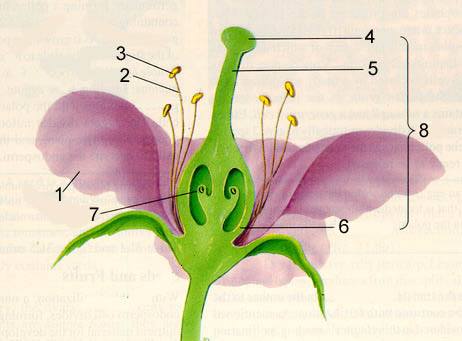
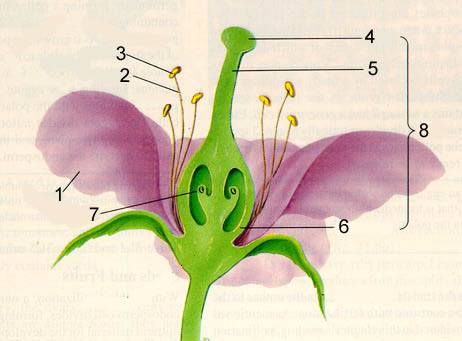
What is the female part of the flower?
Petals
Stamen
Carpel
Sepals
What is pollination?
the transfer of pollen from the anther to the stigma
the union of pollen and egg cells in the ovary of the flower
the dispersal of seeds to a new location
the transfer of spores from the male to female parts of the flower
What is fertilization?
the transfer of pollen from the anther to the stigma
the union of sperm (in the pollen tube) and egg cells in the ovary
the dispersal of seeds to a new location
the use of pollinators, such as bees, to transfer pollen
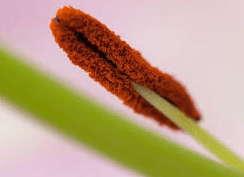
The part of a flower that produces the male gametophyte.
anther
style
stigma
filament

Their leaves have net-like veins, and the flower parts are usually in fours or fives.
monocot
dicot
angiosperm
gymnosperm



What is a conifer?
the joining of an egg and sperm cell
the carrying of seeds to a new place
a seed plant that reproduces with cones
the movement of pollen from a stamen to pistol
a characteristic that is passed from parents to offspring
Mosses must live in a moist environment because __.
male gametes need a way to travel to the egg.
Vascular tissue only works in a moist environment
spores need a way to travel to the egg
They can only absorb oxygen from water

These plants are being shown in this life cycle:
Moss
Ferns
Flowering plants
Cone plants

In this life cycle number 5 best indicates the:
sporophyte stalk
gametophyte stalk
the haploid stalk
the capsule

In this life cycle number 6 is:
Haploid
Diploid
The gametophyte makes gametes
TRUE
FALSE
The sporophyte is
haploid
diploid
triploid
The gametophyte is
haploid
diploid
triploid

What type of cellular division occurs at "a" in the figure?
meiosis
mitosis
What type of cellular division occurs at "c" in the figure?
meiosis
mitosis
The dominant generation of a moss is the
gametophyte
sporophyte
Which of these structures is a gametophyte on an angiosperm?
leaves
stems
roots
pollen
I am a flower that produces nectar. What is the function of the nectar?
To provide food for the flower
To attract pollinators
To attract animals to disperse the fruits
To produce perfumes for humans
I have a long and feathery stigma that sticks out of the flower. How am I pollinated?
By wind
By insects
By water
By explosive action
The oldest part of a tree is in the center

What is found in clusters in the small brown "dots" on the underside of these leaves?
stamens
pollen
spores
cones
Which of the following provides food for the embryo?
Fruit
Endosperm
Cotyledon
Vascular cambium
When a tree grows wider in trunk diameter, this is an example of which of the following?
Secondary growth
Primary growth
Photosynthesis
Xylem transport
Which of the following actively divides and produces alternating layers of xylem and phloem?
Outer bark
Pith
Vascular cambium
Cork cambium
____________ are actively dividing areas at root tips & buds of shoots.
Perennial
Apical meristem
Stem
Root
Flower

