wayground logo

Free Printable Worksheets

Font size

S
M
L
XL
Worksheets

Phys Sci Semester 2 EOC Review Pt.1

Total questions: 40

Worksheet time: 30mins

Name
Class
Date
1.

Type of Change? - Burning a marshmallow over a campfire

a)

Physical

b)

Chemical

2.

Type of Change? - Melting a popsicle

a)

Physical

b)

Chemical

3.

Type of Change? - Boiling some tea

a)

Physical

b)

Chemical

4.

Type of Change? - You cut a piece of wood into smaller sized pieces

a)

Physical

b)

Chemical

5.

Type of Change? - Sodium metal reacts violently with Chlorine gas...

a)

Physical

b)

Chemical

6.

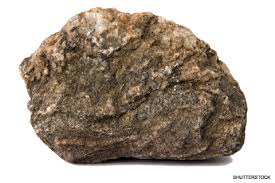
Type of Property? - Paper is easier to set on fire than a rock...

a)

Physical

b)

Chemical

7.
What is the correct value?
a)
5 ml
b)
15 ml
c)
20 ml
d)
25 ml
8.

What is measured with a graduated cylinder?

a)

Mass of a liquid

b)

Distance from one thing to another

c)

Weight of an object

d)

Volume of liquid

9.
What is the volume of the fish inside the graduated cylinder?
a)
38 mL
b)
6 mL
c)
32 mL
d)
Not enough information to solve
10.
This is the amount of "stuff" in an object
a)
weight
b)
gravity
c)
mass
d)
volume
11.

If the mass of a cup of water is 250 grams and the mass of the empty cup is 30 grams. What is the mass of the water?

a)

220 grams

b)

280 grams

c)

30 grams

d)

250 grams

12.

What is the formula for density?

a)

density = volume / mass

b)

density = mass / volume

c)

density = mass + volume

d)

density = mass x volume

13.

What is the density of a substance that has a mass of 30g and a volume of 6 liters?

a)

5 ml

b)

5 g/l

c)

36 g/l

d)

180 g/l

14.

At higher temperatures...

a)

...particles in an object have less energy

b)

...particles in an object move faster

c)

...a gas contracts

15.
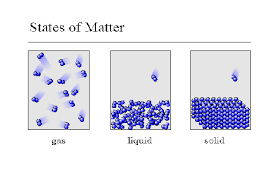
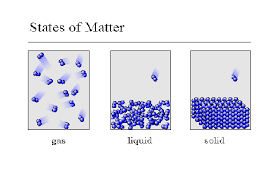
A gas
a)
has a definite shape but no definite volume
b)
has a definite volume but no definite shape
c)
has fast-moving particles
16.
Which state of matter has tightly packed molecules?
a)
solid
b)
liquid
c)
gas
17.

Define a liquid.

a)

Indefinite shape, indefinite volume

b)

Definite shape, definite volume

c)

Something cold with stationary particles

d)

Definite volume, indefinite shape

18.
A chemical change
a)
doesn't really change much.
b)
creates a new substance
c)
is a change in the state of matter
19.
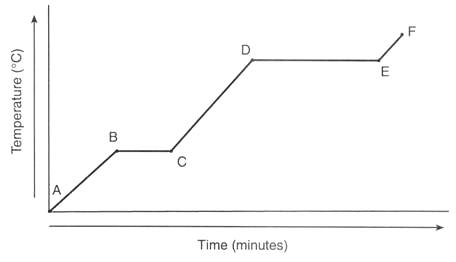
Between which points is the substance changing state?
a)
A-B only. 
b)
A-B, C-D, E-F
c)
B-C only. 
d)
B-C, D-E
20.
What line segment represents only the solid state?
a)
A-B
b)
B-C
c)
C-D
d)
D-E
21.
A pure substance that cannot be separated into simpler substances by chemical or physical means.  
a)
Element
b)
Compound
c)
Mixture
d)
Chemical
22.
These contain only one kind of atom. 
a)
element 
b)
compound 
c)
mixture 
d)
water 
23.
Carbon Dioxide is a ______ 
a)
compound 
b)
element 
c)
mixtures 
d)
Battle of Bunker Hill 
24.
This picture represents which of the following?
a)
element
b)
compound
c)
mixture of elements
d)
mixture of compounds
25.
Classify the picture with the correct label.
a)
Element
b)
Compound
c)
Mixture of Elements
d)
Mixture of Compounds
26.
Classify the picture with the correct label.
a)
Mixture of Elements
b)
Mixture of Elements & Compounds
c)
Mixture of Compounds
d)
Compounds
27.
Everything is made up of little tiny things called _____
a)
compounds
b)
molecules
c)
atoms
d)
solids
28.
From the diagram, which particles are indicated with the arrow?
a)
electrons and protons
b)
protons and neutrons
c)
electrons and neutrons
d)
photons and nucleons
29.
These particles orbit around the nucleus of an atom.  What are they called?
a)
electrons
b)
protons
c)
neutrons
d)
photons
30.
In the center of the atom is something called _____
a)
the kernel
b)
the cell
c)
the nucleus
d)
the focal point
31.
The protons and neutrons are inside of the nucleus, and contain almost all of _____
a)
the charge of the atom
b)
the volume of the atom
c)
the mass of the atom
d)
the kinetic energy of the atom
32.

In terms of matter, the atom is almost entirely made of _____

a)

orbiting electrons

b)

charged protons

c)

heavy neutrons

d)

empty space

33.
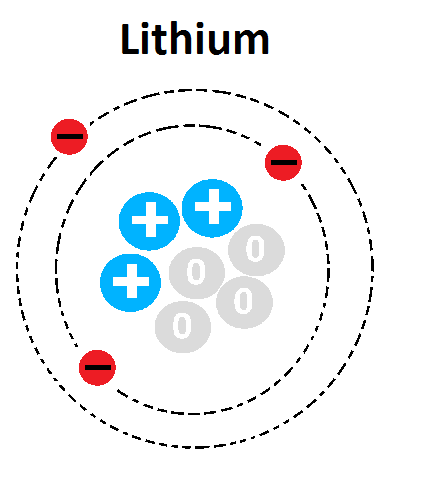
What is the atomic number of this atom?
a)
1
b)
3
c)
4
d)
7
34.

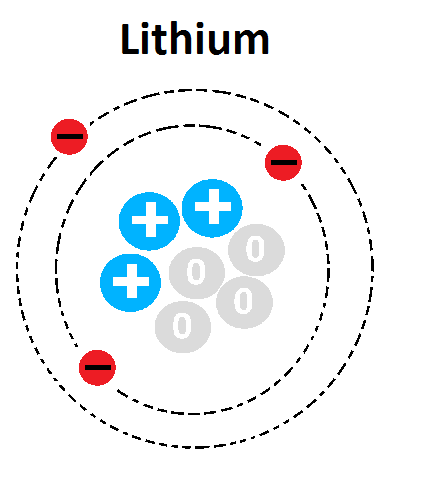
What is the atomic mass of this atom?

a)

1

b)

3

c)

4

d)

7

35.
What is the atomic number of this atom?
a)
1
b)
2
c)
3
d)
4
36.

What is the mass number of this atom?

a)

1

b)

2

c)

3

d)

4

37.
What is the atomic number of this atom?
a)
7
b)
14
c)
21
d)
none of the above
38.

Isotopes are atoms of the same element with different numbers of __________ & therefore different __________.

a)

neutrons ; atomic numbers

b)

protons ; atomic numbers

c)

electrons ; atomic masses

d)

neutrons ; atomic masses

39.
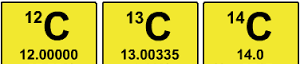
What do these isotopes of carbon all have in common?
a)
neutrons & mass number
b)
atomic number and neutrons
c)
atomic number and electrons
d)
protons, atomic number, and mass number
40.

How many neutrons in Carbon-14?

a)

6

b)

7

c)

14

d)

8