
 Worksheets
ID- Unit B Review
Total questions: 77
Worksheet time: 39mins
Name
Class
Date
1.
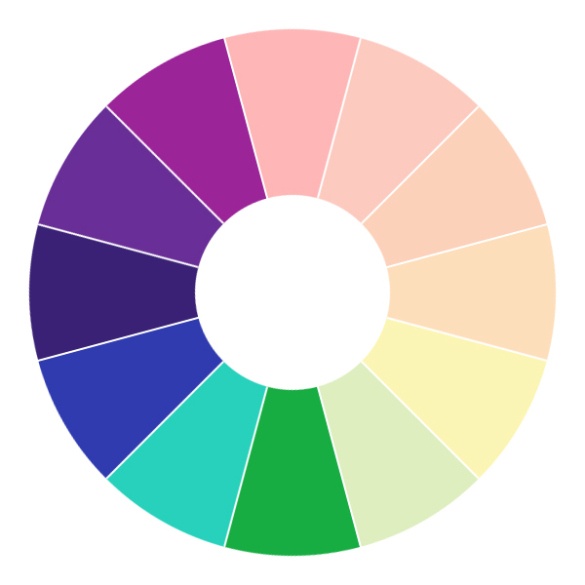
Blues, Greens, and Violets depict feelings of coolness, relaxation, and zen. These colors are also known as:
a)
Warm Colors
b)
Cool Colors
c)
Tertiary Colors
d)
Analogous Colors
2.
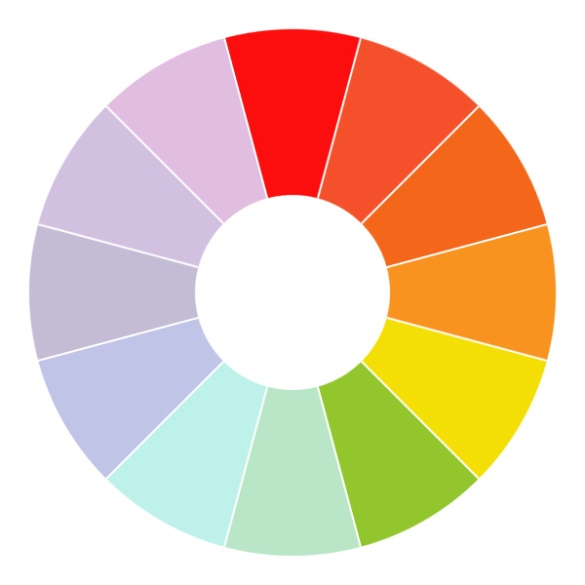
Reds, Yellows, and Oranges depict feelings of heat, passion, and intensity. These colors are also known as:
a)
Cool Colors
b)
Primary Colors
c)
Secondary Colors
d)
Warm Colors
3.
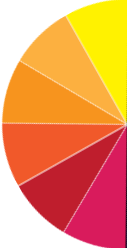
What color harmony is shown?
a)
Cool Colors
b)
Warm Colors
4.
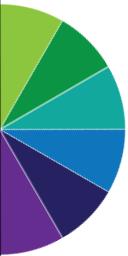
What color harmony is shown?
a)
Cool Colors
b)
Warm Colors
5.

How do you make this color?
a)
red+blue
b)
orange+blue
c)
yellow+blue
d)
purple+yellow
6.
What two colors do you mix to make violet?
a)
blue and yellow
b)
red and green
c)
blue and violet
d)
red and blue
7.
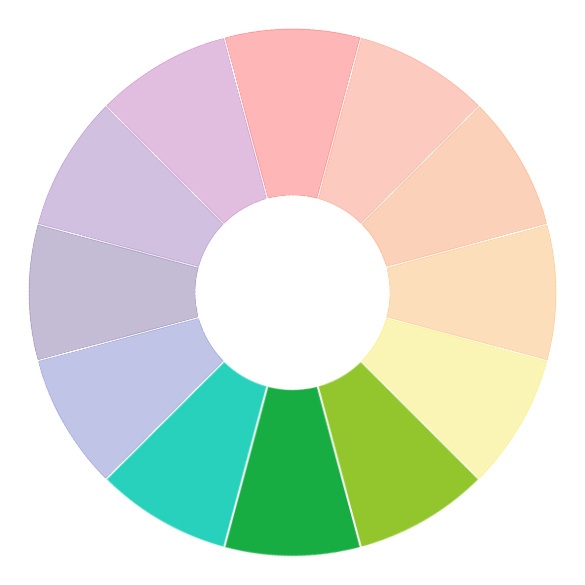
Three colors beside each other on the color wheel are also known as:
a)
Analogous Colors
b)
Secondary Colors
c)
Cool Colors
d)
Complementary Colors
8.
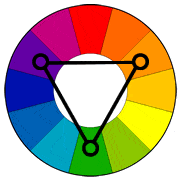
Three colors equally spaced on color wheel?
a)
Analogous Colors
b)
Color Triad
c)
Monochromatic Colors
d)
Primary Colors
9.
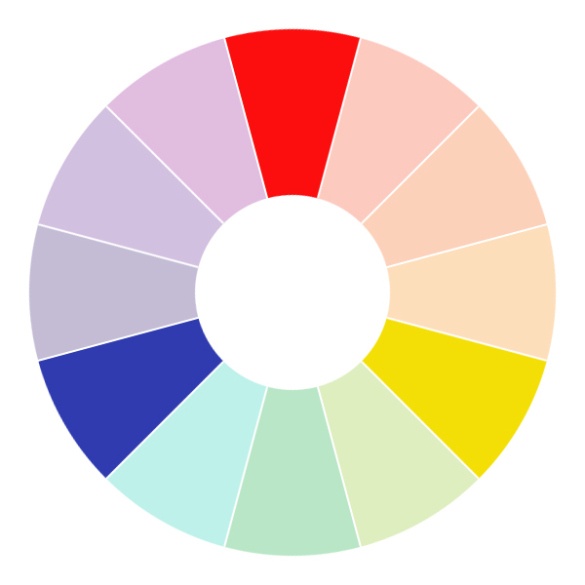
Red, Yellow, & Blue are the "building blocks" of all color. What are these three colors also referred to as?
a)
Tertiary Colors
b)
Secondary Colors
c)
Primary Colors
d)
Complementary Colors
10.
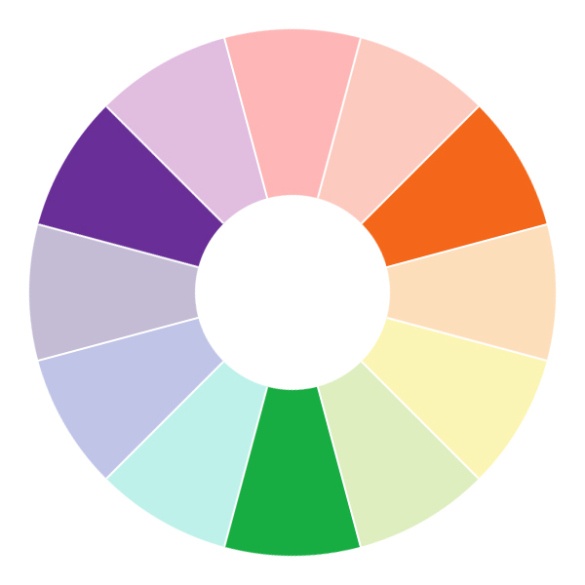
Green, Orange, & Violet are created after mixing two Primary colors together. What are these colors also referred to as?
a)
Secondary Colors
b)
Primary Colors
c)
Tertiary Colors
d)
Analogous Colors
11.
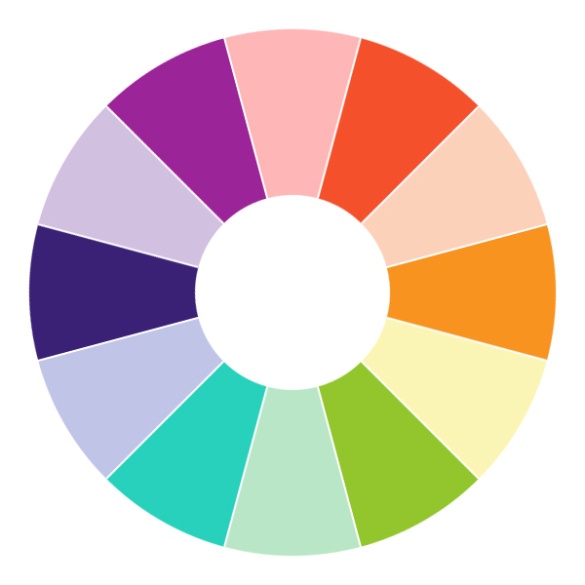
These colors are created after mixing a Primary and a Secondary color together:
a)
Analogous Colors
b)
Tertiary Colors
c)
Complementary Colors
d)
Warm Colors
12.
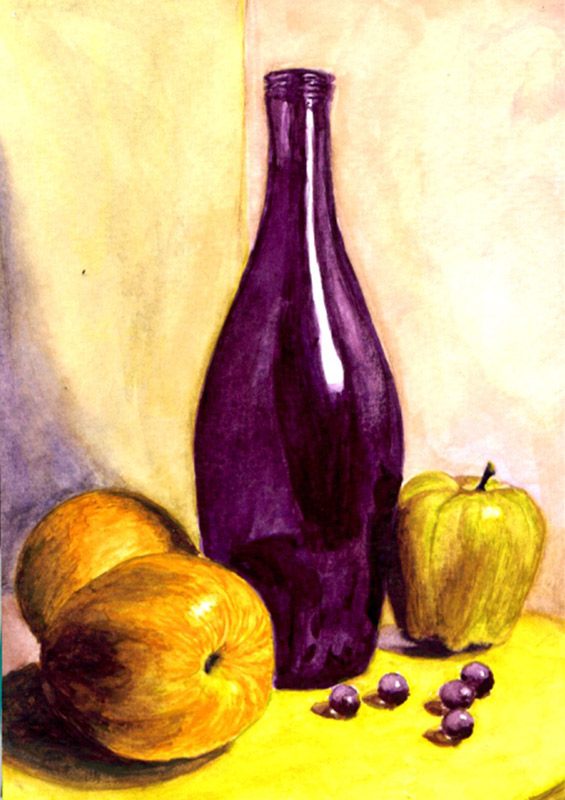
What color scheme is represented by this painting? Choose the best answer.
a)
purple and yellow
b)
complementary
c)
analogous
d)
monochromatic
13.
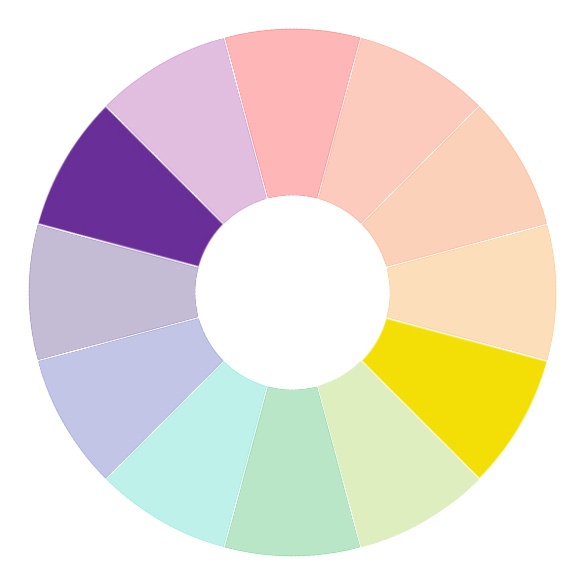
These colors are opposite from each other on the color wheel:
a)
Tertiary Colors
b)
Primary Colors
c)
Analogous Colors
d)
Complementary Colors
14.
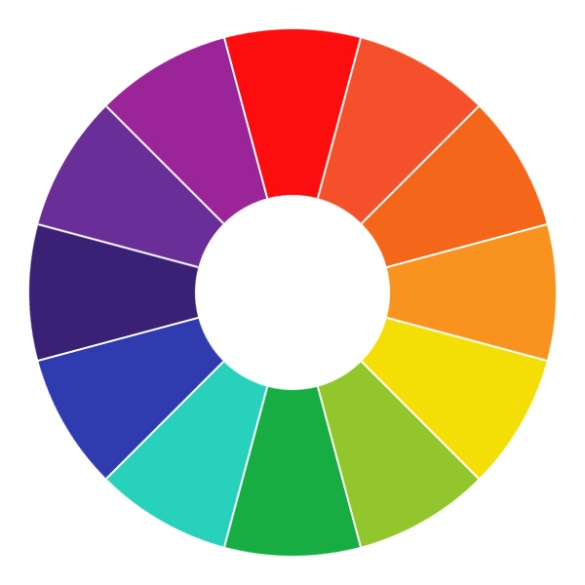
What is the complementary color of yellow?
a)
Green
b)
Orange
c)
Violet
d)
Red
15.

What kind of color scheme is the image?
a)
Complimentary
b)
Analogous
16.

What is the color scheme?
a)
Complimentary
b)
Analogous
17.

What is the color scheme
a)
Complimentary
b)
Analogous
18.

What is the color scheme?
a)
Complimentary
b)
Analogous
19.

What is the color scheme?
a)
Complimentary
b)
Analogous
20.

What is the color scheme?
a)
Analogous
b)
Complimentary
21.

What is the color scheme?
a)
Analogous
b)
Complimentary
22.

What is the color scheme?
a)
Analogous
b)
Complimentary
23.

What is the color scheme?
a)
Complimentary
b)
Analogous
24.

What is the color scheme?
a)
Analogous
b)
Complimentary
25.

What is the color scheme?
a)
Analogous
b)
Complimentary
26.

What is the color scheme?
a)
Analogous
b)
Complimentary
27.

What is the color scheme?
a)
Complimentary
b)
Analogous
28.
A type of balance in which the two sides of an artwork look equally important even though they are not alike
a)
Symmetrical balance
b)
Asymmetrical balance
c)
Radial balance
d)
Bilateral balance
29.
Comparing parts of a whole is called:
a)
Scale
b)
Proportion
c)
Contrast
d)
Balance
30.
The comparison of one thing to another in terms of size is called:
a)
Balance
b)
Contrast
c)
Proportion
d)
Scale
31.
Using many different elements to create interest or contrast in an artwork is called:
a)
Variety
b)
Unity
c)
Balance
d)
Value
32.

This image shows an example of:
a)
asymmetrical balance
b)
symmetrical balance
c)
radial balance
d)
physical balance
33.
The placement of the elements so that no part of the design overpowers any other part or seems visually heavier is called:
a)
unity
b)
emphasis
c)
balance
d)
principles of design
34.
Using similar elements to create a single theme
a)
unity
b)
variety
c)
emphasis
d)
space
35.
The focal point of an artwork is also called:
a)
background
b)
rhythm
c)
emphasis
d)
pattern
36.
A repeated design is called a:
a)
principle
b)
pattern
c)
element
d)
shape
37.

What type of Balance is this image an example of ?
a)
Symmetrical
b)
Asymmetrical
c)
Formal
d)
Symmetrical & Formal
38.

What principle does this image demonstrate?
a)
The lack of color in church design.
b)
That triangles show direction.
c)
Birds do not perch on steeples.
39.
Emphasis refers to the part of art which is what?
a)
The most colorful
b)
In the center
c)
The most dominant
40.

This painting shows which principle?
a)
Emphasis
b)
Symmetry
c)
Movement/Rhythm
41.

This painting by Vincent Van Gogh demonstrates which principle?
a)
Movement/Rhythm
b)
Symmetry
42.

What is the emphasis of this photograph?
a)
The green apples around the pepper
b)
The red pepper in the center
c)
The little man peeking through the apples
43.

Which balance is this digital photograph of a dessert which Mrs. Daniels created an example of?
a)
Symmetrical
b)
Asymmetrical
44.

Which principle is prominent in this interior design?
a)
Formal Balance
b)
Contrast
c)
Symmetry
d)
All of the above
45.

Did this architect use pattern for this design?
a)
yes
b)
no
46.

Which principles did Andy Warhol use in his screen print of Marilyn Monroe?
a)
Emphasis
b)
Color
c)
Variety & Repetition
47.

Name the Principle of Design
a)
Emphasis
b)
Rhythm
c)
Movement
d)
Proportion
48.

Name the Principle of Design
a)
Movement
b)
Variety
c)
Proportion
d)
Emphasis
49.

Refers to the relative size of an object in relation to other objects.
a)
Scale
b)
Proportion
c)
Balance
d)
Emphasis
50.

Identical proportion and arrangement of objects on both sides of a center point. (AKA - symmetry)
a)
formal balance
b)
informal balance
c)
golden section
d)
golden rectangle
51.

Creates a center of interest or focal point in a room.
a)
Balance
b)
Informal balance
c)
Golden rule
d)
Emphasis
52.

Repeating an element of design - such as color, line, form, or texture - creates rhythm by...
a)
repition
b)
gradation
c)
radiation
d)
opposition
53.

The type of rhythm created by a gradual increase or decrease of similar elements of design.
a)
repetition
b)
gradation
c)
radiation
d)
opposition
54.
Which of the following is NOT and Element of Design
a)
Space
b)
Texture
c)
Harmony
d)
Line
55.
To add a look of softness to the wedding dress, which type of line would be best for the designer to use?
a)
Vertical
b)
Horizontal
c)
Diagonal
d)
Curved
56.
While Alice was holding her sister's baby, she noticed the baby kept rubbing her satin shirt. Which element of design was the baby experiencing?
a)
Texture
b)
Line
c)
Space
d)
Shape
57.
Sarah, a petite girl, likes a dress that her mother bought her because it made her appear tall and slim. Most likely, the dress had which type of line?
a)
Vertical
b)
Horizontal
c)
Diagonal
d)
Curved
58.
When decided to add a pink belt to her black sheath dress, she created which type of line?
a)
Vertical
b)
Horizontal
c)
Diagonal
d)
Curved
59.

A ________ leads the eye from one point to another.
a)
color
b)
line
c)
proportion
d)
texture
60.
How a fabric feels or looks.
a)
Rough
b)
Texture
c)
Slick
d)
Shiny
61.
What feeling does each type of line create? Diagonal
a)
Action
b)
Action,Excitement
c)
None of the above
d)
Excitement
62.
What feeling does each type of line create? Vertical
a)
Formality, strength
b)
formality
c)
strength
d)
none of the above
63.
What feeling does each type of line create? Horizontal
a)
restful
b)
None of the above
c)
restful, informal
d)
Informal
64.
What is space?
a)
Negative
b)
The area a designer has to work with
c)
The connection between two points
65.
Describe the difference between shape and form:
a)
They're the same!
b)
Shape is 2 dimensional, form is 3 dimensional
c)
Shape is 3D form is 2D
66.
Describe the types of patterns:-Abstract:
a)
what?!
b)
shapes
c)
items from nature
d)
no set pattern or object
67.
Horizontal lines: make the body appear
a)
thiner
b)
taller
c)
wider
d)
smaller
68.
_______________ lines suggest movement and action.
a)
Parallel
b)
Vertical
c)
Horizontal
d)
Diagonal
69.
Vertical lines emphasize _________.
a)
movement
b)
height
c)
width
d)
all the above
70.
A ________ leads the eye from one point to another.
a)
color
b)
line
c)
proportion
d)
texture
71.

Which of the following words would describe texture?
a)
red
b)
diagonal
c)
horizontal
d)
smooth
72.

•Furniture placed by the wall makes the room appear __________.
a)
cluttered
b)
inviting
c)
spacious
d)
groovy
73.
This is the what is around, between, above, below or within things drawn.
a)
Shape
b)
Space
c)
Movement
d)
Value
74.
A path between two points is a?
a)
Texture
b)
Shape
c)
Pattern
d)
Line
75.
Texture is which of the following?
a)
How the paper you are drawing on feels like.
b)
How we perceive things with our eyes
c)
How something feels or how it looks like it feels.
d)
How we feel things
76.
A three-dimensional object is called:
a)
a square
b)
a mold
c)
a form
d)
a circle
77.
Surface appearance and feel is what element.
a)
Emphasis
b)
Balance
c)
Texture
d)
Shape
100 %

